
 Worksheets
Module 26205 power point 1Quiz
Total questions: 38
Worksheet time: 19mins
What should you be able to do after completing Session One?
Identify boxes and fittings
Install electrical wiring
Design a circuit board
Repair household appliances
Which type of boxes should you be able to select in this session?
Pull and junction boxes
Fuse and switch boxes
Circuit and breaker boxes
Outlet and socket boxes
What is one of the tasks you should be able to perform regarding fittings?
Select and install fittings
Design new fittings
Manufacture fittings
Test electrical fittings
What is the purpose of pull and junction boxes?
To store electrical tools
To provide pull points or make conductor connections
To decorate electrical rooms
To increase electrical voltage
Which NEC Article covers pull and junction box requirements?
NEC Article 210
NEC Article 314
NEC Article 110
NEC Article 430
What must boxes for damp and wet locations be protected against?
Dust
Heat
Moisture
Cold
What does the first number in the IP classification system represent?
Degree of protection against water
Degree of protection against solid objects
Degree of protection against temperature
Degree of protection against chemicals
What level of protection does an IP rating with a first number of 5 provide against solid objects?
Not protected
Protected against solid objects greater than 50 mm
Dust-protected, prevents ingress of dust sufficient to cause harm
Dust-tight, no dust ingress
Which IP rating provides protection against water when immersed between a depth of 150 mm to 1 m?
5
6
7
8
What does the second number in the IP classification system indicate?
Degree of protection against solid objects
Degree of protection against water
Degree of protection against temperature
Degree of protection against chemicals
Which IP rating provides protection against water jets from any direction?
3
4
5
6
What is the NEMA Type commonly used for general-purpose indoor applications?
Type 1
Type 3
Type 4
Type 5
Which NEMA Type is commonly used in outdoor applications such as construction work?
Type 1
Type 2
Type 3
Type 5
What is the IP Classification for NEMA Enclosure Type 3?
P20
P21
P54
IP24
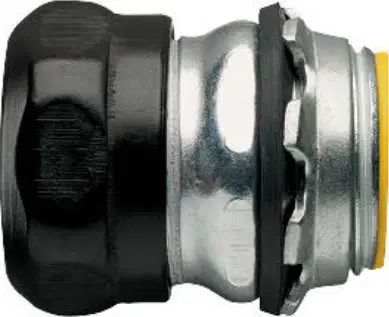
What type of fittings does EMT use due to its thinness?
Threaded fittings
Setscrew or compression fittings
Welded fittings
Snap-on fittings
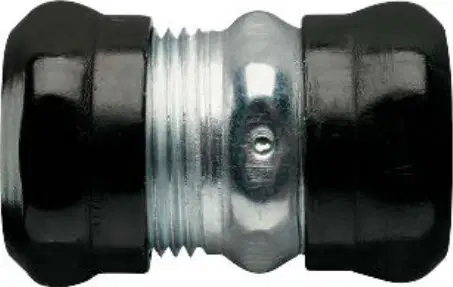
Where can compression fittings listed as raintight be used?
Only indoors
Only in dry locations
Outdoors or in wet locations
In underground installations
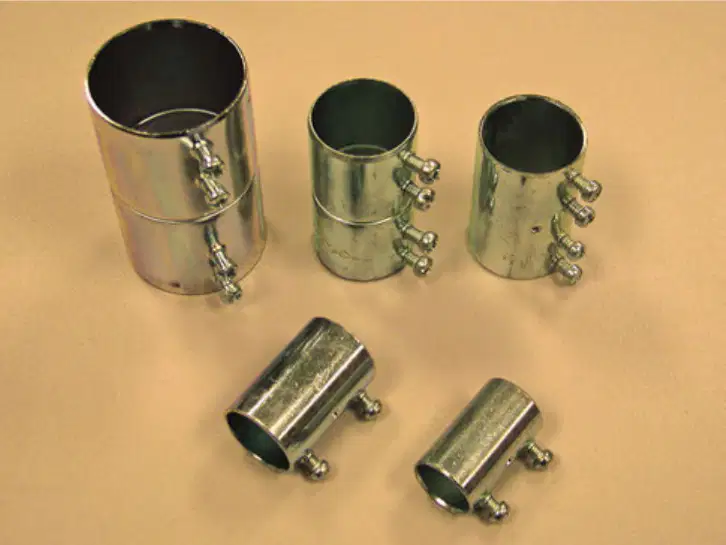
Where can EMT setscrew fittings be used?
Wet locations
Dry locations
Both wet and dry locations
Underwater
What is required at each termination point of EMT?
Only a locknut
Only a bushing
Connectors of the setscrew or compression type
No connectors are needed
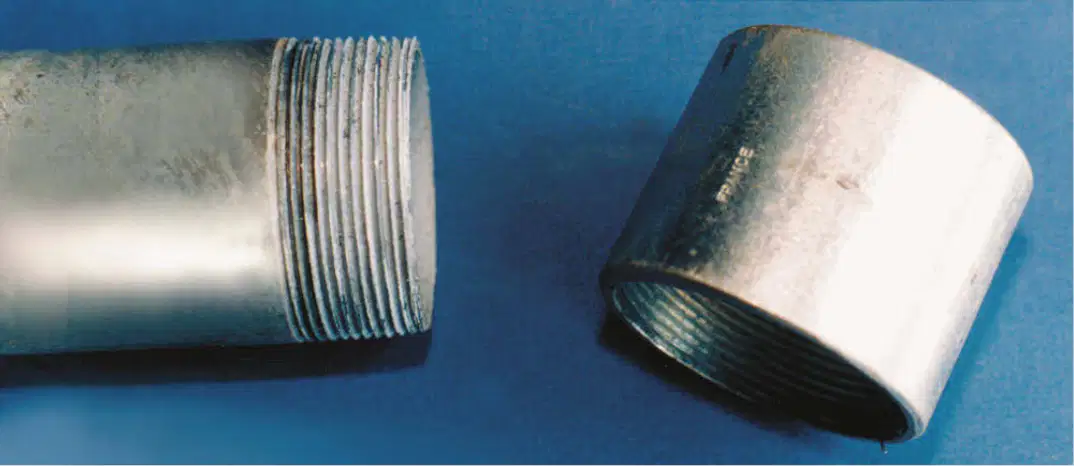
What is the purpose of having sufficient wall thickness in RMC, IMC, and aluminum fittings?
To permit threading and use various types of threaded connectors
To reduce weight
To increase flexibility
To improve insulation
What type of nuts are used at conduit-to-box connections?
Single locknuts
Double locknuts
Wing nuts
Hex nuts
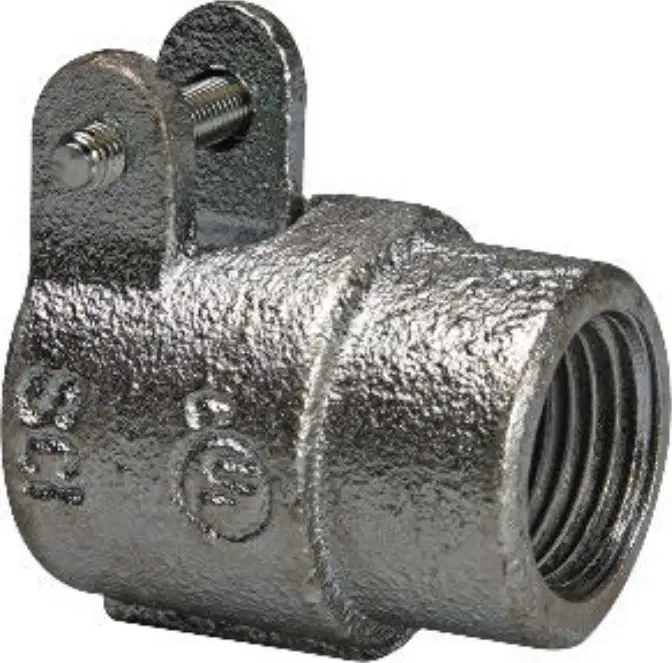
What is the purpose of combination couplings?
To connect two flexible conduits
To transition between rigid and flexible conduit
To connect two rigid conduits
To insulate electrical wires

What are the two types of fittings shown in the image?
Setscrew and Compression Fittings
Bolt and Nut Fittings
Clamp and Screw Fittings
Rivet and Pin Fittings
What are metal conduit couplings used for?
To connect different types of wires
To join sections of conduit
To insulate electrical wires
To provide power to devices
Where are threadless (setscrew) couplings not permitted?
In outdoor locations
In most hazardous locations
In residential buildings
In commercial buildings
In which conditions can threadless (setscrew) couplings be used?
Only indoors
Outdoors or in concrete if listed for the application
Only in hazardous locations
Only in residential areas
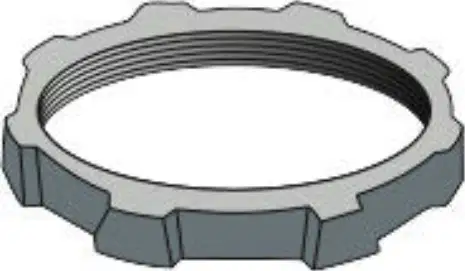
Where are locknuts typically installed in an enclosure connection?
Only on the inside walls
Only on the outside walls
On both the inside and outside walls
Only on the top wall
What type of locknut may be required if bonding jumpers are used in the enclosure?
Standard locknut
Sealing locknut
Grounding locknut
Insulated locknut
What is the purpose of sealing locknuts?
To provide electrical insulation
To make watertight connections
To reduce noise
To increase conductivity
What materials can bushings be made of?
Wood, glass, rubber
Metal, plastic, fiber
Stone, ceramic, glass
Rubber, wood, paper
What is the primary function of bushings at termination points?
To conduct electricity
To provide insulation
To protect conductors from sharp edges
To enhance signal strength
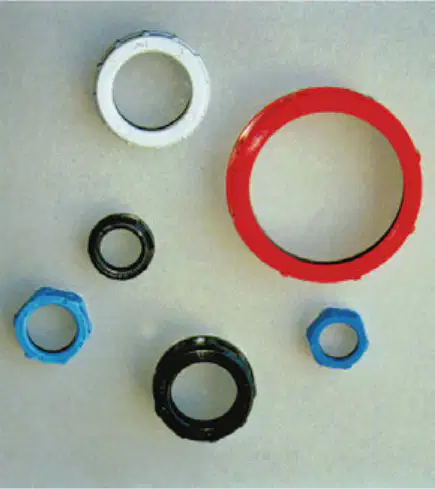
What is the purpose of color coding plastic insulating bushings?
To indicate the material type
To show the manufacturer
To identify the conduit size
To display the installation date
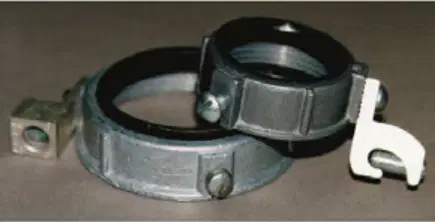
What is the function of grounding bushings?
To prevent electrical surges
To permit the installation of a ground wire
To enhance the aesthetic of the installation
To reduce the weight of the conduit
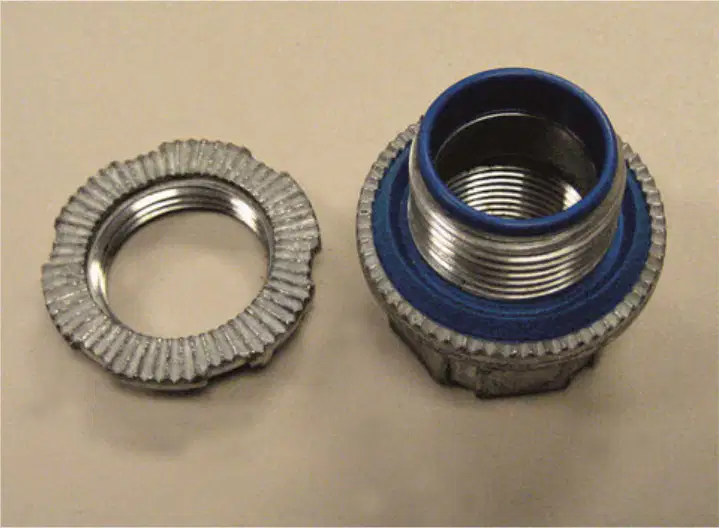
What is the primary function of a Myers hub?
To provide a watertight seal in wet locations
To enhance electrical conductivity
To increase airflow in enclosures
To reduce noise in electrical systems
Where are Myers hubs typically found?
On the top of enclosures where water tends to accumulate
At the bottom of electrical panels
Inside junction boxes
On the sides of circuit breakers
Why might listed watertight enclosures require the use of Myers hubs?
To ensure all entry points are sealed
To improve electrical efficiency
To allow for easier access
To reduce installation costs
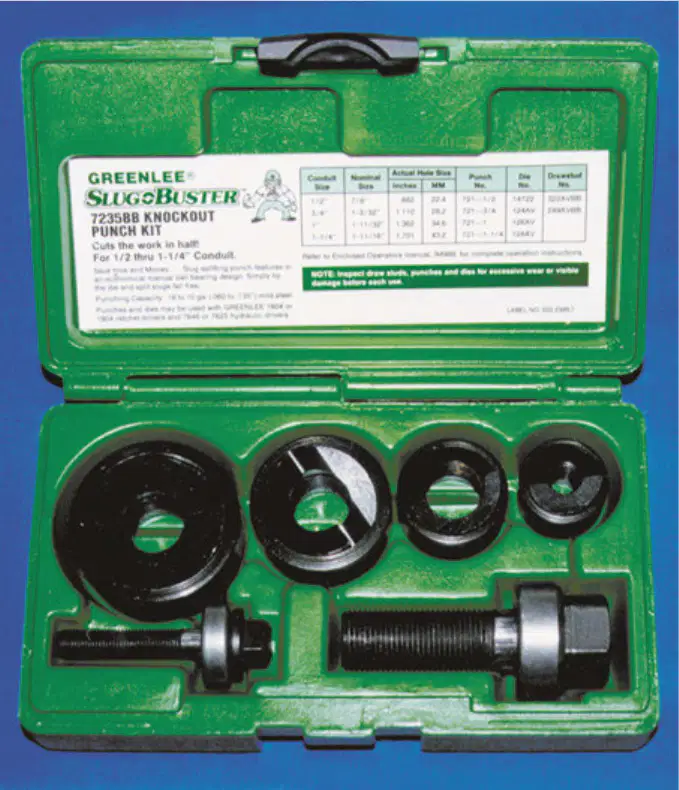
What is the purpose of a knockout punch in an enclosure?
To paint the enclosure
To cut a hole in the enclosure
To seal the enclosure
To measure the enclosure
What does a manual knockout punch require to function?
A hammer and nails
A predrilled pilot hole and a die/drive nut
A screwdriver and screws
A saw and a blade
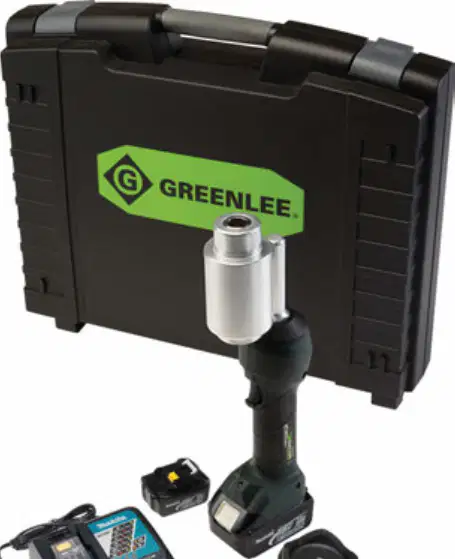
What type of knockout kits can be used when numerous knockouts are required?
Manual knockout kits
Battery-powered and hydraulic knockout kits
Electric knockout kits only
Pneumatic knockout kits

