
 Worksheets
Checkpoint Review #1
Total questions: 50
Worksheet time: 2hrs 31mins
Balanced or Unbalanced: A runner jumping over a hurdle.
balanced
unbalanced
Balanced or Unbalanced: A lamp sitting on a table.
balanced
unbalanced
Balanced forces causes
speed of an object
change in motion
no change in motion
no friction on object
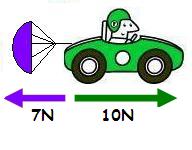

Calculate the net force shown in the diagram?
(a)
A push or a pull is the definition of a ____________________.
force
speed
direction

A chemical combination of two or more elements
element
liquid
solid
compound

made up of?
Glucose (C6H12O6) is considered a compound because it is made up of two or more
molecules
elements
gases
soilds
How many atoms of Carbon are in this formula? C6 H12O6
6
1
12


Object A is the slowest
Object B is the slowest
Object C is the slowest
Object D is the slowest
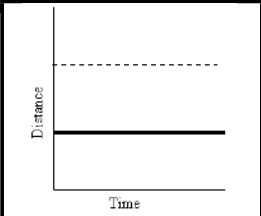
What does this graph represent?
Constant speed
Acceleration
Not moving

A
B
C

Is melting butter for popcorn a chemical or physical change?
chemical
physical
What sign of a chemical change is evident in a fire?
color change
producing heat
light produced
all of the above


What evidence in the picture indicates that a chemical change occurred?
temperature change
odor
gas
What sign of a chemical change is evident in a rusted nail?
change is odor
change in appearance
change in color
change in shape
I mix a liquid with a solid and it fizzes. What evidence tells me that a chemical change occurred?
It fizzes
it is not a chemical change
the liquid was mixed with the solid
color change
The basic unit of an element is called ___
atom
element
proton
product
____ is a substance that can't be broken down. It's made of one kind of atom.
atom
element
mixture
product
______ is the process where one or more substances change into one more more new substances.
reactants
products
chemical reaction
magic
The substances that react together are _____
reactants
products
chemical reaction
magic
The substances are made in a chemical reaction are _____
reactants
products
chemical reaction
magic
The ___ tells us how many MOLECULES to make. It goes in front of the chemical formula.
subscript
coefficient
number
4
The ___ tells us how many ATOMS there are for one element in a chemical formula. It goes BELOW the element symbol.
subscript
coefficient
number
4
How many TOTAL ATOMS are in H2O ?
1
2
3
4
How many TOTAL ATOMS are in CaCO3 ?
1
3
4
5
How many TOTAL ATOMS are in 2H2 ?
1
2
3
4
Avery is conducting a science experiment. When water is added to a solution it is called a ______________
dilution
concentration
heterogeneous solution
dissociation
A solution that contains all of the solute that it can hold at a given temperature.
unsaturated solution
homogeneous solution

solvent
solute

solute
solvent

solvent
solute
What happens to the concentration of a solution when more solvent (water) is added?
It increases
It decreases
It remains the same
It doubles
Which factor does NOT affect the rate of dissolution of a solid solute in an aqueous solution?
Temperature
Surface area
Agitation
Color of the solute
If you increase the temperature of a solution, what generally happens to the rate of dissolution of a solid solute?
It decreases
It increases
It remains the same
It doubles
How does increasing the surface area of a solid solute affect its rate of dissolution?
It increases the rate
It decreases the rate
What is the effect of stirring (agitation) on the rate of dissolution of a solid solute in an aqueous solution?
It decreases the rate
It increases the rate

