wayground logo

Free Printable Worksheets

Font size

S
M
L
XL
Worksheets

PE U1

Total questions: 82

Worksheet time: 2hrs 59mins

Name
Class
Date
1.
What muscle is this?
a)
Deltoid
b)
Trapezius
c)
Latissimus Dorsi
d)
Biceps Brachii
2.
What muscle is this?
a)
Internal obliques
b)
External obliques
c)
Pectoralis major
d)
Pectoralis minor
3.
What muscle is this?
a)
Biceps Brachii
b)
Triceps Brachii
c)
Brachialis
d)
Brachioradialis
4.
a)
Quadricep
b)
Hamstring
c)
Gluteus Maximus
d)
External Oblique
5.
a)
Trapezius
b)
Pectorals
c)
Sternocleidomastoid
d)
Quadricep
6.
Standing on tip toe
a)
Dorsiflexion
b)
Plantar flexion
c)
Inversion
d)
Eversion
7.
Flexion...
a)
Decreases angle of the joint
b)
Increases angle at the joint
c)
Moves limb away from midline
d)
Moves limb toward midline
8.
Moving a limb away from midline
a)
Pronation
b)
Abduction
c)
Adduction
d)
Flexion
9.
Movement of a limb toward the body midline
a)
Abduction
b)
Flexion
c)
Adduction
d)
Pronation
10.

Name the highlighted mucles

a)

hamstring

b)

quadricep

c)

soleus

d)

gastrocnemius

11.

Name the highlighted muscle

a)

tricpes

b)

biceps

c)

rectus femoris

d)

trapezius

12.

Name the highlighted muscle

a)

latissimus dorsi

b)

obliques

c)

rhomboids

d)

deltoid

13.

Name the highlighted muscle

a)

pectorals

b)

deltoid

c)

trapezius

d)

latissimus dorsi

14.

Name the highlighted muscle

a)

transvers abdominals

b)

rectus abdominals

c)

external obliques

d)

internal obliques

15.

Name the highlighted muscle

a)

quadraceps

b)

hamsting

c)

rectus abdominals

d)

deltoid

16.

Name the highlighted muscle

a)

tricep

b)

bicep

c)

bicep femoris

d)

extensor longus

17.

What muscle do you sit on and is highlighted in red?

a)

Gluteus Maximus

b)

Hamstring

c)

Gastrocnemius

d)

Deltoid

18.

What's the name of this muscle?

a)

Tricep

b)

Pectoral

c)

Glutes

d)

Quadricep

19.

What's the name of this bone?

a)

femur

b)

ribs

c)

hip

20.

These types of bones are found in your ankles and wrists

a)

Long

b)

Sesamoid

c)

Flat

d)

Short

e)

Irregular

21.

How many bones are in an adult human's body?

a)

206

b)

168

c)

542

d)

337

22.

What connects muscle to bone?

a)

Ligament

b)

Tendon

c)

Cartilage

d)

Joint Capsule

23.

What connects bone to bone?

a)

Tendons

b)

Ligaments

c)

Joint Capsule

d)

Bursae

24.
Identify the joint action being performed.
a)
Extension
b)
Flexion
c)
Abduction
d)
Adduction
25.
Name the bone in red
a)
Ulna
b)
Humerus
c)
Fibia
d)
Clavicle
26.
Name the bone in red
a)
Ribs
b)
Tibia
c)
Metatarsals
d)
Phalanges
27.
Name the bone in red
a)
Ulna
b)
Humerus
c)
Femur
d)
Clavicle
28.
Name the bone in green
a)
Phalanges
b)
Metatarsals
c)
TIbia
d)
Ribs
29.
Name the part of the spine in red
a)
Lumbar
b)
Cervicle
c)
Thoracic
d)
Sacral
30.
Name the part of the spine in red
a)
Thoracic
b)
Lumbar
c)
Cervicle
d)
Sacral
31.

In this picture, what is represented in multi-colors?

a)

Carpals

b)

Tarsals

c)

Phalanges

d)

Radius

32.
The pink areas are the 
a)
appendicular skeleton
b)
axial skeleton
c)
blushing skeleton
33.

Name the highlighted bone.

a)

femur

b)

axial skeleton

c)

fibula

d)

ulna

34.

Name the highlighted bone.

a)

femur

b)

tibia

c)

fibula

d)

ulna

35.

Name the highlighted bone.

a)

femur

b)

tibia

c)

radius

d)

ulna

36.

Name the highlighted bone.

a)

humerus

b)

tibia

c)

radius

d)

ulna

37.

Name the highlighted bone.

a)

humerus

b)

tibia

c)

radius

d)

ulna

38.

Name the entire structure.

a)

femur

b)

ulna

c)

cranium

d)

calcaneus

39.

Name the highlighted bone.

a)

metacarpals

b)

sternum

c)

tarsals

d)

calcaneus

40.

Name the highlighted bone.

a)

metacarpals

b)

sternum

c)

carpals

d)

clavicle

41.

Name the highlighted bone.

a)

scapula

b)

sternum

c)

metatarsal

d)

clavicle

42.

Name the highlighted bone.

a)

scapula

b)

sternum

c)

metatarsal

d)

clavicle

43.

Name the highlighted bone.

a)

scapula

b)

sternum

c)

metatarsal

d)

carpal

44.

Where is the heart located?

a)

In your leg

b)

slightly left to the center of the chest

c)

slightly right to the center of the chest

d)

on the left side of your body

45.

Which of the following is associated with oxygenated blood?

a)

Aorta

b)

Pulmonary Artery

c)

Septum

d)

Right Ventricle

46.

What is the role of veins in the cardiovascular system?

a)

Carry blood away from the heart

b)

Carry blood back to the heart

c)

Carry blood to the lungs

d)

Allows the exchanges of gases, nutrients and wastes between blood and the tissues

47.

What are the 3 main types of blood vessels?

a)

Capillaries, veins, aortas

b)

Capillaries, arteries, platelets

c)

Capillaries, veins, platelets

d)

Capillaries, veins, arteries

48.

Name the only artery that carries deoxygenated blood.

a)

Pulmonary artery

b)

Aorta

c)

The Vena cava

d)

Pulmonary veins

49.
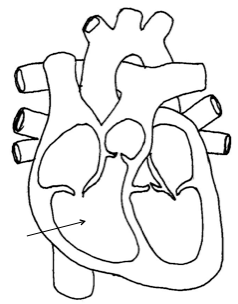
Name this part.
a)
Right ventricle
b)
Pulmonary artery
c)
Left ventricle
d)
Right atrium
50.
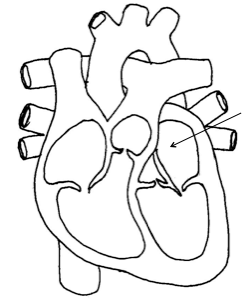
Name this part.
a)
Right atrium
b)
Left ventricle
c)
Right ventricle
d)
Left atrium
51.

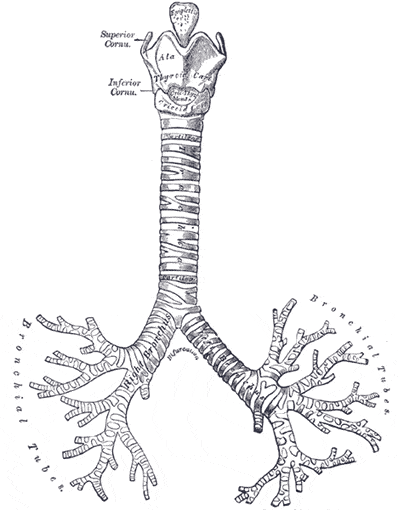
The two main branches from the trachea (one to each lung)

a)

bronchi

b)

alveoli

c)

capillaries

d)

bronchioles

52.

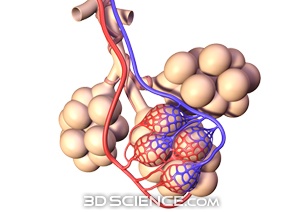
The air sacs that are covered with capillaries where gas exchange takes place

a)

bronchi

b)

lungs

c)

oxygen

d)

alveoli

53.

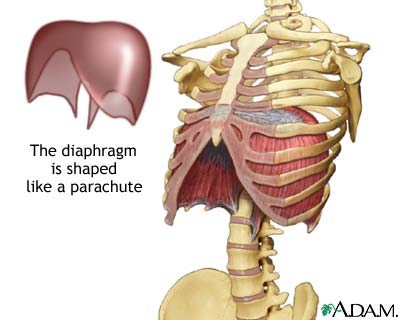
What is function of the dome-shaped diaphragm?

a)

This is where gas exchange happens.

b)

Air passes through the diaphragm on the way to the lungs.

c)

It attaches to the lungs to help in breathing.

d)

It is under the lungs and keeps them from falling down to your stomach.

54.
Name the two body parts that work together to force air IN and OUT of the body:
a)
Lungs and trachea
b)
Rib cage and diaphragm
c)
Rib cage and nasal passage
d)
Diaphragm and nasal passage
55.
The type of muscle contraction where the muscle tenses but does not shorten.  
a)
Isometric
b)
Isotonic
c)
Contraction
d)
relaxation
56.
Which of the following best describes extension?
a)
The straightening of a joint where the angle of movement increases
b)
The bending of a joint where bones get closer together
c)
The rotation of a joint or spinning of one bone on another
d)
The lateral movement away from the midline
57.

The lateral motion TOWARDS the midline is called ______.

a)

adduction

b)

abduction

c)

circumduction

d)

opposition

58.

Movement AWAY from the mid-line is called _____________.

a)

abduction

b)

adduction

c)

opposition

d)

pronation

59.
Identify the joint action being performed.
a)
Circumduction
b)
Lateral Rotation
c)
Medial Rotation
d)
Eversion
60.

Turning the hand so that the palm is upward or facing anteriorly (in anatomical position).

a)

supination

b)

pronation

c)

flexion

d)

dorsiflexion

61.
Rotation of the forearm until the palm faces DOWN is called __________.
a)
supination
b)
pronation
c)
flexion
d)
dorsiflexion
62.

Harry is a cookie monster. His parents have put the biscuits out of reach, on the top shelf. Harry needs to stand on his "tippy toes" to reach the cookie jar. What is the movement of his ankles?

a)

Plantar Flexion

b)

Extension

c)

Dorsiflexion

d)

Rotation

63.

When Dustin Martin kicks a football the movement of the knee joint in the back swing, before kicking the ball is......

a)

Abduction

b)

Flexion

c)

Extension

d)

Adduction

64.

Which movement is shown in the picture?

a)

eversion

b)

rotation

c)

extension

d)

flexion

65.
Identify the joint action being performed.
a)
Inversion
b)
Eversion
c)
Plantarflexion
d)
Dorsiflexion
66.
Identify the joint action being performed.
a)
Extension
b)
Flexion
c)
Abduction
d)
Adduction
67.

Name the organ label # 6.

a)

alveoli

b)

bronchi

c)

trachea

d)

lungs

68.

The exchange of oxygen and carbon dioxide in the alveoli is through a process called

a)

active transport

b)

conduction

c)

convection

d)

diffusion

69.
Which side of the heart has oxygen rich blood?
a)
Left Side
b)
Right Side
70.
Which side of the heart pumps blood into the lungs?
a)
Right
b)
Left
71.
______ carry blood to the heart.
a)
Arteries
b)
Veins
c)
Capillaries
d)
Vena Cava
72.

This part of the heart separates the left and right heart chambers.

a)

Mitral valve

b)

Septum

c)

Aortic valve

d)

Inferior vena cava

73.
A flap of tissue that prevents blood from flowing backward
a)
Aorta
b)
Atrium
c)
Septum
d)
Valve
74.
Given the following structures:
1. larynx
2. nasal cavity
3. pharynx
4. trachea
Which of the following is the correct order that air would flow during inhalation. 
a)
1,2,3,4
b)
2,3,1,4
c)
2,1,3,4
d)
4,2,3,1 
75.

Which best defines heart rate?

a)

 The rate in which the blood travels through the heart

b)

The amount of blood the heart pumps per minute

c)

The number of times the heart contracts or beats per minute

d)

The number of times the heart contracts or beats per second

76.

When we exercise, cardiac output increases due to the increase in both...

a)

Stroke volume and steady state

b)

Heart rate and stroke volume

c)

The amount of blood being pumped from the heart

d)

Blood volume and blood flow redistribution

77.
CARDIAC OUTPUT IS...
a)
The number of times the heart beats in one minute.
b)
The amount of blood ejected by the left ventricle per beat. 
c)
The amount of blood pumped out of the heart in one minute
d)
Pressure in the arteries following contraction of ventricles as blood is pumped out of the heart. 
78.
STROKE VOLUME IS...
a)
The amount of blood ejected by the left ventricle per beat. 
b)
The amount of blood pumped out of the heart in one minute
c)
The number of times the heart beats in one minute.
d)
The blood returning to the heart via the inferior and superior vena cava. 
79.
TIDAL VOLUME IS...
a)
How much air is inspired or expired in one breath.
b)
How much air is breathed in or out in one minute.
c)
The number of breaths taken in one minute. 
d)
(VO2 )The volume of oxygen that can be taken up and used by the body per minute. 
80.
VENTILATION IS...
a)
How much air is inspired or expired in one breath.
b)
How much air is breathed in or out in one minute.
c)
The number of breaths taken in one minute. 
d)
(VO2 )The volume of oxygen that can be taken up and used by the body per minute. 
81.

Ventilation is:

a)

Tidal volume x Cardiac output

b)

Stroke volume x Heart rate

c)

Tidal volume x Respiratory rate

d)

Stroke volume x Respiratory rate

82.

Cardiac output is:

a)

Tidal volume x stroke volume

b)

Stroke volume x heart rate

c)

Heart rate x ventilation

d)

Stroke volume x venous return