
Font size
 Worksheets
Understanding U.S. Government Concepts
Total questions: 134
Worksheet time: 2hrs 31mins
Which of the following best describes the purpose of the Preamble to the Constitution?
To outline the rights of individual states
To establish the goals and purposes of the government
To list the amendments to the Constitution
To define the powers of the President
What is the main difference between a direct democracy and a representative democracy?
In a direct democracy, citizens elect representatives to make decisions.
In a representative democracy, citizens vote on all matters directly.
In a direct democracy, citizens vote on all matters directly.
In a representative democracy, there is no voting process.
Explain how the Connecticut Compromise resolved the conflict between the Virginia Plan and the New Jersey Plan.
It created a unicameral legislature with equal representation.
It established a bicameral legislature with population-based representation in one house and equal representation in the other.
It allowed states to choose their own representation method.
It eliminated the need for a legislative branch.
Which Enlightenment philosopher is known for advocating natural rights and the social contract?
Thomas Hobbes
John Locke
Jean-Jacques Rousseau
Voltaire
Analyze the impact of the Magna Carta on the development of constitutional government.
It established a theocratic government.
It was the first document to limit the power of a king, influencing the development of constitutional government.
It created a direct democracy in England.
It abolished the monarchy in England.
What is the primary function of the Necessary and Proper Clause in the U.S. Constitution?
To limit the powers of the President
To allow Congress to make laws required for executing its enumerated powers
To establish the judicial branch
To define the process of amending the Constitution
Describe the role of the Electoral College in U.S. presidential elections.
It directly elects the President based on popular vote.
It selects the President through electors equivalent to each state’s total congressional representation.
It is a ceremonial body with no real power.
It only functions in the event of a tie in the popular vote.
How did the Articles of Confederation contribute to the call for the Constitutional Convention?
They created a strong central government that was too powerful.
They established a successful national military.
They created a weak central government with significant issues, prompting the need for change.
They resolved all conflicts between states.
Evaluate the significance of Marbury vs. Madison in the context of the U.S. judicial system.
It established the principle of judicial review, allowing the Supreme Court to declare laws unconstitutional.
It abolished the Supreme Court.
It limited the power of the executive branch.
It created the first federal court.
What is the primary purpose of the Bill of Rights?
To outline the structure of the federal government
To protect individual liberties and limit government power
To establish the process for amending the Constitution
To define the powers of the states
Compare the characteristics of an absolute monarchy and a constitutional monarchy.
Both have a monarch with unlimited power.
An absolute monarchy has a monarch with unlimited power, while a constitutional monarchy limits the monarch's power by laws or a constitution.
Both are led by religious leaders.
Both are forms of direct democracy.
What role does the 10th Amendment play in the U.S. system of federalism?
It grants all powers to the federal government.
It reserves powers not delegated to the federal government to the states or the people.
It abolishes state governments.
It establishes the process for electing the President.
Analyze the reasons why the Anti-Federalists opposed the Constitution.
They believed it gave too much power to the states.
They feared excessive federal power and the lack of a Bill of Rights.
They wanted a stronger central government.
They opposed the idea of a bicameral legislature.
What is the significance of the Rule of Law in a democratic society?
It allows leaders to act above the law.
It ensures that no one is above the law, maintaining equality and justice.
It grants absolute power to the judiciary.
It eliminates the need for a legislative branch.
Explain the process by which a bill becomes a law in the United States.
It is introduced in Congress, reviewed by committees, debated and voted on in both chambers, and sent to the President for approval or veto.
It is directly voted on by the public.
It is created by the President and automatically becomes law.
It is decided by the Supreme Court.
This is the system that the United States has used to determine who wins a presidential election.
Popular Vote
Checks and Balances
Electoral College
Federalism
The first 10 amendments to the Constitution are known as the
Great Compromise.
Bill of Rights.
Constitutional Convention.
Articles of Confederation.
The power of the judicial branch to review the actions of the executive and legislative branches and determine whether or not they are unconstitutional (this includes laws passed by Congress); the U.S. Supreme Court case Marbury v. Madison established this power
judicial review
executive review
legislative process
due process
Marbury v. Madison gave us which implied power-
Judicial Review
Limited Government
Rule of Law
Representative Government

Which one of these principles are not found in the Magna Carta?
Limited Government
Trial by Jury
Stronger control by Parliament
Abolishing the Monarchy
How did the Magna Carta influence the American colonial government?
It established the idea of a monarchy with absolute power.
It introduced the idea of limited government and rule of law.
It promoted the concept of a theocratic government.
It encouraged the establishment of a dictatorship.
Which document introduced the idea that even the king must follow the law, influencing American colonial government?
The Mayflower Compact
The Magna Carta
The English Bill of Rights
The Declaration of Independence
What was the main purpose of the Federalist Papers?
To establish the process for amending the Constitution
To outline the rights of individual states
To support the ratification of the Constitution
To oppose the ratification of the Constitution
Which principle of government is demonstrated by the division of power between the national and state governments?
Popular Sovereignty
Checks and Balances
Federalism
Separation of Powers
What is the significance of the Supremacy Clause in the U.S. Constitution?
It limits the power of the federal government
It allows states to nullify federal laws
It declares that federal laws take precedence over state laws
It establishes the President as the supreme leader
What is a bicameral legislature?
A one-house legislature
A two-house legislature
A system where the executive and legislative branches are combined
A system where the judiciary has more power than the legislature
What is the purpose of the commerce clause?
To allow states to regulate commerce independently
To give Congress the power to regulate commerce among states, with foreign nations, and among Indian tribes
To restrict Congress from interfering in state commerce
To allow the President to regulate international trade
Which of the following describes dual federalism?
A system where the national government and state governments are coequal, with each being dominant within its respective sphere
A system where the national government has more power than the states
A system where the states have more power than the national government
A system where the national and state governments work together to solve problems
What is the elastic clause?
It states that Congress can exercise those powers that are “necessary and proper” for carrying out the enumerated powers
It allows the President to expand executive powers
It restricts the powers of Congress to those specifically listed in the Constitution
It allows states to expand their powers beyond those listed in the Constitution
What is popular sovereignty?
The principle that the national government has ultimate authority
The principle that ultimate political authority rests with the people
The principle that the judiciary has the final say in political matters
The principle that states have ultimate authority over the national government
The citizens choose leaders to make decisions on our behalf. Which type of government is this?
Direct Democracy
United Democracy
Republic Democracy
Representative Democracy
Weak U.S. Constitution, State Power
Strong Federal Government
Bill Of Rights
James Madison
Equal Representation
2 Houses Of Congress
5 Slaves=3 Free People For Representation
Representation By State Population
Federalists
Loyalists
Anti-Federalists
Democratic-Republicans
If The Government Protects The Peoples' Rights, The Will Agree To Be Governed
Federalism
Social Contract
Separation Of Powers
Limited Government
Montesquieu, 3 Branches
Controls Each Branch Has Over The Others
Federal & State Governments Share Power
Consent Of The Governed
Article 1
Northwest Ordinance
Amendment Process
Electoral College
3rd Amendment
5th Amendment
7th Amendment
9th Amendment
Self-Incrimination
Lawsuits, Civil Cases
No Cruel Or Unusual Punishment
Fair & Speedy Trial By Jury
Defines Federal & State Powers
10th Amendment
9th Amendment
4th Amendment
5th Amendment
1st Amendment
Fair & Speedy Trial By Jury
Freedom of Religion, Speech, Press, Assembly & Petition
No Unreasonable Searches & Seizures
Unwritten Individual Rights
Equal Representation
Bicameral; 2 Houses Of Congress
Representation By State Population
California=Free, Utah & NM=Vote
3 Rights We Have As A Result Of Being Human
Unalienable Rights
Civil Rights
Individual Rights
Common Rights
Separation Of Powers
Federalism
Limited Government
Checks & Balances
This person is in charge of a city.
president
mayor
governor
king
This person leads the country.
president
governor
mayor
king
This person is the leader of a state.
president
mayor
governor
king
What are the three levels of government? Choose all 3.
parliament
state
federalism
national
local
A group of people that sets rules and runs a country is called
parliament
government
cabinet
king and queen
What are the three branches of government? Choose all three.
local
legislative
state
executive
judicial
This branch of the government makes laws.
legislative
executive
judicial
This branch of the government enforces the laws.
legislative
executive
judicial
This branch of the government interprets the meaning of laws.
legislative
executive
judicial
To keep any one branch from becoming too powerful, the Constitution includes a system of
federalism
Bill of Rights
checks and balances
Articles of Confederation
The First Amendment protects basic freedoms. Choose 3 freedoms protected by this amendment.
to keep and bear arms
of speech
to keep soldiers out of your home
of religion
of press
This document describes how the United States government works and was written by the Founding Fathers.
Declaration of Independence
The Constitution
Articles of Confederation
Bill of Rights
Congress is a part of the
legislative branch
executive branch
judicial branch
The President is part of the
legislative branch
executive branch
judicial branch
What are enumerated powers?
Powers not explicitly listed in the Constitution
Powers shared by both state and federal governments
Powers specifically listed in the Constitution
Powers that are implied through the Necessary and Proper Clause
What are concurrent powers?
Powers that are exclusive to the federal government
Powers that are exclusive to state governments
Powers shared by both state and federal governments
Powers that are implied through the Necessary and Proper Clause
What does the Supremacy Clause establish?
The power of state laws over federal laws
The power of federal laws over state laws
The power of local laws over state laws
The power of international laws over federal laws
Which of the following is an example of an implied power?
The power to coin money
The power to establish a national bank
The power to declare war
The power to regulate interstate commerce
Which clause in the U.S. Constitution allows Congress to pass laws necessary to carry out its enumerated powers?
The Supremacy Clause
The Necessary and Proper Clause
The Commerce Clause
The Establishment Clause
What is the primary purpose of the 14th Amendment?
To grant women the right to vote
To abolish slavery
To provide equal protection under the law
To establish the income tax
Ratify means
to approve or give formal consent
to deny
to change a document
a branch in the government
Legislative branch is the branch of government that
is in charge of making laws (Congress)
is in charge of enforcing laws (president)
is in charge of interpreting or "judging" the laws of our country
Judicial branch is the branch of government that
is in charge of making laws (Congress)
is in charge of enforcing laws (president)
is in charge of interpreting or "judging" the laws of our country
Executive branch is the branch of government that
is in charge of making laws (Congress)
is in charge of enforcing laws (president)
is in charge of interpreting or "judging" the laws of our country
Term for when a legislative branch has two bodies or sections
ratify
unicameral
bicameral
amendment
Term for when a legislative branch has one body or section
ratify
unicameral
bicameral
amendment
Term for a change or addition to a document
amendment
ratify
more
unicameral
What was the first government of the United States called?
Legislature
U.S. Constitution
Shay's Rebellion
Articles of the Confederation
How many states were a part of the Articles of Confederation?
12
9
13
50
What branches of government were missing from the Articles of Confederation? (check all that apply)
Legislative
Executive
Judicial
Which document replaced the Articles of Confederation?
Declaration of Independence
U.S. Constitution
the Preamble
The Bill of Rights

A person who rules over a kingdom or an empire..
Dictator
Prophet
Monarch

A person who rules with complete and absolute power.
Monarch
President
Dictator

A government ruled by religious leaders
Democracy
Theocracy
Cheerocracy

Type of government where people rule directly or through representatives
Theocracy
Democracy
Monarch

Name 2 purposes of government.
Jobs and protection
Infrastructure and the Armed Forces
Public Order and the lottery

A written plan of government
The Declaration of Independence
The English Bill of Right
The Constitution

Who wrote the Declaration of Independence?
George Jefferson
Thomas Jefferson
Jefferson Starship

The reasons the colonies decide to separate from England
The Articles of Confederation
The Constitution
The Declaration of Independence

Basic rights to which all people are entitled
Human Rights
Civil Rights
Bill of Rights

A loose association of states
Confederacy
United States
Confederation

The law making body of Great Britain
Parliament
Congress
General Assembly

The balance of power in our state and federal government...
Feudalism
Communism
Federalism
Any system of government in which a small group holds power is called
democracy
oligarchy
monarchy
autocracy
What freedom gives you the right to say anything you want just as long as you are not threatening the safety of anyone?
Press
Assembly
Petition
Speech
The President can check the power of Congress by using the executive power to
Impeach judges
Declare laws uncustitutional
Pardon people convicted of a crime
Veto bills

Which principle of government is best represented by this graphic?
Separations of Powers
Judicial Review
Republicanism
Popular sovereignty
Why did the Founding Fathers create a government with a system of Checks and Balances?
Make sure one branch had more power than the other two
Give all the power to the people
Make sure the President has all the power
Protect that one branch of government gets all the power
Which branch can veto legislation.
Legislative
Executive
Judicial
Congress
Obeying laws, serving on a jury, and paying taxes are all _____.
Guaranteed by the Bill of Rights
Responsibilities of citizenship
Important parts of the election process
Duties of the Secretary of State
Which enlightenment thinker believed that a strong government, such as an absolute monarchy is needed to keep order?
Thomas Hobbes
Rousseau
Voltaire
John Locke
Both John Locke and Thomas Jefferson wrote about the natural rights of humans. In what document are these "unalienable rights" specifically mentioned?
The Declaration of Independence
The Preamble to the Constitution
The Bill of Rights
Magna Carta

What is the key concept behind the Social Contract?
It is a contract you sign with your cell phone carrier when downloading social media apps.
You surrender every right you have to the government with no benefit for yourself.
You agree to have inappropriate content removed from apps such as Snapchat.
You surrender certain rights in order for the government to provide you with protection and order.

Natural Rights are rights all people have and are born with...
Protection, Laws and Order
Life, Liberty and Property
Tabula Rasa
Money, Money, Money

According to both Hobbes and Locke, in a State of Nature...
There are no rules, no one in charge and no way for people to protect themselves.
Everyone would get along and be peaceful.
We'd all still live in the Garden of Eden rocking those wicked fig leafs.
Santa Claus is king and we're all just elves in his workshop!

Hobbes and Locke disagreed fundamentally on the role of government... read closely.
Hobbes: Once the Social Contract, gov't must do what the people want.
Hobbes: Once the Social Contract is in place, gov't has no obligations to the people.
Locke: Once the Social Contract is in place, gov't must uphold it's end or the people may change or overthrow it.
Locke: Once the Social Contract is in place, gov't can do as it pleases.


Definition: System of government in which power rests with the people.
Consent of the Governed
Federalism
Representative Government
Democracy

The people are the source of any and all governmental power through the electoral process (voting).
Limited Government
Rule of Law
Consent of the Governed
Representative Government
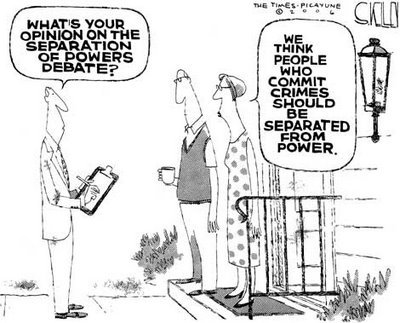
What does it mean to say we have "separation of powers?"
We divide power evenly between branches of government
We divide power but the leader of the government has ultimate say.
We divide power between state and national government.
We divide power among the smaller parts of government.
When laws are fair, enforced, and nobody, not the people, the government or people in government (president, etc.) are above the law.
Limits on Government
Rule of Law
Roles of Government
Democracy
Rights of the minority means that...
while the majority may rule, the minority gets to have its voice heard and has the same rights as the majority.
while the majority is in charge, they don't have to respect the rights of the minority.
while the minority may be loud, they don't need to be heard.
while the minority is smaller in number, they have more power to balance out the majority.
Which principle best matches the quote? Use the clues.
“WE THE PEOPLE of the United States...do ordain and establish this Constitution for the United States of America.” Preamble to the Constitution, 1787
Self Government
Federalism
Representative Government
Limited Government
The Court upheld the constitutionality of racial segregation under the "separate but equal" doctrine, legitimizing racial discrimination and segregation for decades until it was overturned by Brown v. Board of Education.
This landmark case overturned Plessy v. Ferguson and declared state laws establishing separate public schools for black and white students to be unconstitutional, ending racial segregation in public schools and laying the groundwork for the Civil Rights Movement.
Texas v. Hernandez
Plessy v. Ferguson
Bush v. Gore
This case addressed students' First Amendment rights in public schools. The Court ruled that students do not lose their constitutional rights at the schoolhouse gate and that schools must have a compelling reason to limit free speech, setting a precedent for student expression in educational settings.
Tinker v. Des Moines
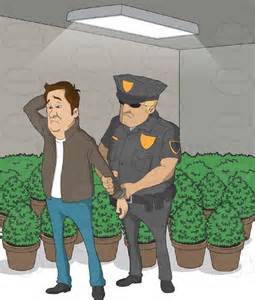
Suspects cannot be questioned (interrogated) until they are informed of their rights (right to remain silent, right to an attorney, etc.)
Brown v Board of Education
Miranda v Arizona
Tinker v Des Moines
Bush v Gore
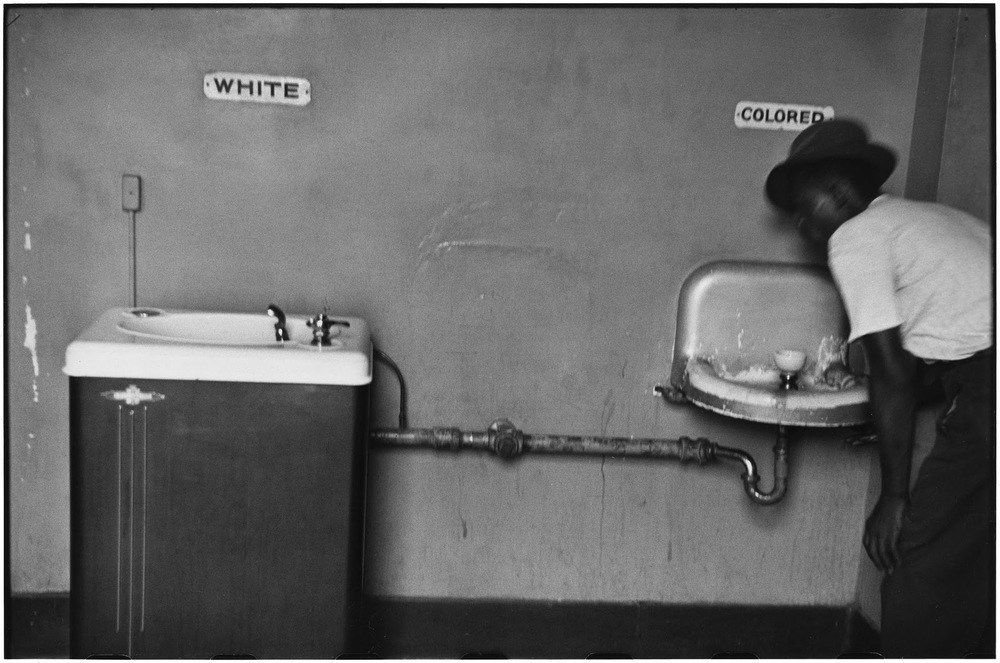
Established “Separate but Equal”, which provided separate public facilities for both whites and blacks as long as they were equal.
District of Columbia v Heller
In Re Gault
Brown v Board of Education
Plessy v Ferguson
A person accused of a crime no matter how poor has the right to an attorney during trial. Enforces the 6th Amendment.
Tinker v Des Moines
Gideon v Wainwright
Miranda v Arizona
United States v Nixon
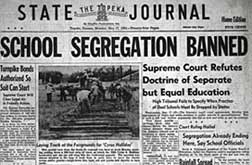
Ruled that “Separate but Equal” was Unconstitutional.
Hazelwood v Kuhlmeier
Marbury v Madison
Plessy v Ferguson
Brown v Board of Education
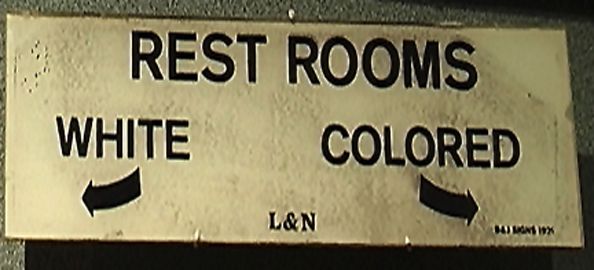
Legal or social separation of races.
Segregation
Lobbying
Boycotting
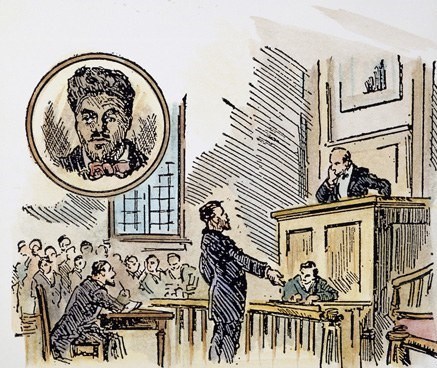
What was the Supreme Court's decision in the Dred Scott case?
That slavery diminished the national character.
That African American rights were protected by the Constitution.
That African Americans did not have the right to sue in federal court because they were not citizens
That slavery should be abolished by executive order
Which statement accurately summarizes the impact of the Gideon v. Wainwright (1963) decision?
It incorporated the 4th Amendment to state and local governments
It required that police officers inform suspects under arrest of the 5th and 6th Amendment rights
It incorporated the right to legal counsel, as protected under the 6th Amendment, to state and local governments
It increased states' power to restrict freedom of speech when it is shown to increase danger to public safety
The Supreme Court is a trial court?
True
False
The Supreme Court gets the last word about what the Constitution really says.
True
False
When you ask a higher court to review your case, you are making an appeal.
True
False

Which are powers that belong to the FEDERAL government?
collecting taxes
declaring war and mantaining a military
operating post offices
marriage and driver's licenses
printing money

Which are powers that belong to STATE governments?
collecting taxes
declaring war and mantaining a military
operating post offices
establishing schools
printing money
What level of Government has the power to Declare War?
Federal
State
Concurrent (Shared by Both)
What level of Government has the power to Issue licenses (marriage, hunting, driver's, etc.)?
Federal
State
Concurrent (Shared by Both)
What level of Government has the power to run public schools
Federal
State
Concurrent (Shared by Both)
What is the head of the executive branch at the state level called?
Governor
President
Mayor
Senator
How many chambers does the bicameral legislature of a state consist of?
Four
One
Two
Three
What are the two chambers of most state legislatures called?
Senate and House of Commons
Senate and House of Representatives
House of Lords and House of Commons
Council and Assembly
What is the law of the land in every state?
Federal laws
The state's constitution
The U.S. Constitution
Municipal codes

