
 Worksheets
Pneumatics Systems - MOY
Total questions: 40
Worksheet time: 36mins
Which type of device could give a pressure reading of -0.2 bars? (Negative pressure)
Flowmeter
Start-up valve
Pressure gauge
Vacuum gauge
Pneumatic actuators are used to convert:
linear motion into rotational motion.
the energy stored in a pressurized fluid into electricity.
rotational motion into linear motion.
the energy stored in a pressurized fluid into motion.
A safety relief valve is used to
prevent air from flowing in a reverse direction.
avoid excessive pressure build-up
control the pressure regulator.
drain dirty water from an air receiver.
Compressors usually pump air into
pneumatic motors.
pneumatic cylinders
receivers
atmosphere.
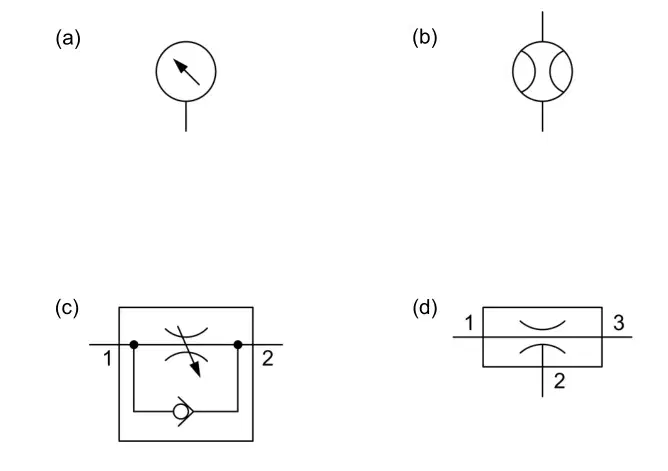
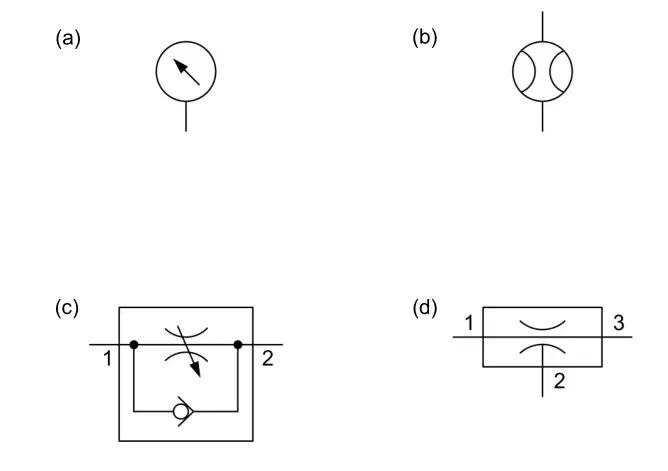
Which of these pneumatic devices converts the energy of a pressurized fluid into motion?
Motors
Actuators
Cylinders
All of the above
None of the above
What could be the purpose of an accumulator in a pneumatic system?
Mitigate the effects of long tubing
Replace a portion of the tubing.
Create a vacuum
Reduce the number of manifolds required.

Which of these part lists could be used to build a basic cheese press?
Air bearing, pushbutton, tubing, air supply
Pneumatic motor, pushbutton, accumulator, tubing, safety valve
Pushbutton, cylinder, tubing, air supply
Tubing, air supply, pushbutton, vacuum generator, suction gripper

With the following circuit, an operator reads a flow rate A on the flowmeter. Select the relation that best describes the flow rate B indicated on the flowmeter if the operator extends the tubing length to 0.6 m (keeping the diameter the same).
A < B
A = B
B = 0
A> B
Which of the following statements is false?
Absolute pressure is equal to the sum of the atmospheric pressure and the gauge pressure
Pressure is defined as the amount of force exerted multiplied by the area.
A mercury barometer consists of a glass tube that is sealed at one end and open at the other.
Flow rate describes the volume of fluid passing through the circuit per unit of time.

What is the force exerted by a pressure of 140 kPa (20 psi) on a 0.1 m^2 (150 in^2) area?
NOTE: 140 kPa = 140,000 Pa
14 × 103 N (3000 Ibf)
7 × 10³ N (1500 Ibf)
1.4 × 10³ N (300 Ibf)
None of the above
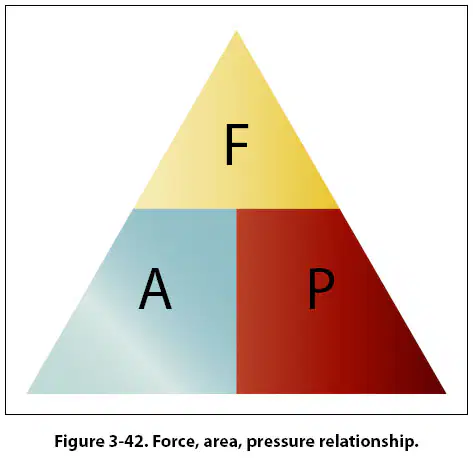
If the area doubles but the force stays the same, what happens to the pressure according to Pascal's Law?
Pressure doubles
Pressure remains constant
Pressure halves
ressure becomes zero

What is the force of the right piston where A1 = 25 in^2, A2 = 75 in^2, and F1 = 15 lbf?
24.5 lbf
45 lbf
90 lbf
30 lbf

What is the effect of increasing A2 in a fluid lift system?
Decreases F2
No effect onF2
Increases F2
Decreases P

What does A1 represent in the fluid lift diagram?
Area of the smaller piston
Force on the smaller piston
Area of the larger piston
Force on the larger piston
Two examples of actuators are pneumatic motors and (a)
(Hint: They produce a linear motion)
Fluid systems include both (a) and pneumatics
A substance that flows and can be compressed
HINT: Includes both liquids and gases
(a)
(a) systems use compressed air to create mechanical motion and power applications to 'do work' in factory automation systems.
This components transform the energy in pressurized air to motion
(They include motors and cylinders)
(a)
What do actuators do?
Two examples of actuators are:
What does a pneumatic cylinder do?
How are pneumatic cylinders and air motors different?
pneumatic cylinders use compressed air and air motors use only air.
pneumatic cylinders produce linear movement and air motors produce rotational movement.
pneumatic cylinders use compressed air and air motors are hydraulic
pneumatic cylinders and air motors are essentially the same.
What kind of components are pneumatic cylinders and air motors?
(a)
Mention two kinds of pneumatic cylinders:

The picture depicts a typical FRL system. What component on the workbank includes the SRL system? The _________ ______
(a)
The picture depicts a typical FRL (filter, regulation, and lubrication) system. The startup valve in the workbench includes two parts of that system, but one of those parts is not needed. What part is that?
Shutoff valve
fliter
regulator
lubricator
The picture depicts a typical FRL system. What does FRL stand for?
________, ________ and lubricator.
(a)
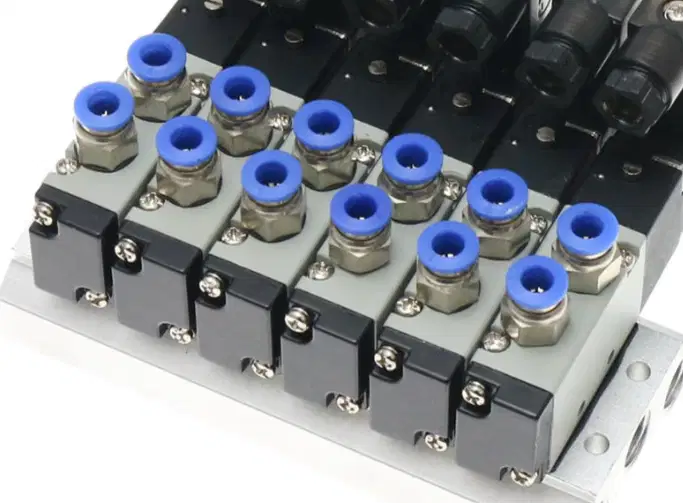
This component distributes compressed air to multiple paths from a single source.
(a)
Plastic hoses that are used to distribute compressed air to the pneumatic components are called pneumatic ______
hoses
actuators
cylinders
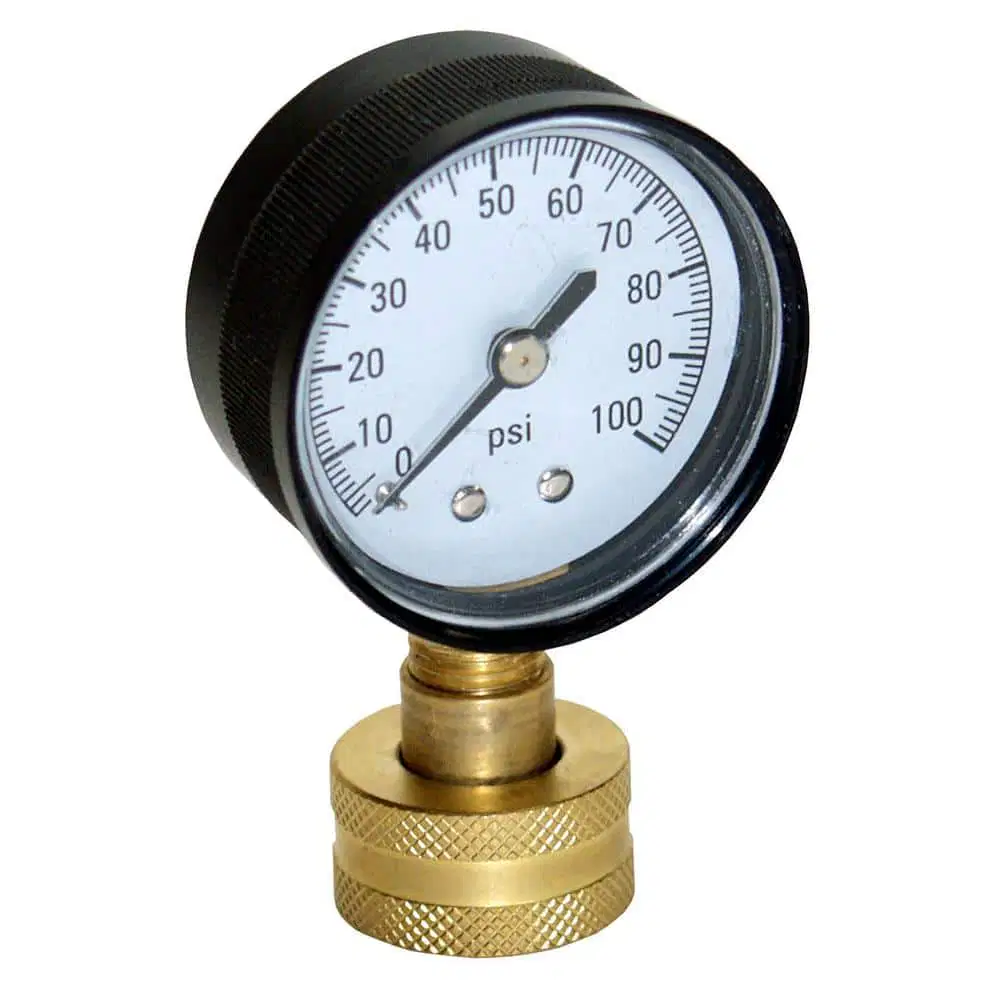
Instrument used to measure the pressure in a system are called pressure (a)
The instrument used to measure the vacuum in a system is called
(a)
What is the pressure exerted by a force of 100 N acting on an area of 5 m²?
50 Pascals
20 Pascals
10 Pascals
5 Pascals
Which of the following statements is correct regarding the relationship between pressure and force?
Pressure decreases as force increases.
Pressure increases as force increases, keeping area constant.
Pressure increases as force decreases.
Pressure is not related to force.
What is the pressure in Pascals when a force of 500 N is applied over an area of 25 m²?
25 Pascals
20 Pascals
12.5 Pascals
50 Pascals
Pneumatics is concerned with a system that uses:
Oil
Expanded air
Compressed air
Electricity
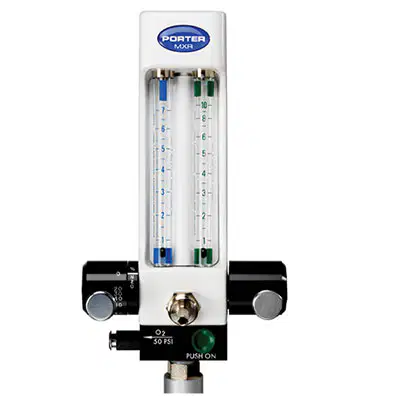
Instrument used for monitoring, measuring, or recording the rate of flow of liquids or gases.
(a)
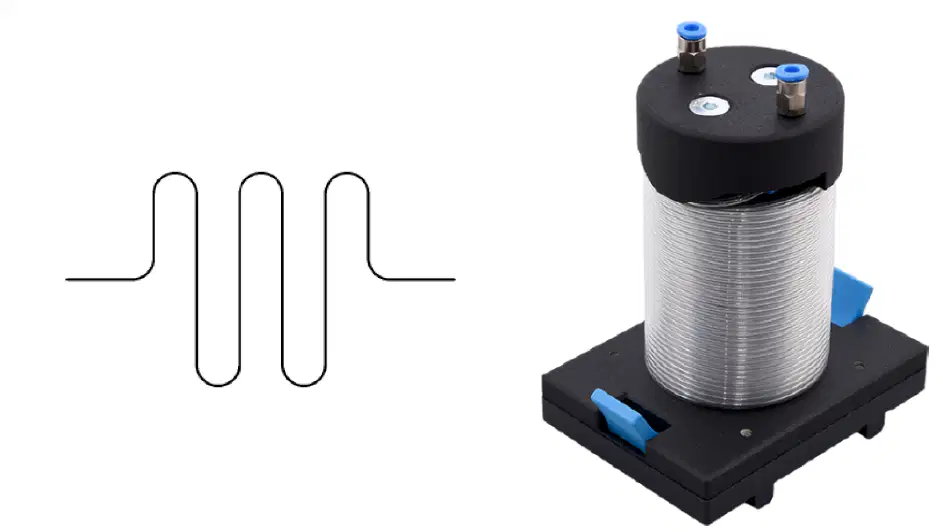
A long pneumatic resistor can be used to simulate:
Long tubbing
Wide tubbing
Short tubbing
The opposition of current flow in an electric system

