
 Worksheets
Anatomy SI Session 4
Total questions: 42
Worksheet time: 31mins
The muscles of facial expression are innervated by what cranial nerve?
CN 5
CN6
CN7
CN8
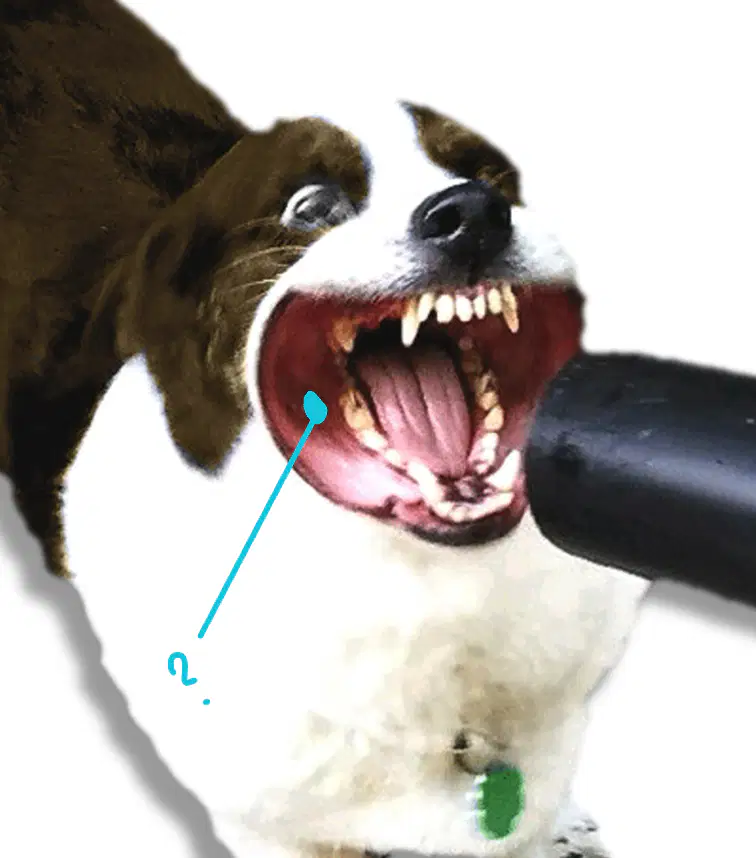
What part of the oral cavity is indicated by the blue question mark.
(a)

Which color indicates the mesial aspect of the tooth?
green
red
blue
purple
Orange
What is the adult canine dental formula?
(I 3/3 C1/1 P4/4 M2/3) x2
(I 2/3 C1/1 P 4/4 M 2/3) x2
(I4/4 C2/2 P3/4 M2/3) x2
(I3/3 C1/1 P4/4 M3/3) x2
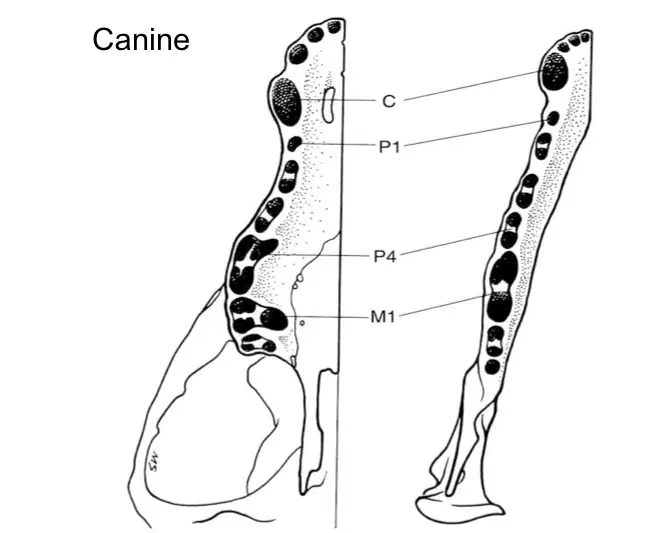
How many roots does 108 have?
1
2
3
4
Which muscle(s) open the mouth?
temporalis muscle
masseter muscle
digastricus muscle

What is the action of the muscle indicated by the yellow pin.
Digastricus muscle
masseter muscle
Medial pterygoid muscle
Geniohyoideus muscle
What are the extrinsic muscle(s) of the tongue? (Choose all that apply)
Superficial lingualis propius m.
genioglossus m.
hyoglossus m.
styloglossus m.
Deep lingualis propius m.
Where does the parotid duct empty at?
Caudal margin of Superior 3rd premolar
sublingual caruncles
Palatolingual caruncles
Caudal margin of superior 4th premolar

Indicated by the red question mark, where does this nerve emerge from the skull?
Rostral alar foramen
cribiform foramina
stylomastoid foramen
Jugular foramen
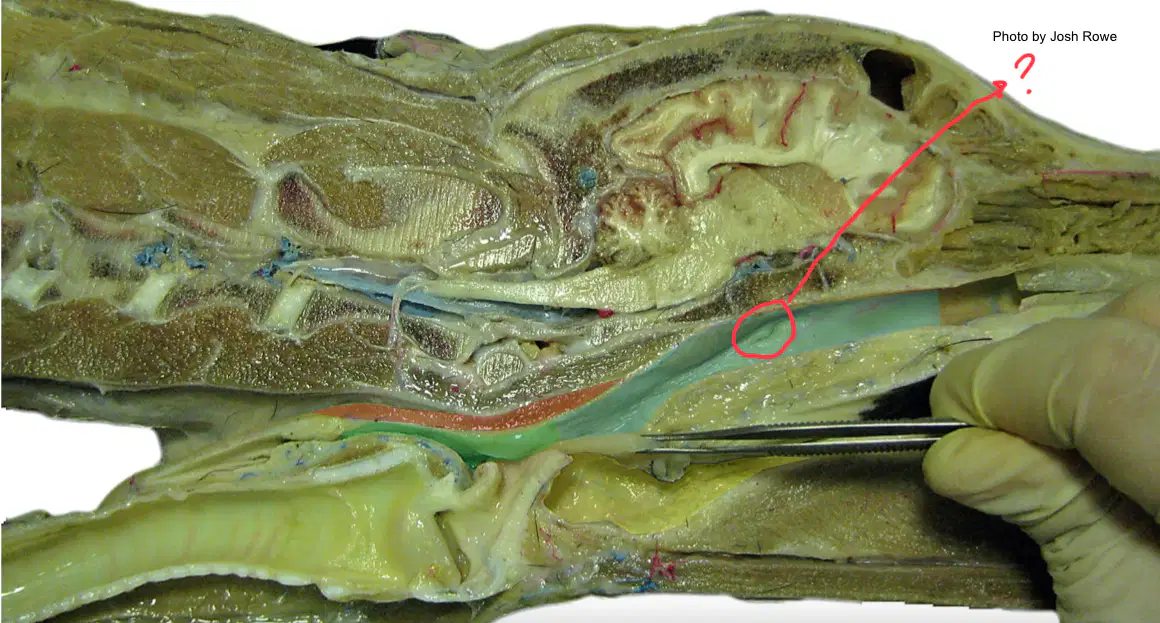
Where does the opening, indicated by the red question mark, lead to?
nasal passage way
oral cavity vestibule
middle ear
inner ear
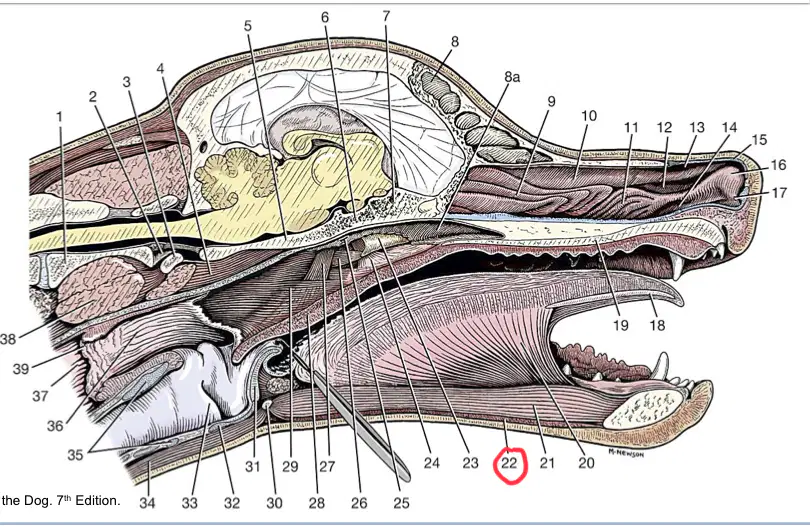
Identify the muscle indicated by number 22 (circled in red).
(a)

What is the structure indicated by the yellow pin.
(a)
What structures make up the external fibrous coat? (Choose all that apply)
Cornea
sclera
cilliary body
choroid
Limbus
Which structures make up the Uvea?
choroid
cilliary body
limbus
iris
Retina
Which muscle(s) does cranial nerve 6 innervate? (Choose all that apply)
lateral rectus
retractor bulbi
Medial rectus
dorsal rectus
The middle ear is housed in what bony structure?
temporal bone
parietal bone
tympanic bulla
Pinna
If the middle and inner ear have an infection, which cranial nerve can be affected?
CN 6
CN 1
CN 7
CN 3
Which cranial nerve can be found running next to the internal carotid artery?
CN 7
CN8
CN5
CN 9

What is the structure indicated by the white arrow?
Optic nerve
Optic ligament
orbital ligament
orbital nerve
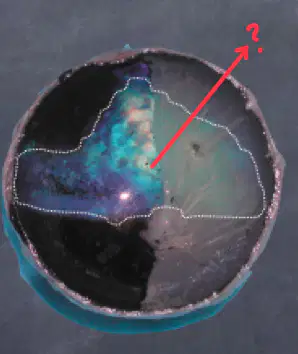
What is the shiny colored region indicated by the red question mark
Tapetum lucidum
third eye lid
retina
iris
Which cranial nerve runs along the lingual artery?
glossopharyngeal nerve
facial nerve
mandibular nerve br. Of the trigeminal nerve
hypoglossal nerve
What branch of the facial artery runs with the mylohyoid nerve?
subcaruncle artery
lingual artery
sublingual artery
Maxillary artery
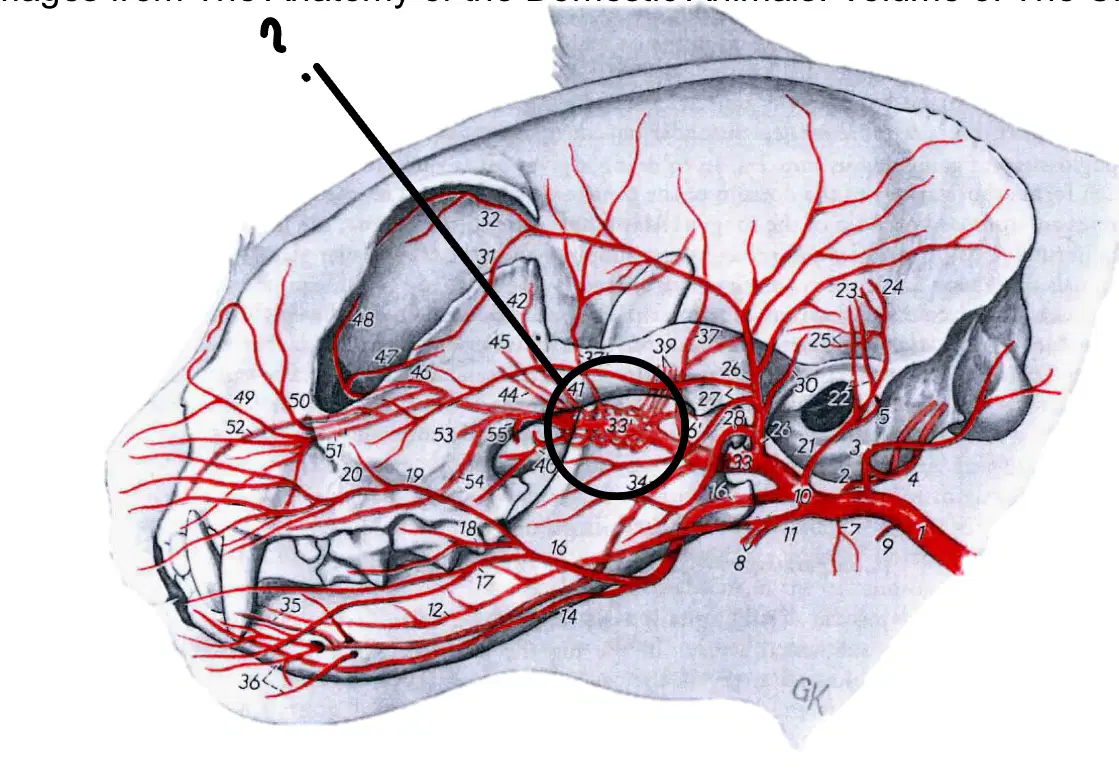
Identify the structure indicated by the black circle.
(a)
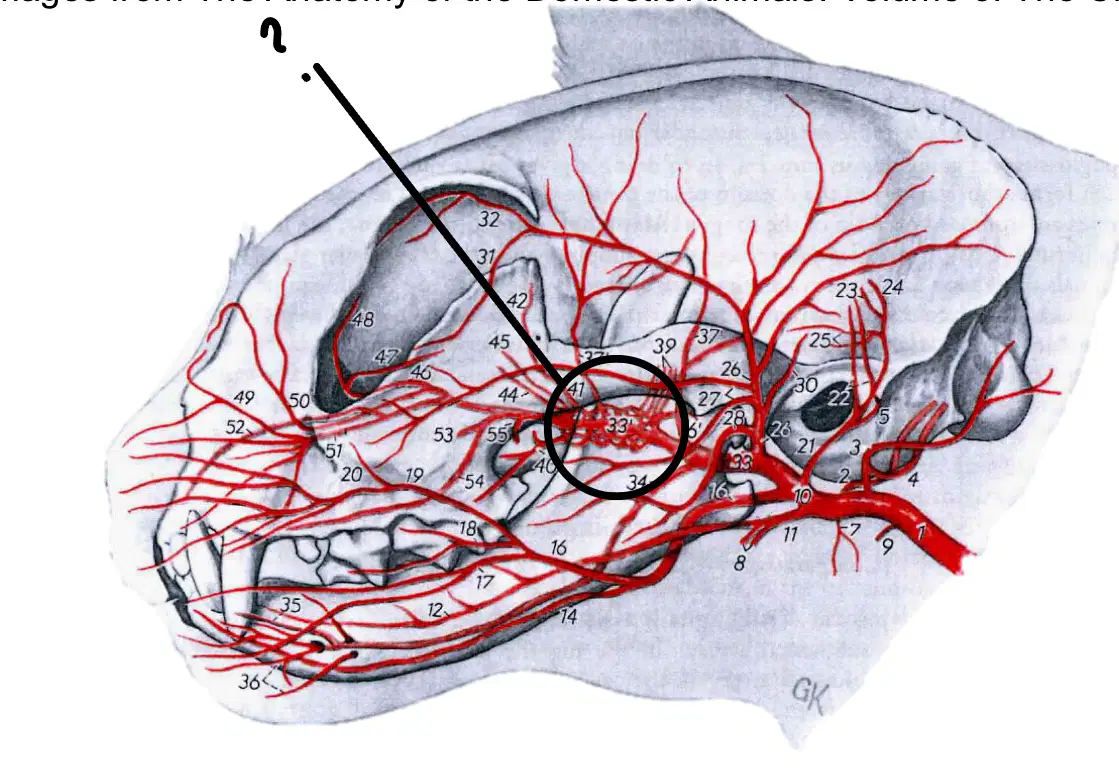
Why do cats have a rete mirabile when dogs do not?
(a)
What is the terminal lymph node of the head?
(a)
What are the three branches of the trigeminal nerve?
ophthalmic
maxillary
mandibular
lingual
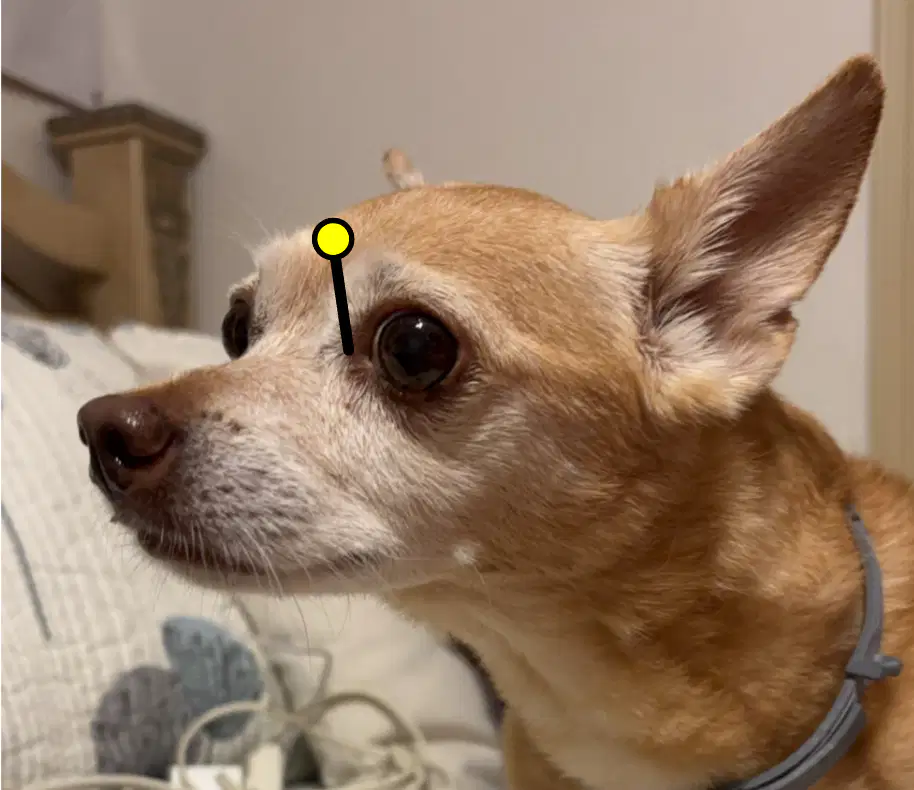
What cranial nerve provides sensory to the spot indicated by the yellow pin?
facial nerve
ophthalmic nerve
maxillary nerve
mandibular nerve
Which cranial nerves contain parasympathetic neurons?
(a)
What cranial nerve innervates the muscles of mastication ? (name of the cranial nerve and the number)
(a)
Which cranial provides motor function to the caudal belly of the digastricus muscle?
(a)
What is the structure that suspends the spinal cord?
filum terminale
denticulate ligaments
pia mater
arachnoid
The sacral and caudal spinal roots that stream caudally and exit at their respective intervertebral foramina is called what?
(a)
What is the caudal end of the spinal cord called?
(a)
The grooves of the brain are called what?
(a)
What cranial nerve emerges from the telencephalon?
(a)
Which cranial nerve does NOT attach to the brain stem?
(a)
What is the only cranial nerve that emerges from the dorsal aspect of the brain?
(a)
Where do you find the cell bodies of the a GSA neuron.
Dorsal gray horn
Ventral gray horn
Dorsal root ganglion
ventral root ganglion
What is the function of the vestibulocochlear nerve ? (Choose all that apply)
hearing
balance
vision
lymphatics
Which cranial nerve(s) emerge from the skull via the tympano-occipital fissure?
Glossopharyngeal nerve
vagus nerve
Accessory nerve
hypoglossal nerve
Which cranial nerve innervates the trapezius muscle?
(a)

