
 Worksheets
U.S. Becomes a World Power
Total questions: 20
Worksheet time: 10mins
Name
Class
Date
1.
Which war led the U.S. to take control of the Philippines, Puerto Rico, and Guam?
a)
The Civil War
b)
The Spanish-American War
c)
World War I
d)
The Mexican-American War
2.
Why did the U.S. start expanding its power overseas in the late 1800s?
a)
To gain more land for its people
b)
To spread autocracy everywhere
c)
To find new markets and resources
d)
To stay out of European wars
3.
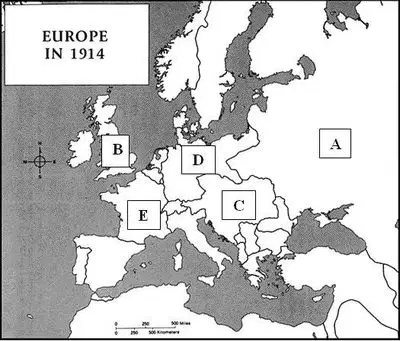
Which Country is represented by the letter E
a)
Russia
b)
France
c)
Germany
d)
Italy
4.
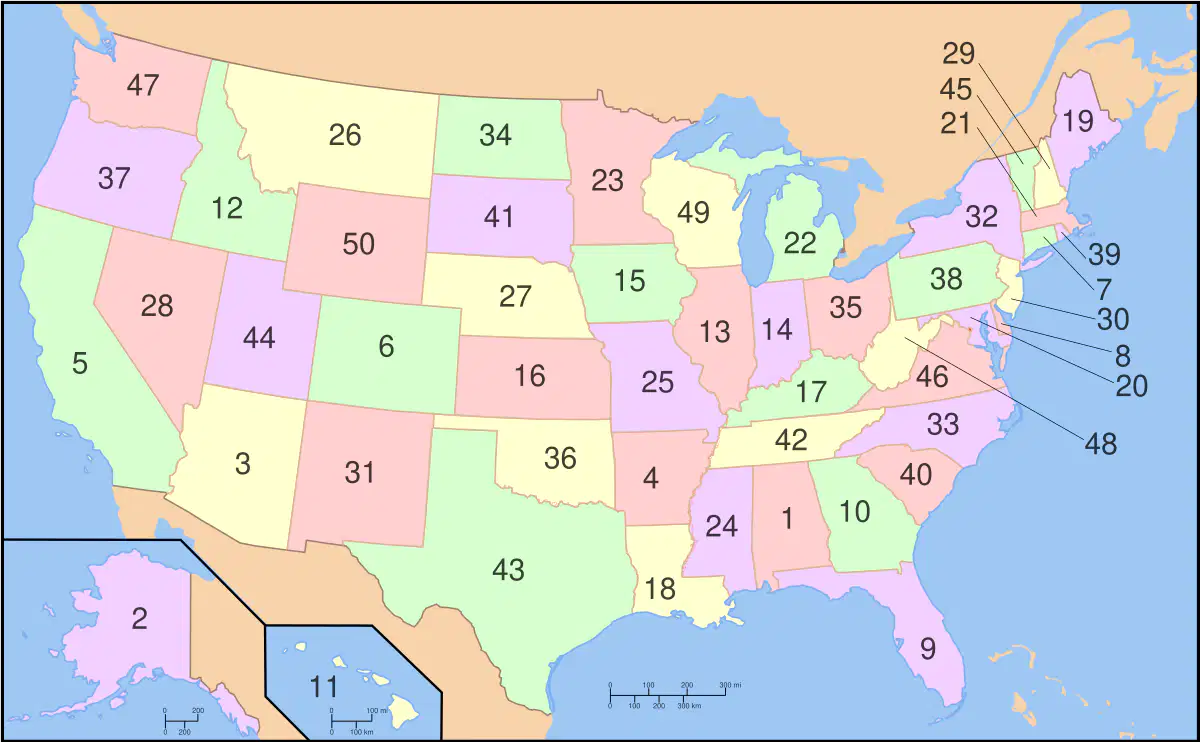
Which State is represented by number 2.
a)
Hawaii
b)
Texas
c)
Alaska
d)
Washington
5.
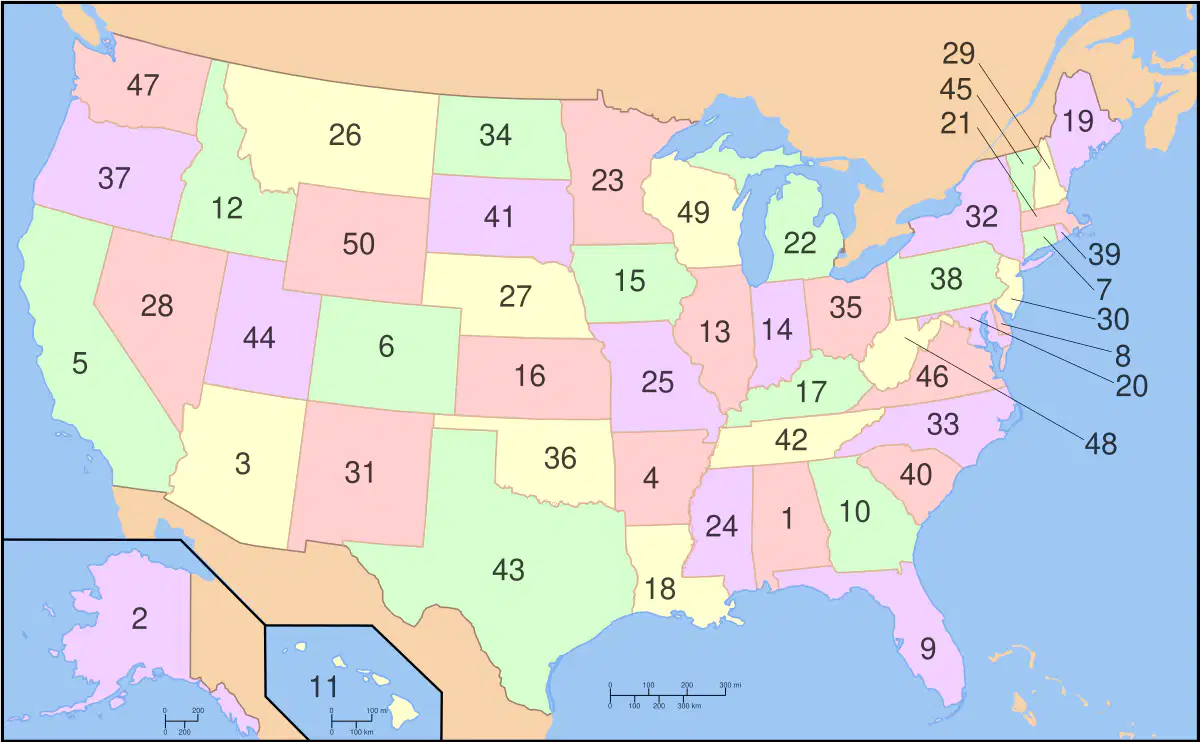
Which State is represented by number 11.
a)
Hawaii
b)
Texas
c)
Alaska
d)
Washington
6.
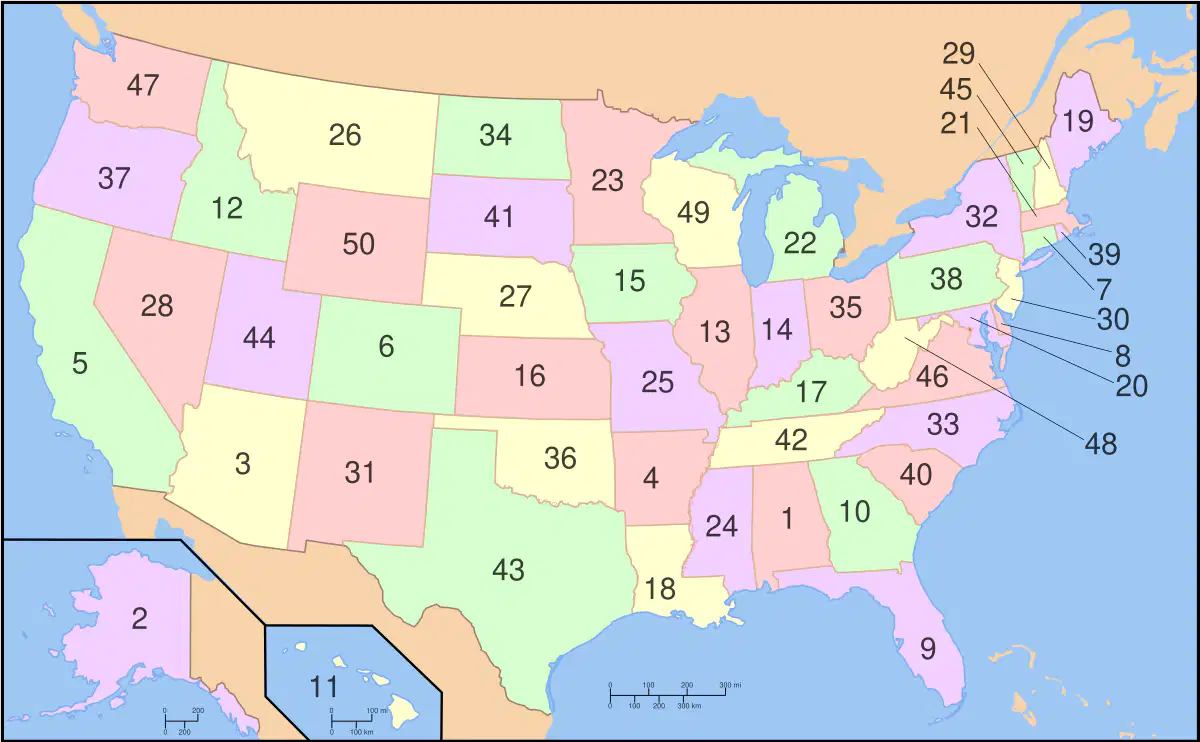
In the Zimmerman telegram-Germany would help Mexico regain Texas, New Mexico, and Arizona. Which numbers on the map represent those three states.
a)
32,38,42
b)
6,43,44
c)
3,31,43
d)
9,18,24
7.
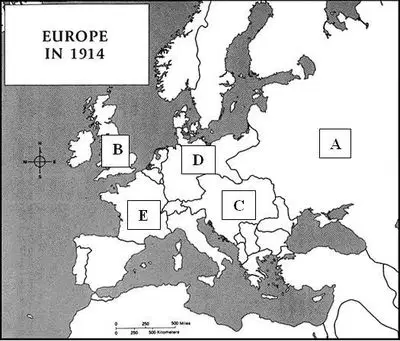
Which Country is represented by the letter D
a)
Russia
b)
France
c)
Germany
d)
Italy
8.
Which of the following was NOT a cause of World War I?
a)
American isolationism
b)
imperialist competition
c)
the stockpiling of weapons
d)
European nationalism
9.
Which country did NOT join the League of Nations after World War I?
a)
France
b)
Italy
c)
United States
d)
Britain
10.
The addition of American troops to the Allied forces in Europe during World War I
a)
did not influence the Allied war effort.
b)
was an important factor in the Allied victory.
c)
increased German morale.
d)
decreased the morale of the European forces.
11.
The Committee on Public Information was established to
a)
supply the troops.
b)
finance the war.
c)
create propaganda to instill support for the war.
d)
recruit troops.
12.
The Open Door Policy was designed as a way for the United States to further
a)
its trade interests.
b)
its desires to annex foreign nations.
c)
international diplomacy.
d)
the establishment of democratic governments.
13.
Controlling public opinion through exaggerated or fabricated news stories:
a)
investigative reporting
b)
influence peddling
c)
yellow fever
d)
yellow journalism
14.
The policy that kept the United States out of the World War I for three years was called?
a)
neutrality
b)
the alliance system
c)
collective security
d)
nationalism
15.
Gains made by American women during World War I included
a)
acceptance as full-fledged members of the U.S. Army.
b)
equal pay for equal work in many war industries.
c)
increased support for women's right to vote.
d)
support for the passage of the 18 th amendment.
16.
Analyze the domestic impact of World War I
a)
Decline in agricultural production, rise in isolationist policies, decrease in government regulation, and cultural homogeneity.
b)
Economic growth, labor shifts, social changes, increased government intervention, and rising isolationism.
c)
Increased military spending, reduced immigration, enhanced international alliances, and technological stagnation.
d)
Economic recession, labor shortages, social stability, and decreased government involvement.
17.
Evaluate the causes and consequences of the US becoming a world power in the late 1800s and early 1900s
a)
The US's rise was primarily due to its agricultural exports.
b)
The US became a world power due to industrialization, territorial expansion, and military victories, particularly after the Spanish-American War.
c)
The US became a world power due to its isolationist policies.
d)
The US was forced into world power status by European nations' demands.
18.
Explain the causes and consequences of World War I and the reasons for US involvement.
a)
The war was caused by economic competition and trade disputes.
b)
The causes of World War I include militarism, alliances, imperialism, and nationalism; the consequences were significant loss of life and political changes; the U.S. got involved due to unrestricted submarine warfare, the Lusitania sinking, and the Zimmermann Telegram.
c)
The U.S. entered the war primarily to support the League of Nations.
d)
The main consequence of the war was the establishment of the United Nations.
19.
Which of the following was a direct consequence of the Treaty of Versailles?
a)
The expansion of the British Empire
b)
The rise of isolationist policies in the United States
c)
The immediate start of World War II
d)
The creation of the League of Nations
20.
All of the following caused United States expansion in the late 1800s except the
a)
Need for raw materials
b)
Desire for new markets to sell their goods
c)
Desire to go to war with other nations
d)
Desire to spread their ideas and culture around the world.
100 %

