wayground logo

Free Printable Worksheets

NEW

Font size

S
M
L
XL
Worksheets

Benchmark Review

Total questions: 70

Worksheet time: 1hrs 25mins

Name
Class
Date
1.

Is the equation balanced?: 2H2O + O2 --> 4MgO + 3Fe

a)

yes

b)

no

2.
How many atoms of carbon (C) are in C6H12O6?
a)
3
b)
6
c)
12
d)
24
3.
How many Hydrogen are in 4H2O?
a)
6
b)
8
c)
2
d)
4
4.
What is the left part of a chemical equation called?
2H2 + O2 --> 2H2O
a)
Reactants
b)
Products 
c)
Yields 
d)
Chemical Equation 
5.
What is the right part of a chemical equation called...
2H2 + O2 --> 2H2O
a)
Reactants
b)
Products 
c)
Yields 
d)
Chemical Equation 
6.
How many Mn atoms are found in the following compound?
3Cr(MnO4)6
a)
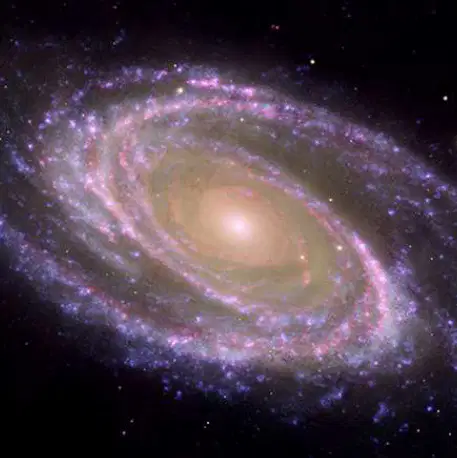
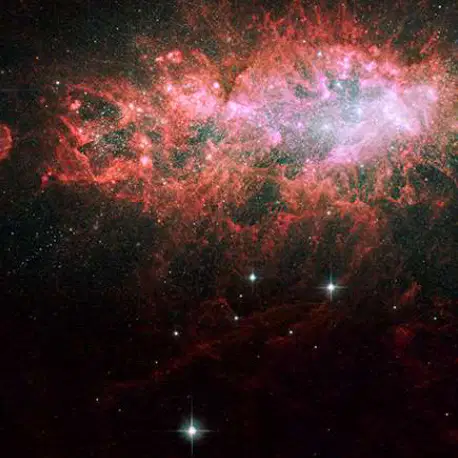
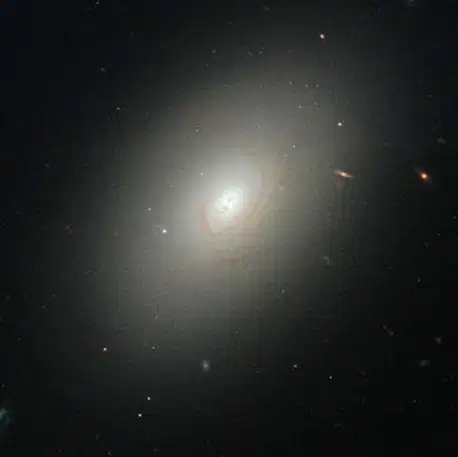
3
b)
4
c)
6
d)
18
7.

Which of the following examples represents a physical change?

a)
b)
c)
d)
8.

A physical change is

a)

a change where the characteristics do not change the substance

b)

a change where the characteristics do change the substance

c)

a change where the chemistry changes

9.

What is the definition of chemical change?

a)

any change that results in the formation of one (or more) new chemical substance(s)

b)

changing of only the appearance of the object

c)

matter cannot be created or destroyed, only change form

d)

changes affecting the form of a chemical substance, but not its chemical composition

10.
What two measurements are necessary for calculating speed?
a)
Mass and time
b)
Temperature and mass
c)
Mass and distance
d)
Distance and time
11.
What is happening in this graph from point A to B?
a)
The object is accelerating.
b)
The object is not moving.
c)
The object is decelerating.
d)
The object is moving at a constant speed.
12.
What is happening in this graph from point B to C?
a)
The object is going down a hill.
b)
The object is returning to its starting location.
c)
The object is slowing down.
d)
The object is staying still.
13.
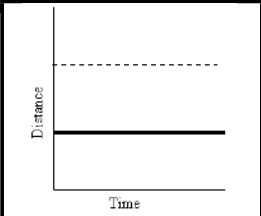
What does this graph represent?
a)
Constant Speed
b)
Acceleration
c)
Not moving
14.
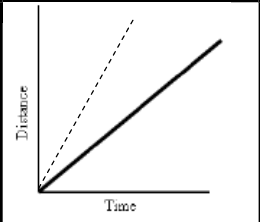
What does this graph represent?
a)
Constant speed
b)
Acceleration
c)
Not moving
15.
What is the speed of an object that travels 60 meters in 4 seconds?
a)
240 m/s
b)
15 m/s
c)
0.067 m/s
d)
15 mph
16.
What is the formula to calculate speed?
a)
S = t/d
b)
S = d/t
c)
S = d x t
d)
S = t x d
17.

Match the description to the graph:

"The car is stopped."

a)
b)
c)
d)
18.
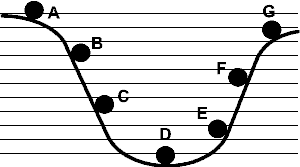
Which point has the most potential energy?
a)
G
b)
f
c)
b
d)
a
19.
Which 2 letters have the most kinetic energy
a)
W & Y
b)
X & Z
20.
At which point is potential energy greatest?
a)
W
b)
X
c)
Y
d)
Z
21.
A rubber band has been pulled backward but hasn’t been let go yet.
a)
Potential
b)
Kinetic
22.
__________ is stored energy. 
a)
Potential
b)
Kinetic
c)
None of the above 
d)
All of the above 
23.

Law of Inertia is

a)

Newton's 1st law

b)

Newton's 2nd law

c)

Newton's 3rd law

d)

Law of conservation of momentum

24.

"For every action, there is an equal and opposite reaction" represents

a)

Newton's 1st law

b)

Newton's 2nd law

c)

Newton's 3rd law

d)

Law of conservation of momentum

25.

F=ma represents

a)

Newton's 1st law

b)

Newton's 2nd law

c)

Newton's 3rd law

d)

Law of conservation of momentum

26.

Parked Car

a)

Balanced Forces

b)

Unbalanced Forces

27.

Kicking a football through a field goal

a)

Balanced Forces

b)

Unbalanced Forces

28.

Sitting in a chair

a)

Balanced Forces

b)

Unbalanced Forces

29.

What is the sum of all forces acting on an object?

a)

Unbalanced force

b)

Net force

c)

Friction

d)

Balanced force

30.

What is the net force?

a)

10 N to the right

b)

10 N to the left

c)

130 N to the left

d)

130 N to the right

31.

What is the net force?

a)

10 N to the left

b)

10 N to the right

c)

50 N to the right

d)

60 N to the left

32.

What is the net force?

a)

0 N

b)

10 N to the left

c)

20 N to the right

d)

20 N to the left

33.
Which of these is not a chemical reaction?
a)
Burning of wood
b)
Milk going bad
c)
Mixing vinegar and baking soda
d)
Melting of ice
34.
The coefficient in  3H2O is
a)
6
b)
2
c)
3
d)
5
35.

How light reflects off of a mineral is called the mineral's

a)

luster

b)

cleavage

c)

streak

d)

fracture

36.

Which of these is a property of metals?

a)

It's malleable

b)

It's an insulator

c)

It's very brittle

37.

All of these properties describe metals except...

a)

malleable

b)

conductors

c)

brittle

d)

shiny

38.
One property of a nonmetals is that it is a good conductor of electricity?
a)
true
b)
false
39.
a)

Metal

b)

Nonmetal

c)

Metalloid

40.
a)

Metal

b)

Nonmetal

c)

Metalloid

41.
a)

Metal

b)

Nonmetal

c)

Metalloid

42.
The type of plate boundary where two plates come together is a .....
a)
Convergent Boundary
b)
Divergent Boundary
c)
Transform Boundary
d)
Plate Boundary
43.
What type of event will occur at this boundary?
a)
Earthquake
b)
Volcano Eruption
c)
Tornado
d)
Mountain Building
44.
A divergent boundary occurs when plates ....
a)
Pull apart
b)
Come together
c)
Slide past each other
d)
subducting
45.
Which of the following is the name of the ancient supercontinent formed 28 Million Years ago.
a)
Pangea
b)
Gondwanda
c)
Laurasia
d)
Neverland
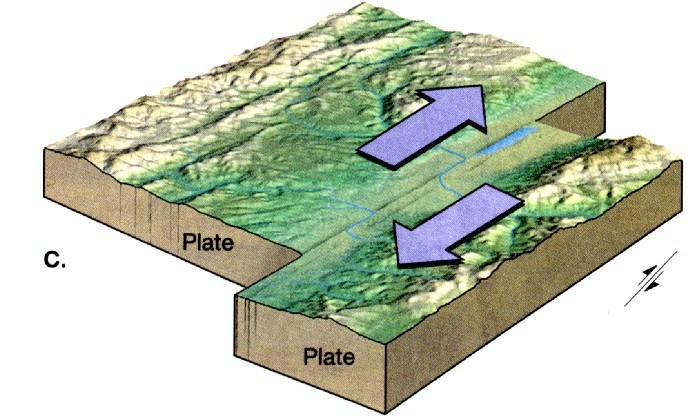
46.
What type of plate boundary is this?
a)
Transform
b)
Convergent
c)
Divergent
d)
Plate
47.
Oceanic Trenches are formed by _______ plate boundaries
a)
Convergent
b)
Transform
c)
Plate
d)
Divergent
48.
Mountains are created when....
a)
Two continental plates collide
b)
Two oceanic plates pull apart
c)
An Oceanic plate subducts under a Continental Plate
d)
Two continental plates pull apart
49.
Star formation begins in the...
a)
main sequence
b)
nebula
c)
dwarfism
d)
periodic table
50.
stars are produced in the nebula
a)
true
b)
false
51.

Which star would have the longer life span?

a)

main sequence

b)

blue giant

52.

What does the Y-axis of the HR diagram measures?

a)

Luminosity

b)

Temperature

53.

What does the X-axis of the HR diagram measures?

a)

Luminosity

b)

Temperature

54.

What is the color of the lowest surface temperature?

a)

Red

b)

Orange

c)

White

d)

Blue

55.

What is the color of the highest surface temperature?

a)

Red

b)

Orange

c)

White

d)

Blue

56.

Most of the stars on the HR diagram are classified as what type of star?

a)

White Dwarfs

b)

Blue Giants

c)

Red Giants

d)

Main Sequence

57.

What type of star has a high temperature and a high luminosity?

a)

White Dwarfs

b)

Blue Giants

c)

Red Supergiants

d)

Smaller Main Sequence stars

58.
A white dwarf is the final stage for _________ mass stars like our Sun.
a)
small/medium
b)
large
c)
super massive
59.
Where does a star begin and end its life?
a)
Black Hole
b)
Galaxy
c)
Nebula
d)
Solar System
60.

The Earth tilts at ______

a)

90°

b)

23.5°

c)

56.2°

d)

24°

61.

What does the rotation of the earth cause us to experience?

a)

Seasons

b)

Day and night

c)

Year

d)

Summer

62.

What is the term used to describe the motion of the Earth around the Sun?

a)

Resolution

b)

Rotation

c)

Revolution

d)

Round

63.

One rotation of Earth is equal to _____

a)

a year

b)

a day

64.

The path Earth follows revolving around the Sun is called ________

a)

Orbit

b)

Axis

c)

Equator

d)

Prime meridian

65.

This word describes how the earths travels around the sun.

a)

solstice

b)

axis

c)

rotation

d)

revolution

66.

If we split the earth into two halves at the equator then we would have two........

a)

equinox

b)

solstice

c)

axis

d)

hemispheres

67.

How can galaxies be categorized?

a)

By their size

b)

By their shape

c)

By their color

d)

By their age

68.

Categorize: Identify each galaxy pictured as spiral, elliptical, or irregular.

a)

Spiral

b)

Elliptical

c)

Irregular

69.

Identify each galaxy pictured as spiral, elliptical, or irregular.

a)

irregular

b)

spiral

c)

elliptical

70.

Identify each galaxy pictured as spiral, elliptical, or irregular.

a)

irregular

b)

spiral

c)

elliptical