wayground logo

Free Printable Worksheets

Font size

S
M
L
XL
Worksheets

Week 16 mixed

Total questions: 214

Worksheet time: 4hrs 34mins

Name
Class
Date
1.
1. thoughts : intangible
a)
a) ideas : difficult
b)
b) grief : painful
c)
c) dreams : frightening
d)
d) friends : careless
2.
1. prolific : unproductive
a)
a) ordinary : common
b)
b) charming : repulsive
c)
c) genuine : authentic
d)
d) fantastic : imagined
3.
2. methodical : careful
a)
a) tired : exhausted
b)
b) playful : stern
c)
c) devious : funny
d)
d) wretched : bad
4.
3. rustic : sophistication
a)
a) complex : detail
b)
b) delightful : charm
c)
c) merciful : cruelty
d)
d) chaos : organized
5.
4. cohesive : dissent
a)
a) forgiving : understanding
b)
b) irritated : anger
c)
c) hate : despicable
d)
d) passionate : apathy
6.
5. barbaric : manners
a)
a) loving : thought
b)
b) lazy : motivation
c)
c) mindful : ignorance
d)
d) prestigious : grace
7.
6. assertive : confidence
a)
a) sprightly : energy
b)
b) passionate : pain
c)
c) hopeless : drive
d)
d) sadness : sorrowful
8.
7. hysterical : control
a)
a) dishonest : morals
b)
b) brave : risk
c)
c) serious : ideas
d)
d) friendly : value
9.
8. political : politically
a)
a) adjective : verb
b)
b) adverb : adjective
c)
c) adjective : adverb
d)
d) adjective : noun
10.
9. toxic : wholesome
a)
a) sensitive : aware
b)
b) polite : kind
c)
c) confused : befuddled
d)
d) adore : despise
11.
10. affirm : affirmative
a)
a) verb : noun
b)
b) verb : adjective
c)
c) adjective : adverb
d)
d) verb : adverb
12.
2. fruitful : futile
a)
a) concerned : indifferent
b)
b) hopeless : pointless
c)
c) gracious : tired
d)
d) relaxed : intrigued
13.
3. civilization : civil
a)
a) adjective : noun
b)
b) verb : adverb
c)
c) verb : adjective
d)
d) noun : adjective
14.
4. defend : tenable
a)
a) allow : illegal
b)
b) question : confusing
c)
c) buy : priceless
d)
d) see : invisible
15.
5. fruit : edible
a)
a) gold : plentiful
b)
b) parents : gullible
c)
c) love : reliable
d)
d) glass : recyclable
16.
6. manageable : difficulty
a)
a) hostile : energy
b)
b) comforting : pain
c)
c) complex : detail
d)
d) dependable : work
17.
7. hurricane : volatile
a)
a) volcano : created
b)
b) illness : pleasant
c)
c) disaster : rewarding
d)
d) intruder : terrifying
18.
8. submissive : agreeable
a)
a) lovely : fun
b)
b) horrifying : scary
c)
c) painful : insufferable
d)
d) happy : kind
19.
9. sensible : reasonable
a)
a) aggressive : helpful
b)
b) compliant : obedient
c)
c) hateful : forgiving
d)
d) tedious : interesting
20.
10. docile : aggression
a)
a) superior : quality
b)
b) predictable : understanding
c)
c) dull : excitement
d)
d) realistic : detail
21.
1. QUART : GALLON
a)
a) centimeter : meter
b)
b) quart : cups
c)
c) four : five
d)
d) quarter : dollar
22.
2. TRIMESTER : MONTHS
a)
a) book : chapters
b)
b) three : period
c)
c) days : week
d)
d) yearly : weekly
23.
3. QUINTUPLET : TRIPLET
a)
a) square : pentagon
b)
b) pentagon : triangle
c)
c) polygon : line
d)
d) five : siblings
24.
4. PENTAGON : POLYGON
a)
a) rice : grain
b)
b) aircraft : plane
c)
c) five : sides
d)
d) rhombus : circle
25.
5. TRIDENT : THREE
a)
a) spear : fork
b)
b) Poseidon : Zeus
c)
c) fishing : tool
d)
d) duplex : two
26.
6. TRILOGY : MOVIES
a)
a) tricycle : wheels
b)
b) triangle : geometry
c)
c) three : pieces
d)
d) movies : books
27.
7. SWIMMING : TRIATHLON
a)
a) classroom : school
b)
b) running : cycling
c)
c) hand : thumb
d)
d) race : metal
28.
8. QUADRANGLE : QUADRILATERAL
a)
a) few : many
b)
b) four : polygon
c)
c) square : rectangle
d)
d) abundant : bountiful
29.
9. PENTAGRAM : FIVE
a)
a) two : dual
b)
b) unicycle : one
c)
c) star : six
d)
d) straight : lines
30.
10. VIOLIN : QUARTET
a)
a) game : inning
b)
b) viola : cello
c)
c) act : play
d)
d) music : play
31.

Sum

a)

The answer to an addition problem

b)

The answer to a subtraction problem

c)

The answer to a multiplication problem

d)

The answer to a division problem

32.

Difference

a)

The answer to an addition problem

b)

The answer to a subtraction problem

c)

The answer to a multiplication problem

d)

The answer to a division problem

33.

Product

a)

The answer to an addition problem

b)

The answer to a subtraction problem

c)

The answer to a multiplication problem

d)

The answer to a division problem

34.

Quotient

a)

The answer to an addition problem

b)

The answer to a subtraction problem

c)

The answer to a multiplication problem

d)

The answer to a division problem

35.

Area

a)

The distance around the edge of a shape

b)

The answer to a subtraction problem

c)

The amount of space inside a shape

d)

The answer to a division problem

36.

Perimeter

a)

The distance around the edge of a shape

b)

An arrangement of objects, pictures, or numbers in rows and columns

c)

The amount of space inside a shape

d)

The answer to a division problem

37.

Factor

a)

Numbers you multiply to get the product

b)

Numbers you add together to get the sum

c)

A number to be subtracted from another

d)

A number from which another is to be subtracted

38.

Addend

a)

Numbers you multiply to get the product

b)

Numbers you add together to get the sum

c)

A number to be subtracted from another

d)

A number from which another is to be subtracted

39.

Subtrahend

a)

Numbers you multiply to get the product

b)

Numbers you add together to get the sum

c)

A number to be subtracted from another

d)

A number from which another is to be subtracted

40.

Minuend

a)

Numbers you multiply to get the product

b)

Numbers you add together to get the sum

c)

A number to be subtracted from another

d)

A number from which another is to be subtracted

41.

Divisor

a)

A number by which another number is to be divided

b)

Numbers you add together to get the sum

c)

A number to be subtracted from another

d)

A number to be divided by another number

42.

Dividend

a)

A number by which another number is to be divided

b)

Numbers you add together to get the sum

c)

A number to be subtracted from another

d)

A number to be divided by another number

43.
Solve 1/2 - 1/3 =
a)
1/6
b)
1/12
c)
5/6
d)
1/2
e)
7/12
44.

A number with only two factors, 1 and the number itself

a)

even number

b)

odd Number

c)

prime number

d)

composite number

45.

A number with more than two factors

a)

even number

b)

odd number

c)

prime number

d)

composite number

46.

The common factor between two numbers that is the greatest (largest).

a)

prime factor

b)

important factor

c)

LCM

d)

GCF

47.

Which TWO numbers are PRIME.

a)

3

b)

9

c)

57

d)

19

48.

Which TWO numbers are COMPOSITE

a)

2

b)

25

c)

87

d)

37

49.

What is the BASE in the following number.

454^5  

a)

4

b)

5

c)

9

d)

20

50.

What is the EXPONENT in the following number?

373^7  

a)

10

b)

21

c)

7

d)

3

51.

Choose the correct statement to describe the following number.

828^2  

a)

two squared 

b)

two cubed

c)

eight squared 

d)

eight cubed

52.

Choose the correct Prime Factorization of 36.

a)

3 x 12

b)

3 x 3 x 4

c)

2 x 2 x 9

d)

2 x 2 x 3 x 3

53.

Choose ALL the numbers that are PERFECT SQUARES

a)

20

b)

25

c)

50

d)

64

e)

81

54.
A prime number...
a)
has one factor.
b)
has more than 2 factors.
c)
has 100 factors.
d)
has exactly 2 factors: 1 and the itself.
55.
A composite number ...
a)
has more than 2 factors.
b)
has one factor.
c)
has at least 10 factors.
d)
is always a really big number.
56.

What are the prime factors of 27?

a)

3x3x3

b)

3x2x3

c)

3x3x4

57.

Find the prime factors of 45.

a)

5x9

b)

3x15

c)

3x3x5

58.

What are the prime factors of 90?

a)

3x3x4x5

b)

5x5x3

c)

2x3x3x5

59.
Which are the factors of 14?
a)

(1,14)

b)

(1, 2, 7, 14)

c)

(2, 7)

60.
Which are the factors of 24?
a)

(1, 2, 3, 8, 12, 24)

b)

(2, 3, 4, 6, 8, 12)

c)

(1, 2, 3, 4, 6, 8, 12, 24)

61.
which number below is NOT prime?
a)
7
b)
9
c)
2
d)
3
62.
Find the prime number.
a)
10
b)
9
c)
7
d)
4
63.

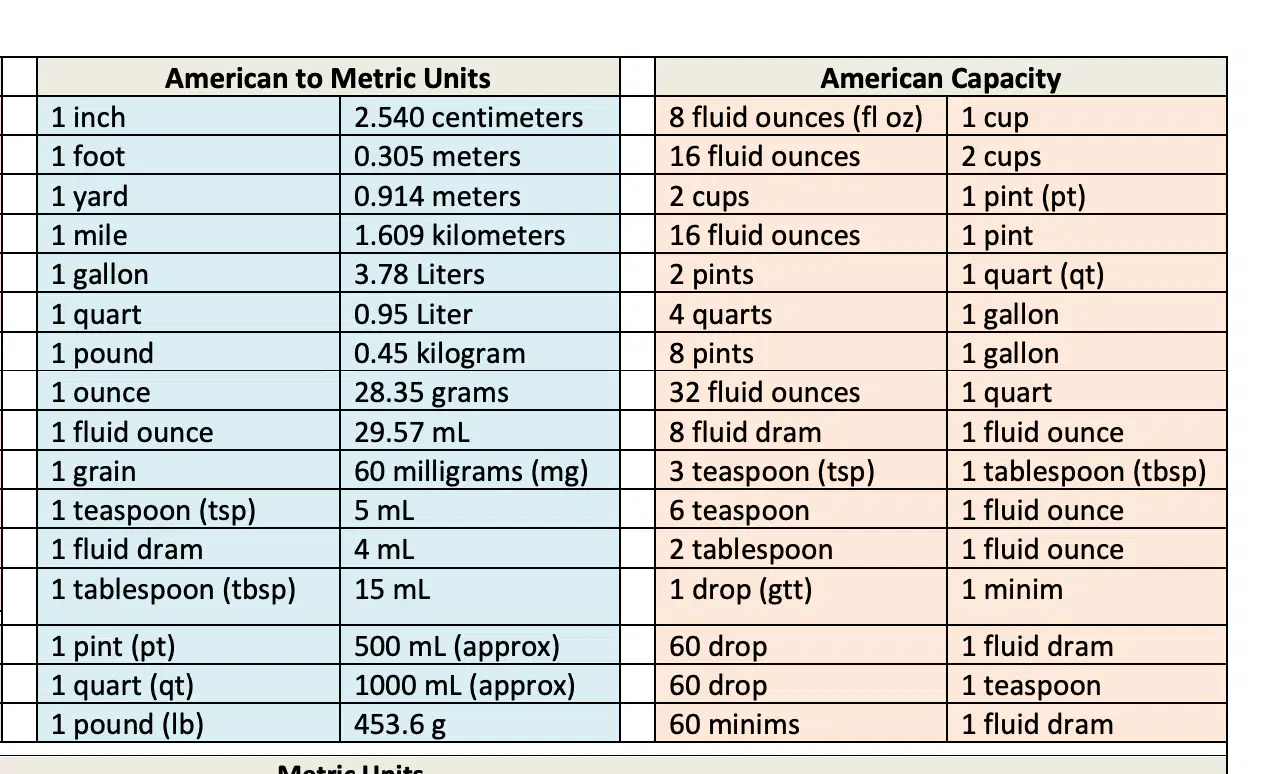
One pint is equivalent to 2 cups. One pint is (a)   times as large as 1 cup.

Choose from the below words
2
3
4
5
64.

One quart is equivalent to 4 cups. One quart is (a)   times as large as 1 cup.

Choose from the below words
2
3
4
5
65.

One gallon is equivalent to 16 cups. One gallon is (a)   times as large as 1 cup.

Choose from the below words
8
12
14
16
66.

One quart is (a)   times as large as 1 pint.

67.

One gallon is (a)   times as large as 1 pint.

Choose from the below words
4
6
8
10
68.

One gallon is _____ times as large as 1 quart.

a)

2

b)

3

c)

4

d)

5

69.

One pint is equivalent to 2 cups. One pint is (a)   times as large as 1 cup.

Choose from the below words
1
2
3
4
70.

One quart is equivalent to 4 cups. One quart is _____ times as large as 1 cup.

a)

2

b)

3

c)

4

d)

5

71.

One gallon is equivalent to 16 cups. One gallon is (a)   times as large as 1 cup.

Choose from the below words
8
12
16
20
72.

One quart is _____ times as large as 1 pint.

a)

1

b)

2

c)

3

d)

4

73.

One gallon is _____ times as large as 1 quart.

a)

2

b)

3

c)

4

d)

5

74.

How many fluid ounces are equivalent to 237 milliliters?

a)

8 FL OZ

b)

24 FL OZ

c)

67.6 FL OZ

d)

1.89 FL OZ

75.

What is the volume in liters for 2 quarts?

a)

0.5 L

b)

1.89 L

c)

2.5 L

d)

3.6 L

76.

What is the equivalent of 1 pint in fluid ounces?

a)

8 FL OZ

b)

24 FL OZ

c)

16 FL OZ

d)

32 FL OZ

77.

the message, the moral, and the lesson repeated or developed throughout a text


What is the message the author is trying to say about the world in which we live?


What is this story telling me about how life works or how people behave?

a)

determine

b)

implied

c)

theme

d)

specific

78.
What is the GCF of 12 and 18?
a)
6
b)
2
c)
3
d)
4
79.
What is the formula for finding the area of a circle?
a)
Area = π × radius²
b)
Area = π × diameter
c)
Area = π × radius
d)
Area = 2 × π × radius
80.
When you multiply by 10 you move the decimal
a)
1 place to the right
b)
1 place to the left
c)
2 places to the right
d)
2 places to the left
81.
What is the formula for finding the area of a rectangle?
a)
Area = length × width
b)
Area = length + width
c)
Area = 2 × (length + width)
d)
Area = ½ × base × height
82.
How many pints are in a quart?
a)
2.0
b)
4.0
c)
3.0
d)
5.0
83.
How many cups are in a quart?
a)
4.0
b)
2.0
c)
3.0
d)
5.0
84.
How many cups are in a pint?
a)
2.0
b)
4.0
c)
1.0
d)
3.0
85.
How many years are in a millennium?
a)
1000.0
b)
500.0
c)
100.0
d)
10.0
86.
How many decades are in a century?
a)
10.0
b)
5.0
c)
20.0
d)
50.0
87.
How many weeks are in a year?
a)
52.0
b)
48.0
c)
60.0
d)
54.0
88.
How many hours are in a day?
a)
24.0
b)
12.0
c)
36.0
d)
48.0
89.
What is 1/2 as a decimal?
a)
0.5
b)
0.25
c)
1.5
d)
0.75
90.
How many minutes are in 3/4 of an hour?
a)
45.0
b)
30.0
c)
15.0
d)
60.0
91.
What is 25% as a fraction?
a)

1/4

b)

1/2

c)

3/4

d)

2/5

92.
How many quarters are in 1 whole?
a)
4.0
b)
2.0
c)
6.0
d)
3.0
93.
What is 75% as a fraction?
a)

3/4

b)

1/4

c)

1/2

d)

1/3

94.
How many feet are in 6 yards?
a)
18.0
b)
12.0
c)
24.0
d)
6.0
95.
What is another way to say “divided by four”?
a)
One quarter
b)
One third
c)
One half
d)
One eighth
96.

What is 1/2 as a decimal?

a)

.5

b)

.25

c)

.3334

d)

.05

97.
What is 100% of something?
a)
All of it
b)
Half of it
c)
A quarter of it
d)
One third of it
98.
How many feet are in one yard?
a)
3.0
b)
2.0
c)
6.0
d)
12.0
99.
What is 1/4 as a percent?
a)

25%

b)

50%

c)

4%

d)

40%

100.
Scribe
a)
A person trained to write and record information in ancient Egypt.
b)
A complex society with cities, a central government, job specialization, and social classes.
c)
The governor of a nome (province) in ancient Egypt.
d)
A worker, often doing physical work like farming or construction.
101.
Deity
a)
A god or goddess, many of whom were worshiped in ancient Egypt.
b)
A place of worship, central to religious life.
c)
A series of rulers from the same family line, often ruling over Egypt for generations.
d)
A system of trade in which goods or services are exchanged without money.
102.
What is the result of dividing 1/4 by 2/3?
a)
3/8
b)
5/12
c)
1/7
d)
1/3
103.
What is the least common multiple of 4 and 6?
a)
12
b)
8
c)
10
d)
16
104.
What is the order of operations in arithmetic?
a)
PEMDAS (Parentheses, Exponents, Multiplication and Division (from left to right), Addition and Subtraction (from left to right))
b)
PEDMAS (Parentheses, Exponents, Division and Multiplication (from left to right), Addition and Subtraction (from left to right))
c)
PEMDAS (Parenthesis, Exponents, Multiplication and Division (from left to right), Subtraction and Addition (from left to right))
d)
PEDMAS (Parentheses, Exponents, Division and Multiplication (from left to right), Subtraction and Addition (from left to right))
105.
A number to be divided by another number is called.. 
What 36 represents in the number sentence 36 divided by 4 equals 9
a)
Divisor
b)
Dividend
c)
Remainder
d)
inverse operation
106.
If a recipe calls for 3 cups of flour to make 24 pancakes, how much flour is needed to make 36 pancakes?
a)
4.5
b)
2
c)
3
d)
6
107.
A package of 8 hot dogs costs $2.40. What is the cost per hot dog?
a)
0.30
b)
0.60
c)
0.90
d)
1.20
108.
2 x 7
a)
15
b)
14
c)
21
d)
12
109.
5 x 5
a)
15
b)
20
c)
5
d)
25
110.
42 ÷ 6
a)
6
b)
7
c)
12
d)
4
111.
9 x 8
a)
63
b)
81
c)
72
d)
18
112.
What was the primary focus of the Israelites' writings in the Torah?
a)
To document their military victories.
b)
To outline their agricultural practices.
c)
To record their religious laws and history.
d)
To create a guide for trade.
113.
What was one of the main reasons for the Israelites' gradual isolation from other nations?
a)
Their military strength.
b)
Their desire for trade.
c)
Their alliances with neighboring kingdoms.
d)
Their strong convictions after overcoming hardships.
114.
What was the primary focus of Solomon's reign?
a)
Expanding the territory through war.
b)
Avoiding wars and invasions.
c)
Building a large army.
d)
Establishing trade routes.
115.
What did Hammurabi contribute to the concept of law?
a)
He carved the first code of conduct onto a stone column.
b)
He created a system of taxation.
c)
He wrote the first history book.
d)
He established the first democracy.
116.
What is the significance of the Ten Commandments for the Israelites?
a)
They were a set of military strategies.
b)
They served as a code of conduct.
c)
They outlined trade agreements.
d)
They were a collection of historical events.
117.
Which leader is known for receiving the Ten Commandments from God?
a)
Abraham
b)
Moses
c)
Jacob
d)
David
118.
What was the outcome of Jacob having 12 sons?
a)
Each son became the patriarch of his own tribe.
b)
They were all enslaved in Egypt.
c)
They all became kings.
d)
They formed a powerful military alliance.
119.
Which of the following best describes the role of a patriarch in ancient Israelite culture?
a)
The female head of a family.
b)
A religious leader without any legal authority.
c)
The male head of a family who imposed laws.
d)
A community leader elected by the people.
120.
What was a major change that Abraham and his nation had to accept?
a)
The worship of multiple gods.
b)
The existence of just one single god.
c)
The abandonment of their homeland.
d)
The adoption of foreign customs.
121.
What was the geographical significance of the lands of Canaan?
a)
It was isolated from other nations.
b)
It was a desert with no resources.
c)
It was known for its mountainous terrain.
d)
It was located between two great kingdoms.
122.
What was one of the main reasons for the Israelites' endurance as a nation?
a)
Their strong military alliances.
b)
Their belief that they were God's chosen people.
c)
Their wealth and resources.
d)
Their advanced technology.
123.
A plate boundary where two plates move away from each other is called
a)
Divergent Boundary
b)
Convergent Boundary
c)
Transform Boundary
d)
Subduction
124.
A Plate Boundary where two plates move toward each other is called
a)
Convergent Boundary
b)
Divergent Boundary
c)
Transform Boundary
d)
Subduction
125.
Convergent Plate Movement can create
a)
Rifts
b)
Mountains
c)
Ocean Ridges
d)
Radiation
126.
Divergent Plate movement can create
a)
Convection Currents
b)
Conduction
c)
Mountains
d)
Rifts and ocean ridges
127.
When pressure builds between two tectonic plates, it can suddenly release causing a (an) ______________________
a)
Earthquake
b)
Volcano
c)
Convection Current
d)
Gravitational Pull
128.
The movement of metals within the earth's outer core cause a ____________________________ that is detectable on the earth's surface using a compass
a)
Gravitational Pull
b)
Volcanic Eruption
c)
Magnetic field
d)
Convection Current
129.
Created by a divergent boundary.
a)
Rocky Mountains
b)
Mariana Trench
c)
Mid Atlantic ridge
130.
Mountains form from ...
a)
plates sliding past one another
b)
collision of plates
c)
plates moving away from each other
131.
During sea floor spreading, molten material rises up from the mantle...
a)
along the continents
b)
at the mid ocean ridges
c)
deep ocean trenches
d)
at north and south poles
132.
Which of the following is where one plate slides under another plate?
a)
submarine zone
b)
divergence zone
c)
subduction zone
d)
lower zone
133.

What was the name of the super-continent proposed by Wegener?

a)

Atlantis

b)

Gondwana

c)

Pangea

d)

Laurasia

134.

Which layer of the Earth is made of the densest, hottest rocks?

a)

Crust

b)

Mantle

c)

Outer Core

d)

Inner Core

135.

What is the lithosphere?

a)

The liquid outer core

b)

The solid crust and upper mantle

c)

The dense inner core

d)

The gaseous atmosphere

136.

What are convection currents?

a)

Movements of the ocean

b)

Circulating liquid in the mantle

c)

Air currents in the atmosphere

d)

Tidal waves in the sea

137.

What is the role of the asthenosphere in plate tectonics?

a)

It supports the atmosphere

b)

It drives plate movement

c)

It creates weather patterns

d)

It forms the ocean floor

138.

What is the lithosphere compared to in the text?

a)

A pot of boiling water

b)

A cracked egg shell

c)

A flowing river

d)

A solid rock

139.

What is a convergent boundary?

a)

When two plates move apart

b)

When two plates slide past each other

c)

When two plates are pushed into each other

d)

When one plate sinks below another

140.

What is the process that creates a circular current of flowing rock?

a)

Convection currents

b)

Divergent currents

c)

Transform currents

d)

Subduction currents

141.

What happens when a continental plate collides with an oceanic plate?

a)

The oceanic plate rises above the continental plate.

b)

The continental plate sinks beneath the oceanic plate.

c)

The oceanic plate sinks beneath the continental plate.

d)

Both plates remain at the same level.

142.

What is a subduction zone?

a)

A place where two plates slide past each other.

b)

A location where an oceanic plate sinks beneath a continental plate.

c)

A place where two plates move away from each other.

d)

A location where two plates collide and form mountains.

143.

(a)   is created in the center of the trench at a divergent boundary.

Choose from the below words
New seafloor
Old seafloor
Mountains
Valleys
144.

What is a transform boundary?

a)

A boundary where two plates move away from each other.

b)

A boundary where two plates collide.

c)

A boundary where two plates slide past each other.

d)

A boundary where one plate sinks beneath another.

145.

What percentage of the world's volcanoes are found in the Ring of Fire?

a)

50%

b)

60%

c)

75%

d)

90%

146.

Which plate is the majority of the Pacific Ocean situated on?

a)

Atlantic Plate

b)

Indian Plate

c)

Pacific Plate

d)

Antarctic Plate

147.

What is the characteristic of areas along the Pacific Plate?

a)

Calm and stable

b)

Mountainous with volcanoes and earthquakes

c)

Flat and dry

d)

Cold and icy

148.
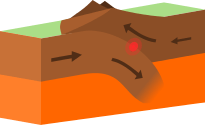
What type of plate boundary is this?
a)
Plate
b)
Divergent
c)
Convergent
d)
Transform
149.

Most geologists think that the movement of Earth’s plates is caused by _______

a)

convection.

b)

continental drift.

c)

subduction.

d)

conduction.

150.

The process by which the ocean floor sinks beneath a deep-ocean trench and back into the mantle is known as _______

a)

convection.

b)

continental drift.

c)

subduction.

d)

conduction.

151.
Name the boundary
a)
convergent boundary
b)
divergent boundary
c)
transform boundary
d)
sergent boundary
152.
Name the boundary
a)
convergent boundary
b)
divergent boundary
c)
transform boundary
d)
sergent boundary
153.
Name the boundary
a)
convergent boundary
b)
divergent boundary
c)
transform boundary
d)
sergent boundary
154.
Earth's crust is broken up into several large rocky pieces called ...
a)
plates
b)
faults
c)
fossils
d)
puzzle pieces
155.

What type of plate boundary is shown in the picture

a)

convergent

b)

divergent

c)

transform

d)

faults

156.
The modern state of Israel is located in what was once known as
a)
Canaan
b)
Mesopotamia
c)
Babylonia
d)
Sumer
157.
Moses led the Hebrew people out of slavery towards which ancient country?
a)
Canaan
b)
Nubia
c)
Egypt was experiencing a famine.
d)
Mesopotamia
158.
Which of the following did Judaism introduce to the Middle East?
a)
the idea of only one supreme God
b)
the ability to write on parchment
c)
the system of rule by kings
d)
the concept of laws that must be followed
159.
Why did the Jews leave Egypt?
a)
They wanted to escape slavery.
b)
They were tired of the Nile flooding.
c)
Egypt was experiencing a famine.
d)
The Pharaoh made them leave.
160.
Why did Abraham lead the Hebrews from Mesopotamia to the land of Canaan?
a)
God had promised this land to the Hebrews.
b)
They were escaping slavery.
c)
The Nile had destroyed all their homes.
d)
There was a famine in Mesopotamia.
161.
Our society takes which of these from Judaism?
a)
using the Ten Commandments as a guide for how to live
b)
lighting eight candles during Hanukah
c)
celebrating the Exodus from Egypt
d)
observing the Sabbath from Friday night to Saturday night
162.
When Judaism was first practiced by the Israelites, what was the MAIN way in which it was different from the other religions of its time?
a)
The Israelites worshipped one god instead of many.
b)

The Israelites built ziggurats to honor their god.

c)
The Israelites believed the pharaoh was like a god.
d)
The Israelites prayed to gods that looked like animals instead
163.
During the Jewish Exodus from Egypt, Moses appointed __________ to lead the Jewish people into Canaan.
a)
Joshua
b)
Abraham
c)
Jacob
d)
Solomon
164.
The first major monotheistic religion that is still practiced today was developed by__________.
a)
the Israelites
b)
the Phoenicians
c)
the Egyptians
d)
the Mayans
165.
The basis of Jewish religion and traditions was derived from which written document?
a)
Torah
b)
Vedas
c)
Qur'an
d)
Sharia
166.
After 40 years of wandering, the Hebrews found "The Promised Land", also known as
a)
Canaan
b)
Judea
c)
Jerusalem
d)
Israel.
167.
The Jews were forced to Egypt due to which of the following reasons?
a)
because of drought and famine
b)

because capybaras invaded and stole their tacos

c)
to pursue religious freedom
d)
to follow Moses
168.
Abraham enters in a covenant with God after God leads him from Ur to the holy land, __________.
a)
Canaan
b)
Jerusalem
c)
Persia
d)
Egypt
169.
Abraham's belief in one god is known as __________.
a)
monotheism
b)
Sabbath
c)
Torah
d)
Diaspora
170.
According to the Torah, why did the Israelites migrate to Egypt around 1700 B.C.?
a)
They suffered several famines in Canaan.
b)
God commanded Abraham to leave.
c)
They were forced into slavery by the Egyptians.
d)
There were outbreaks of disease and plagues.
171.
The religious idea of a "covenant" between one God and his people became the foundation for what two religions?
a)
Judaism and Christianity
b)
Buddhism and Confucianism
c)
Christianity and Buddhism
d)
Taoism and Judaism
172.
What is the significance of King Solomon in the history of Judaism?
a)
He was known for his wisdom and reign during the Golden
b)
He was a warrior king
c)
He was a merchant
d)
He was a prophet
173.
Who is considered the father of the Jewish people?
a)
Abraham
b)
Moses
c)
Muhammad
d)
King Solomon
174.
Who was known for his wisdom and reign during the Golden Age of Israel?
a)
King Solomon
b)
King Herod
c)
King Saul
d)
King David
175.
What is the concept of the Diaspora in Jewish history?
a)
The dispersion of Jewish people outside of Israel
b)
The return of Jewish people to Israel
c)
The period of Jewish exile in Egypt
d)
The establishment of the First Temple
176.
What is the role of the Talmud in Judaism?
a)
It is the central text of Jewish law and ethics
b)
It is a guide to Jewish mysticism
c)
It is a collection of Jewish folktales
d)
It is a historical account of Jewish kings
177.
Who is considered the founder of Judaism?
a)
Abraham
b)
Jesus
c)
Moses
d)
King Solomon
178.
Where was the First Temple built?
a)
Jerusalem
b)
Rome
c)
Mecca
d)
Cairo
179.
What is the concept of the Messiah in Judaism?
a)
Jews still await the coming of the Messiah
b)
The Messiah is a mythical figure
c)
There is no concept of the Messiah
d)
The Messiah has already come
180.
What is the holy book of the Jews?
a)
Torah
b)
Vedas
c)
Bible
d)
Quran
181.
What did King Solomon encourage people to do in his writings?
a)
Listen to sound advice and follow the commandments
b)
Create their own rules
c)
Disobey the commandments
d)
Ignore advice and live freely
182.
What is the significance of the Western Wall in Judaism?
a)
It is the site of the First Temple
b)
It is the site of the crucifixion of Jesus
c)
It is the location of the Last Supper
d)
It is the holiest site in Islam
183.
What is the concept of monotheism in Judaism?
a)
Belief in one God
b)
Agnosticism
c)
Atheism
d)
Belief in multiple gods
184.
What was the important event during the exodus for the Israelites?
a)
Receiving the ten commandments
b)
Building the First Temple
c)
Establishing a new kingdom
d)
Meeting King Solomon
185.
A thesis statement is...
a)
Something your teacher makes you write
b)
Your opinion about the topic in the prompt
c)
A sentence that you're supposed to have in your introduction
d)
A sentence
186.
What is the purpose of a thesis statement?
a)
To be a pretty sentence
b)
To be a sentence in your introduction
c)
To introduce your paper to the reader
d)
To explain what your essay will be about
187.
What information from the prompt do you need to use to write your thesis statement?
a)
"Think" statement
b)
"Write" statement
c)
The quote
d)
"Be sure to" statements
188.
What formula should you use when you write your thesis statement?
a)
What + Why
b)
When + Where
c)
Why + What
d)
Whatever I feel like.
189.
Where does your thesis statement need to appear in your essay?
a)
At the beginning of your introduction
b)
At the end of your introduction
c)
In your body paragraphs
d)
At the end of your entire essay
190.
How do you test if you can prove your thesis statement?
a)
I don't have to test my thesis.
b)
Check my work when I am finished with my entire essay.
c)
Ask your teacher to tell you if you can prove your thesis.
d)
Write a sentence for your example(s) that tells how the example(s) proves your thesis.
191.
Which of the following is the strongest thesis statement?
a)
Friendship is cool.
b)
It is important to have a good friend because they'll be the ones who will be with you when you take your last breath in the end.
c)
Friends are the most important people in your life.
d)
Having friends is important.
192.
Which of the following is the strongest thesis statement?
a)
You should never give up.
b)
You are able to set your mind to anything if you don't give up.
c)
Never giving up is important.
d)
Never giving up is important because there will always be hardships in your way.
193.
Which of the following is the strongest thesis statement?
a)
Laughter is important because not only does it make you and other people feel good, it makes the world a much better place.
b)
Laughter is important.
c)
Laughter is important when you're sad.
d)
Laughter is important because everyone needs to laugh.
194.
What should you do if you can't prove your thesis?
a)
Brainstorm other reasons that you might be able to prove
b)
Change your examples 
c)
Quit writing
d)
Not include your thesis in your essay
195.
The thesis statement should include your opinion on the on the points your are analyzing.
a)
True
b)
False
196.
Where should a thesis statement appear?
a)
first paragraph
b)
anywhere in the essay
c)
last paragraph
d)
the first sentence of every paragraph
197.
Which of the following is a major component of any thesis?
a)
making a claim
b)
providing an amusing anecdote
c)
being at least three sentences
d)
only providing facts
198.
Choose the strong thesis.
a)
 I would like to become a chef when I finish school
b)
 Although both chefs and cooks can prepare fine meals, chefs differ from cooks in   education, professional commitment, and artistry.
199.
What is the purpose of the thesis?
a)
To remind your reader what your paper is about
b)
To state your opinion or claim and prove it
c)
To hook the reader's attention
d)
To use vocabulary words
200.
The thesis statement should express a main idea that links to supporting points
a)
True
b)
False
201.
What is a thesis statement?
a)
A general idea of what the essay is about
b)
A summary of the main idea
c)
A statement that explains the main idea of an essay
d)
A suggestion that you should read the essay

202.
Which CLAIM is the strongest for the following thesis statements?
a)
Violent video games are harmful for young people to play.
b)
Violent video games are harmful to young people, and it should be stopped.
c)
Violent video games are harmful for young people to play because  children can become desensitized to death.
d)
Violent video games are harmful for young people because they should be reading a book.
203.
A thesis statement should not directly announce your topic by using phrases such as, "This essay will talk about ........"
Which of the following makes the best thesis statement?
a)
A. Even though marriage is a strong and respected institution in Russia, more and more people are choosing to live together before marriage, despite the cultural pressures.
b)
B. I am going to explain why many couples in Russia are choosing to live together rather than getting married.
c)
C. Marriage in Russia.
204.
A thesis statement is a complete sentence. A thesis statement is not a question.
Which of these is a thesis statement?
a)
A. Knowing a foreign language.
b)
B. Why should people know a foreign language?
c)
C. Knowing a foreign language is a very useful skill.  It can help one advance in a career, relate better to others, and open one's mind to the ideas of another culture.
205.
A thesis statement states an attitude or opinion on a topic.  It doesn't just state the topic, itself.  A thesis should not be a fact.
Which of these is a thesis statement?
a)
A. Michaelangelo's artwork is famous and admired by many.
b)
B. Michaelangelo's artwork is powerful because of its strong spiritual understones.
c)
C. Michaelangelo was a great artist in Rome during 1500's
206.
A thesis statement can be made more specific by listing subpoints.  These help give your reader a clear idea of what will follow in your essay.
Which of these makes a clear thesis statement?
a)
A. The reason why I came to the United States is to study.
b)
B. The reasons why I came to the United States to study were to educate myself and then return to Malaysia to apply my education.
c)
C. There were many reasons why I came to the United States to study.
207.
What is a Thesis?
a)
A vegetable sold at the pulga
b)
3 sentences that create an introduction
c)
1 sentence that controls the essay, located in the intro
d)
An example of the prompt
208.
A Thesis should be:
a)
Clear and Focused
b)
In the conclusion of an essay
c)
Growing in your backyard
d)
Written with in the first person POV
209.
A thesis statement should be arguable.
a)
True
b)
False
210.

What is the function of a thesis statement?

a)

Presents the main argument of an essay

b)

Presents the main argument of a body paragraph

c)

Introduces the texts focused on in the essay

211.

Why is this not an example of an effective thesis statement: I believe technology is a productive tool because it helps connect people and expands people's scope of knowledge.

a)

It does not present a specific stance.

b)

It is not one sentence.

c)

It uses first person.

212.

What is a thesis statement?

a)

Sentence that answers the prompt, explains the claim, and the provides the reasons that support your claim.

b)

Sentence that gets the reader's attention.

c)

Sentence that is the first sentence of a paragraph, it provides the subject of the paragraph.

d)

Sentence that provides a specific detail or example.

213.

The subject of something you read is called its_____.

a)

tone

b)

topic

c)

structure

d)

sidebar

214.

What is a thesis statement?

a)

A general idea of what the essay is about

b)

A summary of the main idea

c)

A statement that explains the main idea of an essay

d)

A suggestion that you should read the essay