
 Worksheets
Final( Study method 1)
Total questions: 122
Worksheet time: 6hrs 6mins
What is the meaning of anterior/ventral?
Front/in front of
Towards the midline
Away from the midline
Back/towards the back
What is the meaning of Posterior/dorsal?
Above/over
Front/in front of
Back/Towards the back
Towards the bottom
What is the meaning of superior/ cranial?
Towards the top/ on top of
Towards the back/ back
In front of/front
Near, closer to the origin
What is the meaning of Inferior/caudal
Away from the origin
On top of
Towards the mid line
Below, under
What is the meaning of Medial?
Away from the midline
Towards the midline
On top of
Back, Towards the back
What is the meaning of Distal?
Away from the origin
On top of
Towards the Origin
Horizontal/Top & Bottom
What is the meaning of Lateral?
Away from the origin
Away from the origin
Away from the mid line
Towards the origin
What is the meaning of proximal?
Closer to the origin
Away from the origin
Towards the midline
Away from the midline
What is the meaning of superficial?
Closer to the surface
On top of
Posterior
Away from the surface
What is the meaning of deep?
Away from the surface
Lateral
Proximal
Towards the back
What plane is divided from HORIZONTAL (Top and Bottom)?
(a)
What plane is divided into left and right portions?
(a)
What plane is divided into the front and back portion?
(a)
The sternum is _________ to the spine.
Lateral
Superior
Anterior
Medial
Osteokinematic movements occur within a plane and about an axis, and are described based on the anatomical position. True or False?
True
False
The wrist is ________ to the elbow.
Superficial
Proximal
Cephalad
Distal


The lateral motion TOWARDS the midline is called ______.
adduction
abduction
circumduction
opposition

Name this movement
adduction
abduction
inversion
eversion

Name this movement
inversion
eversion
adduction
abduction

Name this movement
ulnar deviation
supination
pronation
radial deviation

Name this movement
supination
pronation
ulnar deviation
radial deviation

The movement shown is a person moving his leg outward. This movement is known as:
abduction
adduction
rotation
flexion

What motion is indicated by letter C
Abduction
Flexion
Extension
Hyperextension
Moving a body part around an axis
adduction
abduction
flexion
extension
rotation
Tendons attach
bone to bone
muscle to bone
muscle to muscle
Ligaments attach to (a)
The carpals could be classified as
What is the main function of a Sesamoid bone?
To protect your internal organs.
To protect tendons and joints, and improve their movement.
To provide strength and structure.

What is the name of the Sesamoid bone in the knee?
Papilla
Patella
Palate
Paries
The metacarpals are what type of bone?
Long Bone
Short Bone
Flat Bone
Irregular Bone
Sesamoid Bone
The phalanges is what type of bone?
Long Bone
Short Bone
Flat Bone
Irregular Bone
Sesamoid Bone
The metatarsal is what type of bone?
Long Bone
Short Bone
Flat Bone
Irregular Bone
Sesamoid Bone
The humerus is what type of bone?
Long Bone
Short Bone
Flat Bone
Irregular Bone
Sesamoid Bone
The ribs are what type of bone?
Long Bone
Short Bone
Flat Bone
Irregular Bone
Sesamoid Bone
The mandible is what type of bone?
Long Bone
Short Bone
Flat Bone
Irregular Bone
Sesamoid Bone
The vertebra is what type of bone?
Long Bone
Short Bone
Flat Bone
Irregular Bone
Sesamoid Bone
The sacrum is what type of bone?
Long Bone
Short Bone
Flat Bone
Irregular Bone
Sesamoid Bone
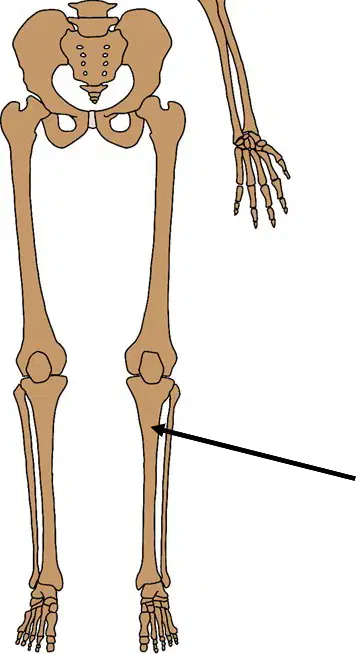
Which of the following bones is found in the lower leg?
Clavicle
Tibia
Scapula
Ulna
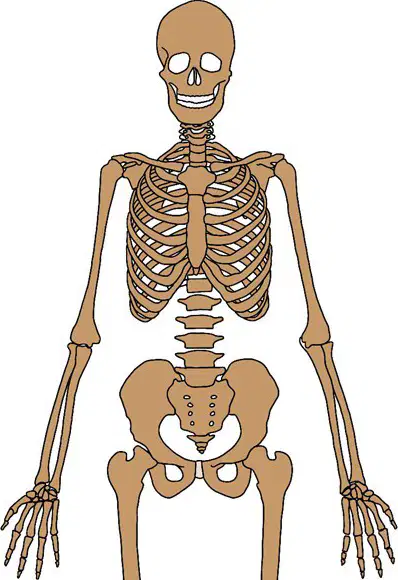
Which of the following bones is NOT in the leg?
Tibia
Femur
Humerus
Fibula
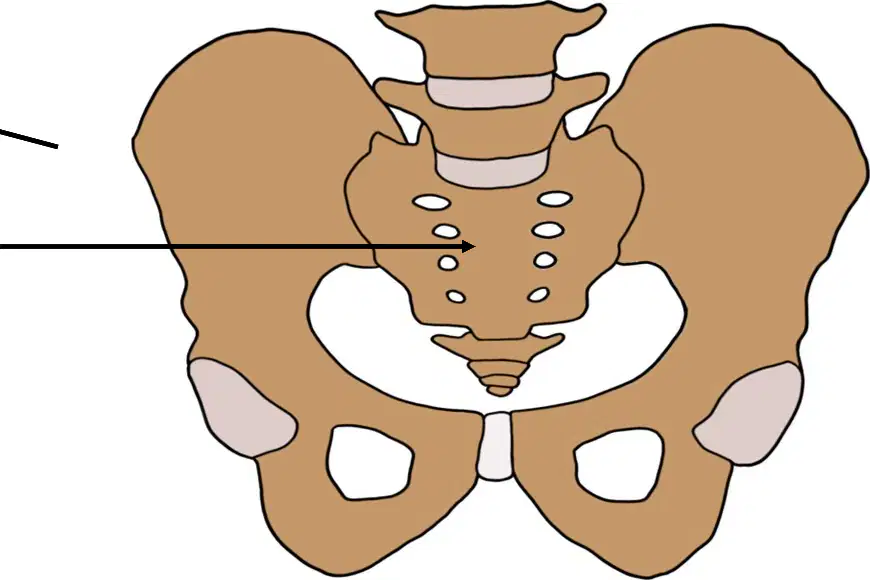
Which bone articulates with the sacrum at the sacroiliac joint?
Femur
Ilium
Tibia
Radius
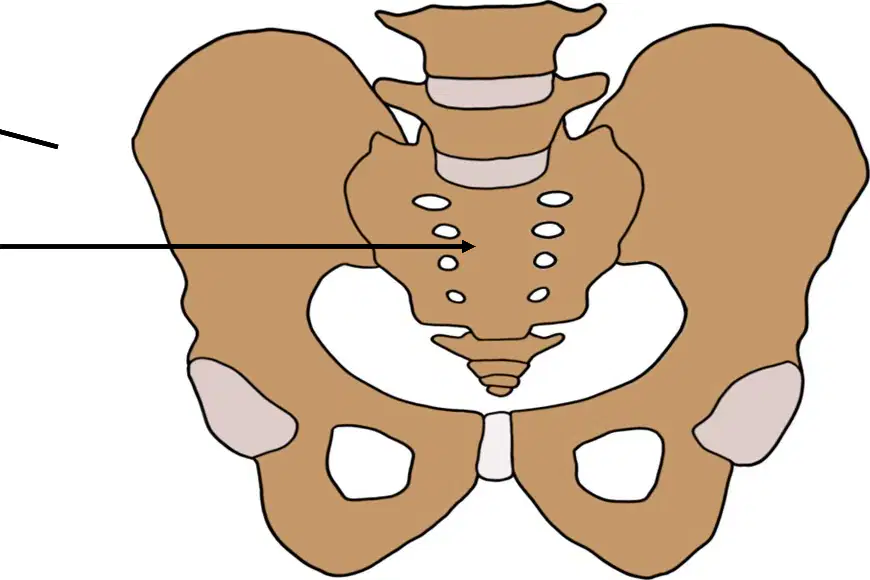
What is the sacrum's role in the human body?
Facilitate movement
Provide structural support
Produce red blood cells
Store calcium
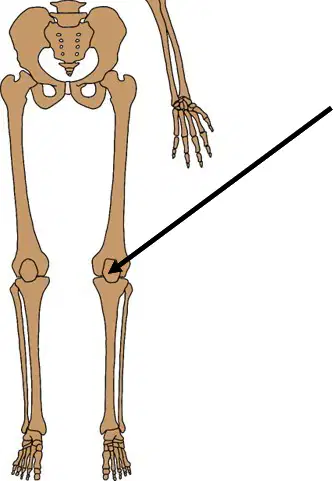
What is another name for the patella?
Elbow
Kneecap
Shoulder blade
Hip bone
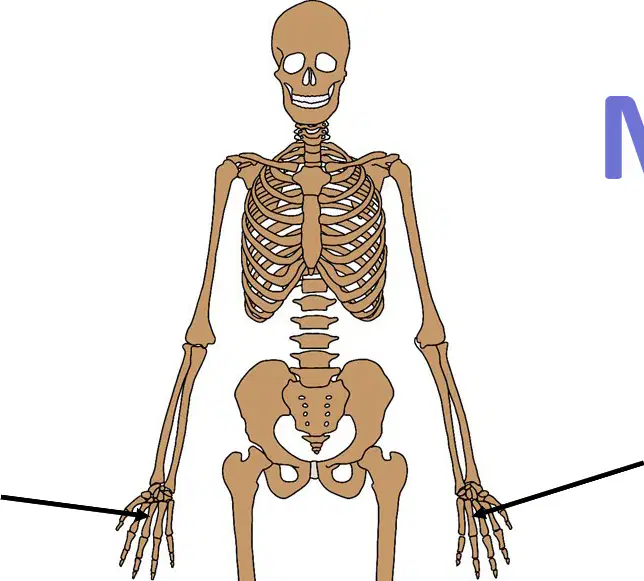
Which part of the skeleton is highlighted in the diagram?
Skull
Ribcage
Metacarpals
Femur
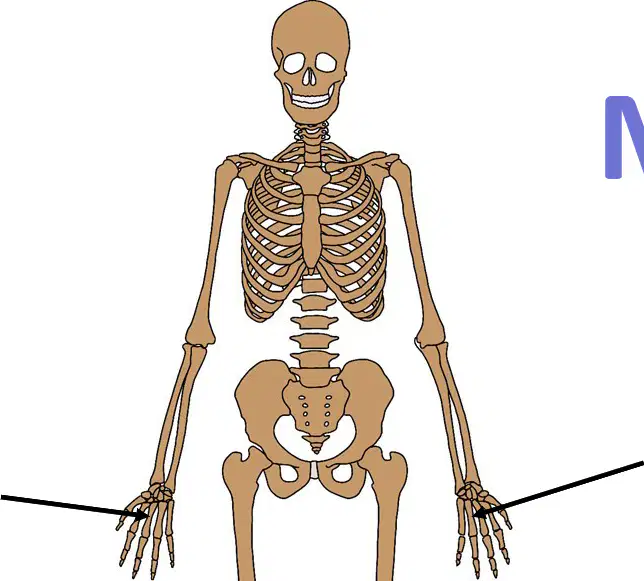
Which bones are directly connected to the metacarpals?
Carpals and phalanges
Tarsals and phalanges
Carpals and tarsals
Phalanges and femur

What bone is the arrow pointing to?
rib
spine
scapula
clavicle

What bone is the arrow pointing to (the bone closest to the thumb)?
ulna
humerus
radius
vertebrae

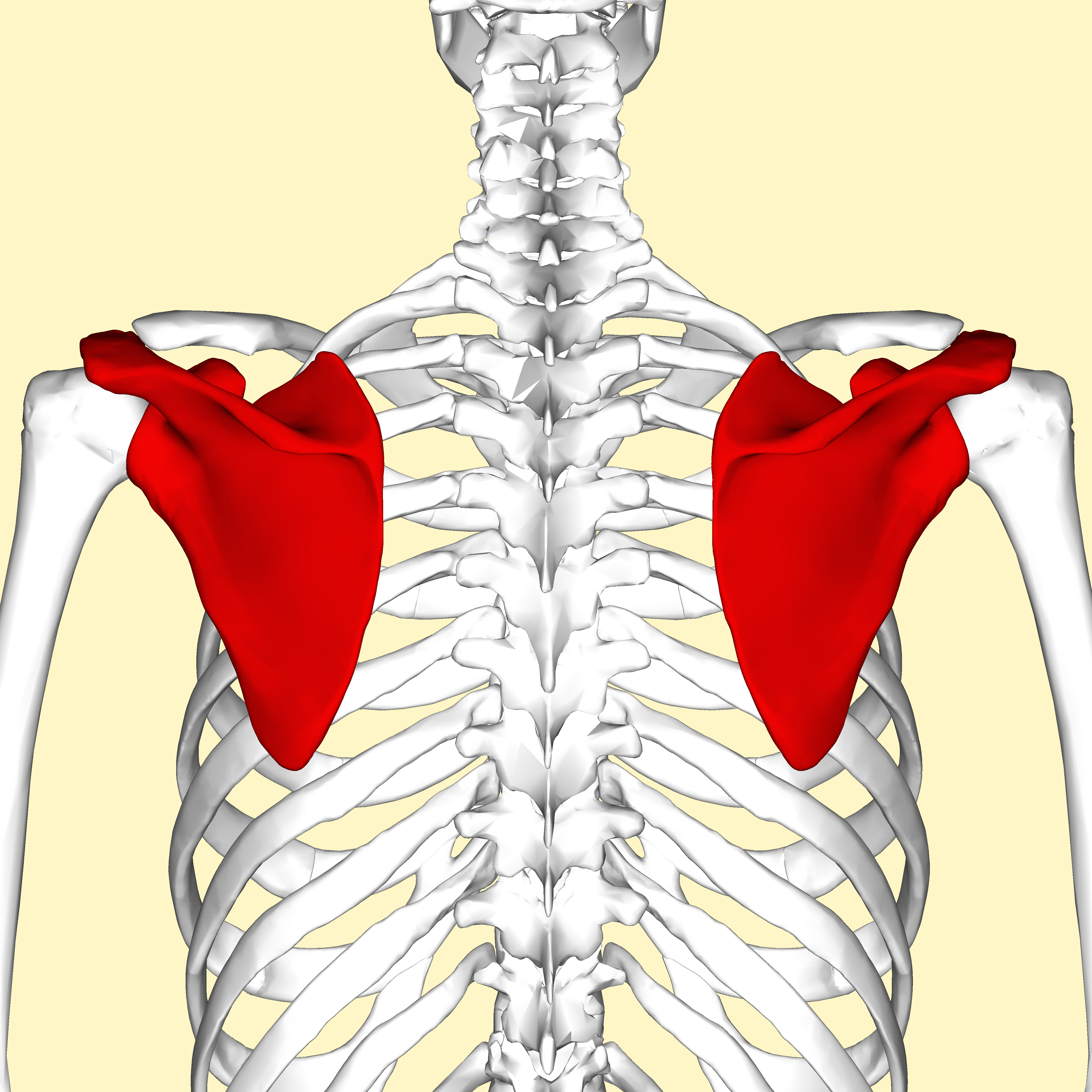


What bone is shown in red?
patella
pelvis

Identify the bone shown in green.
tibia
humerus
radius
ulna

The section of this picture highlighted in green is called the _______________?
Tibia
Patella
Ilium
Fibula

In this picture, what is represented in multi-colors?
Carpals
Tarsals
Phalanges
Radius


Bone #1 is...
Frontal Bone
Parietal Bone
Temporal Bone
Occipital Bone

Bone #4 is...
Mandible
Occipital Bone
Maxilla
Temporal Bone

sternum
scapula
cranium
clavicle

clavicle
vertebrae
sacrum
sternum

coccyx
scapula
clavicle
sacrum

sacrum
clavicle
coccyx
sternum

#2
Metacarpals
Carpals
Phalanges
Tarsals

#3-10
Tarsals
Metacarpals
Phalanges
Carpals

#1
Phalanges
Carpals
Metacarpals
Tarsals

Bone #8
Tarsals
Metatarsals
Phalanges


What type of fracture penetrates through the skin?
Closed (simple)
Open (compound)
Greenstick
Transverse

What type of fracture is this? (Hint: it's across the bone.)
Dorsal
Linear
Closed
Transverse

What is the name of the incomplete fracture usually seen in children?
Linear
Transverse
Fibial
Greenstick

When a broken bone moves out of its original position, it is ___________.
Closed
Displaced
Rearranged
Opened

A linear fracture is a break in the _______ direction as the bone.
Perpendicular
Opposite
Same
Negative

_________ fractures are diagonal breaks in the bone.
Incomplete
Linear
Closed
Oblique
If a fracture is comminuted, that means the bone is in _______ pieces.
Multiple
One
What type of fracture DOESN'T penetrate through the skin?
Open
Closed
Comminuted
Oblique

What type of fracture is this?
Greenstick
Comminuted
Hairline
Spiral

What type of fracture is this?
Greenstick
Comminuted
Hairline
Spiral

What type of fracture is this?
Compound
Comminuted
Simple
Spiral

What type of fracture is this?
Compound
Comminuted
Simple
Spiral
Which radiographic image displays an avulsion fracture?


What type of fracture is shown here?
Comminuted
Transverse
Segmental
Greenstick

What kind of bone is this?
Irregular
Long
Flat
Short


The joints that allow the most movement are called
Fixed
Fibrous
Cartilaginous
Synovial
Examples of a Ball & Socket Joint are found in the
Shoulder
Knee
Hip
Ankle
A hinge joint allows
A wide range of movements
Circumduction
Rotation
Movement in only one direction (ie. backwards & forwards)
An example of a Saddle joint is in the
Knee
Hip
Thumb
Vertebral column
Which of the following is part of a Synovial joint
Synovial membrane
Joint cavity
Ligament
Cartilage
When kicking a football the knee
Flexes
Extends
Abducts
Adducts


This joint permits a back and forth movement, allows for flexion and extension.
Ball and Socket
Hinge
Condyloid
Gliding

This joint permits rotation of one bone around another.
Ball and Socket
Saddle
Pivot
Hinge

This type of joint permits are sliding motion of one bone over another, found between the wrist bone in humans.
Condyloid
Saddle
Gliding
Hinge

This joint permits movement in 2 planes, like the base of the thumb in Humans
Ball and Socket
Gliding
Pivot
Saddle

This joint allows for a hinge type movement in two directions, example in Humans is the joints that connects finger to palm in Humans.
Ball and Socket
Condyloid
Gliding
Hinge

