
 Worksheets
Force, Motion, & Machine Review
Total questions: 28
Worksheet time: 31mins


During which interval is the object speeding up?
A to B
B to C
D to E
E to F
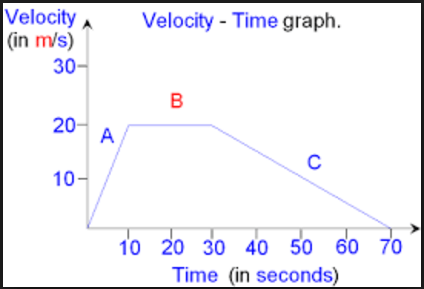

Object is...
(1) speeding up,
(2) constant speed,
(3) speeding up
(1) constant speed.
(2) stopped,
(3) constant speed

What is the speed of the object during segment B?
0.5 m/s
1.3 m/s
2 m/s
2.5 m/s
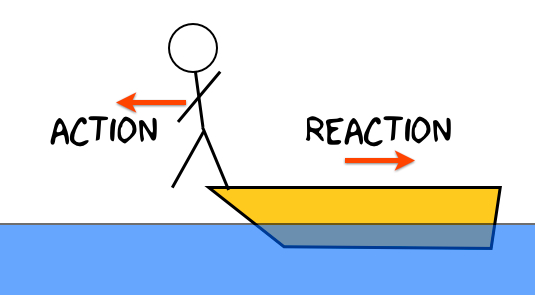
Which of the following would be a good example of Newton's third law of motion?
An air freshener hanging from the rear-view mirror of a car hangs still while the car moves forward with a constant acceleration
A carbon dioxide-fueled rocket launches upward into the air as carbon dioxide gas accelerates toward the ground below the rocket
Two balls of different masses are rolled with the same force, resulting in the ball with larger mass stopping faster than the ball with the smaller mass.
All of the above
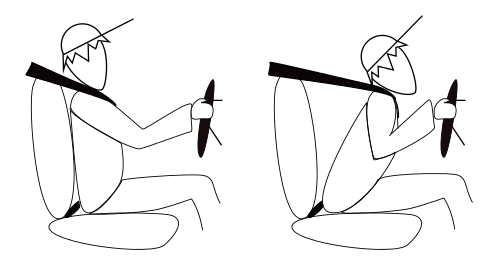
A 10 kg mass is dropped from a tall rooftop and accelerates at 9.8 m/s2. What is the weight of the dropped object?
0 N
9.8 N
98 N
198 N
Which statement below is false?
Weight depends on the force of gravity.
Mass is the amount of matter in an object.
Mass is a constant no matter where you are located.
Weight is a constant no matter where you are located.

Identify true statements:
Drag is increasing
Velocity is increasing
There is no drag
Weight is increasing
Deceleration
The value for gravity on Earth is around _____ m/s^2
5
9.8
8.9
15

weight and mass are the same thing
No - mass is a function of gravity and weight is the atoms and molecules that make up the object
No - weight is a function of gravity and mass is the atoms and molecules that make up the object
Yes - they are both the same
Maybe - it depends on the flux capacitor
Of the following situations, the one in which work is NOT done is:
Lifting a backpack
Carrying a backpack
Hitting a baseball
Pulling a sled
You have a pulley system that requires 500 N of force to lift a 1,700 N engine block. What is the mechanical advantage of the pulley system?
0.29
3.4
29%
1,200 N
The mechanical advantage of a machine is the number of times a machine increases
the amount of friction.
the change in direction.
the force.
the distance an object moves.
Which of the following actions do more work on an object?
(Use your formula W=FxD)
lifting a 100 N box 1.5 m up off the floor
lifting a 90 N box 2 m up off the floor
lifting a 160 N box 1 m up off the floor
lifting an 80 N box 1 m up off the floor
Suppose you live on the top floor of the Lake Point Tower in Chicago, 195 m above the ground. If your weight is 500 N, what minimum amount of work must the elevator do to lift you from the ground floor to the top floor?
(W=FxD)
305 J
97,500 J
695 J
2.5 J


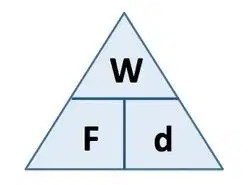
A painter lifts a can of paint that weighs 48 Newtons a distance of 3 meters. How would you calculate how much work he does?

