
 Worksheets
Semester Exam Practice
Total questions: 51
Worksheet time: 40mins
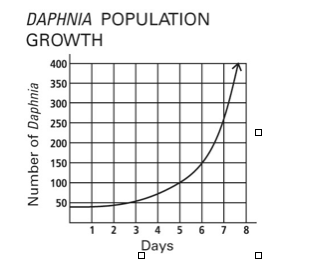
Which of the following populations is most likely to go extinct?
a very small population in an unstable environment
a moderate-sized population of r strategists
a large population with lots of genetic variability
all would be equally likely to go extinct

Things that prevent a population from growing exponentially.
Population
Carrying Capacity
Limiting Factors

Where on the graph has the population reached its carrying capacity?
A to B
B to C
A to C
Where on the graph does the population experience exponential growth?
A to B
B to C
A to C
Where on the graph have the limiting factors began to affect the the population growth?
A
B
C

A species that plays a critical role in the health, maintenance, growth, or definition of an ecosystem.
keystone
invasive
engineer
predator
How quickly a population grows is called
Limiting Factor
Carrying Capacity
Growth Rate


A diagram that shows the transfer of energy in an ecosystem by using several food chains.
ecosystem
food web
environment
food chain

In the energy pyramid here, how much of the energy in each level gets lost as heat?
80%
90%
10%
20%


The diagram represents one way an enzyme can be inhibited. Which statement explains the effect of an inhibitor on an enzyme?
A substrate will be able to bond with the enzyme.
The enzyme will likely be attacked by immune cells
The enzyme will be unable to produce more enzymes.
A substrate will be unable to attach to the enzyme.

Food webs such as the one shown were first used in 1927 by the animal ecologist Charles Elton. The food web below represents the feeding relationships among organisms in an Alaskan ecosystem. An environmental change that removed which of these organisms from the ecosystem would cause the most instability in the ecosystem?
Auklets
Foxes
Salmon
Zooplankton

Some students used vinegar to dissolve a way the shells of three eggs and used these eggs as models of human red blood cells. The students observed the changes in the eggs when they were placed in different solutions. Which statement best describes the role of the cell membrane in this model?
The cell membrane is an impermeable barrier that prevents water from entering the cell.
The cell membrane allows solutions to enter the cell, which causes the cell to shrink.
The cell membrane allows water to enter and leave the cell.
The cell membrane removes solutes from the environment.

Viruses are considered nonliving because they need a host to reproduce.
True
False

A cell _______ in a hypertonic solution because water moves _______ the cell.
shrinks; out
shrinks; in
swells; out
swells; in

Which of the following follows the concentration gradient (high to low) but requires a transport protein?
diffusion
osmosis
facilitated diffusion
active transport
Which of the following converts food into energy for the cell?
vacuole
mitochondria
cytoplasm
cell membrane
Plant cells are able to produce their own food. This process happens in which structure?
cell wall
chloroplast
mitochondrion
vacuole
Which statement best explains how sweating during exercise maintains homeostasis?
It regulates mineral concentrations in cells
It regulates body temperature
It maintains water balance
It maintains sugar balance in cells
In some ecosystems, wolves have been eliminated due to their threats to humans. How can the reintroduction of wolves benefit the ecosystem?
It can eliminate weak animals from a prey population, thereby decreasing competition for natural resources
It can eliminate the most fit animals among the prey population, which will cause an increase in birth rates of the prey
It can cause the prey population to migrate to other areas, resulting in more fit prey.
It can cause the prey population to better blend in with their environment.
What will most likely be the result as humans move into new areas, forests are clear cut and housing developments are built?
Global temperatures will decrease because trees are removed.
Many organisms will lose their homes because their habitats have been destroyed.
Better sanitation in the area will reduce the amount of pollution.
The rainfall in the area will increase because there will be increased runoff.


The following list represents characteristics of a living thing :
made of cells, has lungs, can reproduce
made of cells, grows and develops, uses energy
has similar chemicals, makes noises, made of cells
Which item listed is NOT a characteristic of life?
adjusting to stimuli
getting and using energy
growing and developing
breathing
Which of the following is not a characteristic of life?
Has cells
Able to reproduce
Able to adapt and evolve
Movement

Which of these is not true about all organisms?
all living things are multicellular
all living things obtain and use energy
all living things reproduce
Which of the following is NOT an example of an adaptation?
birds migrating during the winter months
the total sum of all the chemical reactions in your body
humans evolving the ability to digest lactose (sugar in milk)
the ability of dolphins to communicate in aquatic environments

Which characteristic is shown: A plant switches position and follows the sunlight throughout the day.
Grow and develop
Respond to a stimulus
Acquire and use energy
Reproduce
The following are all characteristics of life EXCEPT:
made of cell(s)
eat food
respond stimuli
reproduce
A baby song bird hatches from its egg with both parent songbirds watching. Which characteristic of life does this represent?
All living things reproduce
All living things maintain homeostasis
All living things use energy
All living things grow
Which statement describes ALL living things?
They are composed of one or more cells.
They must reproduce sexually.
They have organ systems to carry out the processes of life.
They are capable of making their own food.

