
 Worksheets
Chemistry Final Exam
Total questions: 65
Worksheet time: 5hrs 25mins

Which equipment heats liquids and some stir liquids?
beaker
graduated cylinder
flask
hot plate

What does it mean when you see this lab safety symbol?
working with glassware/chemicals
wear goggles
working with sharp objects
working with electricity
working with chemicals

Which scientist's model is referred to as the Plum Pudding Model?
Democritus
John Dalton
Ernest Rutherford
J.J. Thomson
Niels Bohr
Which scientist performed the Gold Foil Experiment??
Democritus
John Dalton
Ernest Rutherford
J.J. Thomson
Niels Bohr
Which subatomic particle has a positive charge?
Electrons
Neutrons
Protons
Quarks
Which of the following represents protons on the periodic table?
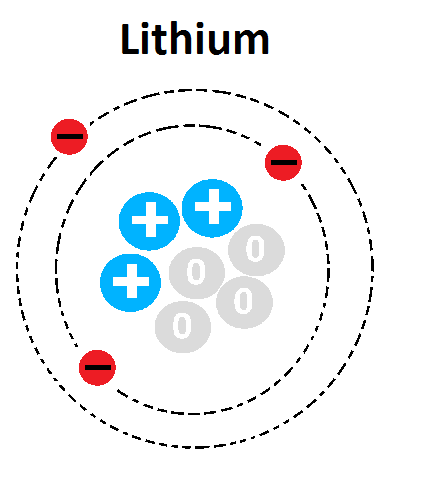
Subtract the number of the atomic number from the mass number
How many electrons would a Nitrogen ion gain/lose? If it has 5 valence electrons.
lose 5
gain 5
lose 3
gain 3
A Bromine ion gains 1 electron, which of the following is the correct symbol for a Bromine ion?
Br-1
Br+1
Br+7
Br-7
Oxygen has 6 valence electron. It will have a charge of _______.
+1
-1
+2
-2
What is the name of group number 1?
halogens
noble gases
alkali metals
alkaline earth metals
Periodic law states that the elements are arranged according to their atomic ________ so that elements with similar chemical properties are in the same ________ and properties repeat periodically.
numbers, rows
masses, rows
masses, column
numbers, column
Metals (select all that apply)
are found on the right side of the periodic table.
are found on the left side of the periodic table.
are good conductors of heat and electricity.
are brittle.
are malleable and ductile.
Which element has similar chemical properties as sodium but has 7 energy levels?
Francium (Fr)
Cesium (Cs)
Rubidium (Rb)
Potassium (K)
Elements that have the same number of energy levels are said to be in the same ______.
group
period
family
classification
As you move across the period, atoms tend to get _______ because the positively charged _______ pull the electrons closer to the nucleus.
bigger,
electrons
smaller,
protons
smaller,
neutrons
bigger,
protons
Electronegativity is the measure of the ability of an atom in a compound to attract. _______.
Electrons
Protons
Neutrons
Which shows increasing electronegativity?
F, Cl, Br, I
Ba, Mg, Cl, F
Cl, Si, Al, Na
O, Se, K, Rb

A substance that may have properties of both metals and nonmetals is called a --
Metal
Nonmetal
Metalloid

The maximum number of electrons that can be placed in the p subshell.
2
6
10
14
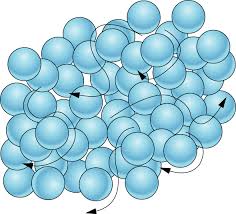
Which is not true about the liquid state of matter?
The liquid state has a definite volume and a definite shape.
The liquid state takes on the shape of its container.
The liquid state has a definite volume and an indefinite shape.
The particles in a liquid can easily move past each other.
Which process could cause a material to change state from gas to liquid?
Adding heat
Adding energy
Removing particles
Removing energy
Oil and water are each homogeneous mixtures. What happens to them when they are mixed?
They form a heterogeneous mixture.
They form a pure substance.
They form a phase.
Formula for barium sulfide
B2S3
BaS
Ba2S
BaS2
Formula for iron (II) carbonate
FeCO3
Fe2CO3
FeCO2
Fe2CO2
Mg + __HCl ---> MgCl2 + H2
In the equation, 2Mg + O2 ---> 2MgO, which are the reactants?
Mg and O
Mg and MgO
MgO
O and MgO
Balance the following equation:
___ Mg+ ___ O2→___ MgO
1, 1, 3
2, 1, 2
1, 2, 1
2, 2, 2
The substance being dissolved in a solution is the?
solution
solute
solvent
mixture
If I dissolve carbon dioxide in water, what is the solvent?
Carbon Dioxide
There is no solvent
Oxygen
Water

How does a solution become supersaturated?
by pouring lots of solute in it then stirring.
dissolve a little solute in it and stir.
heat the solution to make it dissolve more solute and then cool it down.
dissolve a small amount of solvent in it then heat it up.
CaCl2
Soluble
Insoluble
Mg(OH)2
Soluble
Insoluble
Which is the correct net ionic equation for the reaction of:
AgNO3 (aq) + CaCl2 (aq) -> AgCl (s) + Ca(NO3)2 (aq)

What effect does increasing the surface area have on the rate of a chemical reaction?
No effect on the reaction rate
Decreases the reaction rate
Increases the number of collisions
Decreases the number of collisions
What happens to the reaction rate when the temperature is increased?
Increases due to more frequent collisions
Remains the same
Decreases due to lower kinetic energy
Decreases due to fewer collisions
2 NaClO3 (s) → 2NaCl (s) +3 O2 (g)
How many grams of O2 will be produced from 12.00 moles of NaClO3?
256 g of O2
576 g of O2
288 g O2
32 g O2

Identify the limiting and excess reactants in the reaction shown.
O2 is limiting and H2 is excess.
H2 is limiting and O2 is excess.
O2 is both limiting and excess.
There is no limiting reactant.
4NH3+6NO --> 5N2 + 6H2O
Actual yield = 62g
Calculate the percent yield.
Find the percentage composition of Mg in Mg3(PO4)2.
27.48% Mg
43.11% Mg
16.00% Mg
12.63% Mg
What is the empirical formula for C4H6?
CH
CH3
C2H3
C4H6
What is the molecular formula of a compound that has an empirical formula of C4H4O. The molar mass of the molecular formula is 136 g/mol.
C12H12O3
C24H24O6
C16H16O4
C8H8O2
A compound consists of 72.2% magnesium(Mg) and 27.8% nitrogen(N) by mass. What is the empirical formula?
Mg4N3
MgN2
Mg3N2
MgN
What is the molarity of a solution prepared by dissolving 58.5 grams of NaCl in enough water to make 0.5 liters of solution? (Molar mass of NaCl = 58.5 g/mol)
0.5 M
1.0 M
2.0 M
4.0 M
How many moles of solute are present in 250 mL of a 2.0 M solution?
0.25 moles
0.5 moles
1.0 mole
2.0 moles
What volume, in milliliters, of 10.0 M NaOH is needed to prepare 300.0 mL of 2.00 M NaOH by dilution?
0.067 mL
60.0 mL
100 mL
125 mL

