
Font size
 Worksheets
Geography Final Sem 1
Total questions: 95
Worksheet time: 58mins
What 2 questions must geographers must answer?
Where and Why?
What and Where?
How and Why?
When and What?
What are the two major branches of geography?
Human
Physical
Spatial
Dimension
Cartography is
the study of space
the study of humans
the study of the Earth's natural environment
the science of mapmaking
What did Eratosthenes do?
calculated earth's circumference divided it into 5 climate regions
Invented the word "geography"
described the known world in one of the first geography books
studied and labeled the first world map
Geographers...
identify location of important places, explain why one human activity is found near another, ask where and why
Identify the dates of important events, explain why one activity follows another chronologically, ask when and why
a way of life; a set of beliefs, values, and customs shared by a group of people
culture
assimilation
acculturation
economy
assimilation is
making things the same
adopting cultural traits
a process driven by international trade
a process of interaction and integration among the people
acculturation is
making something "worldwide"
uniqueness of a place's culture and economy
adopting cultural traits
making things the same
an effort to make something "worldwide" in scope, influences culture and the economy
a cultural hearth
diffusion
technology
globalization
technology allows diffusion to happen much faster
True
False
Diffusion...
allows diffusion to happen much faster
happens when ideas from the center of innovation (a cultural hearth) spread outward
is Abiotic
is substances in nature that are useful to people, economically and technologically feasible access, and socially acceptable to use
a biotic system
is the same thing as an abiotic system
system made up of living things
system made up of nonliving things
is alive
What are the 3 pillars of sustainability?
Social
Environmental
Economic
Resources are
substances in nature that are useful to people, economically and technologically feasible access, and socially acceptable
Earth's renewable and non-renewable natural resources in ways that do not constrain resource use in the future
Theory and Goal of Globalization
breaks down international trade barriers
brings jobs
increases immigrant rate
promotes exchanges
boosts global trade
How does distance contribute to diffusion?
something going "viral" online
the further away, the longer it takes to diffuse
technology speeds up the process
boosts global trade
Globalization is a process of
intention
internation
interaction
integration
Density definition
the geometric arrangement of objects in space
the extent of a feature's spread over space
the frequency with which something occurs in space
Concentration definition
the extent of a feature's spread over space
the frequency with which something occurs in space
the geometric arrangement of objects in space
Pattern definition
the geometric arrangement of objects in space
the frequency with which something occurs in space
the extent of a feature's spread over space
there are large amounts of something in a given area
high density
low density
China
Low Density. It has a high amount of people in a very large land.
High Density. It has a low population, but a small land.
Low Density. It has a high amount of people in a small area.
High Density. It has a small population in a large land.
High Density, it has less people, but they are more clustered because of the small land
Netherlands
China
US
Finland
Dispersed and Clustered concentration
objects in a given area are closer together - dispersed
objects in a given area are spaced far apart - dispersed
objects in a given area are spaced far apart - clustered
objects in a given area are closer together - clustered
This is a pattern for the streets in the USA. They intersect at right angles at uniform intervals to form square or rectangular blocks.
(a)
How is most of California's water used?
Residents and businesses use 20% the other 80% goes to agriculture
Residents and businesses use 40% the other 60% goes to agriculture
Residents use 20% the other 80% goes to businesses
3 Pillars of Sustainability - Social
Humans use resources to meet their daily needs, this includes everything humans need to survive
The sustainable use of Earth's resources to meet human needs, resources are conserved if they are consumed at a slower rate than they can be replaced
Price of a resource depends on the value people place on it
The 5 themes of geography
location, interaction, movement, place, and religion
location, interaction, movement, place, and region
location, interaction, monument, place, and region
location, integration, movement, place, and region
5 Themes: Physical or human features that contribute to the distinctiveness of a spot on Earth. Ex: Human - building style, religion, food preferences. Physical - mountains, bodies of water, climate type, vegetation
(a)
5 Themes: 3 types of ------. Formal (an area where most people share at least 1 common distinctive characteristic), Functional (groups of areas that attach identity to a central place place), and Perceptual (an area that people believe exists as a part of their cultural identity)
(a)
Absolute and Relative location. Where is it?
Movement
Location
Place
Region
Interaction
DTM - Stage for most of human history because of unpredictable supply
stage 2
stage 1
stage 3
stage 4
DTM - Occurred 200 years ago in the most developed countries due to the Industrial Revolution. Started 50 years ago in developing countries after the transfer of modern medicine
stage 1
stage 2
stage 3
stage 4
DTM - Took place 100 years ago in most developed countries as people chose to have smaller families. Currently taking place for developing countries as the government encourages family planning, vaccines and healthcare adequate
stage 1
stage 2
stage 3
stage 4
DTM - Taking place in some developed countries thanks to birth control, as well as an increasing number of women working outside the home
stage 1
stage 2
stage 3
stage 4
Stage 5 - low birth and death rates along with an elderly population
occurred 200 years ago in developed countries
Possible Demographic Transition Model stage
Definite Demographic Transition Model Stage
Stage for most of human history because of unpredictable food supply
was an economic geographer who created a theory based on the relationship between population growth and food supply
Eratosthenes
Nelson Mandela
F.W. de Klerk
Thomas Malthus
According to Malthus, what will happen if population growth does not slow down?
the earth will create more resources for people to use
due to scarcity, people will marry and have children later in life
Nature will limit growth
Famine, disease, and war
Critics of Malthus' Theory think
due to better growing technology, food production has increased more rapidly than Malthus predicted
it is too negative and population growth is slower than Malthus predicted
poverty and hunger is a result of economic inequality NOT overpopulation
climate change will further impact and reduce crop production
covered with ice, ground permanently frozen- Examples: Greenland, Antarctica, Russia
(a)
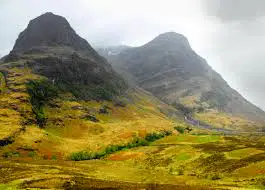
Which land is this?
High Lands
Wet Lands
Cold Lands
Dry Lands
Dry lands are too dry for farming, lack water, and people survive by raising animals and examples are: Algeria, Libya, Northern Mali
False
True
Most populated areas
South Asia, Europe, Southeast Asia, East Asia
Southern Asia, Eastern Asia, Northern Asia, and Middle East
Middle East, Europe, South Asia, North America
Europe, Asia, North America, Latin America
Why is poverty correlated with diseases?
Poor areas have unsanitary conditions that allow diseases to spread easily. People also can't afford medical treatments.
As people travel, so do their germs
Diseases have evolved to become resistant to medicines and chemicals
What is the evolution of diseases?
As people travel, so do their germs
Diseases have evolved to become resistant to medicines and chemicals
Poor areas have unsanitary conditions that allow diseases to spread easily.
What is Lingua Franca?
a branch of a Germanic language
once regarded as a dialect of Spanish, is now classified by linguists as a distinct Romance language
a language spoken in Spain and Portugal, is debated on whether it should be classified as a language or dialect
a language used to communicate by speakers who have different native languages
Chinese uses
logograms
sign language
symbols
pidgin
China used the ..... to slow down population growth
One Child Policy
Three Child Policy
Encouraging more workers
Sterilizations
Arable land
land suitable for farming
requires less farmers
is made of nonliving things
spreads culture
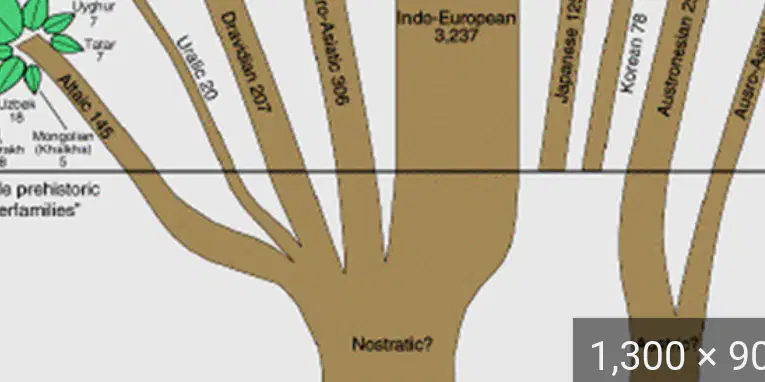
What is this?
Language Family
Language Branch
Language Group
English language family
(a)
4 main branches of Indo-European
Romance, Germanic, Balto-Slavic, Indo-Iranian
Romance, Albanian, European, Canadian
Albanian, Russian, Sino-Tibeten, Balto-Slavic
Indo-Iranian, Balto-Slavic, Indo-European, Canadian
Net Migration
The difference between the number of immigrants and emigrants
Migration TO a location
Migration FROM a location
Permanent move to a new location
Emigration
Migration TO a location
The difference between the number of immigrants and emigrants
Migration FROM a location
Permanent move to a new location
Intra-regional
move from one region to another country
movement within one region
Jews were forced out of their home land in an event called the --------- in 70 C.E.
Diaspora
Holocaust
Antiseminism
Zionsim
When did Zionism occur?
1200 B.C.E - Jews live in and around the land of modern Israel, known as Judea.
1096-1270 C.E. - The Christian countries of Europe invade this region to capture the Holy City in the name of Christ.
1948 - World War 2 is over. As part of rebuilding, Jews are finally given their own country. This resulted from the desire for Jews to find a homeland.
1967 - The Six Day War took place, pitting Palestinians and Arabs (including Egypt and Jordan) against Israel. In the end, Israel defeated these nations thanks to the US.
Yasser Arafat is seen .... to the US
as a terrorist
as a lovely guy
as a hero
as a soldier
Why was it impossible to get a precise/accurate national count of the number of people who immigrated around this time?
frequent boundary changes
there were too many countries
technology was way too good
too much migration
Where do most recent immigrants to the US go to?
California
New York
Texas
Florida
Arizona
Who took the most land after the Six Days War?
Palestine
Egypt
Israel
Jordan
Distribution - Popular culture
based on the ability of people to access the material, income $
influenced by local, physical, and cultural factors
transmitted slowly and on a small scale
spreads rapidly and on a large scale
The effects of a location's physical feature's on the way food tastes
(a)
Restriction on behavior imposed by social custom
(a)
A folk culture's hearth is traceable
True
False
How is a custom different from a habit?
A custom is a repetitive act of a group and a habit is a repetitive act of one person
A custom is a repetitive act of one person and a habit is a repetitive act of a group
A habit is a repetitive act of one person and a custom is a annual act of a group
A custom is a annual act of one person and a habit is a weekly act of a group
Which two factors explain why more women are migrating to developed countries in recent years?
the high % of women in the labor force in these countries logically attracts a high % of females
adults seeking work, rather than children or elderly people
Some developed countries have made it possible for wives to join husbands who have already migrated
Age Patterns of US immigrants:
Children: ---- compared to only ---- Young Adults: ---- compared to only ---- Elderly: ---- compared to ----
49%, 27%, 5%, 15%, 21%, 27%
21%, 27%, 5%, 15%, 49%, 27%
5%, 15%, 49%, 27%, 21%, 27%
21%, 27%, 49%, 27%, 5%, 15%
It took TV ---- years to spread from US to rest of world, but only took internet ---- years
(a)
Extinct Languages
A (an) ---- of many languages is due to globalization
increase
loss
color
accent
How is nationality in the US identified?
by what your religion and beliefs are
the way you look
identifies groups with distinct ancestry and cultural traditions
identifies citizens of the US (born in the country and immigrated citizens)
The Epidemiologic Transition
Stage 1
High CDR (lots of people dying), principal causes of human death: infectious and parasitic diseases, Example: The Black Death
Rapidly Decling CDR (less people dying due to advances in medicine/technology), Pandemic, Example and How it spreads: Cholera; which spreads through dirty water and crowded cities
Moderatley Decling CDR (less people dying), Characterization: decrease in infectious diseases, but an increase in chronic diseases/disorders, Example: Cancer, Heart Disease
Low but increasing CDR (increasing because of many old people in societies in this stage), Changes in life expectancy: has been going up thanks to medical advancement
Rapidly Decling CDR (less people dying due to advances in medicine/technology), Pandemic, Example and How it spreads: Cholera; which spreads through dirty water and crowded cities
Stage 1
Stage 2
Stage 3
Stage 4
Epidemiologic transition: causes of death in each stage of the demographic transition model
False
True
Epidemiological Features
The AIDS epidemic of the 1980s-1990s is an example of.....
Increased Connections
Poverty
Evolution
Precipitation: 2 distinct seasons: has a [dry] season when much of the vegetation dies and a [rainy] season when things grow rapidly.
Arid Climate
Tropical Wet
Humid Continental Climates
Tropical Wet and Dry Climates
Most of the people who practice primal-indigenous religions reside in what two locations?
Southeast Asia
South Pacific Islands
Punjab
Northern Asia
How many adherents (followers) does Sikhism have? Where are almost all Sikhs located?
(a)
Hinduism and Judaism are ----- because -----
Universalizing because they attempt to appeal to all people wherever they may live
Ethnic because they attempt to appeal to all people wherever they may live
Universalizing because they appeal primarily to one group of people living in one place
Ethnic because they appeal primarily to one group of people living in one place
Christians make up 90% of the western hemisphere
True
False
Regional variation of a language, distinguished by distinctive vocab, spelling, and pronunciation
(a)
Why did the US Congress pass the Quota Act of 1921 and the National Origins Act of 1924?
to many illegal immigrants
to many immigrants
to many people moving to Europe
too many immigrants from Canada
Which 4 factors influence government policies towards immigrants and refugees?
public opinion
economic
resources
international regions
culture
Quota: a law that places maximum limits on the number of people who can immigrate to a country----
each year
every 2 months
every 2 years
for a decade
Chain migration and brain drain
the migration of people to a specific location because relatives or members of the same nationality previously migrated there - chain migration
public opinion, economic, resources, and international relations - chain migration
a large-scale emigration by talented people/scientists, researchers, doctors and other profesionals - brain drain
a law that places maximum limits on the number of people who can migrate to a country each year - brain drain
F.W. de Klerk wanted ......
a non-racist South Africa and to release Nelson Mandela from prison
a non-racist South Africa and to keep Nelson Mandela in prison
Nelson Mandela to become his father
Nelson Mandela to start building houses in South Africa
Apartheid was the legal separation of races into different geographic areas
True
False
The mass killing of a group of people in an attempt to eliminate the entire group from existence
(a)
--- influenced the fighting by encouraging the violence to continue in the Rwandan conflict
Phone
TV
Radio
Diffusion
White Belgians favored ----- over -----
(a)
Hilter's motivation for killing the jews
Anti-semitism
Zionism
Terrior
Terrorism
Nazi's believed the ----- is the superior race
(a)
Which ethnic group was a target of ethnic cleansing in Kosovo in the 1990s?
Slavs
Albanians
Muslims
Serbs
What two ethnic groups were fighting in the ethnic cleansing of Bosnia-Herzegovina?
Bosnian Muslims and Croats against Serbs
Slavs against Serbs, Croats, and Muslims
Serbs and Croats against Bosnian Muslims
Serbs and Bosnian Muslims against Croats
Which of the following is TRUE about the ethnic groups of Pakistan?
Punjabis and Uzbeks have been fighting for an ethnic majority.
The majority ethnicity is Punjabi.
All ethnicities are split evenly.
The majority ethnicity is Pashtun.

