
 Worksheets
Biology Quiz on Homeostasis and Feedback Mechanisms
Total questions: 11
Worksheet time: 6mins
When a person does strenuous exercise, small blood vessels (capillaries) near the surface of the skin increase in diameter. This change allows the body to be cooled. These statements best illustrate
synthesis
homeostasis
excretion
locomotion
Which situation is not an example of the maintenance of a dynamic equilibrium in an organism?
Guard cells contribute to the regulation of water content in a geranium plant.
Water passes into an animal cell causing it to swell.
The release of insulin lowers the blood sugar level in a human after eating a big meal.
A runner perspires while running a race on a hot summer day.
Some people with spinal cord injuries do not sweat below the area of the injury. Without the ability to sweat, the human body temperature begins to rise. Which statement would best describe this situation?
Feedback mechanisms regulate blood sugar levels.
Gene mutations are increased.
Energy from ATP is not available.
Dynamic equilibrium is disrupted.
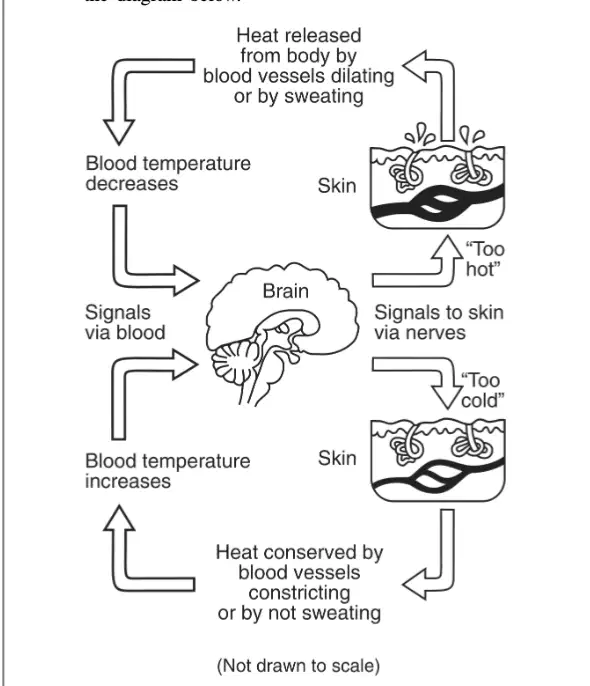
Activities in the human body are represented in the diagram. Which title would be appropriate for the diagram?
Rate of Excretion Varies in Response to Amount of Water Taken In
Feedback Mechanisms Help to Maintain Homeostasis
Respiratory Rate Responds to an Increase in Muscle Activity
The Nervous System Responds to Changes in Blood Sugar Levels
Sweating is a process that helps cool the body during strenuous exercise. This is an example of
recycling of gases
cellular respiration
gene malfunction
a feedback mechanism
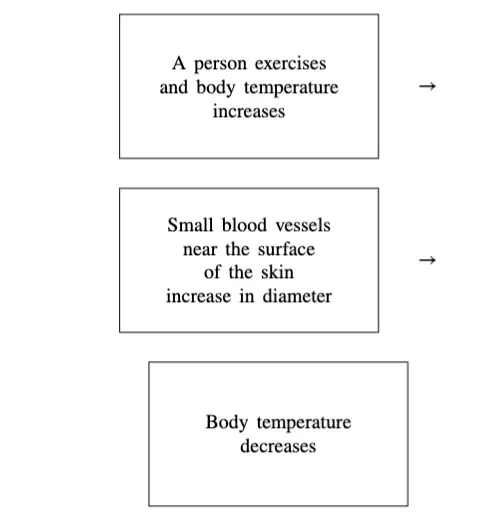
The diagram below represents an activity that occurs in the human body. This diagram best illustrates
active transport
maintenance of homeostasis
synthesis of nutrients
differentiation
Bumblebees show some ability to control their own body temperature. During cold weather, bumblebees have been observed warming their flight muscles by shivering. The bees are able to maintain a body temperature several degrees above that of the surrounding air. Regulation of their internal body temperature is an example of
diffusion
synthesis
respiration
homeostasis
A person usually experiences small variations in body temperature over a 24-hour period. These variations in temperature are an example of
an immune response
genetic differences between individuals
an adaptation to global warming
dynamic equilibrium
An individual walks out of his air-conditioned (75°F) home into the hot outside environment (85°F). His ability to adjust to this changing environment involves a mechanism similar to
the regulation of water loss by guard cells in plant leaves
the digestion of carbohydrates by enzymes
using ATP for the diffusion of water
glucose production in the pancreas
If body temperature is too high, some blood vessels increase in size and sweat glands will excrete sweat, resulting in a lower body temperature. These changes are an example of
a learned behavior
feedback mechanisms
an inherited disorder
genetic mutations
Anhidrosis is the inability to sweat normally. If the human body cannot sweat properly, it cannot cool itself, which is potentially harmful. Anhidrosis most directly interferes with
a feedback mechanism that maintains homeostasis
an immune system response to harmless antigens
the synthesis of hormones in the circulatory system
the enzymatic breakdown of water in cells

