
Font size
 Worksheets
6th Grade Accel- Finals Review
Total questions: 38
Worksheet time: 35mins
Which of the following best describes the hierarchical organization within organisms from simplest to most complex?
Organ systems, organs, tissues, cells
Cells, tissues, organs, organ systems
Tissues, cells, organ systems, organs
Organs, organ systems, cells, tissues
What is the primary difference between plant and animal cells?
Plant cells have a cell wall, while animal cells do not.
Animal cells have chloroplasts, while plant cells do not.
Plant cells have mitochondria, while animal cells do not.
Animal cells have a large central vacuole, while plant cells do not.
How do body systems work together to maintain homeostasis during exercise?
The digestive system increases nutrient absorption.
The respiratory and circulatory systems increase oxygen delivery to muscles.
The nervous system decreases heart rate.
The skeletal system produces more red blood cells.
Which of the following is an example of a noncontact force?
Friction
Tension
Gravity
Applied force
Describe how the Linnaean classification system is used to organize living organisms.
It groups organisms based on their habitat.
It classifies organisms based on their evolutionary history.
It organizes organisms into hierarchical categories based on shared characteristics.
It categorizes organisms by their size and shape.
How does atmospheric movement cause temperature differences on Earth?
By distributing solar energy evenly across the planet.
By creating wind patterns that move warm and cold air masses.
By preventing the mixing of different air masses.
By reflecting sunlight back into space.
Compare and contrast weather and climate.
Weather is the long-term average of atmospheric conditions, while climate is the short-term state.
Weather refers to daily atmospheric conditions, while climate is the long-term average of weather patterns.
Weather and climate are interchangeable terms.
Weather is measured in decades, while climate is measured in days.
What is the law of conservation of energy?
Energy can be created and destroyed.
Energy can be transformed from one form to another but cannot be created or destroyed.
Energy is always lost as heat.
Energy is only conserved in closed systems.
How do weathering, erosion, and deposition shape Florida's landforms?
They create mountains and valleys.
They flatten the landscape by removing all soil.
They break down rocks, transport sediments, and build up new landforms.
They have no effect on Florida's landforms.
Explain the relationship between mass and weight.
Mass is the force exerted by gravity, while weight is the amount of matter in an object.
Mass is constant, while weight varies with gravitational pull.
Mass and weight are the same and do not change.
Mass is measured in newtons, while weight is measured in kilograms.
What is the primary function of the nucleus in a cell?
To produce energy for the cell
To control cell activities and store genetic information
To transport materials within the cell
To protect the cell from external damage
Analyze how global patterns influence weather and climate.
Global patterns have no effect on local weather.
Ocean currents and wind patterns distribute heat and moisture around the Earth, affecting weather and climate.
Only local factors like mountains and lakes influence weather and climate.
Global patterns only affect the climate, not the weather.
Homeostasis is necessary for a cell to survive. What is the definition of homeostasis?
the elimination of waste
The division of cells to form new cells
The maintenance of a stable internal environment
The process by which energy from the sun is used to make food
True or False? The digestive, respiratory, circulatory, excretory, and muscular systems work together to break down food, bring nutrients to every cell in your body, and get rid of food waste.
True
False
a member of a large group of unicellular microorganisms which have cell walls but lack organelles and an organized nucleus, including some that can cause disease.
pathogen
bacteria
parasite
Fungi
As Florida's rivers and streams carry and drop sediment, what landforms are formed?
beaches
barrier islands
deltas
All of the above.
Florida's unique sandy soil and subtropical climate are ideal for growing orange trees. Which of these parts of the Earth system are interacting when Florida’s orange trees grow?
biosphere, hydrosphere, and atmosphere
geosphere, cryosphere, and atmosphere
biosphere, hydrosphere, and cryosphere
cryosphere, atmosphere, and hydrosphere

The picture below illustrates upward movement of warm air and the downward movement of cool air as it occurs in the troposphere. What kind of heat transfer does this process describe?
radiation
conduction
convection
In the morning, over the cold mountain lake, a light fog will form. What two spheres are interacting to allow the fog to form?
hydrosphere and atmosphere
cryosphere and atmosphere
atmosphere and biosphere
geosphere and biosphere
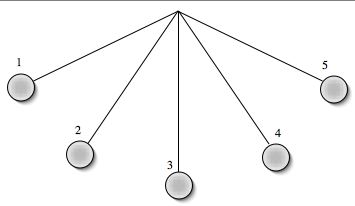

How will this object move?
The object will move to the left, as the forces are balanced.
The object will move to the right, as the forces are unbalanced.
The object will move to the left, as the forces are unbalanced.
The object will move to the right, as the forces are balanced.
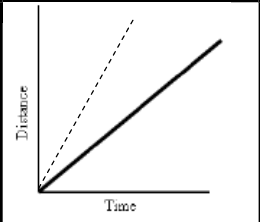

Which process could cause a material to change state from gas to liquid?
Adding heat
Adding energy
Removing particles
Removing energy
Physical Properties that DO NOT change with the amount of matter
present are INDEPENDENT properties of matter.
TRUE
FALSE
Match the following physical properties to their descriptions.
The relationship between the mass of a substance and how much space it takes up
Density
The ability of a substance to conduct heat
Thermal conductivity
The ability of a substance to conduct electricity
Electrical conductivity
The ability of a substance to dissolve in a solvent
Solubility
The ability of a substance to be attracted to a magnet
Magnetic properties
What two properties do you need to find density?
Volume and weight
Mass and volume
Only volume
Only mass
When two or more different elements chemically combine, a __________________________ is formed.
element
compound
mixture
solution

Which element will have the most similar physical and chemical properties to the element Barium (Ba)?
Caesium
Strontium
Astatine
Lanthanum
Oxygen
The substances in this mixture DO NOT blend smoothly throughout, and the individual substances that compose the mixture can be detected or seen.
Homogeneous mixture
Heterogeneous mixture
Pure substance
Suspension

What information is shown for the dependent variable in this graph?
Rainfall in mm
Day of the month
Rainfall during the first 9 days of a month
Wegener’s theory of Continental Shift proved to be wrong. Which would be the best explanation of why we still study what he discovered?
He had valid observations that laid the foundation for changes to his theory, which changed to the Theory of Plate Tectonics.
He was the first scientist to explain some phenomena that nobody else could explain
He travelled around to find fossils that helped explain his theory.
He was just a really smart guy

