
 Worksheets
7th Grade Winter Break Review
Total questions: 150
Worksheet time: 2hrs 16mins
What is another movement characteristic of terrestrial planets?
Rotate on their axes
Spin around the Moon
Move in a straight line
Stay still
What is one of the movements of terrestrial planets?
Orbit the Moon
Orbit the Sun
Stay stationary
Move randomly
What is the location of terrestrial planets in the solar system?
Farthest from the Sun
Closest to the Sun
In the asteroid belt
Beyond Neptune
Which planets are considered terrestrial planets?
Jupiter, Saturn, Uranus, and Neptune
Mercury, Venus, Earth, and Mars
Pluto, Eris, Ceres, and Makemake
Venus, Jupiter, Saturn, and Neptune
How do terrestrial planets compare in size and mass to other planets?
Larger and more massive
Smaller and less massive
Same size and mass
Larger but less massive
Which planets are considered terrestrial planets?
Jupiter, Saturn, Uranus, Neptune
Mercury, Venus, Earth, Mars
Pluto, Eris, Haumea, Makemake
Earth, Jupiter, Saturn, Neptune
Which of the following is a characteristic of terrestrial planets?
Composed of gas
Thick atmospheres
Composed of rock
Larger, more massive planets
What is a common origin for many meteors?
The Kuiper Belt
The Oort Cloud
The asteroid belt
The Sun
What type of bodies does the asteroid belt contain?
Gaseous bodies
Icy bodies
Small, rocky bodies
Liquid bodies
What is the largest object in the asteroid belt?
Vesta
Pallas
Ceres
Hygiea
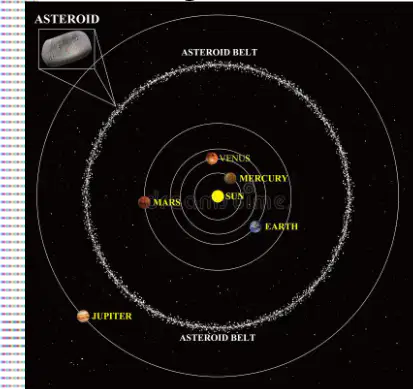
Where is the asteroid belt located?
Between Earth and Mars
Between Mars and Jupiter
Between Jupiter and Saturn
Between Venus and Earth
Which planets are considered small and rocky in the inner solar system?
Mercury, Venus, Earth, and Mars
Jupiter, Saturn, Uranus, and Neptune
Earth, Mars, Jupiter, and Saturn
Venus, Earth, Neptune, and Pluto
What are the objects of the inner solar system?
The Sun, Mercury, Venus, Earth, and Mars
The Sun, Jupiter, Saturn, Uranus, and Neptune
The Sun, Earth, Mars, Jupiter, and Saturn
The Sun, Venus, Earth, Neptune, and Pluto
An AU is the distance from the sun to which planet?
Earth
Mars
Jupiter
Venus
What is the largest object in the solar system?
The Sun
Earth
A star
Smallest
What do all planets in the solar system do around the sun?
Orbit
Gravity
Largest
A star
What keeps objects orbiting in the solar system?
Gravity
Orbit
Earth
Smallest
What is the average distance of one astronomical unit (AU)?
150,000 km
1,500,000 km
150,000,000 km
1,500,000,000 km
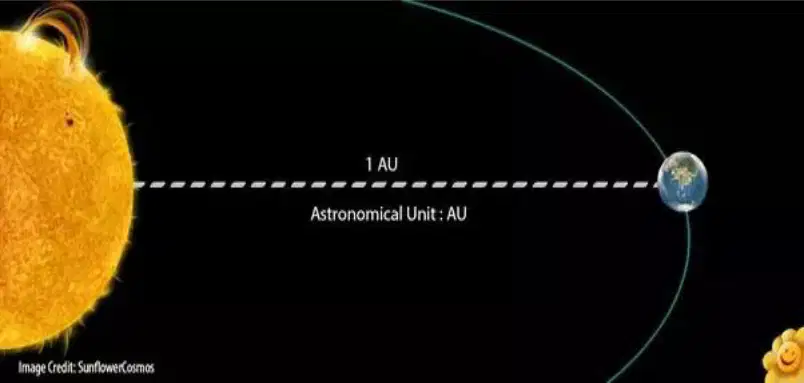
What is the astronomical unit (AU) used for?
Measuring time within the solar system
Measuring distance within the solar system
Measuring temperature within the solar system
Measuring mass within the solar system
What type of energy does the Sun supply that is essential for life on Earth?
Nuclear energy
Electrical energy
Light and heat
Sound energy
What does the Sun's gravity do?
It pushes objects away from the solar system.
It keeps all objects in the solar system in orbit.
It has no effect on the solar system.
It only affects the Earth.
What is the Sun's role in the solar system?
It is a planet that orbits Earth.
It is an average-sized star at the center of the solar system.
It is a moon that orbits Mars.
It is a comet passing through the solar system.
Which of the following is NOT part of our solar system?
Comets
Dwarf planets
Black holes
Asteroids
How many planets are in our solar system?
Seven
Eight
Nine
Ten
What does the Latin word "sol" mean?
Moon
Star
Sun
Planet
Which of the following statements correctly describes the Sun? Select ALL that apply.
The Sun is a medium-sized star located at the center of the solar system.
The Sun is composed of helium and hydrogen.
The Sun moves through space, orbiting the center of the Milky Way galaxy.
The Sun's gravity is crucial for keeping the planets in their orbits.
The Sun is stationary and does not move relative to other stars in the galaxy.
What is an asteroid?
A large planet with a thick atmosphere
A small rocky body orbiting the Sun, mostly found between Mars and Jupiter
A type of star in the solar system
A gaseous cloud surrounding the Earth
Which of the following is a characteristic of a comet?
It is a rocky body orbiting between Mars and Jupiter
It is a small, icy body that develops a tail when near the Sun
It is a large planet with rings
It is a star at the center of the solar system
What is the Kuiper belt?
A region of space beyond Neptune filled with icy bodies
A type of asteroid found between Mars and Jupiter
A large planet in the outer solar system
A cloud of gas surrounding the Sun
Proximity to the Sun means...
A proximity warning is given to an astronaut when the oxygen level in the spacesuit drops below 10 pounds/square inch of atmosphere
The intensity of the Sun's radiation on Earth
How close an object in our solar system is to the Sun
none of theses
Why is the Sun important to life on Earth?
The Sun's radiant energy is converted to food by plants in a process called photosynthesis
The Sun's radiant energy is converted into liquid water
Radiant energy from the Sun is absorbed and released in a delicate balance for life to exist.
none of these
Why is liquid water important for life to exist?
Other life forms get thirsty just like humans
Liquid water is important for rain to fall and wash the pollution from the surface of the planet
none of these
delivery mechanism, dissolving essential nutrients and delivering them to cells.
The atmosphere is important to life on Earth because...
The atmosphere keeps thunderstorms from becoming too large and causing catastrophic damage to Earth
blocks the Sun's dangerous radiation and traps heat making Earth a comfortable temperature
The atmosphere traps cold air just above the surface and without this cold air we would not receive the rain that we needed.
none of these
An Astrobiologist is a person who study's...
the possibility of life beyond Earth
the possibility of life on asteroids
biology on Earth only
none of these
What three things do Astrobiologists look for when searching for life beyond Earth?
water vapor, and food
food, water, and shelter
liquid water, an oxygen containing atmosphere, and an energy source
none of these
A layer of gases that surround a planet
atmosphere
Corona Borealis
protective gas zone
none of these
What is the breakdown of gases in Earth's atmosphere?
79% Oxygen, 20 % Nitrogen, and 1% other gases
79% Nitrogen, 20% Oxygen, and 1% other gases
100% Oxygen
79% Oxygen, 20% Carbon Dioxide, and 1% water vapor
The Ozone Layer protects Earth from what?
meteors
asteroids
viruses and bacteria from Space
radiation from the Sun

Even though the moon is in the habitable zone, why is there no life there?
no atmosphere
No water
Exposed to solar radiation
All of these are correct
If mass ____________ the force of gravity increases. If distance _____________ the force of gravity will decrease.
increases, decreases
decreases, increases
stops, increases
none of these
An astrobiologist has found a two new planets orbiting a star similar to our own Sun. Planet A is closer than Planet B. Which planet will be affected the least by the gravitational pull of the star?
Planet B
Planet A
neither planet will be affected by the gravitational pull of the star
the gravitational pull will not be noticeable
True or False? The closer an object is to another the stronger the gravitational force.
True
False
Not enough information to answer the question
The gravity on the outer planets of our solar system is not as strong as the inner planets. Why is this?
the inner planets are smaller and therefore have less gravity than the larger outer planets
gravity is the same on all planets in the solar system regardless of their size and distance from the Sun
none of these
the outer planets are further away and therefore gravity is weaker than on the inner planets
The use of the Moon's gravity to propel a spacecraft from the Moon's orbit back toward Earth is called what?
free gravity effect
slingshot effect
shotgun effect
none of these
What is the "Goldilocks Zone"?
The warm zone located around a planet that provides a blanket like effect
The zone that life has a hard time existing and will likely never exist
The habitable zone around a star where the temperature is just right to support life.
none of these
What causes all of the planets in the solar system to orbit around the Sun?
the Sun's magnetic field pulls on all of the planets due to the metal core of each planet
the massive size and mass of the Sun creates an extremely strong gravitation force that holds all planets in orbit
the planets orbit the Sun due to its very fast rotational speed causing the graviton effect
none of these
A basketball and a volleyball are roughly the same size but have different mass. In Science class, students conducted an experiment of what would happen if both were dropped from the roof of the school. What do you think the students saw?
both balls hit the ground at the same time due to the force of gravity being equal on both balls
the basketball hit slightly before the volleyball because it has a little more mass than the volleyball
the volleyball hit first because it is lighter and therefore accelerates faster than the basketball with more mass
none of these
What determines the gravitational strength of an object?
Mass and weight
Mass and distance
Distance and density
Density and mass
What force attracts a body toward the center of another physical body having mass?
gravitropism
gravity
astrobiology
none of these

Is this an example of a physical or chemical change?
physical
change

Is this an example of a physical or chemical change?
physical
chemical

Is this an example of a physical or chemical change?
physical
chemical

Is this an example of a physical or chemical change?
physical
chemical
A chemical change
changes the physical properties of an object, but does not create a new substance.
creates a new substance and cannot be undone.

Choose the best description below for the image
physical change
chemical change
Physical change
(Shape)
Cutting paper
Physical change
(solubility)
Dissolving
Kool-Aid
Chemical Change
(Flammability)
Lighting a match
Chemical Change
Creating a new substance
Both a Physical & Chemical change
Bubbles
How many Nitrogen atoms are in the in H3C2ON5?
2
3
4
5
How many Hydrogen atoms are in 4 H2O? (a) How many oxygen atoms? (b)
Which of the following statements describes a compound?
It contains only one kind of atom.
It can be separated by physical means.
It cannot be decomposed into simpler types of substances.
It consists of atoms of two or more different elements bond together.

This diagram represents...
An element
A molecule
A compound
A mixture of elements and compounds
Carbon is considered an element, while carbon dioxide is considered a compound. This is because carbon dioxide is –
a gas at room temperature.
made of two different elements.
given off by green plants.
useful to human beings.
Which of the following is an element?
Gold
Air
Water
Carbon Dioxide
Nitrous Oxide

You place a pot onto a hot stovetop. The heat is transferred from the stove to the pot by
Convection
Conduction
Radiation
Temperature
The total thermal energy of an object is also known as...
Temperature
Insulator
Conductor
Heat
When particles become hotter, they tend to move...
Slower
Faster
At the same rate
Backwards
Erick lights two fires. Above Fire 1, he puts a long piece of iron and lays a steak on top. Above the Fire 2, he puts a slab of rubber and also lays a steak on top of that.
Which of the following is most likely to happen?
The steak above Fire 1 cooks well because iron insulates the meat.
The steak above Fire 2 cooks well because of conduction.
The steak above Fire 1 cooks well because iron is a good conductor of heat.
The steak above Fire 2 cooks well because there is more radiation.
Breyon is cooking dinner for his family. He puts a pot of water on the stove's hot plate to boil. Which of the following correctly describes the heat transfer occurring on the stove?
The pot is heated by conduction, the water is heated by convection.
The pot is heated by convection, the water is heated by conduction.
The pot is heated by a conductor and the water is heated by an insulator
The pot and water are heated by convection.
When heat is transferred through a fluid (liquid or gas), this type of energy transfer is occurring:
Conduction
Convection
Radiation
Evaporation
Fire warming your hands is an example of what type of heat transfer?
(a)
Heat transferred over a distance, without the use of matter:
Conduction
Convection
Radiation
Evaporation

Touching your hand to the lightbulb causes you to burn your fingers. This is an example of:
Conduction
Convection
Radiation
Evaporation
Conduction is the process of:
increasing temperature
heat being gained because of metal
heat transfer due to direct contact
heat transfer through water
Your father is making a cake in the oven. He puts on mitts and grabs the edges of the pan to pull it out. The mitts are an example of
An insulator
A conductor
A convector
A radiator
Categorize the heat transfer in each scenario:
1) The sun is shining onto a car, making it hot
2) You burn your hand by touching a hot seatbelt in the car
3) The soda in the cupholder starts to get warm
1) Radiation
2) Convection
3) Radiation
1) Conduction
2) Conduction
3) Convection
1) Convection
2) Conduction
3) Radiation
1) Radiation
2) Conduction
3) Convection
During convection, hot molecules in a fluid move faster. They become less ______ and rise to the _____ of the fluid.
dense, bottom
heavy, top
dense, top
fast, top
On a sunny day, some of the air heats up and rises higher into the atmosphere. This is part of the heat transfer known as
Conduction
Convection
Radiation
Evaporation
You leave a metal spoon inside a cup of hot cocoa and go video games for a few minutes. When you come back and grab the spoon, it burns your hand. Why does this happen?
The spoon is a conductor, so the hot cocoa transferred heat through it easily.
The spoon is a insulator, so the hot cocoa transferred heat through it easily.
The hot cocoa is a form of radiation, so it makes metal hot.
The spoon insulated the heat into your hand
Is steel a conductor or an insulator?
Conductor
Insulator
Which would be the best to cook food in?
wood
plastic
styrofoam
iron
Earth's weather is influenced by the movement of air; hot air and cold air are constantly circulating and causing changes. What type of heat transfer is responsible for this?
Conduction
Convection
Radiation
Evaporation
The condition where two substances in physical contact with each other exchange no heat energy. They are said to be the same temperature.
Thermal Energy
Cooler to Warmer
Energy Transfer
Thermal Equilibrium
Two objects have different temperatures. Object A has a temperature of 42 degrees and Object B is 37 degrees. Which direction should the energy transfer between Objects A and B?
From Object A to Object B
From Object B to Object A
Energy will not transfer
Energy will transfer both directions
Heat always moves from _____________ to ______________.
cold; hot
cold; cold
hot; cold
hot; hot
A 0° F object is touching a 100° F object. How many degrees Fahrenheit will these 2 objects be at thermal equilibrium? (Show your Work for full credit)
(a)
A 80° F object is touching a 90° F object. How many degrees Fahrenheit will these 2 objects be at thermal equilibrium? (Show your Work for full credit)
(a)

What happens to the temperature if I add ice cubes to a glass of soda
The heat transfers from the coke to the ice
The heat transfers from the ice to the coke
Two objects with different temperature in thermal contact will reach thermal equilibrium when.....
both object becomes hotter
both objects become colder
both object reach the same final temperature
net heat transfer other than zero

Which of the following is NOT true about temperature?
Temperature is a form of heat energy.
Temperature is measured in degrees celcius or kelvin.
Temperature is the degree of hotness or coldness of an object.
Temperature increases in a hot environment.

Which of the following is NOT true about heat?
Heat moves from hot places to cold places.
Heat is a form of energy.
Heat cannot be transferred.
Heat makes molecules speed up.
What are the three methods of heat transfer?
conduction
convection
friction
radiation

If you burn your hand on the handle of a hot pan, heat was transferred to your skin by
conduction
convection
radiation
equilibrium

The spoon becomes hot because heat is transfer through
conduction
convection
radiation

Which pin or paperclip dropped off the metal rod first?
A
B
C

The type of heat transfer that creates currents in water is called ________.
conduction
convection
radiation

Near the ceiling of a room the air is warmer. The warm air rises because of ________.
conduction
convection
radiation

Diagram shows an activity conducted by a student. It is found that the spiral-shaped cardboard rotates. What inference can be made from the activity?
Hot air above the candle rises through radiation.
Hot air above the candle rises through convection.
Hot air above the candle rises through conduction.
Hot air above the candle propagate through vacuum and rises.

The diagram shows a refrigerator. The cooling unit is placed at the top. The cooling unit cools the air near it. What happens to the density of the air as it cools, and how does it move?
The density of air increases. It moves down.
The density of air increases. It moves up.
The density of air decreases. It moves down.
The density of air decreases. It moves up.

Which is the best position to place the heating element in an electric heater?
A
B
C
D

The diagram shows some rice being boiled in a pan. What is the main methods by which thermal energy is transferred (i) through the metal pan and
(ii) through the water?
(i) radiation (ii) conduction
(i) radiation (ii) convection
(i) conduction (ii) convection
(i) convection (ii) conduction

Energy from the Sun travels to Earth through
Conduction
Convection
Insulation
Radiation
Which describes what can happen as a result of radiation?
A piece of wood burns in a fire.
A shirt is hot after having been ironed.
A can of soup is heated in a pot on a stove.
A car’s internal temperature rises to over 100 degrees celcius on a sunny day.
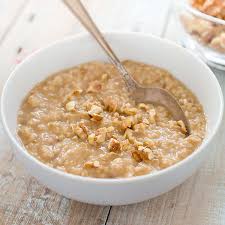
You leave your cold spoon in a hot bowl of oatmeal. What happens after an hour?
The temperature of both the oatmeal and the spoon stay the same
The spoon and the oatmeal become the same temperature
Only the temperature of the oatmeal will change
Only the temperature of the spoon will change
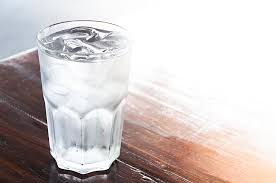
Johnny put ice in his water. Which idea do you think best explains why the water got cold?
The coldness from the ice moved into the water
The coldness and the heat moved back and forth until the water cooled off.
The heat from the water moved into the ice.
The ice melted and cooled off the water.
Which of the following is TRUE about the land breeze?
It occurs during daytime.
It blows from the sea to land.
It occurs because the land heats up faster than the sea.
It occurs because the sea is warmer than the land.
Which material is the best conductor of heat?
Glass
Styrofoam
Metal
Wood
What materials would be good heat insulators for a handle on a pan or pot that would be used on the stove?
Wood
Aluminium
Iron
Steel

Which of the following is NOT a heat insulator?
The wall of an ice box
Oven gloves
Mercury in thermometers
Cooking utensils made of wood

What is the BEST reason cooking pots are made out of the materials like aluminum and stainless steel?
They are able to stop the flow of heat.
They are good conductors of heat.
They keep the same amount of heat.
They are good insulators of heat.
The following are heat conductors EXCEPT


Which is TRUE about a heat insulator?
It allows heat to pass through easily.
It slows down heat energy transfer.
It provides heat to keep materials warm.
It is good at absorbing heat.
What formula can we use to find speed?
Speed = distance/time
Speed = distance X time
Speed = mass X acceleration
Speed = mass/acceleration
What is the speed of a turtle that travels 10 miles in 5 hours?
50 miles/hour
2 miles/hour
5 miles/hour
15 miles/hour
The geese fly 23 mph to the south when they migrate for the winter.
speed
velocity
acceleration
Changes in our speed, direction or both are called _________.
gravity
changes
acceleration
displacement
You ride your bike in a straight line at a constant speed of 10 km/h.
Acceleration occurred because speed increased.
Acceleration did not occur because neither speed nor direction changed.
Acceleration occurred because you changed directions.
Acceleration occurred because speed decreased.
When you know both the speed and direction of an object's motion, you know the...
Juan ran 72 m across the football field in 8 seconds. What was his speed?
8 m/s
576 m/s
7 m
9 m/s
Steve runs 20 m North in 4 seconds. What is his velocity
5 m/s
4 m/s south
5 m/s south
5 m/s north

Mr. Rudman drives his race car at a speed of 300 miles per hour. What distance and time could have been used to find his speed?
300 miles in 2 hours
60 miles in 20 hours
30 miles in 20 hours
600 miles in 2 hours
A runner races in the 100 meter dash. If her average speed is 10 m/s, what will her time be at the end of the race?
10 m/s
1000 m/s
100 seconds
10 seconds

What is this?
"This airplane is traveling at 500 mph, West"
Speed
Velocity
Acceleration
Which is an example of speed?
A car driving 55 miles per hour south.
A bicyclist traveling 10 meters per hour toward the next town.
A roller coaster is traveling 10 meters per second.
A rocket blasting off at 2,500 meters per second toward space.
Which is an example of velocity?
A car driving 55 miles per hour south.
A bicyclist traveling 10 meters per hour.
A roller coaster is traveling 10 meters per second.
A rocket blasting off at 2,500 meters per second.

A coach records the distance a runner travels during 3 different trials. What is the runner's average speed in kilometers per minute?

A student pushed a ball down a hill and recorded the distance, time, and average speed during 3 different trials.
How far did the ball travel with an average speed of 5.25 m/s?

Jose Altuve is at batting practice for the Houston Astros.
What was the average speed of the baseball for his third hit as it traveled in the air?
32 m/sec
20.7 m/sec
24 m/sec
27 m/sec

Jose Altuve is at batting practice for the Houston Astros.
What was the average speed of all three hits?
32 m/sec
20.7 m/sec
24 m/sec
27 m/sec
The distance traveled by a toy train over time is shown in the graph below. Use the information in the graph to complete the table.
Average speed = 2 m/s
Average speed = 1.77 m/s
5
3
1
0 m
2 m
4 m
Average speed = 0.66 m/s
What force attracts a body toward the center of another physical body having mass?
gravitropism
gravity
astrobiology
none of these
What determines the gravitational strength of an object?
Mass and weight
Mass and distance
Distance and density
Density and mass
A basketball and a volleyball are roughly the same size but have different mass. In Science class, students conducted an experiment of what would happen if both were dropped from the roof of the school. What do you think the students saw?
both balls hit the ground at the same time due to the force of gravity being equal on both balls
the basketball hit slightly before the volleyball because it has a little more mass than the volleyball
the volleyball hit first because it is lighter and therefore accelerates faster than the basketball with more mass
none of these
What causes all of the planets in the solar system to orbit around the Sun?
the Sun's magnetic field pulls on all of the planets due to the metal core of each planet
the massive size and mass of the Sun creates an extremely strong gravitation force that holds all planets in orbit
the planets orbit the Sun due to its very fast rotational speed causing the graviton effect
none of these
What is the "Goldilocks Zone"?
The warm zone located around a planet that provides a blanket like effect
The zone that life has a hard time existing and will likely never exist
The habitable zone around a star where the temperature is just right to support life.
none of these
The use of the Moon's gravity to propel a spacecraft from the Moon's orbit back toward Earth is called what?
free gravity effect
slingshot effect
shotgun effect
none of these
The gravity on the outer planets of our solar system is not as strong as the inner planets. Why is this?
the inner planets are smaller and therefore have less gravity than the larger outer planets
gravity is the same on all planets in the solar system regardless of their size and distance from the Sun
none of these
the outer planets are further away and therefore gravity is weaker than on the inner planets
True or False? The closer an object is to another the stronger the gravitational force.
True
False
Not enough information to answer the question
An astrobiologist has found a two new planets orbiting a star similar to our own Sun. Planet A is closer than Planet B. Which planet will be affected the least by the gravitational pull of the star?
Planet B
Planet A
neither planet will be affected by the gravitational pull of the star
the gravitational pull will not be noticeable
If mass ____________ the force of gravity increases. If distance _____________ the force of gravity will decrease.
increases, decreases
decreases, increases
stops, increases
none of these

