
 Worksheets
Second Semester Basic Art Exam 2023/24
Total questions: 48
Worksheet time: 24mins
Which of the following is an example of a Real Texture?
the fluffiness of a cloud in a painting
paint strokes on a canvas
the fur of a cat
Which of the following combinations below is a triadic color theory?
red, pink, black
red, blue, yellow
black, grey, white
yellow, yellow-green, green
For easy study, colors are usually arranged in a circle called a color wheel.
True
False
Three examples of INTERMEDIATE (TERTIARY) COLORS are:
yellow-green, yellow-orange, red
blue-green, blue-violet, red-violet
red, yellow-orange, orange
green, grey, pink
Pop art based on modern popular culture and the mass media, especially as a critical or ironic comment on traditional fine art values.
True
False
Analogous colors are any two/three neighbors on the color wheel.
True
False
Red, Yellow and Blue are referred to as PRIMARY COLORS.
True
False
What is another name for hue?
line
shape
color
texture
Which of the following are NOT color theories?
Primary
Cool Colors
Pointillism
Analogous
Which of the combinations below is an achromatic color theory?
red, blue, green
black, grey, white
red, pink, maroon
yellow, violet
An artist might use warm colors to depict fire or the sun.
True
False
Which of the following is a split-complementary color theory?
red, blue, violet
violet, yellow-green, yellow-orange
pink, black, violet
green, red
Adding white to a hue produces a lighter version of the color called a tint.
True
False
What do we call the hues that range from yellow to red-violet?
Cool colors
Warm colors
Analogous colors
Which of the following combinations is a Warm Color theory?
blue, blue-green, white
red, red-orange, orange
green, violet, blue
red, blue, yellow
White, black and gray are called
neutrals
warm colors
cool colors

This is an example of a printmaking BLOCK.
True
False

What is the name of the object in this image:
barren
bench hook
brayer
ball

What is the name of the object in this image?
brayer
barren
benchhook
block

What is the name of the object in this image?
benchhook
barren
brayer
block
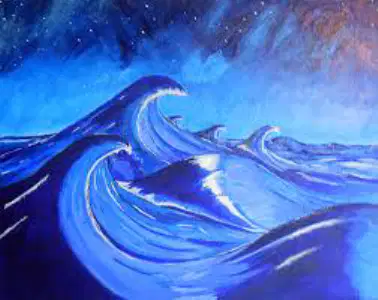
This image is an example of a MONOCHROMATIC color theory.
True
False

This image is an example of a ACHROMATIC color theory.
True
False

The following image is an example of:
triadic color theory
Monochromatic color theory
Analogous color theory

The following image is an example of:
monochromatic color theory
complimentary color theory
Cool color theory
Warm color theory

This image is an example of what color theory:
warm color theory
cool color theory
Triadic color theory

This image is an example of ACHROMATIC color theory.
True
False
A hue plus black is called a SHADE.
True
False

What color theory does this painting use?
primary
secondary
warm colors
monochromatic
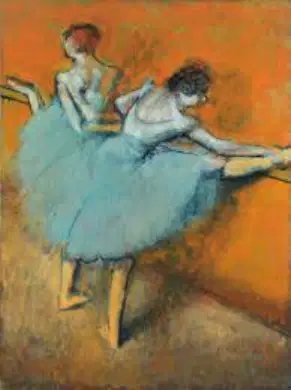
What color theory is used in this piece?
complementary
secondary
warm colors
triadic
To create a tone, you should add black to a hue.
True
False
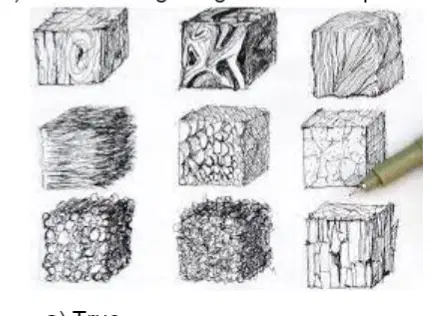
The following image is an example of actual/real texture.
True
False
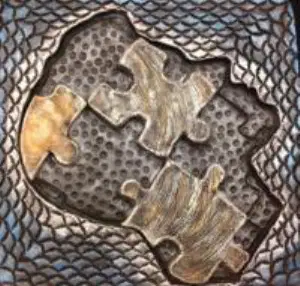
The image is an example of actual/real texture.
True
False
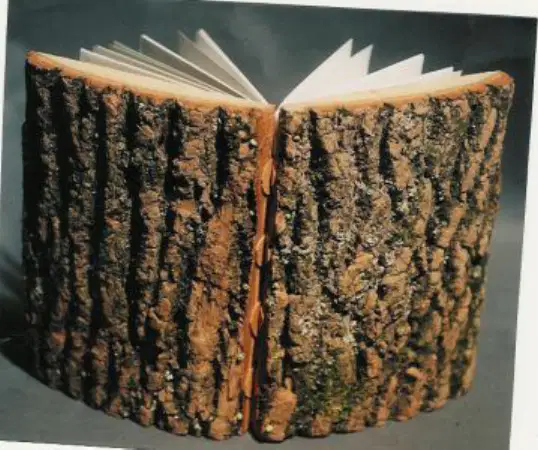
This is an example of an implied texture.
True
False
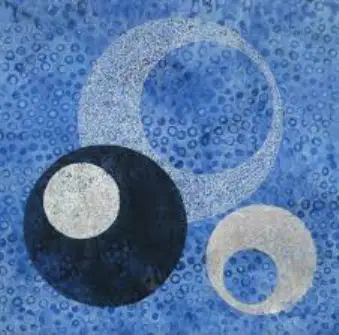
This image is an example of asymmetrical balance.
True
False
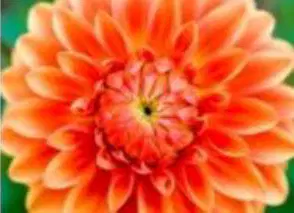
This image is an example of radial balance.
True
False
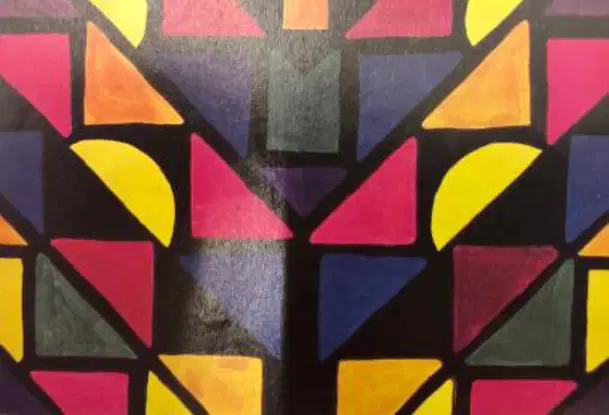
The following image is an example of asymmetrical balance.
True
False
Scoring is scratching the edges of the clay before joining them together.
True
False
Slip is a fluid suspension of clay in water used in joining clay pieces and for surface decoration.
True
False
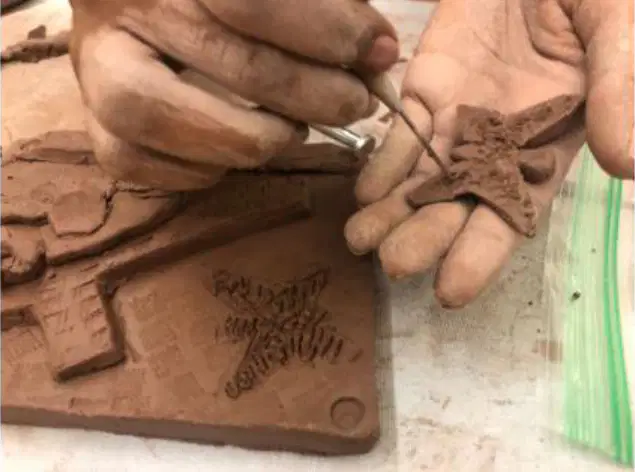
This image is an example of what building method in ceramics.
impression
slip and score
subtractive
wedging
Symbolism is using an object, person, place or thing to stand for something else.
True
False
NARRATIVE ART is art which tells a story.
True
False
The 5 NON LINEAR methods to create depth are
color, line, position, value, space
position, overlapping, size variation, color and value
value, color, tint, space, hue
line, shape, space, value, texture
Overlapping is placing one shape on top of another to produce a feeling of depth.
True
False
Color is not a method of creating nonlinear depth.
True
False
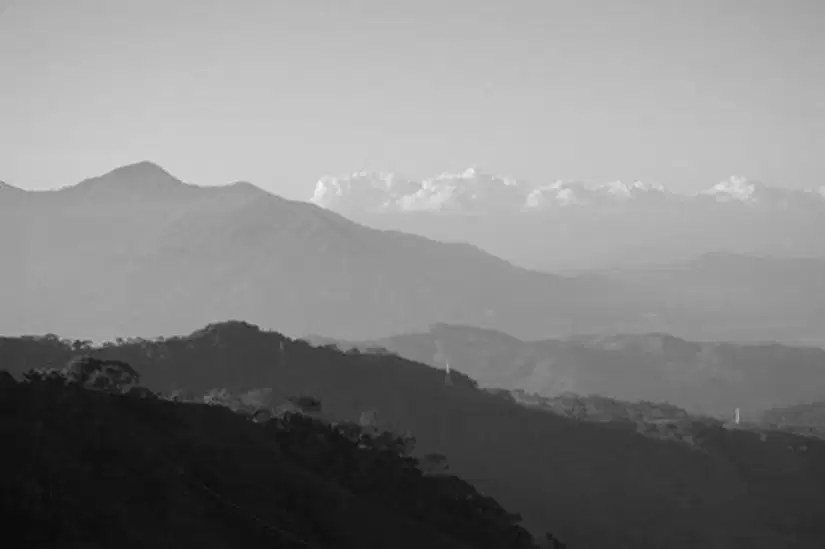
Which one of the nonlinear methods of depth is best represented in this image?
Value
Color
Position
Size Variation
The word CONTRAST describes big differences within a design.
True
False
Artists can achieve CONTRAST in an artwork by using
Contrast of Materials
Contrast of Line
Contrast of Color
All of the above
One way an artist can create contrast is to combine natural materials with materials made by humans.
True
False

