
Font size
 Worksheets
2nd Nine Weeks Exam - CS 1
Total questions: 185
Worksheet time: 5hrs 6mins
What does NASA stand for?
National Aeronautics and Space Administration
National Aerospace and Space Agency
National Astronautics and Space Association
National Aeronautics and Space Agency
Match the following space telescopes with their respective space agencies.
Hubble Space Telescope
NASA's famous space telescope launched in 1990
Galileo Space Telescope
Fictional space telescope not associated with any agency
Kepler Space Telescope
NASA's space telescope launched to find exoplanets
Voyager Space Telescope
NASA's space probes launched to study the outer planets
What is the primary function of the Jet Propulsion Laboratory (JPL)?
To design and build aircraft
To develop robotic spacecraft
To train astronauts
To study oceanography
Which of the following is a type of spacecraft designed to land on the surface of a planet or moon?
Orbiter
Lander
Rover
Satellite
Match the following Apollo missions with their achievements.
Apollo 11
First to land humans on the Moon
Apollo 13
Successful failure, returned safely after an in-flight accident
Apollo 8
First crewed spacecraft to orbit the Moon
Apollo 15
First mission to use the Lunar Roving Vehicle
What is the main purpose of a satellite?
To explore deep space
To orbit a planet and collect data
To land on a planet
To travel to other galaxies
Which of the following is a type of spacecraft that can move across the surface of a planet or moon?
Lander
Rover
Orbiter
Satellite
Match the following NASA missions with their corresponding achievements.
Voyager 1
First spacecraft to reach interstellar space
New Horizons
First spacecraft to visit Pluto
Pioneer 10
First spacecraft to fly past Jupiter
Cassini
Explored Saturn and its moons
What is the name of the spacecraft that is currently exploring Mars and is known for its selfies?
Spirit
Opportunity
Curiosity
Perseverance
Which of the following is NOT a type of spacecraft?
Lander
Submarine
Orbiter
Rover
What is the main goal of the Voyager spacecraft?
To study the Sun
To explore the outer planets and beyond
To land on Mars
To orbit the Earth
Which space agency operates the International Space Station (ISS) along with NASA?
European Space Agency (ESA)
Russian Federal Space Agency (Roscosmos)
Japan Aerospace Exploration Agency (JAXA)
All of the above
What is the name of the spacecraft that landed on a comet in 2014?
Rosetta
Galileo
Cassini
Juno
Which of the following is a type of spacecraft that remains in orbit around a celestial body?
Lander
Rover
Orbiter
Satellite
What is the name of the NASA mission that aims to return samples from Mars to Earth?
Mars Pathfinder
Mars Sample Return
Mars Odyssey
Mars Express
a person trained to travel to space and perform a specific job
astronaut
catanaut
specialist
probe
A vehicle sponsored by sixteen nations that circles the earth while astronauts living on board carry out experiments is called the (a)
A US government agency in charge of the space program
NASA
JPL
FDA
ABSS
an unmanned spacecraft designed to send information back to Earth
satellite
shuttle
space station
probe
a reusable spacecraft that used rockets to launch but could land like a plane when returning to Earth
satellite
space shuttle
space station
probe
A 20-year competition of space exploration between the United States and former Soviet Union
space race
astro race
moon race
cold war
an item that was originally developed for use in space but has uses on Earth
space spinoff
space shuttle
space program
an optical instrument for making distant objects appear larger and brighter by using lenses and curved
mirrors
telescope
microscope
radar
satellite

Who was the first man on the moon?
Drew Henniger
Hitler
Yuri Gagarin
Neil Armstrong
Which of these are NASA space spinoffs?
scratch resistant lenses
memory foam
Invisible braces
GPS
Contact lenses
What space probe went past the outer planets on its way to the Oort Cloud?
Voyager 1
Voyager 2
Mariner 10
Pioneer 10
what was the first creature in space
a dog
a human
a hamster
monkey

Was the Space Shuttle reusable?
Yes
No

What does the Hubble take pictures of?
plants and animals
planets, stars and galaxies
famous people

The Soviet Union launched ________, the worlds first artificial satellite, into the Earth's orbit in 1957.
Sputnik
Explorer I

Which country was the first to send an artificial satellite into the Earth's orbit?
Soviet Union
United States of America


A significant difference between spiral and elliptical galaxies is the —
ongoing star formation, common in spiral galaxies but not in elliptical galaxies
high star density at the core of spiral galaxies but not elliptical galaxies
presence of irregular galaxies within elliptical galaxies but not spiral galaxies
relatively large percentage of new stars in elliptical galaxies but not in spiral galaxies
What is our Galactic home? (Our Galaxy)
Andromeda Galaxy
Milky Way Galaxy
Sombrero Galaxy
Whirlpool Galaxy

What type of galaxy is this?
Spiral
Lenticular
Elliptical
Irregular

Which of the following statement is FALSE about dwarf galaxies?
has low luminosity
found in clusters and most abundant
high mass
small size

Can you see the Milky Way without a telescope?
True
False

Which of the following statement is TRUE about elliptical galaxies?
they are spherical or oval shaped
they are older with very little gas, dust, or young stars
half of the galaxies that we see are elliptical
all of the above
Which university manages JPL?
Caltech
Johns Hopkins
Stanford
Berkeley
True or false: JPL designed, built, and operated the United States' first satellite.
True
False
Which of the following JPL probes was the first to take images of another planet?
Mariner 3
Mariner 4
Mariner 6
Mariner 7
True or false: JPL probes have visited every planet.
True
False
Who was the first director of JPL?
James Van Allen
Wernher von Braun
Theodore von Kármán
Jebediah Kerman
When was JPL threatened with cancellation by the administration?
1969
1972
1975
1981
Which of the following JPL satellites was NOT launched on Shuttle?
Galileo
Seasat
Magellan
Cassini
Which US state is JPL in?
Virginia
Texas
New Mexico
California
When did JPL become part of NASA?
1958
1960
1967
1980

Name the JPL probe in the image.
Voyager probe
Pioneer probe
Ranger probe
Galileo
Which program started the JPL tradition of "good luck peanuts"?
Explorer
Pioneer
Mariner
Ranger
Who is the current director of JPL?
Laurie Leshin
John Davies
Edward Stone
Frank Malina
What was the first spacecraft to dive between Saturn and its rings?
Cassini
Galileo
Juno
Voyager 1
64-78.
Answer the questions below after watching the video
What percentage of the federal budget is allocated to NASA?
Exactly 2%
More than 10%
About 5%
Less than 1%
What technology did NASA develop that is now used in scratch-resistant lenses?
Polarized lenses
Anti-fog coating
Scratch-resistant astronaut helmets
UV protection
What was the original purpose of the technology that allows for LASIK surgery?
To improve astronaut vision
To track astronauts' eyes in space
To measure light intensity
To monitor heart rates
What did NASA develop to protect equipment during space shuttle launches?
Anti-gravity devices
Radiation shields
Shock absorbers
Heat shields
Why does NASA rely on solar power for the ISS?
It reduces the weight of the ISS
Solar power is more efficient in space
It's cheaper than other power sources
The ISS cannot be plugged into an electrical socket
How much water does the ISS recycle annually?
5,000 gallons
1,000 gallons
500 gallons
2,000 gallons
What problem did NASA solve by cutting grooves into runways?
Reducing noise pollution
Increasing runway length
Minimizing hydroplaning
Improving lighting
What is one of the main benefits of the runway grooves developed by NASA?
They reduce noise pollution
They improve runway lighting
They increase traction and channel water away
They make runways longer
What material did Goodyear use in their tires that was developed with NASA's help?
Carbon fiber
Kevlar
A material stronger than steel
Titanium
What technology did NASA's Jet Propulsion Laboratory develop that is now used in smartphones?
Miniature imaging system
Touchscreen technology
Battery technology
GPS
What medical imaging technologies benefited from NASA's digital image processing?
X-rays and ultrasounds
CAT scans and MRIs
Blood tests and biopsies
Endoscopies and colonoscopies
What did NASA discover that is now used in over 90% of infant formulas?
A nutritious, algae-based vegetable oil
A new type of protein
A vitamin supplement
A new type of carbohydrate
What was the original purpose of memory foam technology?
To reduce noise in space
To create more comfortable mattresses
To improve astronaut comfort during takeoff and landing
To insulate spacecraft
What insulating material did NASA develop for the Apollo spacesuits?
Polyurethane foam
Fiberglass
Aerogel
A new type of insulating material
What system did NASA develop to prevent ice buildup on the space shuttle?
Thermawing
FrostShield
IceGuard
HeatWing
A wave of molecular collisions is called
sound wave
pressure wave
seismic wave
What is the speed of sound?
760 miles per hour
1220 miles per hour
1337 miles per hour
The first airplane to fly faster than sound.
Bell X-1
Concorde
Space Shuttle
A Mach 1 airplane goes
faster than the speed of sound
slower than the speed of sound
the speed of sound
An airplane that goes slower than the speed of sound
subsonic
supersonic
hypersonic
An airplane that goes so fast that heat starts to become a critical factor
subsonic
transonic
supersonic
hypersonic
The act of moving or pushing an object forward.
Thrust
Propulsion
sonic boom
Which type of engine cannot create thrust directly?
piston
jet
rocket
Where is the high pressure found around a propeller?
in front of the propeller
behind the propeller
inside the propeller
Where is the increasing pressure found in jet and rocket engines?
inside the engine
outside the engine
beside the engine
A supersonic airliner
Bell X-1
Concorde
Space Shuttle

What is the jet stream?
Precipitation in North Carolina
Weather over a long period of time
Strong winds above the Earth's surface
Football flying over the Earth


Where does the Earth receive the most direct radiation from the sun?
Where is there a surplus of energy? (Select all that apply)
South Pole
Equator
Tropic of Capricorn/Cancer
North Pole
Where is there a deficit of energy? (Select all that apply)
Equator
North Pole
South Pole
Tropics
Where is the atmosphere thicker?
The Poles
Equator
Tropics
The more reflective a surface is the higher the (a) value. Very white surfaces, such as fresh (b) , reflect a very high fraction of incoming radiation back to space. Darker surfaces such as water, (c) or asphalt have a much lower albedo and more of the sun's energy is (d) .
Warm air...
sinks
rises
Cold air ...
sinks
rises
What weather is caused by low pressure?
Clouds and rain
Clear skies
Objects in the SOUTHERN Hemisphere deflect to which direction due to the Coriolis Effect?
Left
Up
Down
Right
Polar cell – At higher latitudes, air (a) and travels the poles. Once over the poles, the air (b) , forming areas of high atmospheric pressure called the polar highs. At the surface, air moves (c) from the polar highs, creating east-blowing surface winds called polar (d) . This cell is (e) driven.
Correctly label the 3 cells of atmospheric circulation.
Polar
Hadley
Ferrel
At the equator there is an area of (a) pressure, due to the (b) and expanding air. At around 30º North the sinking air creates an area of (c) pressure. This forms the (d) cell which is thermally (e) .
(a) currents move warm water (energy) (b) from the equator, towards the poles.
(a) currents move cool water (b) from the poles, towards the equator.
Which two of the following deflect ocean currents helping to create gyres?
Trade winds
The Coriolis Effect
The Jet Stream
Land masses
Reorder the following to describe thermohaline circulation.
When ocean water freezes, forming sea ice, salt is left behind.
This causes the surrounding seawater to become saltier and denser.
Dense-cold-salty water sinks to the ocean bottom.
Surface water flows in to replace the sinking water.
Which in turn becomes cold and salty enough to sink.
Organize these ocean currents into the right categories.
Labrador
Canary
Greenland
Gulf Stream
North Atlantic Drift
North Equatorial
The Tropical Maritime air mass originates over the (a) . It's temperature can be described as (b) and it has a relative humidity of 65-82%
Rainfall varies from showers to intense thunderstorms giving varied weather.
The Tropical Continental air mass originates over the (a) . It's temperature can be described as (b) and it has a relative humidity of 65-82%
There is no rainfall and often poor visibility because of dust carried by the wind.
In July the thermal equator moves in which direction?
North
South
In January the thermal equator moves in which direction?
North
South
The Intertropical Convergence Zone occurs where the (a) winds converge creating a zone of (b) pressure. This rising air creates cumulonimbus clouds which bring frequent (c) and heavy rainfall.
What is SpaceX?
A government space agency
A private aerospace manufacturer and space transportation company
A fictional space exploration organization
A satellite television provider
Who founded SpaceX?
Jeff Bezos
Richard Branson
Elon Musk
Bill Gates
In what year was SpaceX founded?
2000
2002
2004
2006
What was the first rocket developed by SpaceX?
Falcon 1
Falcon 9
Starship
Dragon
When did SpaceX successfully launch and land the first orbital rocket?
2008
2010
2012
2015
What is the name of SpaceX's spacecraft designed to carry humans to space?
Orion
Dragon
Starliner
New Shepard
When did SpaceX first launch a reused Falcon 9 rocket?
2015
2016
2017
2018
What is the name of SpaceX's project to provide global internet coverage?
Blue Origin
Starlink
OneWeb
Kuiper
When did SpaceX first launch astronauts to the International Space Station (ISS)?
2018
2019
2020
2021
What is the name of SpaceX's heavy-lift launch vehicle?
Falcon Heavy
Delta IV Heavy
Saturn V
Atlas V
Which SpaceX rocket is designed for missions to Mars?
Falcon 9
Falcon Heavy
Starship
Dragon
When did SpaceX first land a Falcon 9 booster on a drone ship?
2014
2015
2016
2017
What is the primary goal of SpaceX's Starship program?
To build a space hotel
To establish a human settlement on Mars
To create a new satellite network
To develop a new space station
Which of the following is a significant achievement of SpaceX in 2021?
Launching the first all-civilian spaceflight
Landing on the Moon
Sending a probe to Jupiter
Building a space hotel
What is the name of the SpaceX mission that first sent humans to orbit without professional astronauts?
Inspiration4
Crew Dragon Demo-2
Artemis I
Apollo 11
Scientists at NASA are planning a human mission to the space station. Which of these spacecraft would they use to deliver astronauts to the space station?

Space Shuttle

Rover

Space Probe

Satellite

Space Probe

Space Shuttle

Satellite

Lander/Rover

Rocket

Which is an advantage of a space probe compared to a space shuttle?
Space probes can travel further into space since they are unmanned.
Space probes may need human intervention if problems arise.
Space probes transmit information back to Earth.
Space probes are not able to be used more than once.

What type of space vehicle is shown?
Rover
Satellite
Space Probe
Rocket

Artificial satellites are launched into space on rockets.
True
False
1 Revolution for Earth
365 days
1 Rotation for Earth
24 hours
1 Season for Earth
3 months
Space X is a company owned by
Eli Manning
Elon Musk
Robert Kennedy
Barack Obama
Space X works with ________________ to launch rockets into space
Department of Motor Vehicles
Department of Education
Dollar Store
NASA
On May 30, 2020, the first spaceship in 9 years to have
live plants
humans, astronauts
tubs of bacteria
a dog named ROver
The part of the rocket that fell into the Atlantic Ocean and will be reused is
The Falcon 9
The Eagle
The Ocean Liner
The MayDay
The part of the spacecraft that attached to the International Space Station is the
Octopus
Dragon
Spider
Montauk
How many NASA astronauts were on the flight on May 30, 2020?
one
fifteen
two
too many to count
The two astronauts on board the Space X were
Ariana Grande and Hillary Duff
Matt Christopher and Roald Dahl
Bob Behnken and Doug Hurley
Jaira Birns and Bart Simpson
How many hours did it take for the Space X flight on May 30?
101 hours
19 hours
4 hours
7000 hours
Newton's third law of motion applies to the Space X flight because the engine is pushing down and
mass x volume
length x width x height
displacement
For each action there is an equal and opposite reaction
The Space X rocket launched on May 30, 2020 is a very important part of history and will lead to
Olympic Summer Games
further exploration in space
funding for recycling properly
video games
______________ is a satellite constellation designed to provide internet access to the world.
SpaceX Starlink
SpaceX Starship
Jefferson Starship
Falcon 9
The first stage of which rocket can be recovered by flying it back down to Earth and landing it upright on a launch pad?
Falcon 6
Falcon 7
Falcon Heavy
Falcon 9
Which SpaceX spacecraft is used to deliver cargo to the International Space Station?
Falcon 9
Falcon Heavy
Dragon
Starship
SpaceX Starship is estimated to have a payload of _____________.
1 ton
150 tons
2000 tons
424 tons
Match the following
Asteroid
Large space rock
Comet
Dirty Snowball
Meteor
Space rock burning in the atmosphere
Meteoroid
Small space rock (outside atmosphere)
Meteorite
Space rock that hits Earth's surface
Earth's (a) causes our day/night cycle while Earth's (b) and tilted axis causes our seasons.
Short revolution
Long revolution
No rings
Have rings
Terrestrial (rocky)
Made of gas
Smaller in size
Larger in size
Match the following
satellite from which vehicles can be launched
or scientific research can be conducted
space station
the tendency of a moving object to keep moving
inertia
a by-product derived from a previous product
spin off
the force that causes a spacecraft to accelerate
thrust
a machine that uses escaping gas to move
rocket
is a large spacecraft in orbit around Earth. It serves as a home where crews of astronauts and cosmonauts live.
Spitzer Space Telescope
Fermi-Gamma Ray Telescope
Compton Gamma Ray Observatory
International Space Station

´The study of objects and phenomena in space.
(a)

A satellite in which humans work and live for an extended time.
(a)


What planet is this?
(Earth, Jupiter, Mars, Mercury, Neptune, Saturn, Uranus, Venus)
(a)
What planet is this?
(Earth, Jupiter, Mars, Mercury, Neptune, Saturn, Uranus, Venus)
(a)

What planet is this?
(Earth, Jupiter, Mars, Mercury, Neptune, Saturn, Uranus, Venus)
(a)

What planet is this?
(Earth, Jupiter, Mars, Mercury, Neptune, Saturn, Uranus, Venus)
(a)

What planet is this?
(Earth, Jupiter, Mars, Mercury, Neptune, Saturn, Uranus, Venus)
(a)

What planet is this?
(Earth, Jupiter, Mars, Mercury, Neptune, Saturn, Uranus, Venus)
(a)

What planet is this?
(Earth, Jupiter, Mars, Mercury, Neptune, Saturn, Uranus, Venus)
(a)

What is this?
(a)
Point to a galaxy
Point to a comet
Point to a constellation
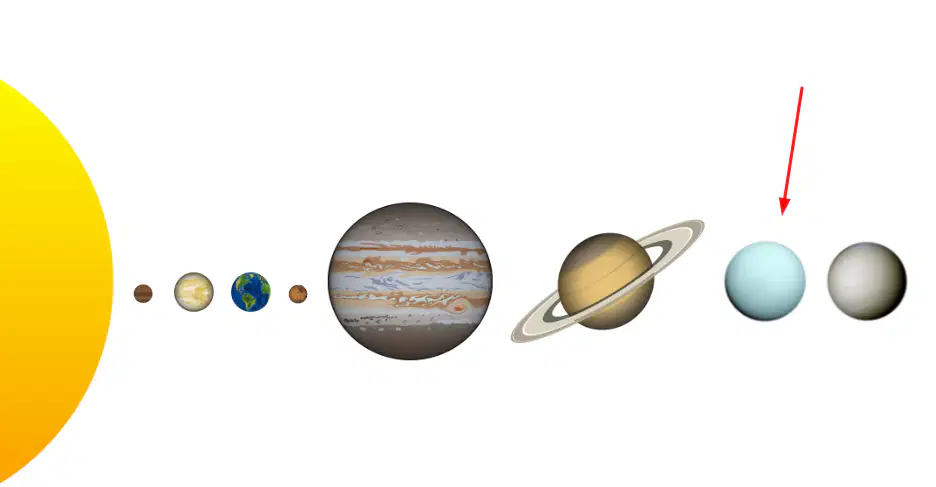
Point to Jupiter
Point to Neptune
Point to Saturn
Point to Uranus
Point to Mercury
Point to Mars
Point to Earth
Point to Venus
Organize these planets into the right categories
Mercury
Venus
Earth
Mars
Jupiter
Saturn
Uranus
Neptune
(a) is a rocky planet. It is the smallest planet in the solar system. It is made of metals. It doesn't have any rings or moons.
(a) is a rocky planet. It is the hottest planet in the solar system. It is made of metals. It doesn't have any rings or moons.
(a) is a rocky planet. It is the only planet with life on it. It is made of metals. It doesn't have rings. It has one moon and a lot of water.
(a) is a rocky planet. It is made of metals. It doesn't have rings. It has red rocks and 2 moons. I doesn't have rings.
(a) is a gas planet. It is the biggest planet in the solar system. It has big storms. It has 79 moons. It has the biggest moon.
(a) is a gas planet. It is the second biggest planet in the solar system. It has 7 big rings. It has more than 150 moons.
(a) is a gas planet. It is the coldest planet in the solar system. It has 27 moons and 4 rings. The rings are difficult to see.
(a) is a gas planet. It is the furthest planet from the sun. It has 14 moons and 6 rings. The rings are difficult to see.
Which of the following was a direct result of the Apollo Applications Program?
Skylab
Space Station Freedom
Space Shuttle
The ISS

