
NEW
Font size
 Worksheets
Computer Architecture Quiz
Total questions: 29
Worksheet time: 2hrs 25mins
What does IAS stand for?
Immediate Access Store (Same as RAM)
Integrated Access System
Intelligent Application Suite
Interactive Application Service
What is the function of a von Neumann architecture?
It controls the power supply of a computer.
It introduced the concept of the stored program.
It is responsible for the design of integrated circuits.
It manages the data flow between the CPU and memory.

Which register is responsible for storing numerical values during an operation?
Memory Address Register (MAR)
Current Instruction Register (CIR)
Memory Data Register (MDR)
Accumulator (ACC)
What does a system clock do?
It controls the power supply of a computer.
It produces timing signals for synchronization.
It manages the data flow between the CPU and memory.
It stores the address of the next instruction to be read.
What is the purpose of backing store?
To hold frequently used data for quick access.
To store data permanently even when the computer is powered down.
To manage the synchronization of data flow.
To convert digital data into electric currents.
What is the main function of a register in the CPU?
To store data permanently.
To convert digital data into electric currents.
To hold data or instructions as part of the Fetch–Decode–Execute cycle.
To manage memory addresses.
What is the difference between a unidirectional and bidirectional data flow?
Unidirectional can travel in one direction, bidirectional in both.
Unidirectional is faster than bidirectional.
Bidirectional is used for data, unidirectional for control signals.
Unidirectional is used for control signals, bidirectional for data.
What is overclocking?
Reducing the clock speed of a system clock.
Changing the clock speed to a lower value.
Changing the clock speed to a higher value.
Replacing the system clock with a new one.
How many cores does a dual core CPU have?
One core
Two cores
Four cores
Eight cores
What is the Fetch–Execute–Decode cycle?
Instructions and data are fetched, decoded, and finally executed.
Instructions and data are decoded, fetched, and finally executed.
Instructions and data are executed, fetched, and finally decoded.
Instructions and data are fetched, executed, and finally decoded.
What is the role of the Basic Input/Output System (BIOS)?
It is used to perform the initialization of a computer system during boot-up.
It is a type of computer architecture.
It is responsible for the execution of all instructions and data in a computer.
It is a suite of programs used to manage memory.
What is an opcode? opcode操作码
Part of a machine code instruction that identifies what data is to be used.
Part of a machine code instruction that identifies what action the CPU has to perform.
A type of memory that loses its contents when the power is turned off.
A device that converts digital data into electric currents.
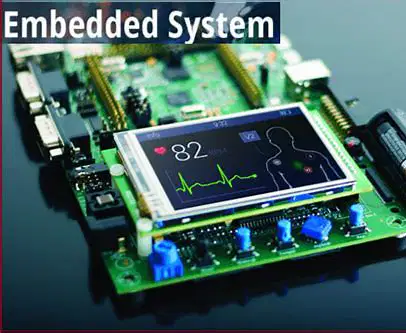
What is an embedded system? embedded system嵌入式系统
A combination of hardware and software designed for a specific set of functions.
A type of computer architecture.
A system that uses barcodes for data representation.
A system that uses virtual keyboards for input.
What is the function of a DAC?
To convert digital data into electric currents.
To convert analogue data into digital form.
To store data permanently.
To manage network connections.
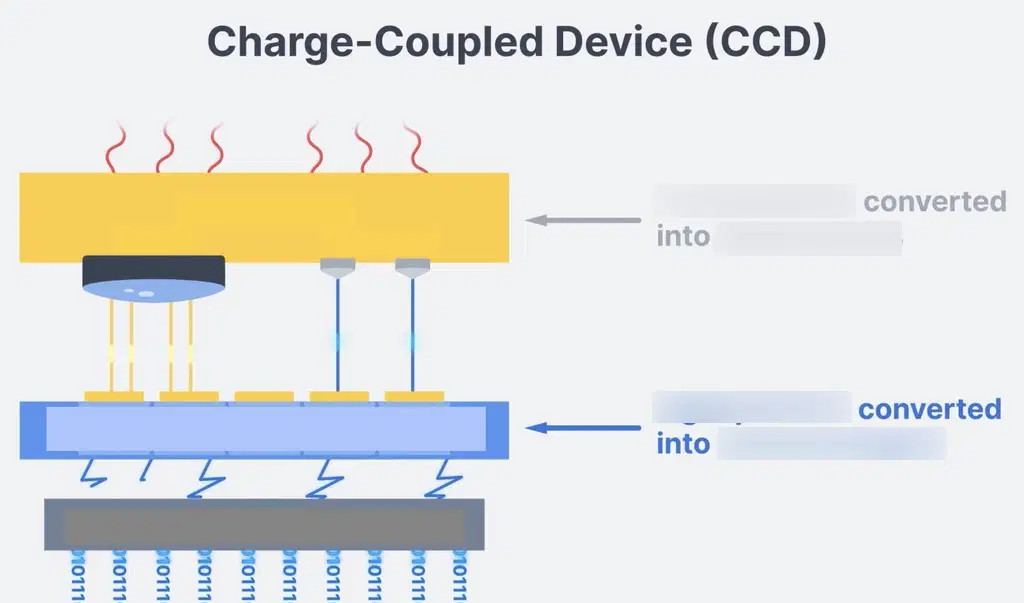
What is a charge couple device (CCD)?
A light-sensitive cell made up of millions of tiny sensors acting as photodiodes
光敏二极管.
A device that converts digital data into electric currents.
A type of touch screen technology.
A device used for data storage.
What is the main technology used in an optical mouse?
A red LED to track the movement of the device.
Infrared beams to detect screen touches.
Capacitive technology to sense finger touches.
Piezoelectric crystals to force ink out onto paper.
What is the purpose of computer-aided design (CAD) software?
To create drawings for 3D printing or blueprints.
To manage the synchronization of data flow in a computer.
To convert digital data into electric currents.
To store data permanently.
What is the function of an actuator?
To convert electrical energy into mechanical movement.
To convert digital data into electric currents.
To manage the synchronization of data flow in a computer.
To store data permanently.
What is a digital micromirror device (DMD)?
A chip that uses tiny mirrors to create a video display.
A device that converts digital data into electric currents.
A type of touch screen technology.
A device used for data storage.

What is the function of a piezoelectric crystal in an inkjet printer?
piezoelectric crystal压电晶体
It vibrates and forces ink out onto paper.
It converts digital data into electric currents.
It manages the synchronization of data flow in a computer.
It stores data permanently.
How does an OLED produce an on-screen image?
It uses the movement of electrons between a cathode and an anode.
It requires a backlight for illumination.
It uses a red LED to track movement.
It converts digital data into electric currents.
What is the function of a loudspeaker? loudspeaker 扬声器
It converts electric current into sound.
It converts digital data into electric currents.
It manages the synchronization of data flow in a computer.
It stores data permanently.
What is the difference between RAM and ROM?
RAM is primary memory that can be written to or read from, while ROM is primary memory that cannot be written to.
ROM is primary memory that can be written to or read from, while RAM is primary memory that cannot be written to.
Both RAM and ROM are types of storage devices.
Both RAM and ROM are types of output devices.
What does volatile memory refer to? volatile 易丢失的
Memory that retains its contents when the power is turned off.
Memory that loses its contents when the power is turned off.
Memory that is used for long-term data storage.
Memory that is used for temporary data storage.
What is the purpose of refreshing in the context of DRAM?
To maintain charge with a device such as a capacitor(电容器).
To replace old data with new data.
To convert digital data into electric currents.
To manage the synchronization of data flow in a computer.
What is the function of latency in a system?
The time it takes to find a track on a hard disk.
The speed at which data is transferred over the network.
The temperature at which a CPU operates.
The amount of data a computer can process.
What is SSD endurance?
The total guaranteed number of times data can be written to or read from an SSD in its usable life cycle.
The speed at which data is transferred over the network.
The temperature at which a CPU operates.
The amount of data a computer can process.
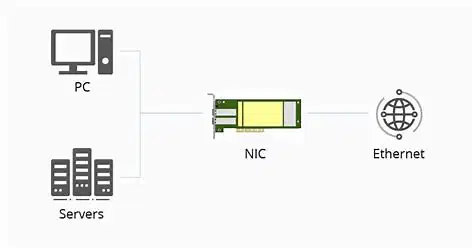
What is the function of a network interface card (NIC, 网络接口卡,简称“网卡”)?
To allow a device to connect to a network, such as the internet.
To convert digital data into electric currents.
To manage the synchronization of data flow in a computer.
To store data permanently.
What is the purpose of dynamic IP address? dynamic 动态的
An IP address that doesn't change.
A unique identifier which acts as a network address for a device.
A temporary IP address assigned to a device each time it logs onto a network.
A server that automatically provides and assigns an IP address.

