
 Worksheets
Economics Final Test
Total questions: 100
Worksheet time: 50mins
Which of the following best defines economics?
The study of supply and demand
The study of microeconomics and macroeconomics
The study of how to best allocate scarce resources amongst unlimited wants
The study of how to best extract resources from citizens
Which of the following best defines scarcity?
Insufficiency or smallness of supply; not enough to go around
Something must be wanted or have value and be scarce
Quantity demanded is greater than quantity supplied
Quantity supplied is greater than quantity demanded
Which of the following best defines opportunity cost?
The cost of producing a good or service
The value of the next best alternative forgone by choosing another alternative
The value of all alternatives forgone by choosing a single alternative
The cost of consuming a good or service
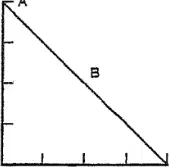
In figure 1 shown above, at point B the trade-off (opportunity cost) is:
2 military bases
2 housing projects
Both A and B
None of the above
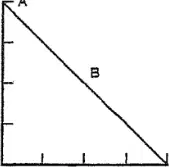
In figure 1 shown above, to move from point A to point B:
Less military bases can be established
More military bases can be established
Less housing projects
None of the above
Which of the following best defines factors of production?
Resources used to produce goods and services: land, labor, capital, entrepreneurship
Resourced used to consume goods and services: land, labor, capital, entrepreneurship
Resources used to produce or consume goods and services
Resources used to maximize the amount of goods produced
Which of the following best defines an economic system?
The way a society organizes itself to decide what and how much will be produced, the way goods and services will be produced, and how the output will be distributed.
A group of countries or regions within a country which are connected economically.
The “invisible hand” that allows supply and demand automatically set the proper price and quantity for every good and service produced in an economy.
None of the above
Which of the following best defines a traditional economic system?
Political leaders organize production and distribution.
Everyone is involved in organizing production and distribution.
Cultural customs are used to organize production and distribution.
None of the above.
Which of the following best defines a command economic system?
Political leaders organize production and distribution.
Everyone is involved in organizing production and distribution.
Cultural customs are used to organize production and distribution.
None of the above.
Which of the following best defines a market economic system?
Political leaders organize production and distribution.
Everyone is involved in organizing production and distribution.
Cultural customs are used to organize production and distribution.
None of the above
Which of the following plays an important role in a market economy?
Entrepreneurs
Workers
Consumers
All of the above
The most important (but not the only) goal in a market economy is:
Competition
Profit
Winning
Economic equality
A “market” is best described as:
A situation which brings willing buyers and sellers together
A place to buy consumer goods
A place to sell one’s production
A competition
A market in which there are many sellers, each one trying to differentiate their similar product to gain a larger share of the market is known as a/an:
Monopoly
Oligopoly
Pure competition
Mercantilism
A market in which one seller provides most of the goods and services is known as a/an:
Monopoly
Oligopoly
Pure competition
Mercantilism
A market characterized by only one seller is known as:
Monopoly
Oligopoly
Central planning
Pure competition
Which of the following defines demand curve?
The amount of a good or service consumers are willing and able to buy at a given price
The amount of a good or service businesses are willing and able to produce at a given price
A graph showing how the amount of a good or service demanded changes with a change in price
A graph showing how the amount of a good or service supplied changes with a change in price
Which of the following best defines supply curve?
The amount of a good or service consumers are willing and able to buy at a given price
The amount of a good or service businesses are willing and able to produce at a given price
A graph showing how the amount of a good or service demanded changes with a change in price
A graph showing how the amount of a good or service supplied changes with a change in price
Which of the following best defines quantity demanded?
The amount of a good or service consumers are willing and able to buy at a given price
The amount of a good or service businesses are willing and able to produce at a given price
A graph showing how the amount of a good or service demanded changes with a change in price
A graph showing how the amount of a good or service supplied changes with a change in price
Which of the following best defines quantity supplied?
The amount of good or service consumers are willing and able to buy at a given price
The amount of a good or service businesses are willing and able to produce at a given price
A graph showing how the amount of a good or service demanded changes with a change in price
A graph showing how the amount of a good or service supplied changes with a change in price
Which of the following best defines the law of demand?
As price increases, quantity demanded decreases
As price increases, quantity demand increases
How a change in price effects the quantity demanded for a good or service
How a change in price effects the quantity supplied for a good or service
Which of the following best defines the law of supply?
A. As price increases, quantity supplied decreases
B. As price increases, quantity supplied increases
C. How a change in price affects the quantity demanded for a good or service
D. How a change in price affects the quantity supplied for a good or service
In a market economy, the forces of supply and demand interact to determine:
A. Balance
B. Interest rates
C. Price
D. Quantity
Which of the following best defines shortage?
A. The price at which the quantity supplied equals the quantity demanded
B. The quantity which the price offered by firms equals the price consumers are willing to pay
C. When the quantity supplied is greater than quantity demanded
D. When the quantity demanded is greater than quantity supplied
Which of the following best defines surplus?
A. The price at which the quantity supplied equals the quantity demanded
B. The quantity which the price offered by firms equals the price consumers are willing to pay
C. When the quantity supplied is greater than quantity demanded
D. When the quantity demanded is greater than quantity supplied
Which of the following best defines a change in demand?
A. A movement of the entire demand curve to the right or left
B. A movement along the demand curve
C. A changing of the slope of the demand curve
D. A changing of the curvature of the demand curve
Which of the following best defines determinants of demand?
A. All price factors that influence the demand for a good or service
B. Non-price factors that influence the supply of a good or service
C. Non-price factors that influence the demand for a good or service
D. All price factors that influence the supply of a good or service
Which of the following does NOT shift the demand curve for a product?
A. Income
B. Substitutes
C. Complements
D. Price
Which of the following does NOT cause an increase in the demand for a product?
A. Increase in population
B. Change in tastes
C. Increase in the price substitutes
D. Implementation of additional federal regulations
Which of the following best defines substitutes?
Good or service that is generally used with another good or service
Good or service that can easily replace another good or service
Good or service that is in no way influenced by another good or service
Temporary teachers which can never be as great as your economics teacher
Which of the following best defines complements?
Good or service that is generally used with another good or service
Good or service that can easily replace another good or service
Good or service that is in no way influenced by another good or service
Nice things you say to other people
Which of the following best defines a change in supply?
A movement of the entire supply curve to the right or left
A movement along the supply curve
A changing of the slope of the supply curve
A changing of the curvature of the supply curve
Which of the following would NOT cause an increase in the supply of a product?
Decrease in the price on input resources
A decrease in market price
A more efficient work force
An increase in overall consumer income
Which of the following does NOT shift the supply curve for a product?
Costs of production
Technology
Number of producers
Necessities & luxuries
Which of the following best defines elastic?
Perfectly horizontal; any change in price reduces quantity to zero; at the correct price, quantity is infinite
A small change in price causes a large change in quantity
Perfectly vertical; a change in price does not change quantity
A small change in price causes a small change in quantity
Which of the following best defines elasticity of demand?
The quantity demanded for a good or service varies inversely with price
The quantity supplied of a good or service varies positively with price
How a change in price effects the quantity demanded for a good or service
How a change in price effects the quantity supplied for a good or service
Which of the following does NOT affect the elasticity of demand?
The presence of substitutes
The cost of production for the good or service
The price of the good or service
The relative importance of the good or service to the consumer
Which of the following best defines elasticity of supply?
The quantity demanded for a good or service varies inversely with price
The quantity supplied for a good or service varies positively with price
How a change in price affects the quantity demanded for a good or service
How a change in price affects the quantity supplied for a good or service
Which is an example of inelastic supply?
Kites
Candy
Apple orchard
Hair cuts
Which of the following best defines ceteris paribus?
All else unequal
All else changed
All else equal
All else variable
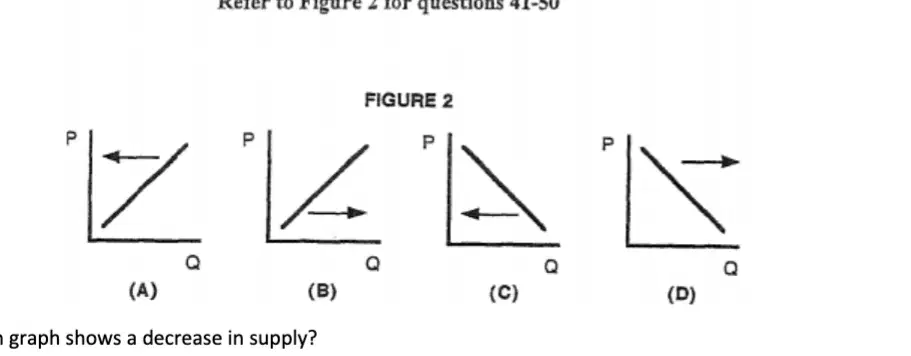
Which graph shows a decrease in supply?
Graph A
Graph B
Graph C
Graph D
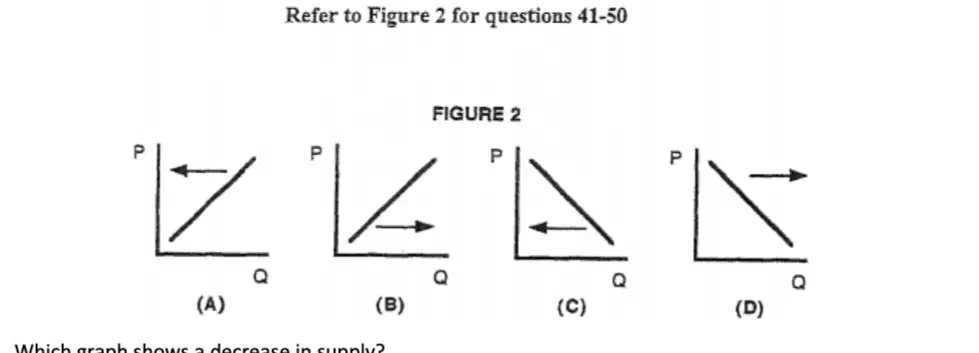
Which graph shows an increase in supply?
Graph A
Graph B
Graph C
Graph D
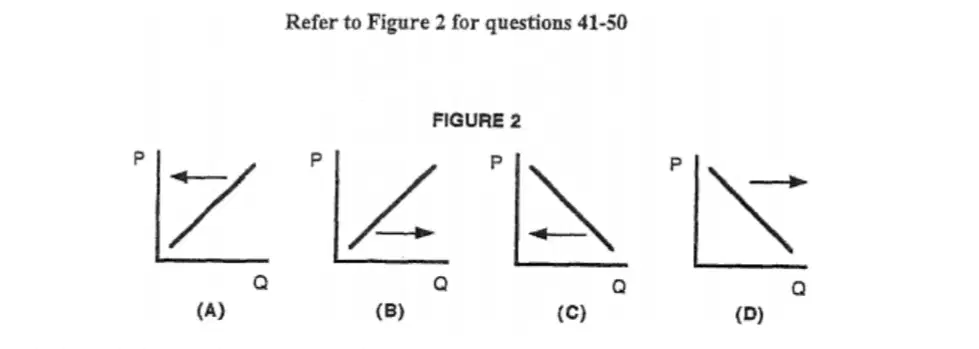
Which graph shows a decrease in demand?
Graph A
Graph B
Graph C
Graph D
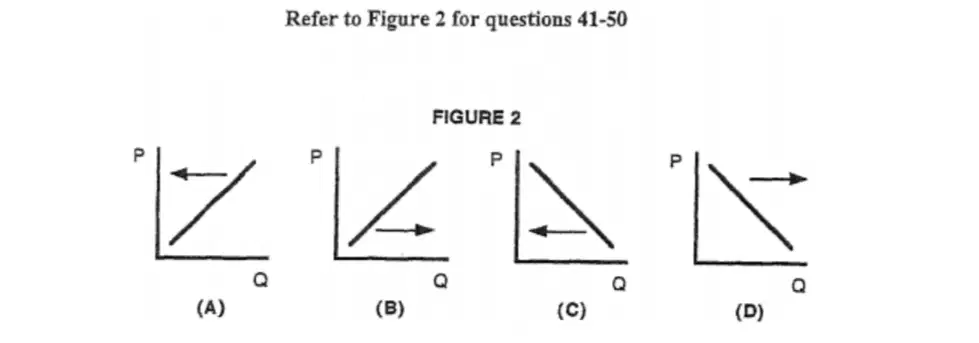
Which graph shows an increase in demand?
Graph A
Graph B
Graph C
Graph D
The government gives every student in California a tax rebate of $3,000, ceteris paribus. What does this do to the demand for video games?
Decreases demand
Increases demand
No change in demand
Decreases supply
The price of Oreos drops dramatically, ceteris paribus. What does this do to the demand for Hydrox (fake Oreos)?
Increases demand
Decreases demand
No change in demand
Increases supply
The cost of flour increases, ceteris paribus. What does this do to the supply of donuts?
Increases supply
Decreases supply
No change in supply
Increases demand
Twelve new bookstores open up in town, ceteris paribus. What does this do to the supply of books?
Decreases supply
Increases supply
No change in supply
Decreases demand
A new law is passed outlawing the use of pesticides on all produce, ceteris paribus. What does this do to the supply of lettuce?
Increases supply
Decreases supply
No change in supply
Increases demand
The price of tomatoes decreases, ceteris paribus. What does this do to the supply of spaghetti sauce?
Increases supply
Decreases supply
No change in supply
Increases demand
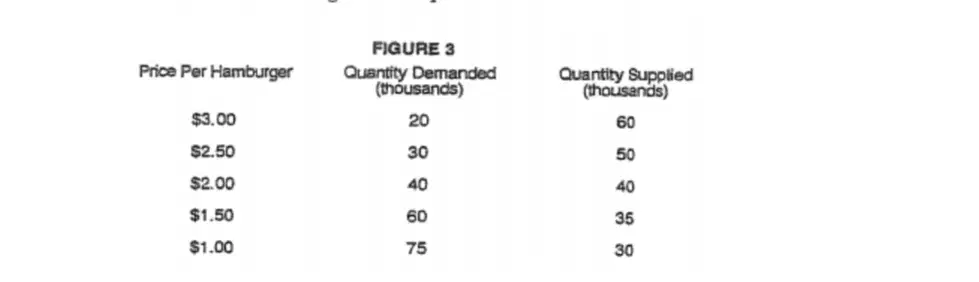
A shortage of hamburgers would result if the actual market price were
$2.00 per hamburger
Any price above $2.00 per hamburger
Any price below $2.00 per hamburger
Any price below $2.50 per hamburger
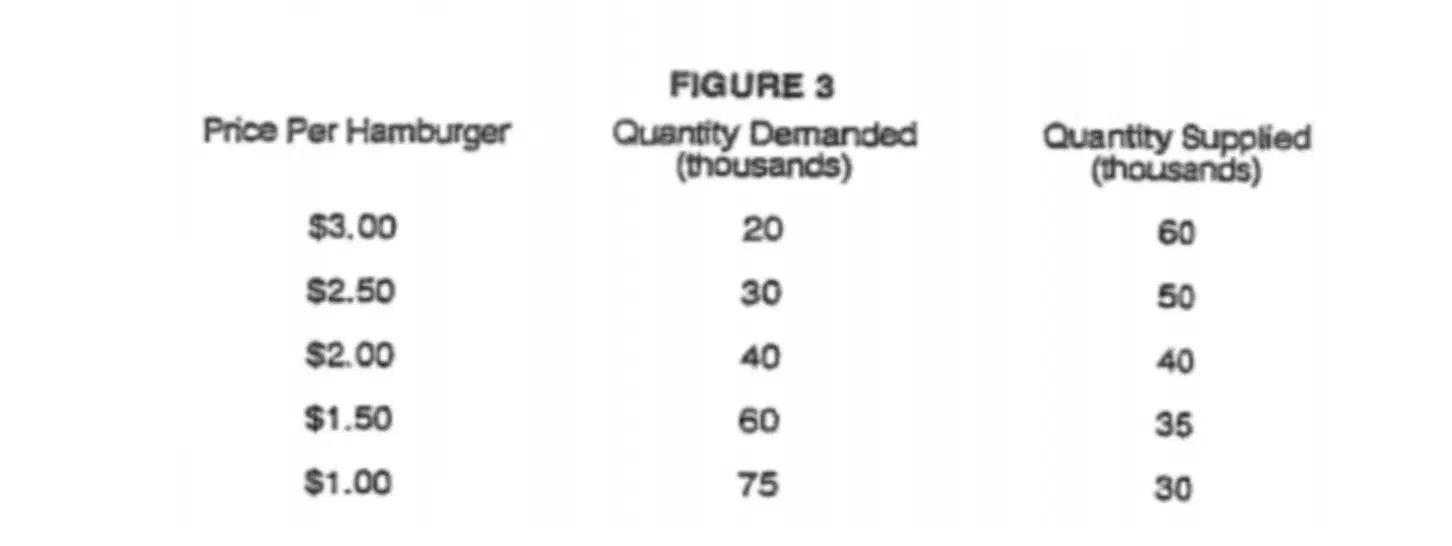
A surplus of hamburgers would result if the actual market price were
$2.00 per hamburger
Any price above $2.00 per hamburger
Any price below $2.00 per hamburger
Any price below $2.50 per hamburger
If the price of a good is mistakenly set by the producer above the equilibrium price but is free to move, we can expect
The price to fall
The quantity demanded to increase
The quantity supplied to decrease
All of the above
A change in which the following would cause a movement along the demand curve (change quantity demanded) for Ford trucks, but not a shift in the demand curve (change in demand) for Ford trucks
Consumer income
Chevy prices
Ford prices
Consumer tastes
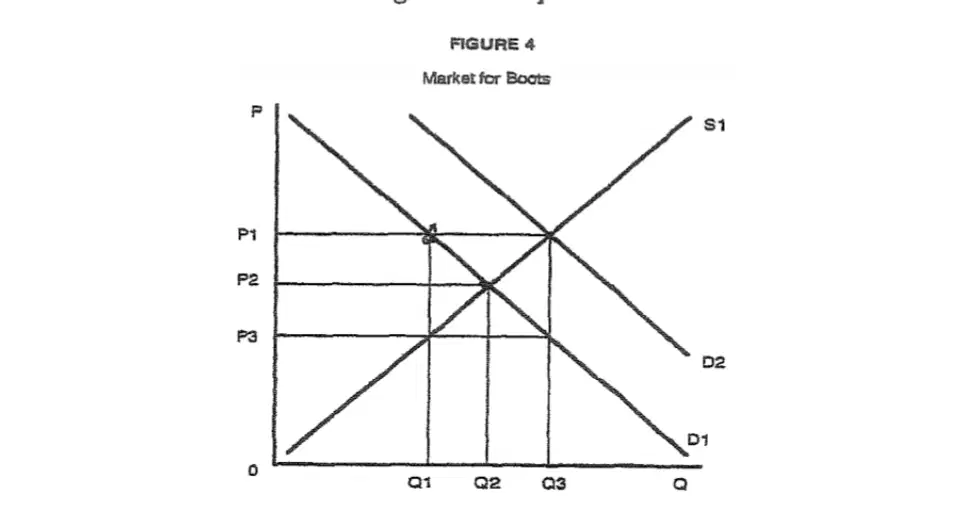
If D1 is the current demand curve, the equilibrium price of boots is:
P1
P2
P3
Q2

At P1, the quantity supplied of boots is:
Q1
Q2
Q3
S1

If country clothes were to go out of style, which shift would occur?
D1 to D2
D2 to D1
D1 to S1
P1Q1 to P3Q3

At P3, the market for boots is a:
Shortage
Surplus
Equilibrium
Balance
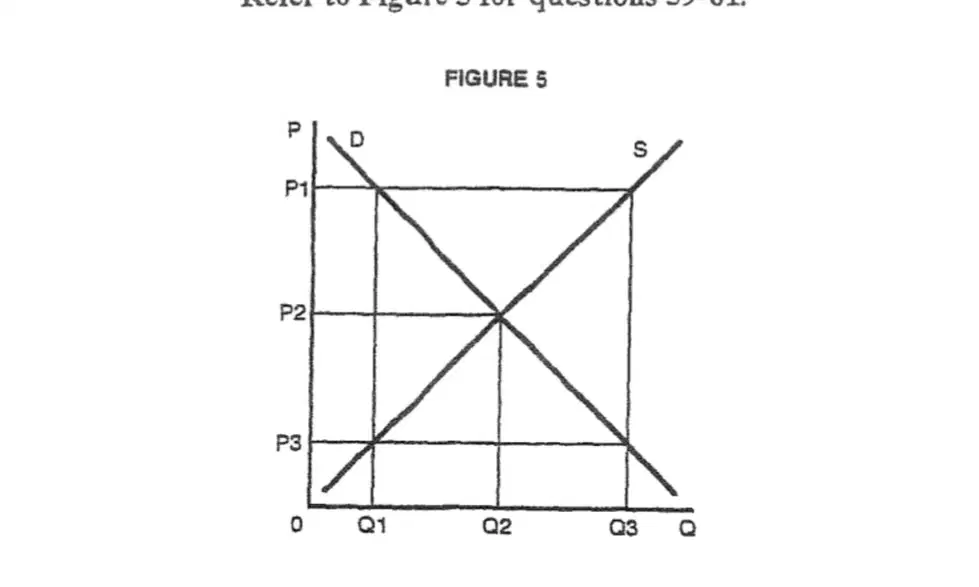
Which of the following would be considered an effective price floor (minimum wage)?
P1
P2
P3
Q1
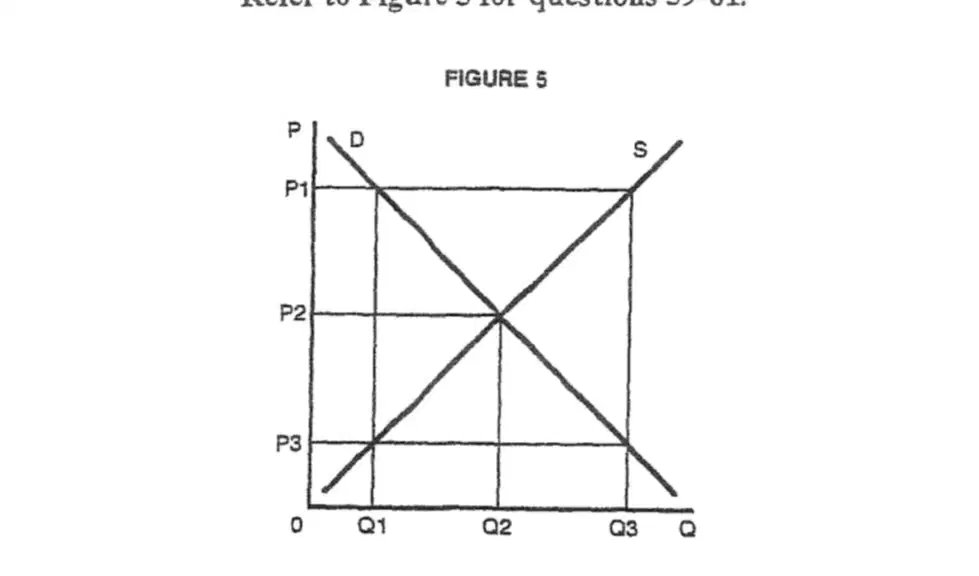
Which of the following would be considered an effective price ceiling (rent control)?
P1
P2
P3
Q1
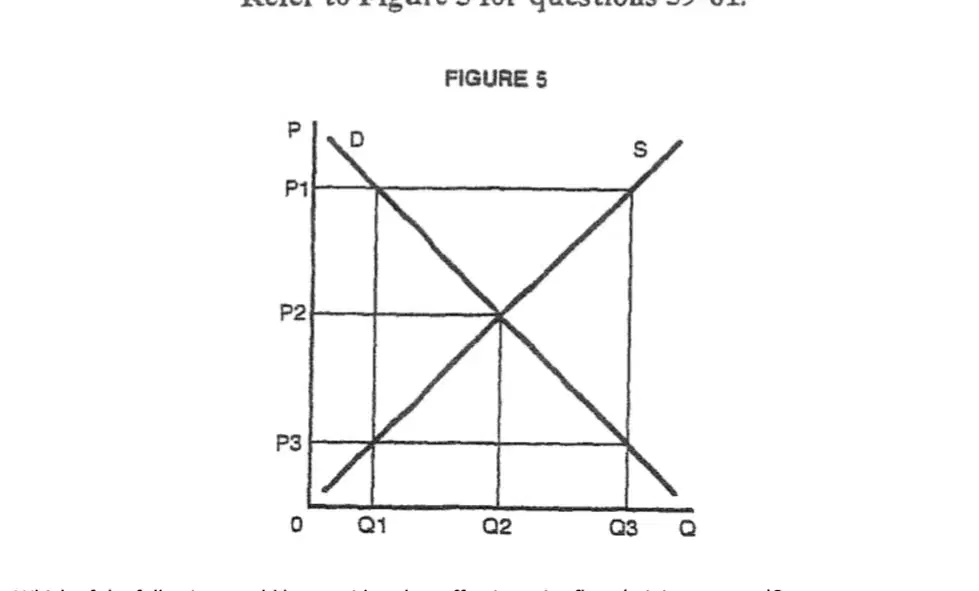
Which of the following would be considered equilibrium price?
P1
P2
P3
Q1
The economic goals of the United States do NOT include:
Economic growth
Full employment
Equal opportunity
Stable prices
Which of the following best defines gross domestic product?
A. The total of all goods and services purchased in the U.S. in one year
B. The total of all goods and services produced in the U.S. in one year
C. The total of all goods and services sold in the U.S. in one year
D. None of the above
What is the formula for gross domestic product?
A. M – X + G + I + C
B. G - C + M + X + I
C. C + I + G + X - M
D. None of the above
Real Gross Domestic Product differs from Gross Domestic Product because it takes which of the following into consideration?
A. The rate of inflation
B. The quality of goods
C. The balance of trade
D. The absolute advantage
By studying Gross Domestic Product figures, economists can do all of the following EXCEPT:
A. Evaluate the performance of the economy
B. Compare the economies of different countries
C. Understand business cycles
D. Determine a company’s best level of output
Which of the following best defines frictional unemployment?
A. Occurs when people take time to find a job
B. Occurs as a result of harvest schedules or vacations, or when industries slow or shut down for a reason
C. Occurs when workers’ skills do not match the jobs that are available
D. Unemployment that rises during economic downturns and falls when the economy improves
Which of the following best defines cyclical unemployment?
A. Occurs when people take time to find a job
B. Occurs as a result of harvest schedules or vacations, or when industries slow or shut down for a reason
C. Occurs when workers’ skills do not match the jobs that are available
D. Unemployment that rises during economic downturns and falls when the economy improves
Which of the following best defines seasonal unemployment?
A. Occurs when people take time to find a job
B. Occurs as a result of harvest schedules or vacations, or when industries slow or shut down for a reason
C. Occurs when workers’ skills do not match the jobs that are available
D. Unemployment that rises during economic downturns and falls when the economy improves
Which of the following best defines structural development?
A. Occurs when people take time to find a job
B. Occurs as a result of harvest schedules or vacations, or when industries slow or shut down for a reason
C. Occurs when workers’ skills do not match the jobs that are available
D. Unemployment that rises during economic downturns and falls when the economy improves
Inflation can be described as an:
Increase in prices
Increase in demand
Increase in supply
All of the above
If inflation was being caused by having too much money in the economy, which theory would explain the inflation?
Quantity theory
Demand-pull theory
Cost-push theory
Wage price spiral
If inflation was being caused by producers raising prices in order to meet increased costs, which theory would explain the inflation?
Quantity theory
Demand-pull theory
Cost-push theory
Wage price spiral
If inflation were being caused by the demand for goods and services exceeding existing supplies, which theory would explain the inflation?
Quantity theory
Demand-pull theory
Cost-push theory
Wage price spiral
If inflation were being caused by rising wages causing high prices which cause higher wages, which theory would explain the inflation?
Quantity theory
Demand-pull theory
Cost-push theory
Wage price spiral
The Federal Reserve influences the money supply with which of the following?
Monetary policy
Fiscal policy
Trade policy
None of the above
Congress influences the money supply with which of the following?
Monetary policy
Fiscal policy
Trade policy
None of the above
Which of the following best describes reserve requirements?
The interest rates charged to banks for borrowing money from the Fed
The % of deposits which banks must hold and not loan out to other people
The buying and selling of United States bonds
The amount of gas needed to make it to the next gas station
Which of the following best describes open market operations?
The interest rates charged to banks for borrowing money from the Fed
The % of deposits which banks must hold and not loan out to other people
The buying and selling of United States bonds
The amount of gas needed to make it to the next gas station
Which of the following best describes discount rates?
The interest rates charged to banks for borrowing money from the Fed
The % of deposits which banks must hold and not loan out to other people
The buying and selling of United States bonds
The amount of gas needed to make it to the next gas station
If the Federal Reserve wanted to increase the money supply using reserve requirements it would?
Lower the rate
Increase the rate
Leave the rate unchanged
None of the above
If the Federal Reserve wanted to increase money supply using discount rates it would?
Lower the rate
Increase the rate
Leave the rate unchanged
None of the above
If the Federal Reserve wanted to increase the money supply using open market operations it would?
Buy bonds
Sell bonds
Neither sell nor buy bonds
None of the above
Which of the following situations would signal the need for expansionary (easy) monetary policy?
Rising inflation, extremely low unemployment, economic recovery
Falling GDP, rising unemployment, economic recession
Rising inflation, rising unemployment, economic recovery
Increasing GDP, extremely low unemployment, economic recession
Which of the following situations would signal the need for restrictive (tight) monetary policy?
Rising inflation, extremely low unemployment, economic recovery
Falling GDP, rising unemployment, economic recession
Rising inflation, rising unemployment, economic recovery
GDP extremely low unemployment, economic recession
Which of the following would be an example of fiscal policy?
An increase in the reserve requirement
An increase in federal spending
The selling of bonds on the open market
A decrease in the discount rate
Which of the following is NOT subject to control by the Federal Reserve?
Taxes
Money supply
Reserves in banks
Interest rates
Why will $1,000 deposited in a bank “create” money through the multiplier effect?
The $1,000 earns interest for the depositor
The Federal Reserve will match it with $1,000 of reserves
The bank will earn interest on the money it loans
Some of the deposit will be loaned, spent, and then redeposited
India can produce 100 million tons of cotton and China can produce 150 million tons of cotton. China has:
A trade surplus
An absolute advantage
A comparative advantage
A surplus
According to the theory of comparative advantage, a good should be produced in a nation where:
The opportunity costs of production are lower than that of another country
The absolute advantage is greatest
The production possibilities curve shows a greater slope
None of the above
This is the macroeconomic approach that asserts fiscal policies can use tax income & borrowing to increase aggregate demand as a means of stabilizing market economic growth, inflation, & unemployment.
laissez-faire economics
demand-side economy theory
supply-side economic theory
central planning
This is the macroeconomic approach that asserts federal regulations, spending, and taxes should be reduced to stimulate economic growth and aggregate demand by lowering the cost of production & therefore market price for goods. Furthermore, it held that full employment contributed to inflation, and that a monetary authority should be charged with regulating the money supply to stabilize inflation, employment, and growth.
laissez-faire economics
demand-side economy theory
supply-side economy theory
central planning
This was the Nobel-prize winning American economist who, in the 1970s, helped develop the contemporary monetary and fiscal approaches used by most world central banks.
John Keynes
Adam Smith
Milton Friedman
Karl Marx
This was term used to describe the return of pro-laissez-faire economic policies in the 1970s and 1980s following the period of high unemployment and high inflation known as stagflation of the 1970s.
neo-conservatism
socialism
globalization
neo-liberalism
This is the term used to describe the entity or person that dictates an economy’s monetary policy.
federal bank
monetary authority
money supply
central bank
Which of the following makes the primary monetary policy decisions for the Federal Resource System?
Board of Governors
Chamber of Commerce
Bank of America
U.S. Treasury
This is an economy centered around information-based jobs rather than traditional industrial production.
manufacturing economy
agricultural economy
commercial economy
knowledge economy
The development of free-trade policies & organizations following World War II contributed to most significantly to which of the following:
globalization
the Cold War
stagflation
the Great Recession
This is the term used to describe the relocation of domestic production to foreign countries.
outsourcing
exporting
importing
insourcing
Which of the following U.S. monetary practices was ended by President Richard M. Nixon in 1971?
the Federal Reserve System
the gold standard
the petrodollar
free trade policies

