
 Worksheets
Peat, Permafrost, Carbon
Total questions: 15
Worksheet time: 8mins

Match the following stages of peat formation with their descriptions:
Year 1
Dead vegetation falls into an open body of water.
Year 50
More layers of dead vegetation bury the first, forming a wetland.
Year 1000
Dense layers of organic matter become peat.
Peat forms over hundreds and thousands of years as plants grow, die, and pile up underwater in wet ecosystems like (a) .
Deserts
Mountains
Bogs
Forests
The sugar molecules in peat are made up of hydrogen, oxygen, and (a) .
True or False: The sugar molecules in peat decompose completely over time.
True
False
Match the following terms with their definitions: 1) Peat 2) Permafrost 3) Carbon.
A chemical element
Carbon
Frozen ground
Permafrost
Accumulated plant material
Peat
Peatlands account for about (a) % of the 29% of Earth's surface covered by land masses.
1%
3%
5%
10%
Fill in the blank: Over time, plants pile up, get packed together, and form (a) .
Soil
Sand
Clay
What is the primary component of peat?
Dead plants
Sand
Rocks
Water
Fill in the blank: Peat is found in swamps, bogs, and (a) .
Deserts
Wet tropical forests
Mountains
Plains
Which of the following statements is true about peatlands?
They cover 50% of Earth's land
They are only found in cold regions
They account for 3% of land surface
They are man-made.
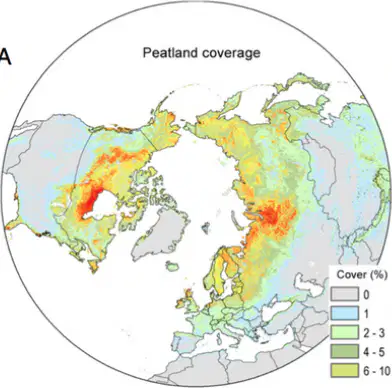
Match the following regions with their characteristics related to peatlands:
Mostly frozen, locked in permafrost
Arctic Circle
Traditional use of peat for fuel
Ireland
Contains nearly 25% of the planet's soil carbon
Finland
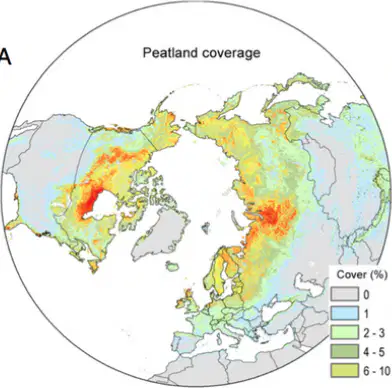
In the Northern Hemisphere, peatlands cover an area roughly one third the size of which country?
Canada
Russia
United States
China
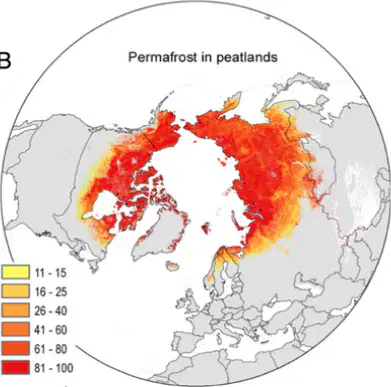
Peatlands in the Arctic Circle are mostly:
Dry and arid
Frozen, locked in permafrost
Covered with dense forests
Urbanized
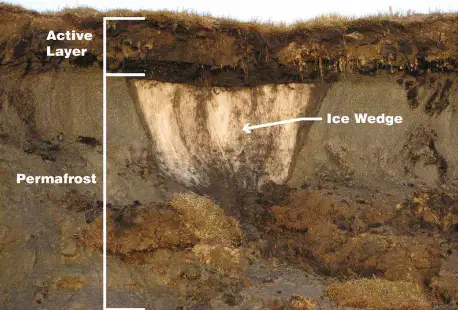
The word 'permafrost' is derived from 'permanent' and (a) .
Ice
Frost
Snow
Cold
What is permafrost?
A) A type of soil
B) Frozen ground
C) A type of plant
D) A weather phenomenon.

