
 Worksheets
Manual Handling Operations Regulations 1992
Total questions: 15
Worksheet time: 8mins
Manual handling includes activities such as lifting, lowering, pushing, pulling, and _______.
Jumping
Carrying
Running
Climbing
The Manual Handling Operations Regulations were established in which year?
1985
1992
2000
2010
Musculoskeletal disorders (MSDs) can cause pain and injuries to which parts of the body?
A) Arms, legs, and joints
B) Eyes and ears
C) Skin and hair
D) Teeth and gums
Fill in the blank: Manual handling operations can lead to _______ injuries.
Wrist
Ankle
Ear
Eye
Fill in the blank: Slips, trips, and _______ are common hazards in manual handling operations.
Falls
Jumps
Runs
Dives
Which element of LITE deals with the task being performed?
Load
Individual
Task
Environment
When lifting a load, it is advised to keep the heaviest side of the load next to the ____.
floor
waist
body
head
What is the recommended position for your feet to maintain balance while lifting?
Together
Apart with 1 leg slightly forward
Crossed
Apart with both legs forward
Which type of footwear is unsuitable for maintaining a stable posture during lifting?
High heels
Sneakers
Boots
Sandals
What is the recommended way to ensure a good hold on a load?
Hug the load close to the body
Grip the load tightly with the hands only
Use a mechanical lift
Push the load with your feet
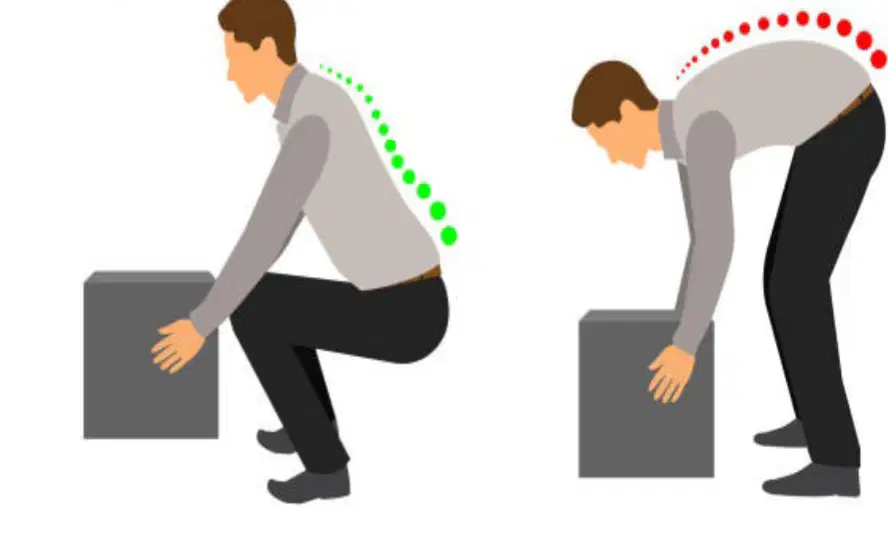
Which posture is shown as incorrect in the diagram?
Slightly bending the back
Fully flexing the back
Keeping the back straight
Slightly bending the knees
Fill in the blank: To lift safely, keep your shoulders level and facing the same direction as the ____.
Knees
Hips
Feet
Head
According to the guideline, what should you do if you're in doubt about lifting something?
Try lifting it anyway
Seek advice or get help
Ignore the doubt
Ask a friend to watch
In manual handling, suction devices are used to create _______.
Permanent handles
Temporary handles
No handles
Fixed handles
When lifting, it is important to maintain _______.
Bent spine
Straight spine alignment
Curved spine
No spine alignment

