
Font size
 Worksheets
Quiz 3: Selection
Total questions: 16
Worksheet time: 15mins
Natural Selection
Process where traits and organisms that are best adapted to the environment survive and reproduce.
Adaptation
A variation in a plant or animal that increases it chance of survival in its environment.
Species
A group of organisms that can interbreed and produce fertile offspring.
Evolution
The gradual development of organisms over time through changes in traits.
A process in nature where traits and organisms that are best adapted to the environment survive and reproduce.
(a)


Speciation can occur as a result of geographic isolation because _________.
members of a species can no longer find mates
populations that live in different environments may be exposed to different selection pressures
exchange of genes during recombination
movement of genes within a population because of interbreeding

Why are advantageous traits more likely to be passed onto offspring?
Because they are more likely to survive and reproduce.
Because they come from dominant alleles.
Because they come from recessive alleles.
Because the organism knew it needed that trait, survives, and passes it on.
Which statement is true comparing natural selection and artificial selection?
In natural selection, traits benefit humans and in artificial selection, the traits benefit the species
In natural selection, traits benefit the species and in artificial selection, the traits benefit humans
In natural and artificial selection, the process takes hundreds of years to occur
In natural and artificial selection, nature determines what traits will be passed down to offspring.
Humans often use methods of artificial selection, such as selective breeding, to produce horses with specific traits.
Which statement best describes how selective breeding helps horse breeders produce the most desirable traits for racing?
Selective breeding produces horses with a higher rate of survival due to an increase in the genetic diversity of the horse offspring.
Selective breeding helps breeders control which traits are passed on by producing horse offspring that only have the desired traits.
Selective breeding uses two horse parents with the desired traits to increase the chances of passing the desired traits on to offspring.
Selective breeding uses two horse parents with unknown traits to produce offspring with genetic variations and different traits.
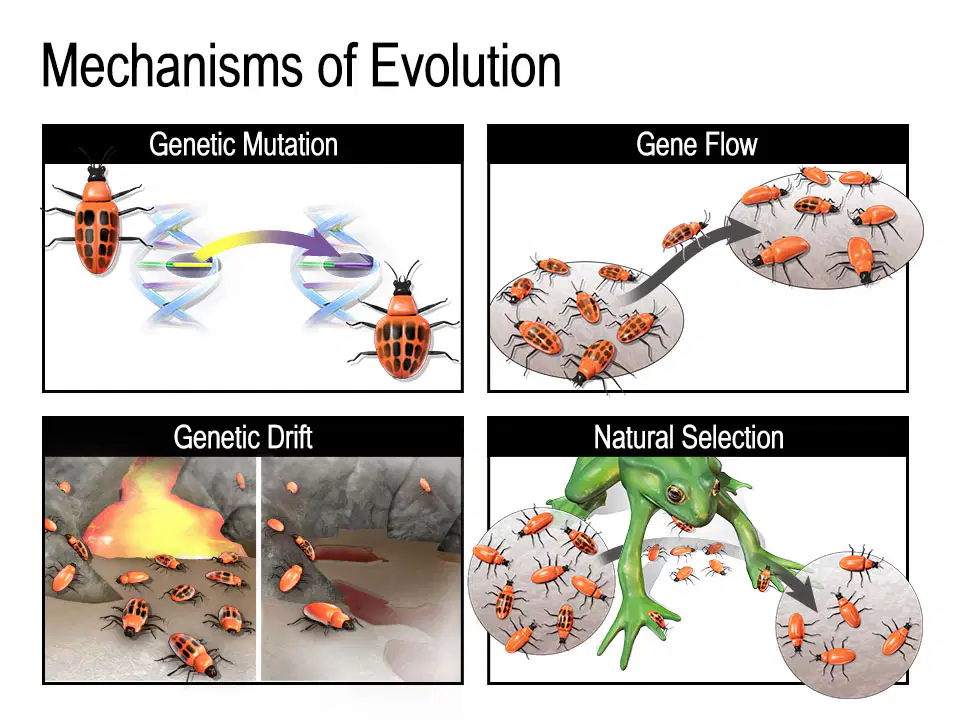
Which of the following is true about genetic diversity in natural selection?
It is reduced if only a few traits are selected
It is promoted as various traits are tested against the environment
It is controlled by human intervention
It is not affected by environmental pressures

What is the outcome of artificial selection?
Traits that enhance survival are favored
Specific desired traits are enhanced
Promotes genetic diversity
Reduces genetic diversity
Analyze the relationship between genetic variation and the ability of a population to adapt to environmental changes.
Genetic variation limits a population's ability to adapt.
Genetic variation increases a population's ability to adapt.
Genetic variation has no effect on a population's adaptability.
Genetic variation decreases a population's adaptability.
Evaluate the impact of a lack of genetic variation on a population's survival.
It increases the population's ability to survive environmental changes.
It has no impact on the population's survival.
It decreases the population's ability to survive environmental changes.
It ensures the population will thrive in any environment.
Apply your knowledge of natural selection to explain why antibiotic resistance is increasing in bacteria.
Bacteria are choosing to become resistant to antibiotics.
Antibiotics cause bacteria to mutate and become resistant.
Bacteria with resistance genes survive and reproduce, passing on the resistance.
Antibiotic resistance is a myth and does not occur.

