
 Worksheets
MOCK EOC
Total questions: 47
Worksheet time: 24mins

In which structure is protein synthesized?
1
2
3
4
Which cellular structure helps to maintain homeostasis by controlling the transportation of substances into and out of the cell?
vacuole
cell wall
mitochondrion
cell membrane

Tanisha draws a diagram representing the various relationships between organisms in a marsh ecosystem. From the relationships shown, she hypothesizes that an increase in the seaside sparrow population could reduce the number of clapper rails in the ecosystem. Which statement BEST explains Tanisha’s hypothesis?
Both seaside sparrows and clapper rails breed in the same area.
Seaside sparrows and clapper rails compete for similar resources.
Seaside sparrows and clapper rails have a predator-prey relationship.
Both seaside sparrows and clapper rails increase ecosystem biomass.
If worldwide deforestation is not regulated, what could most likely result?
Acid rain could lower the pH of rivers and lakes to dangerous levels for aquatic life.
CO₂ levels in the atmosphere could increase and contribute to global warming problems.
Plants and animals could become better adapted to living in desert conditions.
Future generations of humans could have an excess of wood and paper products.
A strand of DNA has these bases: AGC CAT GTA TAC. What is the complementary strand of DNA?
ACG GAT CTA TAG
TCG GTA CAT ATG
TGC CTA GAT ATC
UCG CUA CAU AUG
Place the following terms in the correct order for protein synthesis: protein, amino acid, DNA, and mRNA.
DNA, mRNA, amino acids, protein
mRNA, DNA, protein, amino acids
DNA, protein, mRNA, amino acids
Protein, amino acids, mRNA, DNA
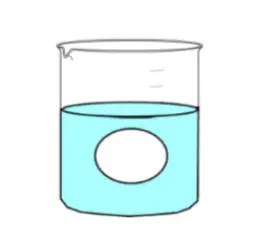
This human cell has a 70% water concentration. It was placed into a solution of distilled water. Over time, what will happen to the cell?
A. Water will move from the cell into the beaker, causing the cell to shrink.
B. Salt will move from the cell into the beaker, causing the cell to shrink.
C. Water will move into the cell from the beaker, causing the cell to swell.
D. Salt will move into the cell, causing the cell to swell.
A segment of DNA has this sequence: ATA GCA CAT GTA. What is the mRNA sequence transcribed from this segment?
TAT CGT GTA CAT
TAT GCT CTA GAT
UAU CGU GUA CAU
UAU GCU CUA CAU
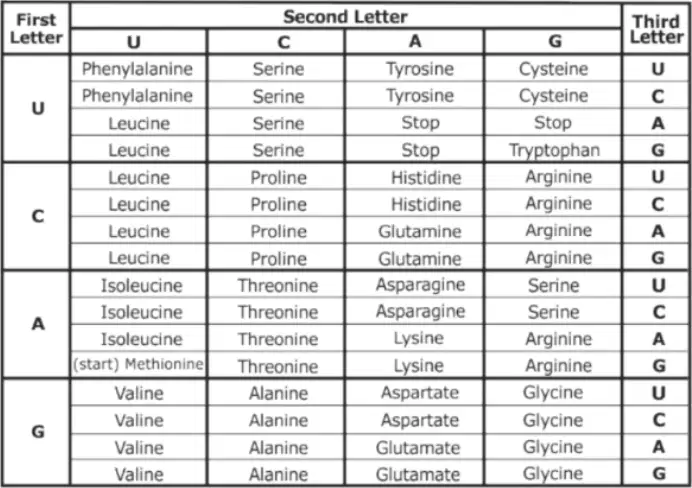
Which amino acids are coded for by an mRNA segment that reads CAG GUG?
Arginine and valine
Isoleucine and arginine
Glutamine and valine
Valine and histidine
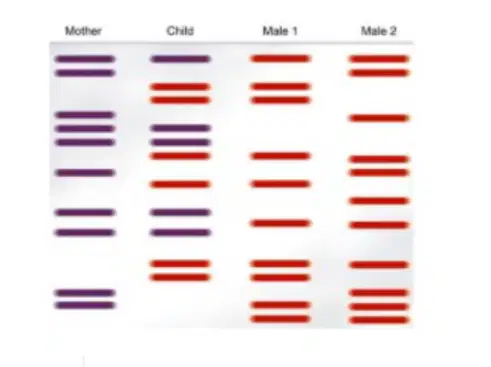
Based on the DNA fingerprint, which male is the father of the child?
Male 1
Male 2
It cannot be determined based on the test
Neither male 1 nor male 2
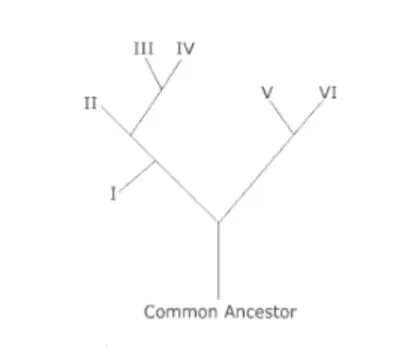
Based on the cladogram below, which two species have the most amino acids in common?
II & VI
III & IV
I & II
I & V
Lilly pads have a waxy substance on their exterior, allowing them to float in the water. Which biological molecule makes up the waxy exterior?
Carbohydrates
Proteins
Lipids
Nucleic acids
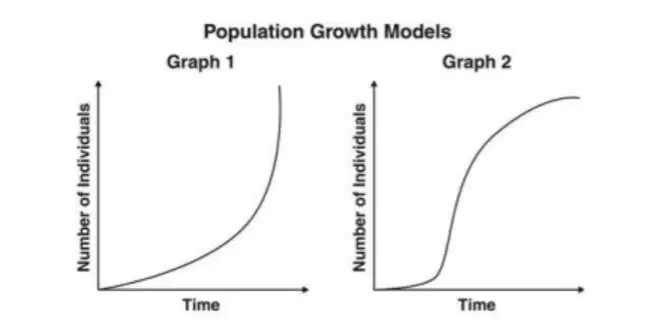
Both graphs represent different population growth models. In Graph 1, there are no external factors acting on a population. What is the most likely factor causing the change in Graph 2?
the maximum rate of adaptation
the limitation of genetic diversity
the maximum rate of reproduction
the limitation of available resources
Which best describes the long term effects of increased carbon dioxide emissions?
There will be decreased solar activity.
Temperatures on Earth will decrease.
Temperatures on Earth will increase.
Less carbon dioxide will dissolve into oceans.
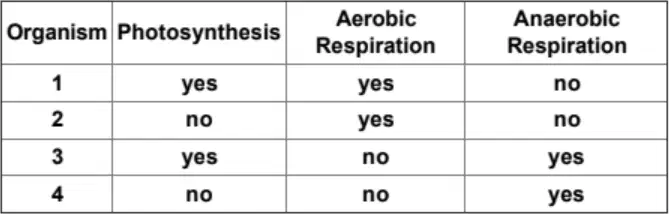
Which organisms change gaseous carbon from the environment into solid carbon for living organisms?
1 and 2
1 and 3
2 and 4
3 and 4
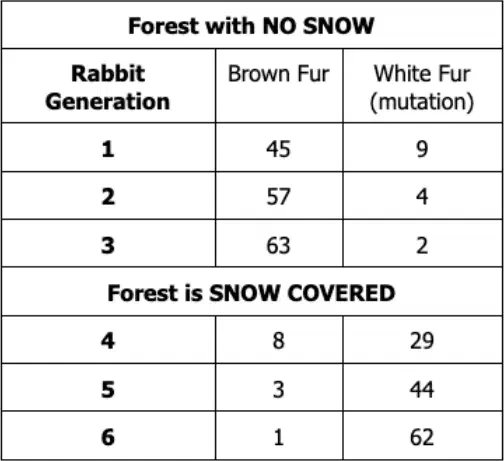
Which conclusion can be made based on this data?
The white fur mutation is a favorable trait in an environment with no snow.
When in a snowy environment, the white fur mutation is a favorable trait compared to the brown fur.
When in a snowy environment, the brown fur mutation is a favorable trait compared to the white fur.
Rabbits will change fur color based on the surrounding environment.
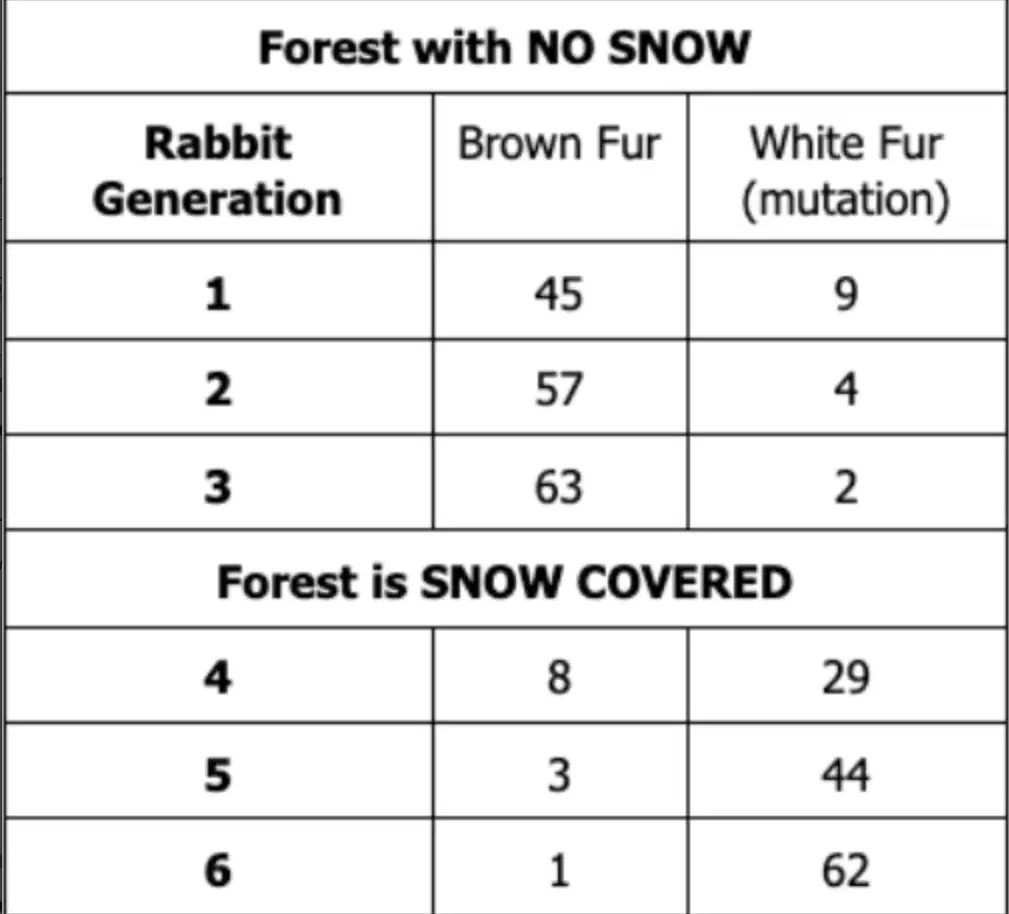
Check the three statements that must be true in order for natural selection to occur in the rabbit population. Choose three answers.
There is genetic variation within the rabbit population.
All organisms in the rabbit population are genetically similar.
Resources are unlimited and the rabbits do not need to compete.
The rabbits must compete for limited resources.
Rabbits with favorable adaptations reproduce and pass on their genes.
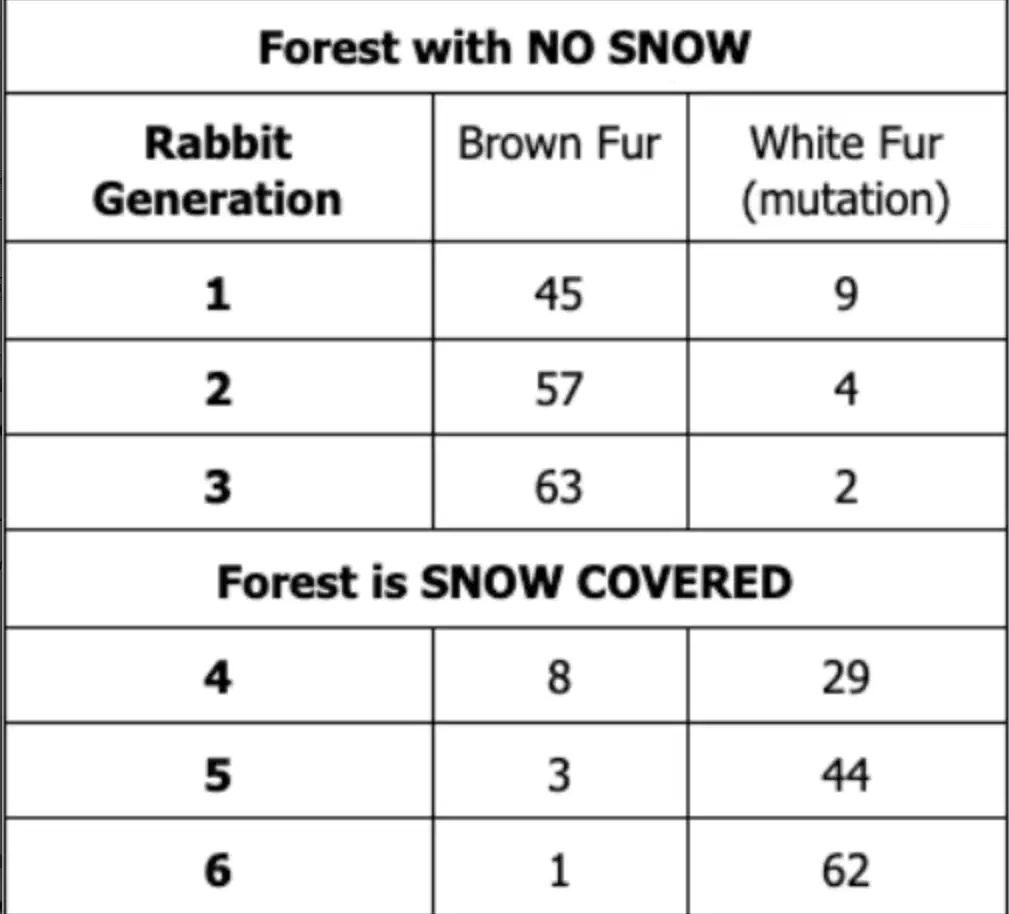
Natural selection led to the change in the population by acting on a rabbit's...
predators.
prey.
genotype.
phenotype.
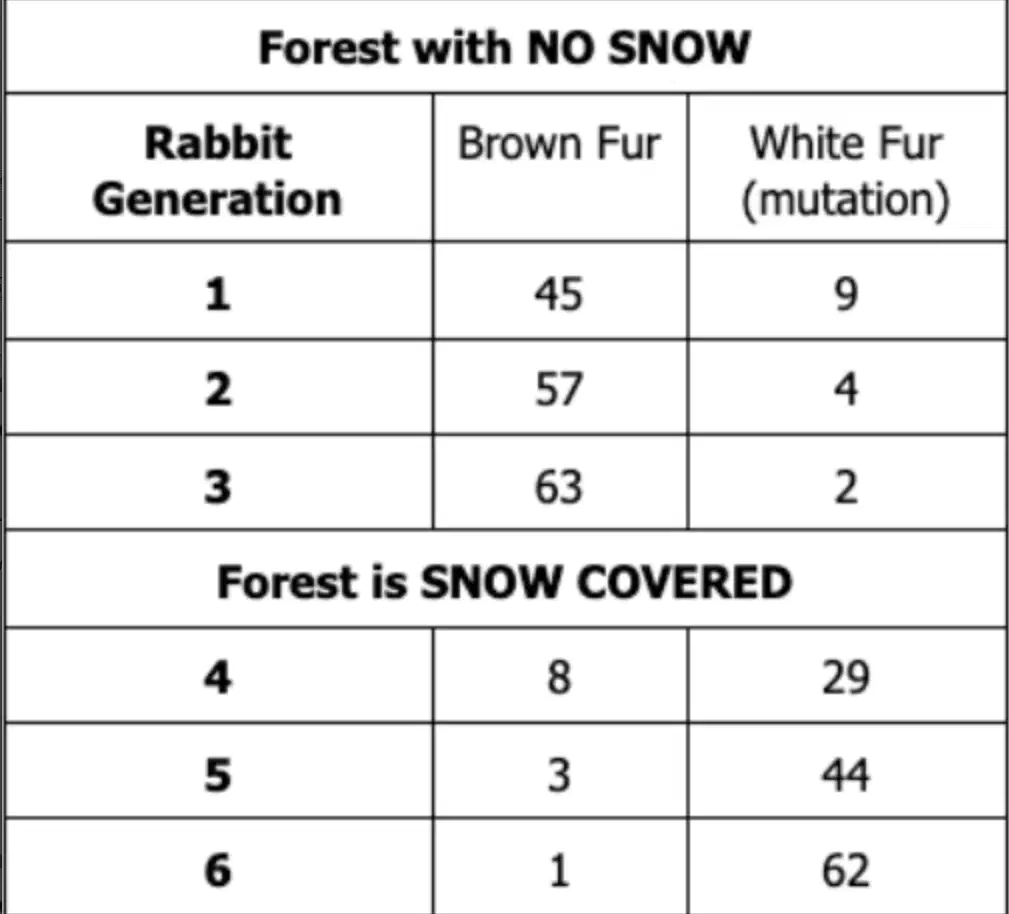
Predict what would happen to the rabbit population in generations 7 - 10 if the environment changed back to "no snow."
There would be an increase in white furred rabbits.
There would be a decrease in white furred rabbits.
There would be no change in the rabbit population.
The wolves would eat all of the rabbits.
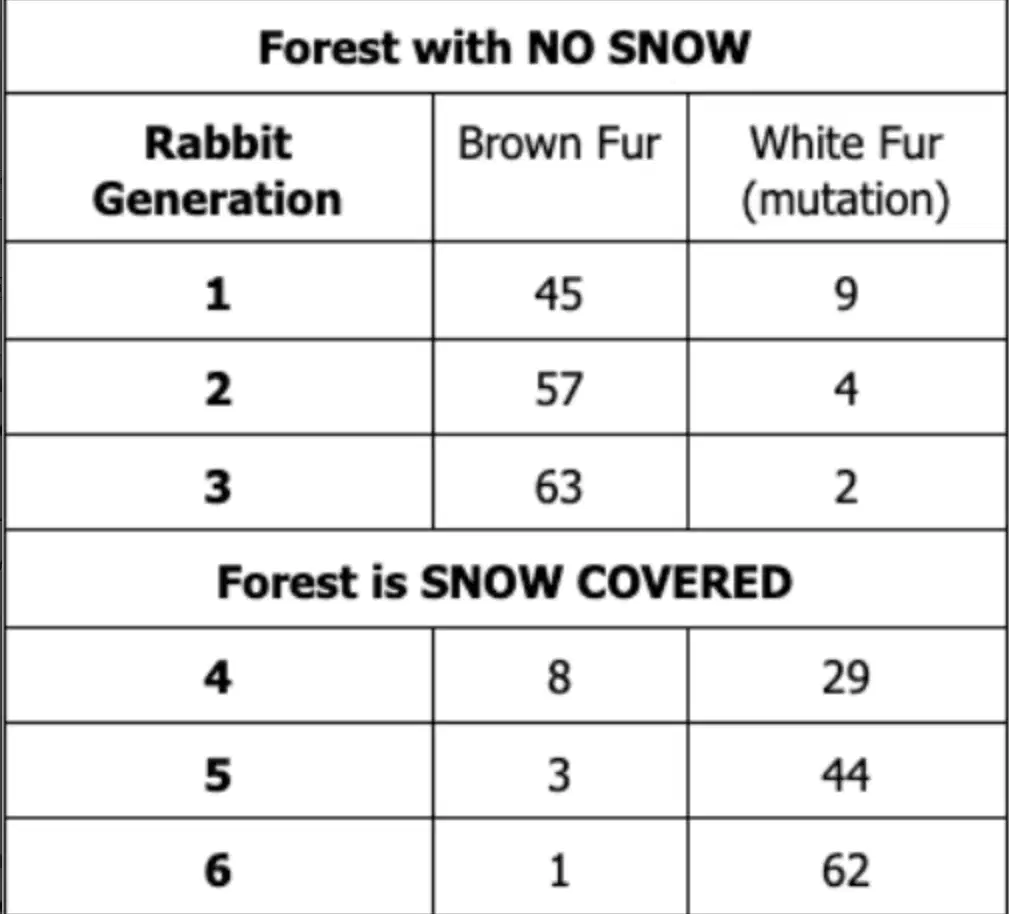
Based on the data, what trait contributed to the rabbits' fitness?
Longer teeth to access food in the snow.
Thicker fur to withstand the cold temperatures.
Shorter ears to minimize heat loss.
Fur color that allows camouflage in the snow.
What is the most likely outcome from DNA mutation in an organism?
daughter cells created
different proteins assembled
fewer daughter cells created
cell becomes exposed to radiation
What is the best explanation for the continual changes in the classification system of organisms?
All organisms struggle for existence and become extinct
All organisms compete to be at the top of the food chain
Technological advances have allowed scientists to better compare organisms
More species have been discovered, but scientists have not analyzed all the data
Which statement best compares aerobic and anaerobic respiration?
Less ATP is generated during anaerobic respiration than during aerobic respiration
More water is generated during anaerobic respiration than during aerobic respiration
More oxygen is generated during anaerobic respiration than during aerobic respiration
Less lactic acid is generated during anaerobic respiration than during aerobic respiration
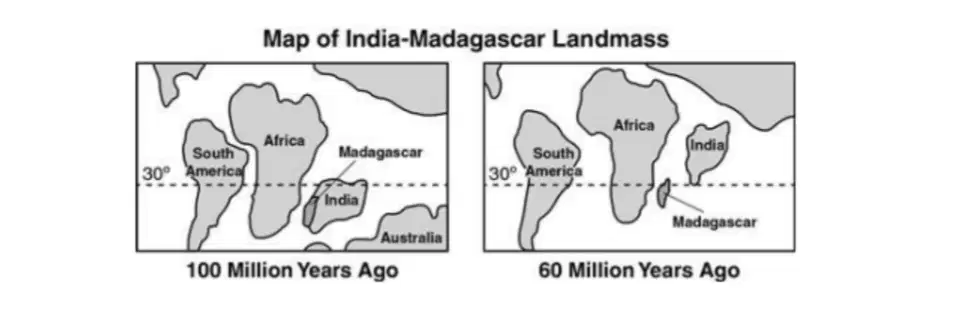
Use the image below to answer the question. Genetic data suggest many frog species that live in Madagascar and India share a common ancestor that lived on the India-Madagascar landmass. Which statement BEST describes the divergence of frog species found in India and Madagascar?
Breeding preferences of the frogs prevented interbreeding between frogs, resulting in new species.
Geographic separation led to splitting of the original species, resulting in a new species in each location.
The frog species occupied different habitats within the same geographic areas, resulting in new species.
Different mating seasons led to the divergence of the gene pool, resulting in a new species at each location.
Which of the following statements are true regarding enzymes? Select four responses.
Enzymes are only able to fit one specific substrate in their active site.
Enzymes are reusable, because the active site never changes shape.
Enzymes are required by all living organisms to catalyze their metabolic reactions.
Each enzyme has an optimum environment and can become denatured if pH or temperature changes too much.
The active site of one enzyme can fit with a variety of substrates.
A blood sample from an individual will produce a unique DNA fingerprint. Which is the best reason for this occurrence?
Each individual has a unique set of hormones in their cells.
Each individual has a unique set of enzymes in their cells.
Each individual has a unique sequence of organelles in their cells.
Each individual has a unique sequence of nucleotides in their cells.
Which best describes organisms that have had parts of their DNA replaced with that of a different organism?
Cloned organisms
Sexual organisms
Asexual organisms
Transgenic organisms
What might the examination of tusks, teeth, and beaks among animals indicate about their evolutionary relationships?
Similar structures indicate the animals lived at the same time.
Similar structures indicate the animals lived in similar climates.
The type of structure present may indicate how closely animals are related evolutionarily.
The type of structure present and its size helps indicate how these animals are related to animals with no teeth.
In which way does meiosis most likely increase genetic variation?
It prevents crossing over from occurring prior to cell division.
It divides the maternal and paternal chromosomes randomly into gametes.
It proceeds at a slower rate and allows for more mutations.
It keeps the maternal and paternal chromatids together in a cell.
What is the chance of two parents with blood types AB and O producing an offspring with blood type O?
0%
25%
50%
75%
Which process involves a cell interpreting genetic information from DNA?
fertilization
photosynthesis
protein synthesis
cellular respiration
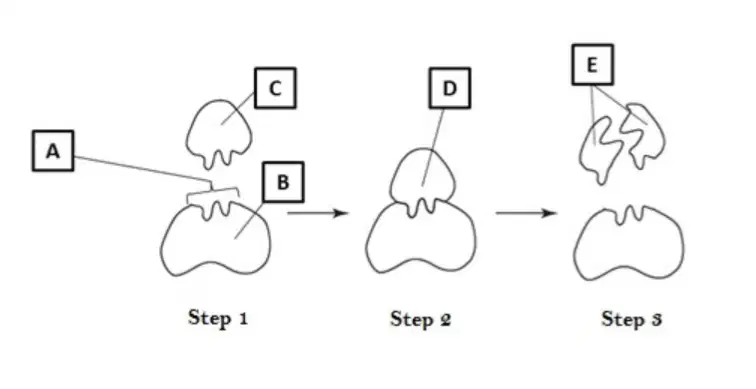
Which letter represents the enzyme in the diagram below?
A
B
C
D
Which of the following is the most direct impact of burning fossil fuels for energy production in agriculture?
Increased atmospheric emissions leading to acid rain
Increased run-off of pollutants into surface water
Decreased availability of water to irrigate crops
Increased deforestation and habitat loss
What immediate impact can clearing land for agriculture have on an ecosystem?
It increases the amount of oxygen in the atmosphere.
It results in habitat loss, which can cause a decrease in biodiversity.
It increases the amount of carbon dioxide in the atmosphere, causing global warming.
It causes sea levels to rise, which could result in flooding and habitat destruction.
What would most likely result if more farms were developed along river basins in North Carolina?
An increase in water pollution
An increase in the average rainfall
An increase in invasive species
An increase in severe weather events
Raising livestock, such as sheep and cattle, results in the production of large amounts of methane gas. Methane has a similar effect in the atmosphere as carbon dioxide. As more livestock are raised to provide meat-based diets for humans, what is most likely the effect of the increase in methane?
Acid rain
Deforestation
Ozone depletion
Water pollution
Which of the following is an impact of using chemical pesticides?
The rate of natural selection is increased in pests with genetic resistance.
The rate of natural selection is decreased in pests with genetic resistance.
Some pests will choose to get used to the pesticide.
The pesticides will kill the crop plants.
Which is the result of mitosis?
two identical cells
four unique cells
a decrease in genes
a new protein
The primary source of energy for nearly all life is the Sun. Which BEST describes how autotrophs utilize this energy?
Autotrophs convert light energy into chemical energy.
Autotrophs convert cellular energy into organic compounds.
Autotrophs use electromagnetic energy to release heat.
Autotrophs use mechanical energy to release water.
Which of the following is an impact of using chemical pesticides?
The rate of natural selection is increased in pests with genetic resistance.
The rate of natural selection is decreased in pests with genetic resistance.
Some pests will choose to get used to the pesticide.
The pesticides will kill the crop plants.
Which is the result of mitosis?
two identical cells
four unique cells
a dcecrease in genes
a new protein
The primary source of energy for nearly all life is the Sun. Which BEST describes how autotrophs utilize this energy?
Autotrophs use mechanical energy to release water.
Autotrophs use electromagnetic energy to release heat.
Autotrophs convert cellular energy into organic compounds.
Autotrophs convert light energy into chemical energy.
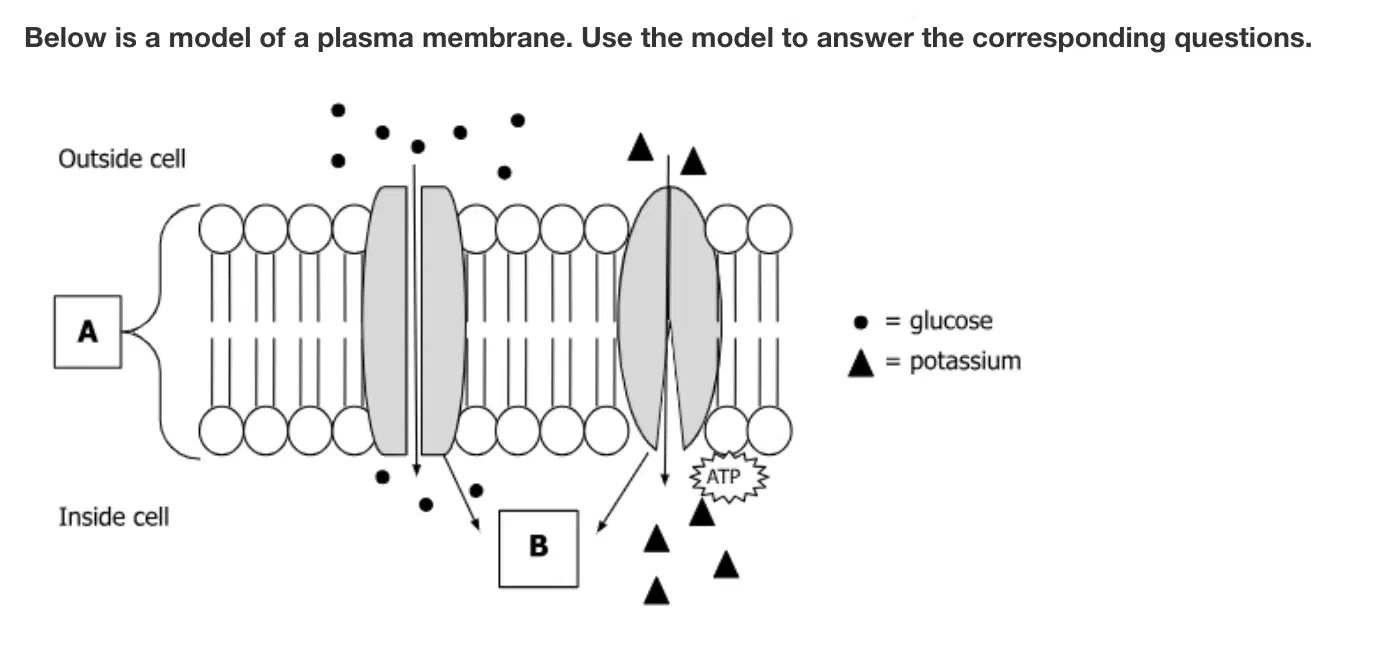
The glucose molecules are moving into the cell in order to reach...
ATP
The concentration gradient
homeostasis
osmosis
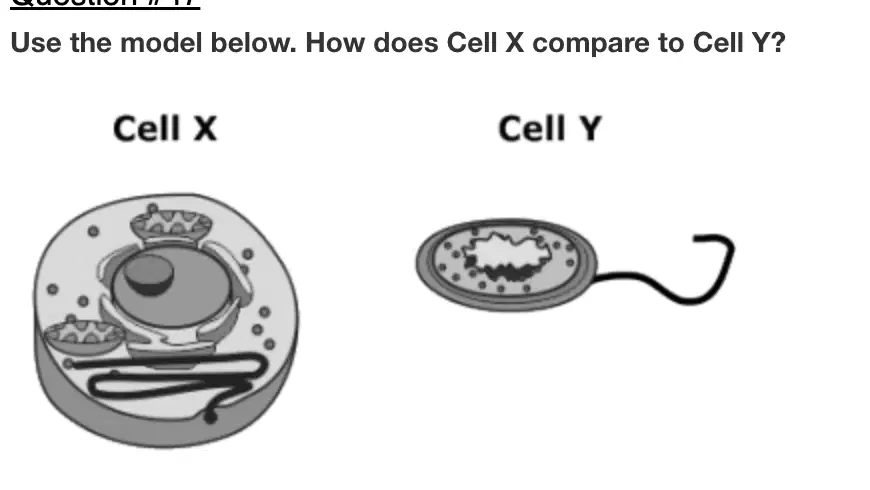
Use the model. How does Cell X compare to Cell Y?
Cell X is an animal cell, cell Y is a plant cell.
Cell X is prokaryotic, cell Y is eukaryotic.
Cell X is eukaryotic, cell Y is prokaryotic.
Cell X is a plant cell, cell Y is an animal cell.
Which would most likely increase a person’s likelihood of developing heart disease?
A vegetarian diet
Exercising regularly
Restricting salt intake
A diet high in fat and cholesterol
Which is an example of cell differentiation?
All mammal cells are identical
All cells have cilia at the adult stage.
The DNA is different in all somatic cells.
Fat cells have a different job than nerve cells.

What trait is shared among mammals, birds, and lizards?
See UV Light
Amniotic Egg
Spiny-Ray Fins
Molt Exoskeleton

