
 Worksheets
Matter (Composition and Properties)
Total questions: 48
Worksheet time: 8hrs 0mins
Substances that are made up of ONLY one type of atom (element) or compound.
Heterogeneous mixture
Pure substance
Suspension
Homogeneous mixture
Which of the following is classified as a pure substance?
Lemonade
Fruit punch
ketchup
Hydrogen

Which of the following is NOT a mixture?
milk
lemonade
vegetable salad
carbon
Which of these is an element?
Salt (NaCl)
Water (H20)
Oxygen (O)
Carbon Dioxide (CO2)
Which of these is a compound?
Aluminium (Al)
Carbon Dioxide (CO2)
Nitrogen (N)
Sand
True or False: Elements and compounds are pure substances.
True
False
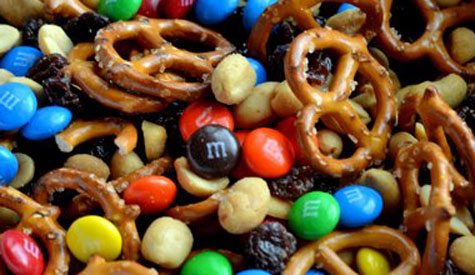
Identify which images are HETEROGENEOUS MIXTURES! (Check all that apply)


Solutions are ___________ mixtures.
Solid
Homogenous
Heterogeneous
Gas


What type of mixture does this diagram represent?
Homogeneous
Heterogeneous

Which method can you use to separate sand and iron filings?
Distillation
Magnetism
Filtration
Evaporation
A mixture that contains two or more substances uniformly combined
heterogeneous mixture
homogeneous mixture
suspension
colloid

Matter is classified in...
Elements & Compounds
Homogeneous & Heterogeneous
Colloids & Suspensions
Pure substances & Mixtures

Which of the diagrams below represent a mixture?
A
B
C
D
An element is a ___ that cannot be separated into simpler substances by physical or chemical means.
pure substance
mixture
solution
compound
Where can you find examples of elements?
Dictionary
Periodic table of compounds
Periodic table of elements
Your neighbor

Which letter represents a mixture?
D
G
E
A
[check all that apply] Mixtures are
chemically combined
composed of two or more types of matter that can be present in varying amounts
One or more elements chemically combined
can be separated by physical changes
What is air?
Element
Compound
Mixture
Which picture shows a pure substance?


A combination of substances that dissolve into one another--they are evenly mixed so that individual parts cannot be seen or separated.
solutions
mixtures
observations
It shows a Tyndall effect when light is passed through
Solution
Suspension
Colloid
In which of the following do particles sit at the bottom
Solution
Suspension
None of the above
Colloid

Milk
Solution
Suspension
Colloid

Sand in Water
Solution
Suspension
Colloid

Fog
Solution
Suspension
Colloid


A chemical change is a change in
an item's properties such as size, shape, density
an item that creates a new substance, releases light or heat
an item's sound
an item's look or state of matter
A physical change is a change
in an item's properties like its shape, size or density.
that creates a new substance or emits light or heat
that creates a smell
that cannot be undone
Bending metal
Physical Change
Chemical Change
Ice cream melting
Physical Change
Chemical Change
Is a rusting bicycle a chemical or physical change?
When salt dissolves is water, that is a _____.
What is a chemical change?
Forming a new substance
When two or more substances combine to make a greater one
When two or more substances combine to make a new chemical substance
Combing substances
The Law of Conservation of Mass States
Energy cannot be created nor destroyed, it can only change form.
Mass cannot be created nor destroyed, it can only change form.
Mass can be created or destroyed, it cannot change form.

Which of the models of a chemical reaction best represents the Law of Conservation of Mass?
A
B
C
D

A student pours hydrochloric acid (HCl) into an open beaker that contains a piece of magnesium (Mg). A chemical reaction occurs, and the data for the reaction is shown in the image. Was there a total mass increase or a total mass decrease for this experiment?
There was a increase in mass.
There was a decrease in mass.
There was no change in mass.
A student dissolved 25 grams of salt into 1,000 grams of water. What should the mass of the saltwater mixture be?
975 grams
1,000 grams
1,025 grams
2,500 grams

