
 Worksheets
Types of Domestic Hot Water Systems
Total questions: 38
Worksheet time: 19mins
Which of the following is a type of domestic hot water system?
Combi boiler
Solar panel
Wind turbine
Geothermal pump
A _______ is a type of domestic hot water system that combines heating and hot water in one unit.
Combi boiler
Solar panel
Wind turbine
Geothermal pump
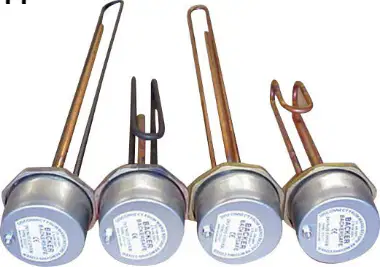
What is required for all immersion heaters installed today?
A) A reset button or cut-out device
B) A thermostat
C) A power switch
D) A temperature gauge.
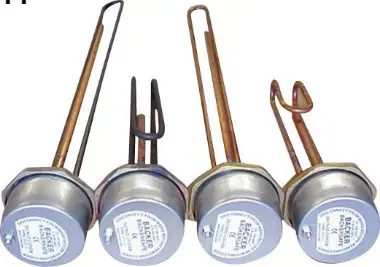
Domestic immersion heaters are rated at ___ kW.
1
2
3
4
What are the components joined together in an open vented combination unit?
A) Cylinder and cold water storage cistern
B) Cylinder and hot water tank
C) Cold water storage cistern and hot water tank
D) Mains feed and distribution pipe.
Open vented combination units are sometimes found in ______.
Houses
Flats
Offices
Schools
Which component in the DHW system is responsible for storing water?
Open vent
Storage cistern
DHW cylinder
Coil type heat exchanger
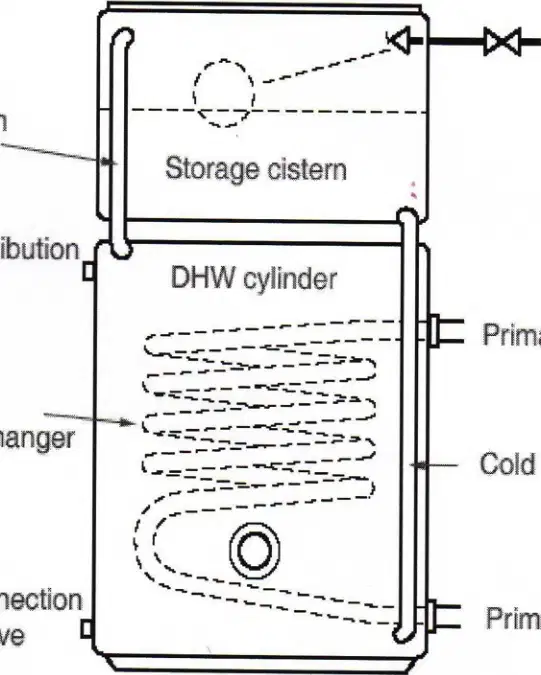
The ________ is used to transfer heat in the DHW system.
Storage cistern
DHW cylinder
Coil type heat exchanger
Primary flow
What is the purpose of the component labeled at the top of the water heater?
Pressure relief valve
Thermostat
Heating element
Insulation
The component labeled at the bottom of the water heater is used to regulate the temperature. It is called a ________.
Pressure relief valve
Thermostat
Heating element
Insulation
What is the temperature difference between the top and bottom of a hot water cylinder when it is up to temperature?
5°C
10°C
15°C
20°C
In a hot water cylinder, a baffle is installed to prevent incoming cold water from ______ with the hot water.
Mixing
Heating
Cooling
Evaporating
What is a characteristic of a single feed system?
It uses two CWSCs
It requires a feed and expansion cistern
It uses one CWSC and fills both primary and secondary waters through the same pipe
It is a direct system.
In a single feed system, the heat exchanger uses an ______ to separate the primary water from the secondary waters.
air lock
water pump
thermal valve
pressure gauge
What could happen if the air bubble is lost in the water system?
The water remains clear
Secondary water mixes with primary water, causing brown water discharge
The system stops working
The water becomes colder.
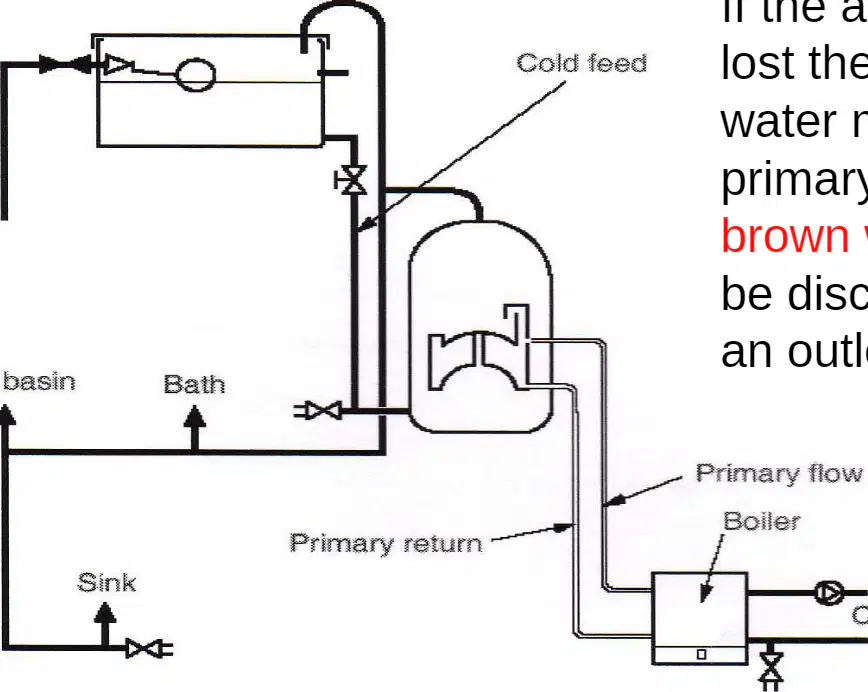
In the water system diagram, what is the purpose of the 'Open vent'?
To heat the water
To allow air to escape
To filter the water
To add chemicals
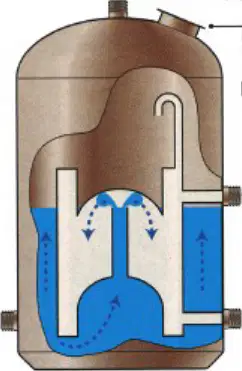
What is the first step in the process of the water heating system shown in the diagram?
Air lock is formed
Cold water enters cylinder and heat exchanger
Water is heated and pushes air bubble into lower dome
Cylinder and primaries are full.
Which of the following is a disadvantage of a Direct cylinder system?
Quick heat-up time
Cheap to install
Risk of rusty water
Compliant with part L.
The Indirect cylinder system is ________ to install.
Cheap
Expensive
Easy
Quick
Which of the following is an advantage of stored water systems?
Instant hot water
Secondary heat source
Less space required
Cheaper installation
Stored water systems are suitable for areas with ______.
high water pressure
low water pressure
no water pressure
variable water pressure
Which of the following is a method to heat domestic hot water?
Electric heater
Solar panels
Gas stove
Microwave
Water can be heated by introducing a second or third coil in the hot water cylinder. This allows the hot water to be heated by various means such as ________.
Nuclear energy
Renewable energy
Fossil fuels
Electric heater
Which component in the solar water heating system is responsible for releasing excess pressure?
Automatic air vent
Flow meter
Expansion vessel
Pressure release valve
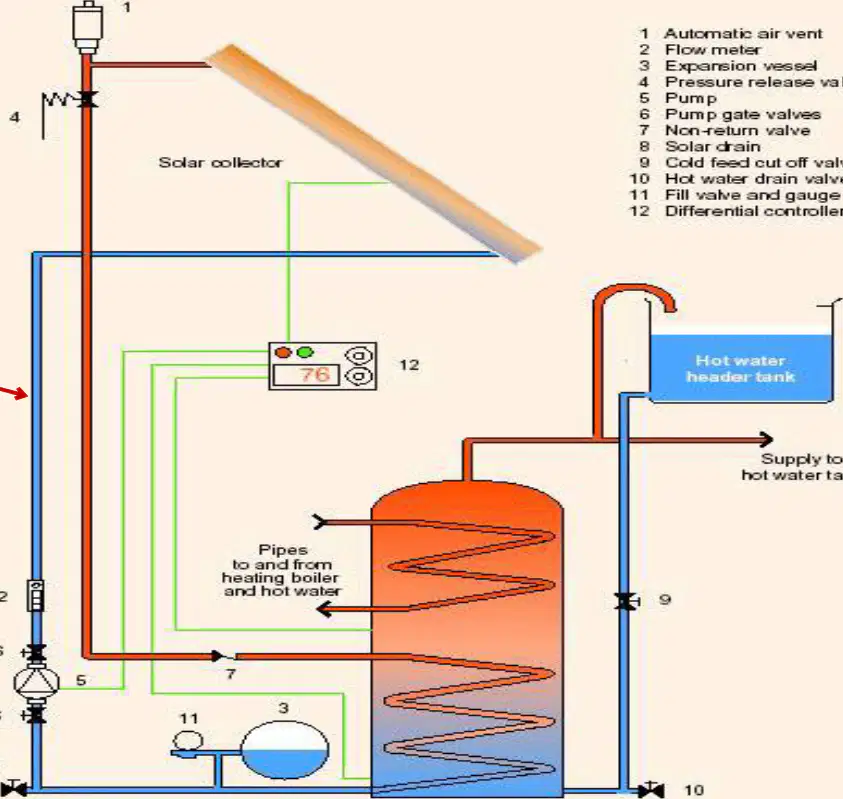
In the solar water heating system, the lower coil is connected to the _______.
Hot water header tank
Solar circuit
Cold feed cut off valve
Differential controller

In the UK, solar water heating can provide over ___ of a household's demand.
30%
40%
50%
60%
What is a characteristic of unvented hot water cylinders?
They have an open vent
They operate under mains pressure
They require a CWSC in the loft
They are low pressure systems.
Unvented hot water cylinders do not have an ______.
open vent
incorporated safety relief
mains pressure
CWSC
Which component in an unvented hot water system is responsible for controlling the primary flow?
High limit thermostat
Motorised valve
Expansion valve
Line strainer
In an unvented hot water system, the _______ is used to relieve excess pressure.
Cylinder cold water inlet
Pressure reducing valve
Temperature pressure relief valve
Control thermostat
What is the maximum temperature that the hot water should never reach in an unvented hot water system?
80°C
90°C
100°C
110°C
In an unvented hot water system, the system must be maintained by a ________.
certified plumber
competent person
local authority
safety officer
What are the two types of instantaneous hot water systems?
Centralised and Distributed
Centralised and Localised
Localised and Global
Distributed and Global
Instantaneous hot water systems heat water only when it is ____.
Stored
Needed
Available
Cold
What is the primary function of a combination boiler?
To store hot water
To heat up cold mains water instantaneously
To cool down hot water
To generate electricity
A combination boiler uses a plate _______ with a large surface area to heat water.
condenser
heat exchanger
compressor
radiator
What is the function of the combination boiler in a household plumbing system?
To heat water for the central heating circuit
To provide electricity
To filter water
To store rainwater
In a household plumbing system, the _______ is used to control the flow of water into the house.
Service valve
Drain tap
Stop valve
Check valve

