
 Worksheets
Copper Pipe Joining Quiz
Total questions: 44
Worksheet time: 22mins
What is required to shape copper correctly when joining copper pipes?
A high degree of skill
A low degree of skill
No skill at all
Only basic tools
Which of the following is NOT a reason for fitting copper pipes?
Join lengths of copper together
Change the direction of pipework
Add a connection
Paint the pipes
Which of the following is a common type of fitting used for joining copper pipes?
Weld
Solder
Glue
Clamp
What is one of the types of fittings used for joining copper pipes?
Nail
Push-fit
Tape
Rivet
Compression is a type of fitting used for what purpose?
Electrical wiring
Joining copper pipes
Painting walls
Installing windows
What is required for solder fittings to achieve a water-tight seal?
Proper cleaning and fluxing of copper
Using a large amount of solder
Applying heat for a long time
Using any type of metal
Why is it important to clean soldered fittings after they cool?
To improve the appearance
To prevent corrosion
To make them shiny
To change their color
What is the main characteristic of an end-feed fitting in plumbing?
It uses glue to create a seal.
It requires solder to be fed in at the end.
It is welded using a torch.
It uses a screw mechanism to join pipes.
How does solder flow into an end-feed fitting?
By gravitational force
By magnetic attraction
By capillary action
By manual insertion
What happens to the solder in an end-feed fitting when it cools off?
It evaporates.
It creates a water-tight seal.
It becomes brittle.
It changes color.

What is the function of a Tee in copper pipework?
To allow a connection to be made to the pipework run
To cap the end of a pipe
To reduce the pipe size
To bend the pipe at a 90-degree angle

What does a Coupling do in copper pipework?
Allows two pieces of copper tube to be connected together
Allows a pipe to be bent
Allows a pipe to be capped
Allows a pipe to be reduced in size
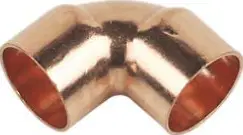
What is the function of an elbow in copper pipework?
It allows the pipework to change direction by 90°.
It connects a smaller diameter of pipe.
It seals the end of a piece of copper pipe.
It increases the diameter of the pipe.
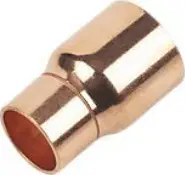
What does a reducer do in a copper pipe system?
It allows the pipework to change direction by 90°.
It connects a smaller diameter of pipe.
It seals the end of a piece of copper pipe.
It increases the diameter of the pipe.
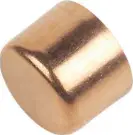
What is the purpose of a stop end in copper pipework?
It allows the pipework to change direction by 90°.
It connects a smaller diameter of pipe.
It seals the end of a piece of copper pipe.
It increases the diameter of the pipe.
Why are solder ring fittings classified as non-reusable?
They are too expensive to reuse.
They cannot be moved once soldered in position.
They are made of non-recyclable materials.
They are designed for single-use only.
What can be done to release a pipe from a solder ring fitting if necessary?
Use a solvent to dissolve the solder.
Cut the pipe and fitting apart.
Re-heat the fitting to release the pipe.
Apply pressure to break the seal.
What is the purpose of the internal rubber O-ring in push-fit fittings?
To create a water-tight seal
To provide electrical insulation
To enhance thermal conductivity
To prevent corrosion
What is necessary to avoid damaging the O-ring when installing push-fit fittings?
A square and clean-cut end to the pipe
A rough and jagged end to the pipe
A tapered end to the pipe
A threaded end to the pipe

What type of components are used for joining copper pipes as shown in the image?
Push-fit
Soldered
Welded
Threaded
What is a characteristic of the push-fit components mentioned in the text?
They are produced by many manufacturers and come in different finishes.
They require welding to join.
They are only available in one finish.
They are exclusively made of plastic.
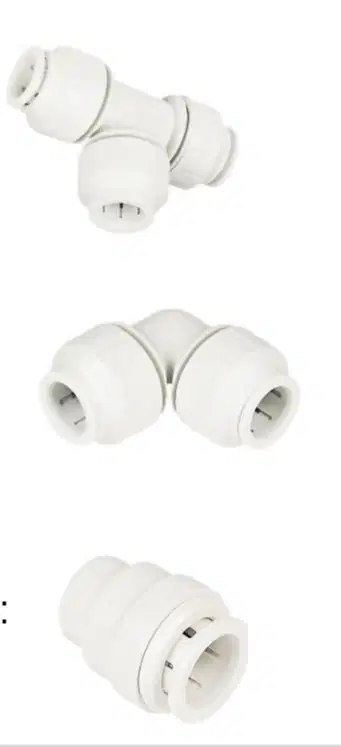
Which of the following is a type of push-fit fitting used to join copper pipes?
Tee
Bolt
Nut
Washer
What is the purpose of a coupling in plumbing?
To connect two pipes
To stop the flow of water
To change the direction of the pipe
To reduce the pipe size
Which fitting is used to change the direction of a pipe?
Elbow
Coupling
Reducer
Stop-end
What is the function of a stop-end in plumbing?
To terminate the end of a pipe
To connect two pipes
To change the pipe size
To change the direction of the pipe

What is a characteristic of push-fit fittings in plumbing?
They are permanently fixed.
They require soldering to join.
They are reusable and can be removed with a release key.
They are only used for plastic pipes.

What is not required when installing push-fit fittings onto copper pipe?
Sleeve or insert
Additional adhesive
Extra clamps
Heat application
What is needed when using push-fit fittings on plastic pressure pipe?
Sleeve for added rigidity
Extra adhesive
Heat application
Additional clamps
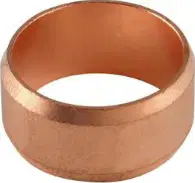
What is used to create a water-tight seal in compression fittings for copper pipes?
Rubber gasket
Copper or brass 'olive'
Plastic ring
Metal clamp
What additional material can be used around the olive in compression fittings?
Glue
Seal paste
Tape
Wax

What type of fitting is used to connect three sections of copper pipe at a 90-degree angle?
Coupling
Elbow
Tee
Reducer
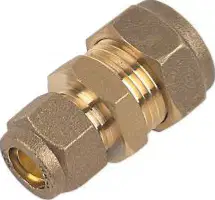
Which fitting is used to connect two pipes of different diameters?
Stop-end
Coupling
Reducer
Elbow
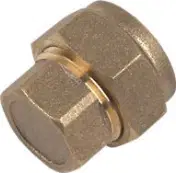
What is the purpose of a stop-end fitting in copper pipe systems?
To connect three pipes
To cap the end of a pipe
To change pipe direction
To join two pipes of the same diameter
Why are compression fittings classified as reusable?
They are made of plastic.
They can be released with an adjustable spanner.
They do not require any tools for removal.
They are permanently fixed.
What needs to be done to release the back nut in a compression fitting?
Tighten the olive.
Remove the olive.
Heat the pipe.
Use a hammer.
What is required after removing the olive in a compression fitting?
A new pipe.
A replacement olive.
A new spanner.
A new back nut.

What types of tap connectors are mentioned for joining copper pipes?
Straight, bent, solder, push-fit, compression
Straight, curved, welded, snap-fit, expansion
Angled, twisted, glued, lock-fit, contraction
Flat, looped, bolted, clip-fit, extension
What is used to achieve a water-tight seal between the tap connector and the base of the tap?
A small fiber washer
A rubber gasket
A metal clamp
A plastic ring
What are the two most common sizes for domestic copper pipework and fitting?
10mm and 20mm
15mm and 22mm
18mm and 25mm
12mm and 24mm
In what lengths can copper pipes be purchased?
2.0m and 4.0m
3.0m and 6.0m
5.0m and 7.0m
1.0m and 8.0m
How can copper pipes be purchased?
In a bundle of 5 lengths or as a single length
In a bundle of 10 lengths or as a single length
In a bundle of 15 lengths or as a single length
In a bundle of 20 lengths or as a single length
What is required when installing copper pipe in a property?
It should be painted.
It should be insulated.
It should be correctly supported.
It should be buried underground.
Why is it important to support copper pipes correctly during installation?
To enhance water flow.
To prevent sagging or movement.
To improve thermal efficiency.
To reduce noise.
What is the horizontal clipping distance for a 15mm copper pipe?
0.8m
1.2m
1.8m
2.4m

