Wayground logo

Free Printable Worksheets

Font size

S
M
L
XL
Worksheets

P2-P2 WISE CITIZEN AND ART EXAM 6TH GRADE

Total questions: 48

Worksheet time: 32mins

Name
Class
Date
1.

It began in 1789, when the people of Paris rebelled against the king and protested the existence of exclusive rights that only the nobles had.

a)
French Revolution
b)
Russian Revolution
c)
Industrial Revolution
d)
American Revolution
2.

It was approved by the French National Constituent Assembly on August 26th,1789

a)
Declaration of Independence
b)
French Constitution of 1791
c)
Universal Declaration of Human Rights
d)
Declaration of the Rights of Man and of the Citizen
3.

Is one of the fundamental documents that came out of the French Revolution because it clearly defines personal and collective rights as universal.

a)
Declaration of the Rights of Man and of the Citizen
b)

The Declaration

c)
The Napoleonic Code
d)
Constitution of 1791
4.

This definition is supported by the concept of__________, meaning they are given to us due to the simple fact that we are human.

a)
legal entitlements
b)
social privileges
c)
civil liberties
d)

natural rights

5.

What happened in 1789?

a)

People in Paris protested the exclusive right of nobles

b)

A document that defines personal and collective rights as Universal

c)

Because they are given to us due to the simple fact that we are humans.

d)

Even though the Declaration of the Right of Man of the Citizen established the right of all men without exception.

6.

Why are these rights considered humans rights?

a)

People in Paris protested the exclusive right of nobles

b)

A document that defines personal and collective rights as Universal

c)

Because they are given to us due to the simple fact that we are humans.

d)

Even though the Declaration of the Right of Man of the Citizen established the right of all men without exception.

7.

What is the Declaration of Man and of the Citizen?

a)

People in Paris protested the exclusive right of nobles

b)

A document that defines personal and collective rights as Universal

c)

Because they are given to us due to the simple fact that we are humans.

d)

Even though the Declaration of the Right of Man of the Citizen established the right of all men without exception.

8.

Universal Declaration of Human Rights that was approved in...

a)
January 1, 1950
b)
December 10, 1948
c)
November 20, 1945
d)
March 15, 1952
9.

What does GPS stand for?

a)
Global Positioning Service
b)
Geographic Positioning System
c)
Global Positioning Satellite
d)
Global Positioning System
10.

When was GPS first used?

a)

June 26, 2003

b)

June 26, 1983

c)

June 26, 1973

d)

June 26, 1993

11.

Who were the first user of the GPS?

a)
Civilian researchers
b)
The United States military
c)
European Space Agency
d)
Private companies
12.

Which country invented GPS?

a)
China
b)
United States
c)
Germany
d)
Russia
13.

How many satellite formed the GPS network?

a)
12
b)
18
c)
30
d)
24
14.

GPS can also be used for other purpose. For example scientists in ​ (a)   use GPS to study the movements and eating of ​ (b)   .

Choose from the below words
Minnesota
deer
horse
Mexico
15.

GPS can also be used for other purpose. For example Surveyors in ​ (a)   use GPS to ​ (b)   .

Choose from the below words
houses
trees
New York
measure land and buildings
Oregon
16.

GPS can also be used for other purpose. For example Fishermen in ​ (a)   use GPS to ​

​ (b)  

Choose from the below words
ship
kayak
Canada
Alaska
guide their boats.
17.

GPS can also be used for other purpose. For example Geographers in ​ (a)   use GPS to find which ​ (b)   are getting ​ (c)  

Choose from the below words
Texas
trees
thin and heavy
California
Mountains
taller or shorter
18.

How does GPS works?

a)
GPS determines location using signals from satellites to triangulate position.
b)
GPS functions by measuring the distance to nearby landmarks.
c)
GPS relies solely on cellular networks for positioning.
d)
GPS uses Wi-Fi signals to determine location.
19.

What is a seismometer?

a)
A seismometer is a device used to predict weather patterns.
b)
A seismometer is an instrument used to measure and record seismic activity.
c)
A seismometer is a tool for measuring temperature changes.
d)
A seismometer is an instrument that detects air pressure variations.
20.

What is the difference between a natural hazard and natural disaster?

a)
A natural hazard is always a disaster waiting to happen.
b)
Natural hazards are only caused by human activities.
c)
A natural hazard is a potential threat, while a natural disaster is the actual event causing damage.
d)
Natural disasters can be predicted with certainty.
21.

What is the world's most expensive type of natural disaster?

a)
Floods
b)
Tornadoes
c)
Earthquakes
d)
Wildfires
22.

What does CENAPRED stand for?

a)
Centro Nacional de Prevención de Desastres
b)
Centro Nacional de Análisis de Riesgos
c)
Centro de Estudios Avanzados en Desastres
d)
Centro de Emergencias Nacionales
23.

What was the National Center for Prevention of Disaster created to do?

a)
To promote international disaster tourism.
b)
To develop new disaster-related video games.
c)
To provide financial aid to disaster-stricken countries.
d)
To enhance disaster preparedness and response efforts.
24.

What causes natural disasters in Mexico?

a)
Tsunamis from distant earthquakes
b)
Floods caused by heavy rainfall
c)

Geographic location

d)
Landslides from deforestation
25.

How many major natural disasters did Mexico suffer from 1980 to 1998

a)
5
b)

79

c)
15
d)
20
26.

In which year was Mexico City seriously damaged by an earthquake?

a)
1985
b)
2000
c)
1975
d)
1990
27.

What could cause a wildfire?

a)
Heavy rainfall
b)

lightning and human activities

c)
Planting trees
d)
Using solar panels
28.

What factors contribute to flooding?

a)
Drought conditions
b)
High humidity
c)
Mild temperatures
d)

Tropical cyclones and seasonal rain activity

29.

What happened on September 19, 1985.

a)
A major earthquake struck Mexico City.
b)
The first mobile phone was invented.
c)
The Berlin Wall was constructed.
d)
A hurricane hit the East Coast of the United States.
30.

Where do most earthquakes occur?

a)
Underneath large bodies of water
b)
In the center of continents
c)
At the tops of mountains
d)

Along subduction zones

31.

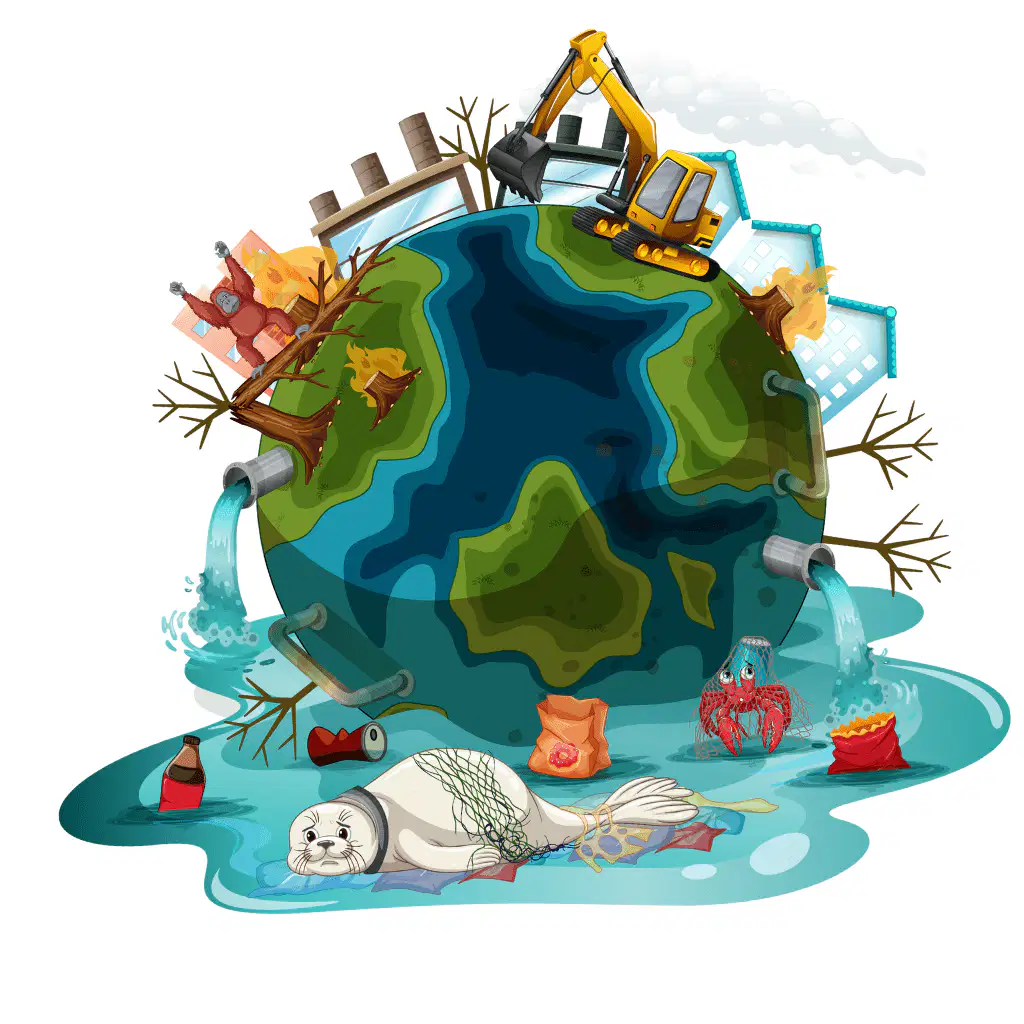
This image shows

a)

environment

b)

disseminate

c)

installations

d)

awareness

32.

This image shows

a)

environment

b)

disseminate

c)

installations

d)

awareness

33.

This image shows

a)

environment

b)

disseminate

c)

installations

d)

awareness

34.

This image shows

a)

environment

b)

disseminate

c)

installations

d)

awareness

35.

What is the purpose of ecology?

a)
The purpose of ecology is to understand the relationships between living organisms and their environment.
b)
To focus on economic impacts of wildlife
c)
To analyze human behavior exclusively
d)
To study only plant life
36.

What are the differences between posters and interventions in environmental participatory art?

a)
Posters are interactive tools, while interventions are static displays.
b)
Posters are used for community engagement, while interventions are for personal reflection.
c)
Posters are static visual tools for communication, while interventions are interactive actions that engage the community.
d)
Posters require community participation, while interventions do not involve the public.
37.

Match the following image with the correct word

a)

1.

poster

b)

2.

participatory art

c)

3.

recycling art

38.

What is a meme?

a)
A meme is a traditional form of art created by hand.
b)
A meme is a scientific term for genetic material.
c)
A meme is a viral cultural element or idea, often humorous, shared and modified online.
d)
A meme is a type of social media platform.
39.

What is the definition of promote

a)
To support or actively encourage something.
b)
To ignore or dismiss something.
c)
To hinder or obstruct something.
d)
To confuse or mislead about something.
40.

What is the definition of expression

a)
A single variable that holds a value.
b)
A combination of variables, constants, operators, and functions that evaluates to a value.
c)
A mathematical operation performed on numbers.
d)
A statement that always returns true or false.
41.

What does space intervention do to the community?

a)
Space intervention decreases community participation.
b)
Space intervention isolates community members.
c)
Space intervention fosters community engagement and collaboration.
d)
Space intervention has no impact on community dynamics.
42.

What kind of art is this a 2D or a 3D?

a)

2D

b)

3D

43.

What kind of movie is this a 2D or a 3D?

a)

2D

b)

3D

44.

This art has only width and height

a)
2D art
b)
Sculpture
c)
Digital animation
d)
3D art
45.

This art has only width, height and depth

a)
2D art
b)
Sculpture
c)
Digital animation
d)
3D art
46.

This art involves the community

a)
2D art
b)
Sculpture
c)
Digital animation
d)

participatory art

47.

What do this words (social movements and community) have in common

a)
They both involve collective action and shared goals.
b)
They are solely based on government policies and regulations.
c)
They both prioritize economic growth over community welfare.
d)
They are both focused on individual achievements.
48.

In your own words explain what 2D AND 3D art is.

4 lines