
Font size
 Worksheets
Hamlet - Act 3 Quiz
Total questions: 40
Worksheet time: 40mins
All of these reasons are ironic for Rosencrantz and Guildenstern’s betrayal of Hamlet except?
Their betrayal is ironic because their actions are not what childhood friends should do to one another.
Their betrayal is ironic because they are more loyal to an evil stranger than a known, good friend.
Their betrayal is ironic because they do not serve the true king since Claudius usurped order.
Their betrayal is ironic because they serve the rightful king of Denmark and are doing what’s right.
What is ironic about Hamlet and Gertrude’s relationship in Scene 3?
Gertrude is a woman who has more power than Hamlet, which is ironic because of Shakespeare’s era.
Gertrude was involved with the murder of Hamlet’s father, which is ironic because she is his wife.
Hamlet, Gertrude’s son, is giving his mother advice, which is ironic since she should give him advice.
Hamlet, Gertrude’s son, listens to his mother’s advice, which is ironic since Hamlet is an adult.
What is the subtext of the iconic dialogue in the soliloquy “To be or not to be? That is the question”?
Is being a son worth it if a father dies prematurely?
Is kingship worth it if being a king means that someone else will kill to be king?
Is life worth living if life is filled with suffering and misery?
Is madness appropriate to fake because so many suffer from mental health?
All of the following are examples of dramatic irony in Act 3 except which?
Hamlet and the audience see the ghost that tells him not to harm Gertrude, but Gertrude doesn’t.
Hamlet believes he is speaking alone with Ophelia, but the audience knows she is not alone.
Hamlet is motivated by revenge and kills Polonius, motivating Laertes to seek revenge, too.
Hamlet observes Claudius on his knees, but the audience knows Claudius can't repent his sins.
What is Polonius’ tragic flaw? What proves to be his undoing?
his ambition
his lack of empathy
his parenting style
his pride
In her soliloquy after Hamlet leaves, Ophelia reveals all of the following except which?
Hamlet has gone mad
She will go to a nunnery
She is the most wretched of all women
Everyone used to look to Hamlet for hope but now it is gone
How does Hamlet feel about women after how he perceives Gertrude and Ophelia have treated him?
Hamlet feels that women are deceptive, fake, or untrustworthy
Hamlet feels that women are homicidal, lethal, or murderous
Hamlet feels that women are innocent, pure, and wholesome
Hamlet feels that women are loving, nurturing, and holy
What paradox does Claudius experience during the play? What does he feel, and what does he ultimately do? Why?
Claudius feels guilty about murdering his brother but is unable to repent because he still enjoys the benefits of his crime.
Claudius is torn between his love for Gertrude and his desire for power, ultimately choosing power.
Claudius is conflicted about his role as king and his fear of Hamlet, leading him to abdicate the throne.
Claudius experiences a moral dilemma about punishing Hamlet but decides to forgive him out of love for Gertrude.
Why does Hamlet postpone his revenge? What would happen to Claudius if Hamlet killed him while Claudius was repenting his sins?
Hamlet postpones his revenge because he is unsure of Claudius's prayers. If Hamlet killed Claudius while he was repenting, Claudius would go to heaven.
Hamlet postpones his revenge because he is afraid of Claudius. If Hamlet killed Claudius while he was repenting, Claudius would become a ghost.
Hamlet postpones his revenge because he wants to gather more allies. If Hamlet killed Claudius while he was repenting, Claudius would haunt him.
Hamlet postpones his revenge because he is waiting for the right moment. If Hamlet killed Claudius while he was repenting, Claudius would be resurrected.
Why can’t Claudius repent for his sins? Why does he choose the path that he takes?
He is unable to give up the benefits of his crimes.
He is unaware of the gravity of his sins.
He is afraid of being punished by the law.
He believes he is already forgiven.
Rosencrantz and Guildenstern’s betrayal of Hamlet is ironic for all of these reasons except?
Their betrayal is ironic because their actions are not what childhood friends should do to one another.
Their betrayal is ironic because they are more loyal to an evil stranger than a known, good friend.
Their betrayal is ironic because they do not serve the true king since Claudius usurped order.
Their betrayal is ironic because they serve the rightful king of Denmark and are doing what’s right.
What is ironic about Hamlet and Gertrude’s relationship in Scene 3?
Gertrude is a woman who has more power than Hamlet, which is ironic because of Shakespeare’s era.
Gertrude was involved with the murder of Hamlet’s father, which is ironic because she is his wife.
Hamlet, Gertrude’s son, is giving his mother advice, which is ironic since she should give him advice.
Hamlet, Gertrude’s son, listens to his mother’s advice, which is ironic since Hamlet is an adult.
What is the subtext of the iconic dialogue in the soliloquy “To be or not to be? That is the question?”
Is being a son worth it if a father dies prematurely?
Is kingship worth it if being a king means that someone else will kill to be king?
Is life worth living if life is filled with suffering and misery?
Is madness appropriate to fake because so many suffer from mental health?
All of the following are examples of dramatic irony in Act 3 except which?
Hamlet and the audience see the ghost that tells him not to harm Gertrude, but Gertrude doesn’t.
Hamlet believes he is speaking alone with Ophelia, but the audience knows he is not alone.
Hamlet is motivated by revenge and kills Polonius, motivating Laertes to seek revenge, too.
Hamlet observes Claudius on his knees, but the audience knows Claudius doesn’t repent his sins.
Claudius decided to send Prince Hamlet to ____________.
Paris
France
Elsinore
England
Who spied on Prince Hamlet and Queen Gertrude?
Claudius
Polonius
Horatio
Laertes
The Player Queen says she will always love her husband, rejecting thoughts of:
divorce
loving another if he were to perish
cheating
wishing she were married to a better king
Who does Hamlet kill in Act 3, Scene 4?
Gertrude
Claudius
Polonius
Ophelia
Hamlet is concerned with all of these things in Act 3 Scene 4 EXCEPT
Gertrude's sex life
Claudius's murder of his father
Rosencrantz and Guildenstern's betrayal
Ophelia's relationship with Laertes
Who enters as Hamlet is tormenting his mother?
Ophelia
Horatio
Rosencrantz
Ghost
Why does the ghost appear to Hamlet in Act 3, Scene 4? (chose both)
To remind him of his real purpose
To scare him
To give him more information
To remind him to be kind to his mother
"I must be cruel only to be kind." Who says this quote?
Claudius
Polonius
Gertrude
Hamlet
True or False. Gertrude can see the Ghost in this scene.
True
False
Which of the following is ONE of the requests Hamlet made to his mom, Gertrude, at the end of scene 4?
Talk to Claudius about the murder
Tell Claudius that Hamlet is only crazy by design, not insanity
Try and influence Ophelia to meet Hamlet later
Why does Gertrude think that Hamlet is going crazy?
Because his dad died
Because she married his uncle
All of the above
Why does Hamlet question trusting the ghost?
Ghosts aren't real
He thinks he may be losing his mind
He thinks the ghost may be the devil instead of his dad
What is the significance of the play within a play in Act 3?
To reveal the truth and expose the guilt of the characters.
To provide comic relief and entertain the audience.
To showcase the acting skills of the performers.
To confuse the audience and create suspense.
Who did Hamlet think was behind the curtain?
Gertrude
Claudius
Polonius
Ophelia
How does Hamlet's treatment of Ophelia in this Act 3reflect his attitude towards women?
Loving and caring
Indifferent and apathetic
Positive and respectful
Negative and disrespectful
What does Hamlet's behavior towards his mother reveal about his character?
Indifferent and apathetic
Loving and caring
Happy and content
Complex and conflicted
What is the definition of dramatic irony?
A recurring theme, subject, or idea that contributes to the overall meaning of a work.
A situation in which the audience knows something that the characters do not, leading to tension and suspense.
The underlying or implicit meaning or message conveyed through dialogue, actions, or symbolism in a literary work.
A reference to a well-known person, place, event, or work of literature, used to enhance understanding or create a specific effect.
WHO SAID THAT
"...my two schoolfellows, Whom I will trust as I will adders fang'd..."
Hamlet
Gertrude
Claudius
Polonius
WHO SAID THAT (choose both)
"Hamlet, thou hast thy father much offended...
Mother, you have my father much offended..."
Hamlet
Gertrude
Claudius
Polonius
WHO SAID THAT
"You cannot call it love; for at your age the hey- day in the blood is tame..."
Hamlet
Gertrude
Claudius
Polonius
By the end of Act 3 who does Gertrude give her allegiance to?
Claudius
Polonius
Hamlet
The Ghost
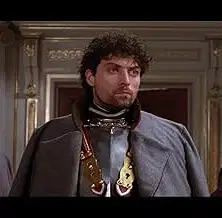
What country is Fortinbras supposed to be invading now that he has agreed to leave Denmark alone?
Poland
England
Germany
Norway

Who is the antagonist in The Lion King?
(a)

In “Avatar: The Last Airbender,” which character is the last of the Air Nomads?
(a)

What is the name of the red dog who is the best friend of a young girl named Emily Elizabeth?
(a)

What is the name of the restaurant owned by this family?
(a)

