wayground logo

Free Printable Worksheets

Font size

S
M
L
XL
Worksheets

World History B Supplemental Work

Total questions: 94

Worksheet time: 1hrs 21mins

Name
Class
Date
1.
Which of France's estates was not exempt from the taille?
a)
the First Estate
b)
the Second Estate
c)
the Third Estate
d)
the Fourth Estate
2.
A machine for beheading people used as a means of execution during the French Revolution.
a)
Guillotine
b)
strappado
c)
Judas Craddle
d)
Iron Maiden
3.
In its attempts to create a new order that reflected its belief in reason, the National Convention
a)
declared new national holidays celebrating great French religious leaders
b)
ordered the building of several new libraries and universities, even though the treasury was empty
c)
pursued a policy of de-Christianization going so far as to adopt a new calendar
d)
drafted yet another constitution to reflect the ideas of the Enlightenment
4.
The Committee of Public Safety was given broad powers to
a)
drain all the canals
b)
defend France from threats
c)
protect the Paris Commune from thieves
d)
restore order to Brussels
5.
The French National Assembly swore the Tennis Court Oath, which was
a)
a promise to redistribute all the wealth in France
b)
a vow to continue to meet until they had produced a constitution
c)
an oath of loyalty to Jean-Baptiste Colbert, an outspoken lawyer that called for doing away with the relics of feudalism
d)
a promise not to rest until all members of the clergy were tried and executed
6.
The Declaration of the Rights of Man and the Citizen proclaimed
a)
equal rights for all men, but no political rights for women
b)
an end to the monarchy and the abolishing of the National Assembly
c)
equal rights for all citizens, including equal political rights for women
d)
an end to the National police force
7.
The Duke of Wellington defeated Napoleon at
a)
Annecy in France
b)
Waterloo in Belgium
c)
the Black Forrest in Germany
d)
Moscow in Russia
8.
The Russians defeated Napoleon's superior Grand Army by
a)
retreating hundreds of miles and burning their own villages and countryside
b)
waiting to attack during the brutal Russian winter
c)
splitting their meager forces in half and attacking from two sides
d)
making an alliance with Egypt, which launched an attack on Turkey to draw Napoleon out of Russia
9.
This queen who reigned from 1837 to 1901, reflected the British feeling of national pride
a)
Queen Elizabeth I
b)
Queen Anne
c)
Queen Victoria
d)
Queen Mary
10.
In which country did the Industrial Revolution begin?
a)
Germany
b)
Great Britain
c)
Italy
d)
Spain
11.
The production of _______ was one of the first industries to be affected by the Industrial Revolution
a)
automobiles
b)
textiles
c)
toys
d)
furniture
12.
The______ was crucial to Britain's Industrial Revolution.
a)
bicycle
b)
flying shuttle
c)
water-powered loom
d)
steam engine
13.
According to Darwin, which of the the following was central to organic evolution?
a)
natural selection
b)
genetic engineering
c)
natural production
d)
organic selection
14.
Who proposed the germ theory of disease?
a)
Gustave Courbet
b)
Michael Faraday
c)
Louis Pasteur
d)
Charles Darwin
15.
Who developed a steam engine that could drive machinery?
a)
James Hargreaves
b)
Edmund Wilson
c)
James Watt
d)
Henry Cort
16.
The internal-combustion engine gave rise to
a)
conveyor belts and factory lights
b)
automobiles, airplanes, and improved ocean liners
c)
streetcars and subways powered by electricity
d)
a true American economy
17.
The pitiful conditions created by the Industrial Revolution gave rise to
a)
the Iron Worker's Revolt of 1886
b)
a mass exodus from the cities back to the farms
c)
socialism, in which society owns and controls the means of production
d)
a cry for rights for animals that worked in coal mines
18.
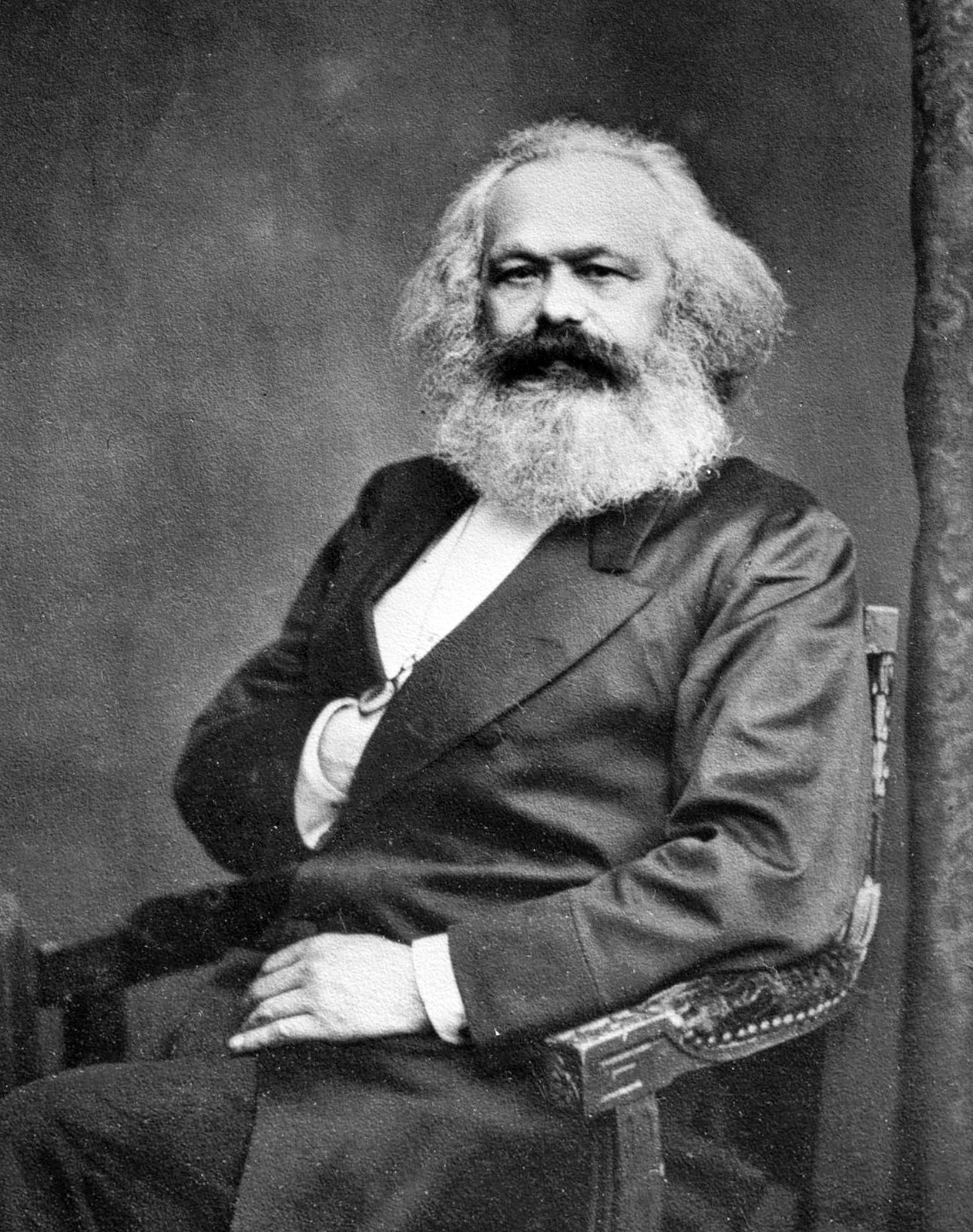
This party based its theories on the work of Karl Marx.
a)
socialist
b)
moderate
c)
liberal
d)
capitalist
19.
According to Karl Marx, the ________, or working class, was oppressed by the middle class.
a)
proletariat
b)
bourgeoisie
c)
socialists
d)
communists
20.
In the Second Industrial Revolution, what led the way to new industrial frontiers?
a)
textiles, railroads, iron, and coal
b)
a true world economy, internal-combustion engines, and new products
c)
radios, telephones, light bulbs, and telegraphs
d)
steel, chemicals, electricity, petroleum
21.
The belief that each "people" should have their own country is what?
a)
Nationalism
b)
Socialism
c)
Democracy
d)
Dictatorship
22.
What happened to Napoleon after he was defeated by the Duke of Wellington?
a)
He was tried and executed by an international tribunal
b)
Sentenced to life at the La Santé Prison in Paris
c)
Exiled to the tiny island of St. Helena
d)
Appointed Emperor of France
23.
This radical Jacobin's death marked the end of the "Reign of Terror" during the French Revolution
a)
Jean-Paul Marat
b)
King Louis XVI
c)
Maximilien Robespierre
d)
Georges Danton
24.
Karl Marx believed the _____________, or middle class were the oppressors of the working class
a)
Proletariat
b)
Revisionists
c)
Soviets
d)
Bourgeoisie
25.
Who did J.P. Morgan partner with and invest in, to bring electricity to New York?
a)
Thomas Edison
b)
Nikola Tesla
c)
John D. Rockefeller
d)
Henry Ford
26.
What business was J.P. Morgan in and how did he make his money?
a)
Industrialization, create the largest structural steel plant in Pittsburg
b)
Banking, bought out failing companies and makes the profitable again
c)
Utilities, invented electricity and set up the first power grid in Washington D.C.
d)
Oil Refining, created the Standard Oil Company, and create a monopoly of the oil industry
27.
Was known as the Commodore, invested in railroads across America. His most famous railroad was the New York Central.
a)
Andrew Carnegie
b)
Cornelius Vanderbilt
c)
John D. Rockefeller
d)
J.P. Morgan.
28.
Invested in and created the largest steel mill in Pittsburg
a)
Andrew Carnegie
b)
Cornelius Vanderbilt
c)
John D. Rockefeller
d)
J.P. Morgan.
29.
Investment Banker who bought out failing companies and returned them to profitable one. He was taught to never invest in risky businesses by his father, but ended up investing in Edison Electric.
a)
Andrew Carnegie
b)
Cornelius Vanderbilt
c)
John D. Rockefeller
d)
J.P. Morgan.
30.
Invented DC electric current and the light bulb.
a)
Nikola Telsa
b)
Thomas Edison
c)
J.P Morgan
d)
John D. Rockefeller
31.
Invented and perfected AC electric current.
a)
Nikola Telsa
b)
Thomas Edison
c)
J.P Morgan
d)
John D. Rockefeller
32.
Invented the electric chair to try and prove that AC current was the more deadly current.
a)
Nikola Telsa
b)
Thomas Edison
c)
J.P Morgan
d)
John D. Rockefeller
33.
Spain
a)
B
b)
A
c)
C
d)
D
e)
E
34.
France
a)
D
b)
A
c)
B
d)
C
e)
E
35.
Germany
a)
F
b)
A
c)
B
d)
C
e)
D
36.
Italy
a)
G
b)
A
c)
B
d)
C
e)
D
37.
Great Britain
a)
I
b)
A
c)
B
d)
C
e)
D
38.
Sweden
a)
K
b)
A
c)
B
d)
C
e)
D
39.
Finland
a)
L
b)
A
c)
B
d)
C
e)
D
40.
Norway
a)
J
b)
A
c)
B
d)
C
e)
D
41.
Poland
a)
H
b)
A
c)
B
d)
C
e)
D
42.
Switzerland
a)
C
b)
A
c)
B
d)
D
e)
E
43.
Denmark
a)
A
b)
B
c)
C
d)
D
e)
E
44.
Ukraine
a)
E
b)
A
c)
B
d)
C
e)
D
45.
What was the “Reign of Terror”? When did it come to an end (who was executed)
4 lines
46.
Explain why the Industrial Revolution started in Great Britain? ( Include at least 3 reasons)
4 lines
47.
Explain Karl Marx’s theories about the proletariat and bourgeoisie. What did he theorize would eventually happen? Was he correct? Give an example.
4 lines
48.
(Explain) which World History unit/event was the most interesting this semester by sharing something you remember or learned.
4 lines
49.

Which ideology is most closely associated with the ideas proposed by Karl Marx regarding the overthrow of capitalist systems by the working class?

a)

capitalism

b)

socialism

c)

communism

d)

command economies

50.

What is a territory settled and ruled by people from another land

a)

colony

b)

territory

c)

spoils

d)

Island

51.
The infamous "Scramble for Africa" referred to:
a)
A major race that was held across the plains of Africa
b)
A period when the European powers conquered and divided most of Africa amongst themselves
c)
A war that Britain launched against the Boers in South Africa
d)
A period when the European powers rushed to establish friendly relations with nations across Africa
52.
What happened as a result of the Berlin Conference of 1884-1885? 
a)
France and Britain agreed to govern their African colonies jointly. 
b)
There was less fighting between African leaders and European powers. 
c)
African leaders voiced their suggestions for better relations with European powers. 
d)
Europeans divided Africa into colonies without consulting African leaders. 
53.
 Imperialism was brought on as a result of 
a)
Democratic Revolutions 
b)
World War I 
c)
Industrialization 
d)
The Renaissance 
54.

When one country takes control of another for economic, political or military gain it is called?

a)

Colonialism

b)

Imperialism

c)

Manifest Destiny

d)

Nationalism

55.
Economic motives for imperialism include _________.
a)
a desire to spread Christianity
b)
a need for military bases around the world
c)
a need for raw materials to be used in factories
d)
a desire to gain glory
56.

What idea does this represent?

a)

Nationalism

b)

Militarism

c)

Imperialism

57.

Deep devotion to one's own country is called __.

a)

Nationalism

b)

Imperialism

c)

Alliance

d)

Militarism

58.

Nations building large armies as preparation for war is called __.

a)

Nationalism

b)

Imperialism

c)

Alliances

d)

Militarism

59.

The idea that countries need to join forces in order to defend each other is called __.

a)

Nationalism

b)

Imperialism

c)

Alliances

d)

Militarism

60.

Triple Alliance members included the countries of:

a)

Italy, France, Britain

b)

France, Britain, Russia

c)

Germany, Austria-Hungary, Italy

d)

Austria-Hungary, France, Russia

61.

Triple Entente members included the countries of:

a)

Italy, France, Britain

b)

France, Britain, Russia

c)

Germany, Austria-Hungary, Italy

d)

Austria-Hungary, France, Russia

62.
The League of Nations was created after World War One; as an international, world wide:
a)
peace keeping organization
b)
banking system
c)
health organization
d)
delivery system
63.
Who is to blame for the war according to the Treaty of Versailles?
a)
Great Britain
b)
France
c)
Germany
d)
Serbia
64.
What was the land between two enemy trenches called?
a)
No Man's Land
b)
His brother's land
c)
Auntie Anne's Land
d)
Pen Cattle
65.
The following countries make up which alliance system: Austria-Hungary, Germany, & Ottoman Empire
a)
Triple Entente
b)
Allies
c)
Central Powers
d)
Axis
66.
What is a dictator?
a)
Someone who helps a country in need
b)
Someone who gives control of the government to the people
c)
Someone who gains complete control of a country's government
67.
Who became the dictator of Germany and led that country into WWII?
a)
Winston Churchill
b)
Benito Mussolini
c)
Adolf Hitler
68.
What was the name of Hitler's form of government which denied individual freedoms took complete power of the Germany?
a)
democracy
b)
fascism
c)
dictatorship 
d)
monarchy 
69.
Who was Benito Mussolini?
a)
The fascist ruler of Italy
b)
The fascist ruler of Germany
c)
The fascist ruler of France
d)
The fascist ruler of England
70.
Who was the ruler of U.S.S.R?
a)
Joseph Stalin
b)
Winston Churchill
c)
Adolf Hitler
d)
Harry S. Truman
71.
Between WWI and WWII, Japan tried to solve the problem of its scarcity of natural resources by doing what?
a)
Exporting agricultural products in exchange for new technology. 
b)
Establishing a policy of imperialism.
c)
Building nuclear power plants. 
d)
Cooperating with the soviet union.
72.
Who was the military leader of Japan during WWII?
a)
Charles De Gaulle
b)
Winston Churchill
c)
Hideki Tojo
d)
Benito Mussolini
73.
What economic system is free-market and has no government interference?
a)
totalitarian
b)
communism
c)
fascism
d)
capitalism
74.
What is totalitarianism?
a)
Aggressive preparation for war.
b)
A government that aims to totally control all aspects of citizens’ lives.
c)
A government in which power is shared between many political parties.
d)
A government chosen by the people through elections.
75.

Which countries were Axis powers in WWII?

a)

Germany, Japan, Italy

b)

USA, Great Britain, Soviet Union

c)

France, USA, Italy

d)

Germany, USA, Great Britain

76.

Who was the leader of the USA during WWII?

a)

FDR

b)

Truman

c)

FDR and Truman

d)

Stalin

77.

Which event describes why America entered WWII?

a)

The sinking of the Lusitania

b)

The Zimmerman Telegram

c)

Political instability and failing economy

d)

The attack on Pearl Harbor

78.

Which group in America was treated with distrust and prejudice during WWII, resulting in the creation of internment camps?

a)

African Americans

b)

German Americans

c)

Japanese Americans

d)

Mexican Americans

79.

Which event occurred last during WWII?

a)

Germany surrendered

b)

Italy surrendered

c)

Japan surrendered

d)

Atomic bomb was used on Hiroshima

80.

Poland was invaded by which two countries at the beginning of WWII?

a)

Germany and the Soviet Union

b)

Germany and Japan

c)

Germany and Italy

d)

Germany and Austria

81.

What cities did the A-Bomb get dropped on at the end of WWII?

a)

Nagasaki

b)

Hiroshima

c)

Tokyo

d)

Berlin

82.

what is blitzkrieg?

a)

total war intended to cause swift victory

b)

slow and steady war

c)

trench warfare

d)

the use of poison gas

83.

The invasion of _______ started WW2

a)

Austria

b)

Finland

c)

Poland

d)

Czechoslovakia

84.

The Eastern bloc of Europe is alliend as the

a)

N.A.T.O

b)

Warsaw Pact

c)

S.A.L.T.

d)

Glasnost 

85.

A competition for supremacy in weapons and technology

a)

Cold War

b)

Nuclear War

c)

Mutually Assured Destruction

d)

Arms Race

86.

The U.S. pledge to support anti-communist was known as

a)

Diplomacy

b)

Containment

c)

Truman Doctrine

d)

Monroe Doctrine

87.

 A war in which there is no direct conflict between two sides

a)

Stale War

b)

Truce War

c)

Cold War

d)

Closed War

88.

This was a plan to strengthen democratic governments by providing food and economic assistance to war-ravaged European countries to help them rebuild after the war

a)

The Marshall Plan

b)

The Truman Plan

c)

N.A.T.O Plan

d)

Warsaw Plan

89.

British Prime Minister Winston Churchill declared what had “descended across the continent” dividing Europe into two hostile camps

a)

Communism 

b)

The Berlin Wall

c)

The Velvet Underground

d)

An Iron Curtain 

90.

The longest running between 1954-1975,most expensive and deadly proxy war of the Cold War

a)

Cuban Revolution

b)

Korea War

c)

Vietnam War

d)

War on Terror

91.

What was the term 'iron curtain' used to describe the division of?

a)

North and South Vietnam

b)

East and West Asia

c)

North and South Korea

d)

Eastern communist Europe and Western democratic Europe

92.
President Truman adopted a new foreign policy during the Cold War know as the Truman Doctrine. What was the main goal of the Truman Doctrine?
a)
To expand trade with Europe
b)
To limit the build up of nuclear weapons
c)
To stop the spread of communism
d)
to send financial aid to Europe
93.
Why did the United States become involved in the Korean War?
a)
to contain communism
b)
to colonize Korea
c)
to spread communism
d)
to Christianize Koreans
94.

What organization was formed by Democratic Western countries to stop the spread of Communism?

a)

NATO

b)

NAFTA

c)

WPA

d)

USA