
 Worksheets
WED and Sedimentary Rock
Total questions: 25
Worksheet time: 37mins
What is the 1st process?
erosion
weathering
compaction
deposition
What is the 2nd process?
weathering
erosion
cementation
deposition
What is the 3rd process?
erosion
cementation
weathering
deposition
What is the 4th process?
compaction
cementation
erosion
weathering
What is the 5th process?
cementation
condensation
weathering
erosion
The process that is not part of how sedimentary rocks form is _____.
weathering
melting
cementation
deposition
Tiny pieces that break off of rocks are called _____.
sediment
conglomerate
fossils
all of the above
The weight of layers and layers of sediment causes?
weathering
erosion
cementation
compaction

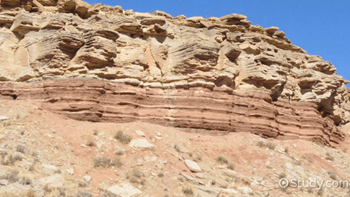
What factors can lead to the formation of a sedimentary rock?
melting and solidification
extreme heat and pressure
compaction and cementation

The breakdown of rock into smaller pieces from wind, water, or ice
erosion
deposition
weathering
delta
a flammable liquid produced from organic matter buried under layers of sediments for millions of years
fossil
oil
natural gas
coal
After several layers of rock and dirt build up, they are pushed and stuck together in two processes called what?
When layers of decaying plants and animals are exposed to a lot of heat and pressure, they eventually become what?
What is the process that moves sediment from one location to another?
What is the process by which dissolved minerals crystallize and glue particles of sediment together?
Deposition
Weathering
Cementation
Erosion
What is the process by which rock is broken down into smaller pieces by physical means?
Weathering
Erosion
Deposition
Compaction


Which diagram models the process of compaction leading to the formation of Sedimentary Rock?
F
G
H
J

The diagram below shows the sequence of the processes that turn solid rock into sandstone. Which two processes best complete this diagram?
Melting and cooling
Erosion and compaction
Compaction and cementation
Evaporation and dissolving

Several layers of sedimentary rock are illustrated. They are in the same order as when they first formed. Which layer formed first?
Rock Layer W
Rock Layer X
Rock Layer Y
Rock Layer Z

