wayground logo

Free Printable Worksheets

Font size

S
M
L
XL
Worksheets

EXAM REVIEW - Space

Total questions: 159

Worksheet time: 2hrs 13mins

Name
Class
Date
1.
what is the closet planet to the sun
a)
mercury
b)
earth
c)
mars
d)
saturn
2.
what is the furthest planet from the sun
a)
mars
b)
neptune
c)
uranus
d)
saturn
3.
what is the biggest planet
a)
neptune
b)
mars
c)
saturn
d)
jupiter
4.
how many universes are there
a)
1
b)
6
c)
4
d)
10
5.
how many planets are there in our solar system
a)
9
b)
10
c)
7
d)
8
6.
is the sun a star
a)
yes
b)
no
c)
maybe
d)
no its a ball of magma
7.
what is a black hole
a)
a force strong enough to keep light in
b)
a black hole is a hole of energy
c)
a black hole is a rift to another dimension
d)
a place where sound cant escape
8.
what is the 5th planet in the solar system
a)
earth
b)
mars
c)
jupiter
d)
uranus
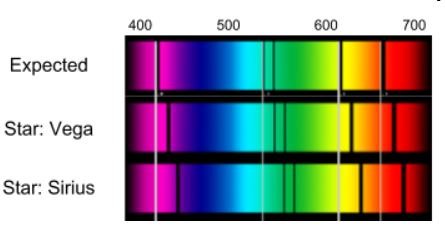
9.
what is the 8th planet in the solar system
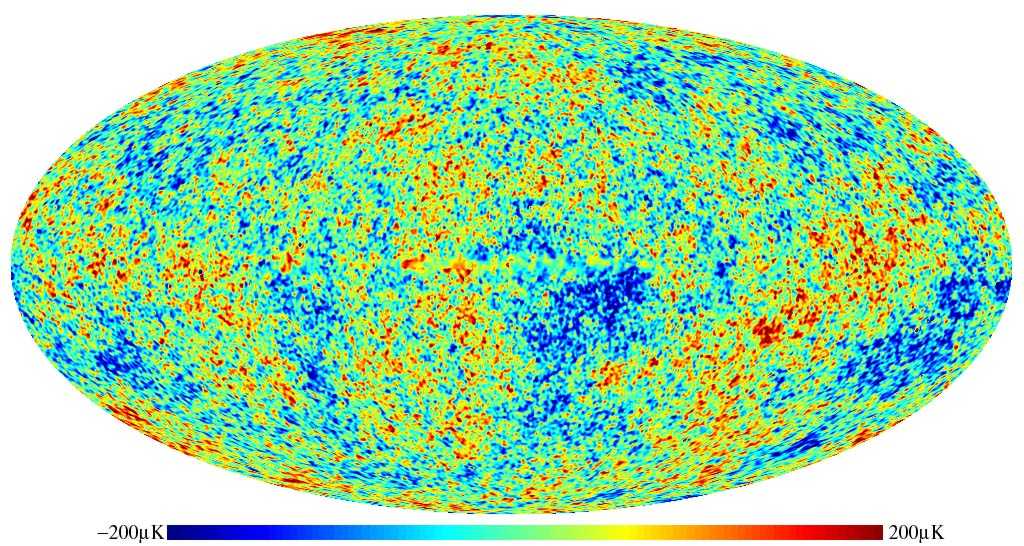
a)
mars
b)
neptune
c)
saturn
d)
earth
10.
what is in between the inner terrestrial and outer gas/ice giant planets
a)
asteroid belt
b)
equator
c)
invisible line
d)
the sun
11.
which ones are gas giants
a)
outer planets
b)
inner planets
12.
which element(s) are a star made of
a)
hydrogen and helium
b)
helium
c)
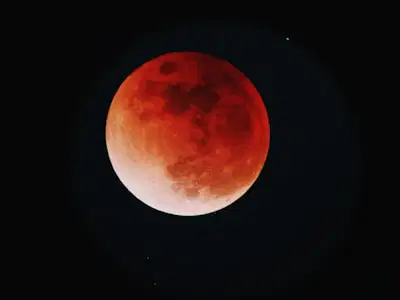
hydrogen
d)
hydrogen and argon
13.
What is a star before it becomes main sequence?
a)
A nebula, then a protostar
b)
A supergiant
c)
A white dwarf
d)
A black dwarf
14.
what are the large rocks that orbit the sun
a)
planets
b)
comets
c)
meteroite
d)
astroids
15.
What is the sun made of?
a)
Mostly Helium and Hydrogen
b)
Mostly Carbon
c)
Mostly Helium
d)
Mostly Iron
16.
Which reaction happens in the core of the sun?
a)
Nuclear fission
b)
Nuclear fusion
17.
When it starts to die, our sun will become a...
a)
Supernova
b)
Supergiant
c)
Red giant
d)
black hole
18.
A planet is
a)
luminous
b)
non-luminous
19.
A luminous celestial body that is the centre of the solar system, and has planets that orbit around it
a)
Star
b)
Natural satellite
c)
Planet
d)
Moon
20.
A collection of stars that form a recognizable pattern
a)
Star
b)
Natural satellite
c)
Constellation
d)
Galaxy
21.
Fusion involves...
a)
The splitting of hydrogen atoms
b)
The combination of hydrogen atoms into helium
c)
Vegeta and Goku fuuu-sion-HA into Gogeta
d)
Nuclear explosion
22.
A comet is...
a)
Irregular piece of rocky metal material
b)
Irregular piece of rocky metal material coated in ice that vaporizes into a tail and orbits the sun
c)
A piece of an asteroid that moves through space
d)
A piece of an asteroid that enters Earth's atmosphere and burns up
23.
An asteroid is...
a)
Irregular piece of rocky metal material
b)
Irregular piece of rocky metal material coated in ice that vaporizes into a tail and orbits the sun
c)
A piece of an asteroid that moves through space
d)
A piece of an asteroid that enters Earth's atmosphere and burns up
24.
An meteor is...
a)
Large, irregular piece of rocky metal material
b)
A piece of an asteroid that burns up and reaches Earth's surface
c)
A piece of an asteroid that moves through space
d)
A piece of an asteroid that enters Earth's atmosphere and burns up
25.
An meteorite is...
a)
Irregular piece of rocky metal material
b)
A piece of an asteroid that burns up and reaches Earth's surface
c)
A piece of an asteroid that moves through space
d)
A piece of an asteroid that enters Earth's atmosphere and burns up
26.
An meteoroid is...
a)
Irregular piece of rocky metal material
b)
A piece of an asteroid that burns up and reaches Earth's surface
c)
A piece of an asteroid that moves through space
d)
A piece of an asteroid that enters Earth's atmosphere and burns up
27.
What can a supernova become?
a)
Neutron star
b)
Black hole
c)
Neutron star and then a black hole
d)
Neutron star OR a black hole
28.
A main sequence star is:
a)
a star in its adult age
b)
a star in its early age
c)
a star in its old age
d)
a dead star
29.
A nebula is composed of...
a)
An explosion
b)
Gases and dust
c)
A protostar
d)
A black giant
30.
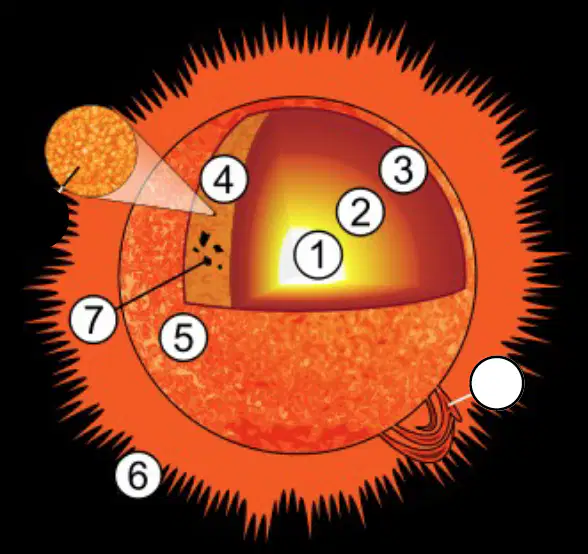
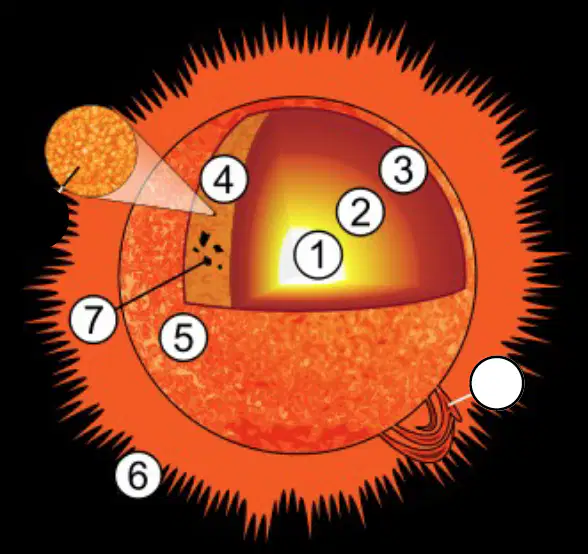
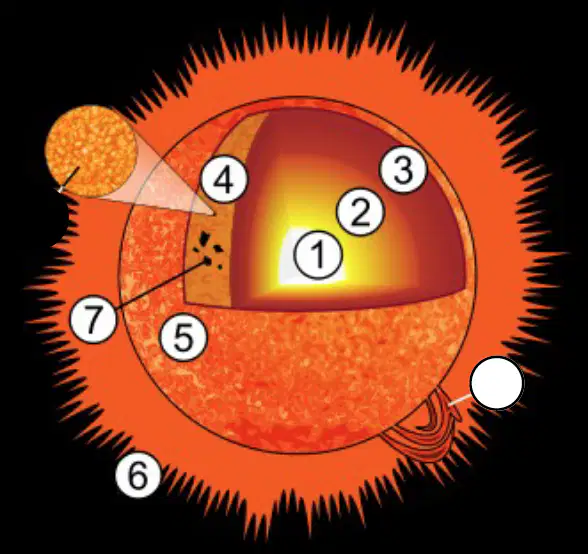
(1) is the...
a)
RADIATIVE zone
b)
CORE
c)
CONVECTIVE zone
d)
Plasma
31.
(2) is the...
a)
RADIATIVE zone
b)
CORE
c)
CONVECTIVE zone
d)
Plasma
32.
(3) is the...
a)
RADIATIVE zone
b)
CORE
c)
CONVECTIVE zone
d)
Plasma
33.
In the outer layers of the sun, (4) is the...
a)
CHROMOSPHERE
b)
CORONA
c)
PHOTOSPHERE
d)
Sunspots
34.
In the outer layers of the sun, (4) is the...
a)
CHROMOSPHERE
b)
CORONA
c)
PHOTOSPHERE
d)
Sunspots
35.
Our sun is currently a...
a)
Supernova
b)
Red Supergiant
c)
Red giant
d)
Main sequence star
36.
If the moon is between the sun and the Earth, this can result in which kind of eclipse?
a)
solar eclipse
b)
lunar eclipse
37.
If the Earth is between the sun and the moon, this can result in which kind of eclipse?
a)
solar eclipse
b)
lunar eclipse
38.
Which is NOT an inner terrestrial planet?
a)
Mercury
b)
Earth
c)
Mars
d)
Uranus
39.
Which is NOT an outer gas/ice giant?
a)
Venus
b)
Saturn
c)
Uranus
d)
Neptune
40.
Which CORRECTLY lists the order of the planets from closest to farthest from the sun?
a)
Mercury > Earth > Venus > Mars > Jupiter > Saturn > Neptune > Uranus
b)
Mercury > Venus > Earth > Mars > Jupiter > Saturn > Neptune > Uranus
c)
Mercury > Venus > Earth > Mars > Jupiter > Saturn > Uranus > Neptune
d)
Uranus > Neptune > Saturn > Jupiter > Mars > Earth > Venus > Mercury
41.
A celestial object is:
a)
Any body or entity that exists in a galaxy
b)
Any body or entity that exists in space
c)
Any body or entity that exists in a solar system
d)
Any body or entity that exists in a constellation
42.
which of the following is a dwarf planet?
a)
uranus
b)
mercury
c)
the moon
d)
pluto
43.
Which of the following colours of stars are listed HOTTEST to COLDEST?
a)
blue/blue white, yellow, red
b)
red, yellow, blue/blue white
c)
blue/blue white, red, yellow
d)
red, blue/blue white, yellow
44.
The four inner planets are considered:
a)
terrestrial planets
b)
gas giants
45.
The four outer planets are considered:
a)
terrestrial planets
b)
gas giants
46.
A small, dim, hot star that is the remains after a red giant dies
a)
main sequence star
b)
black dwarf
c)
white dwarf
d)
planetary nebula
47.
A white dwarf that has cooled and stopped glowing
a)
black hole
b)
black dwarf
c)
neutron star
d)
planetary nebula
48.
Which of the following best describes why Earth experiences seasons?
a)
Changes in Earth's distance from the Sun
b)
Earth's tilt on its axis relative to its orbit around the Sun
c)
Changes in Earth's speed of rotation
d)
Variations in Earth's magnetic field
49.
What primarily causes the tides on Earth?
a)
Gravitational pull of the Moon and Sun on oceans
b)
Earth's rotation on its axis
c)
Atmospheric pressure changes
d)
Underwater volcanic activity
50.
What occurs during a solar eclipse?
a)
The Earth passes between the Sun and the Moon
b)
The Moon passes between the Sun and the Earth, blocking the Sun's light
c)
The Earth casts a shadow on the Moon, partially covering it
d)
The Sun casts a shadow on the Earth, causing darkness
51.
During a lunar eclipse, which body is obscured by the Earth's shadow?
a)
the sun
b)
the moon
c)
Venus
d)
Mars
52.
What is the primary cause of the post-industrial greenhouse effect on Earth?
a)
Increase in atmospheric oxygen levels
b)
Release of greenhouse gases from volcanic eruptions
c)
Human activities emitting greenhouse gases
d)
Decrease in Earth's glacial ice
53.
Which of the following best describes the greenhouse effect?
a)
Cooling of the Earth's surface due to reflection of sunlight
b)
Formation of greenhouse structures to grow crops in colder climates
c)
Trapping of heat in the Earth's atmosphere by greenhouse gases
d)
Increased absorption of ultraviolet radiation by the ozone layer
54.
What are the primary greenhouse gases responsible for the greenhouse effect?
a)
Oxygen and nitrogen
b)
Carbon dioxide and methane
c)
Hydrogen and helium
d)
Nitrogen dioxide and sulfur dioxide
55.
How do human activities contribute to the greenhouse effect?
a)
By reducing the concentration of greenhouse gases in the atmosphere
b)
By releasing additional greenhouse gases into the atmosphere
c)
By reflecting more sunlight back into space
d)
By decreasing the amount of solar radiation reaching the Earth's surface
56.
What is one consequence of an enhanced greenhouse effect?
a)
Cooling of the Earth's surface
b)
Decrease in global sea levels
c)
Expansion of polar ice caps
d)
More frequent and severe weather events
57.
AU is used to measure distances...
a)
within the solar system
b)
outside the solar system
58.
Light years are used to measure distances...
a)
within the solar system
b)
outside the solar system
59.

Which of the following is true of land and sea ice?

a)

the surface area is staying the same

b)

 glacial the surface area is decreasing

c)

the surface area is increasing

60.
Currently, about 10% of Earth is covered with ice year-round. If this ice melts, what could happen to Earth’s temperature?
a)
Increase
b)
Decrease
c)
Remain the Same
d)
Not enough information 
61.
What are greenhouse gases?
a)

gases that absorb and trap thermal energy

b)

gases that should not be inhaled

c)

gases in the atmosphere that reflect the sun's energy

62.
Which of the following is the best conclusion that can be made from this graph?
a)
atmospheric carbon dioxide levels have been decreasing since 1960
b)
Hawaii has a lot of carbon dioxide
c)
humans have been working hard to decrease carbon dioxide levels
d)
atmospheric carbon dioxide levels have increased steadily since 1960
63.
Which of the following gases DOES NOT trap heat?
a)
carbon dioxide
b)
nitrogen
c)
water vapor
d)
methane
64.

Which of the following extreme weather events have been linked to climate change?  

a)
droughts
b)
flooding
c)
melting of polar ice caps
d)
all of the above
65.

Which is a chemical energy source that is burned to generate electricity in power plants?

a)
coal
b)
wood
c)
gasoline
d)
batteries
66.
The main human activity that releases greenhouse gases is
a)
using bottled water
b)
burning fossil fuels
c)
texting on cellphones
d)
eating meat
67.
Which of the following is contributing to an increase in carbon dioxide in the atmosphere?
a)
deforestation
b)
photosynthesis
c)
oceans
d)
all of the above
68.
Melting of glaciers and polar ice caps....
a)
will result in cooler temperatures in the Arctic
b)
will result in sea-levels rising
c)
Will have no effect on ecosystems
d)
None of the above
69.
Carbon is stored in
a)
Trees and other living things
b)
Oceans
c)
underground in soil and fossil fuels
d)
All are correct
70.
Climate change causes extreme weather conditions such as:
a)
excessive heat
b)
drought
c)
extreme storms
d)
all of these
71.
How can the planting of new trees help reduce climate change?
a)
Trees help create breezes.
b)
Trees release moisture that cools the atmosphere.
c)
Trees take in carbon dioxide from the atmosphere during photosynthesis.
d)
Trees block the release of greenhouse gases from soil.
72.
The greenhouse effect is beneficial as it helps to sustain life on earth by naturally trapping heat in the atmosphere. 
a)
False
b)
True
73.
Any amount of CO2 (Carbon Dioxide) in the atmosphere is bad for our planet.
a)
True
b)
False
74.
Changes from minute-to-minute, hour-to-hour, day-to-day
a)
Climate
b)
Weather
75.

Long term average atmospheric conditions over a large area

a)
Climate
b)
Weather
76.

What kind of energy is infrared (thermal energy)?

a)

heat energy

b)

electrical energy

c)

nuclear energy

d)

sound energy

77.

The greenhouse effect is due to

a)

the absorption and trapping of thermal energy by the atmosphere

b)

the reflection of ultraviolet radiation by the atmosphere

c)

the absorption of ultraviolet radiation by the atmosphere

d)

the absorption of ultraviolet radiation by Earth

78.

Which of the following is NOT evidence of climate change?

a)

Global average temperature is rising

b)

Increased severe weather events

c)

Biomes are shifting faster than species can adapt

d)

Sea levels are decreasing

79.

Identify the following numbers or characteristics as being correctly in scientific notation or not.

Categorize the following

4.5×1054.5\times10^{-5}  

9.8×10299.8\times10^{29}  

1.00002×1041.00002\times10^{-4}  

10.1×10210.1\times10^{-2}  

1.24×561.24\times5^6  

12.22×19212.22\times19^{-2}  

Number is between 1 and 10 and is multiplied by 10 to some exponent

0.2×1020.2\times10^2  

Scientific Notation
Not Correctly in Scientific Notation
80.

The distance that light travels in one year.

a)

light year

b)

astronomical unit

c)

kilometre

d)

metre

81.

The distance between Earth and the sun.

a)

light year

b)

astronomical unit

c)

kilometre

d)

metre

82.

1 Astronomical Unit (AU) =

a)

9.5×10129.5\times10^{12} km

b)

1.5×1081.5\times10^8 km

83.

1 Light Year (ly) =

a)

9.5×10129.5\times10^{12} km

b)

1.5×1081.5\times10^8 km

84.

A galaxy is 5.4 light years away. How many kilometres is this? (Use your calculator)

Recall that 1ly=9.5×10¹²km1ly=9.5\times10^{12}km

a)

5.13×10¹³km5.13\times10^{13}km

b)

5.68×10¹³km5.68\times10^{-13}km

85.

A star is 7.8×10⁹km7.8\times10^9km away from Earth. How many AU away is it? (Use your calculator)

Recall that 1AU=1.5×10⁸km1AU=1.5\times10^8km

a)

52 AU

b)

1.17×10¹⁸AU1.17\times10^{18}AU

86.
The three pieces of evidence for our current theory of the universe are:
a)
blueshift, CMB, moon landing.
b)
redshift, IBM, Andromeda galaxy.
c)
redshift, CMB, distribution of elements.
d)
doppler effect, light spectra, fusion.
87.
Galaxies that are redshifted are:
a)
actually blue.
b)
really far away.
c)
invisible.
d)
moving away from us.
88.

The Cosmic Microwave Background radiation (CMB) is:

a)
the remaining energy from the big bang.
b)
incredibly hot.
c)
visible to the human eye.
d)
only located in certain places in the universe.
89.

An infinitely small, hot, dense point that is theorized to be the origin of the universe is known as what?

a)

redshift

b)

singularity

c)

atom

d)

molecule

90.

Our theory of the universe's expansion from a singularity was confirmed by the discovery of detecting what?
a)
fusion.
b)
cosmic microwave background radiation.
c)
the Andromeda galaxy.
d)
the Doppler effect.
91.
Light waves that are stretched out by objects moving apart:
a)
have a shorter wavelength.
b)
travel faster than the speed of light.
c)
are invisible.
d)
appear more red.
92.
The universe is ____________ years old.
a)
8.13 billion
b)
13.8 billion
c)
1.83 billion
d)
381 million
93.
The most abundant element in the universe today is:
a)
water
b)
hydrogen
c)
oxygen
d)
carbon
94.
What is true about these stars?
a)
Both of these stars are moving away from us.
b)
Both of these stars are moving towards us.
c)
Both of these stars are blueshifted.
d)
The star Sirius is closer to us.
95.

This image describes:

a)

The redshift.

b)

The CMB.

c)

The distribution of each element in the universe.

d)

The amount of time the universe has existed.
96.
This is a picture of:
a)

The Cosmic Microwave Background radiation (CMB).

b)
The Milky Way.
c)
The universe in the future.
d)
A redshifted star.
97.
The universe is expanding.  This means that:
a)
Galaxies are getting bigger.
b)
Atoms are getting bigger.
c)
The universe is creating more matter.
d)
The amount of space between galaxies is increasing.
98.

The observation that light from galaxies appears red supports the theory that...

a)

The universe is expanding

b)

The universe is shrinking

c)

Galaxies are moving towards the Earth

d)

Wavelengths of light are getting shorter

99.

An example of the Doppler Shift would be which of the following?

a)

Energy is found in the universe

b)

A police siren sounds different when it moves away from us

c)

Satallites orbit the Earth

d)

The Sun goes through an eclipse

100.

The first elements formed in our universe were...

a)

Oxygen and Iron

b)

Nickel and Gold

c)

Hydrogen and Helium

d)

Sodium and Zinc

101.

Which is NOT true? Cosmic Microwave Background Radiation is...

a)

Is evidence for the Big Bang

b)

Is leftover energy from the start of the universe expansion

c)

Something that heats up our food

d)

Something that was first discovered by accident

102.

Which scientist first discovered the redshift of light using a very powerful telescope?

a)

Sir Isaac Newton

b)

Edwin Hubble

c)

Albert Einstein

d)

Robert Wilson

103.
What is true about these two galaxies?
a)
The Sombrero Galaxy is closer to us.
b)

The Pinwheel Galaxy is moving away from us more slowly than the Sombrero Galaxy.

c)
The Pinwheel Galaxy is moving towards us.
d)
The Sombrero Galaxy is not moving.
104.

This model best represents

a)

Plate Tectonics

b)

Theory of Relativity

c)

The Big Bang Theory

d)

Convection Currents in the Mantle

105.

In red shift, the wavelengths of light become

a)

Longer

b)

Shorter

c)

Bluer

d)

Slower

106.

Which of the following best describes the location of the Asteroid Belt?

a)

Between Mars and Jupiter

b)

Beyond Neptune

c)

Between Earth and Mars

d)

Inside the orbit of Mercury

107.

What is the primary physical property that distinguishes a comet from an asteroid?

a)

Comets have a solid surface

b)

Comets have a tail when near the Sun

c)

Comets are larger than asteroids

d)

Comets orbit the Sun in a circular path
108.

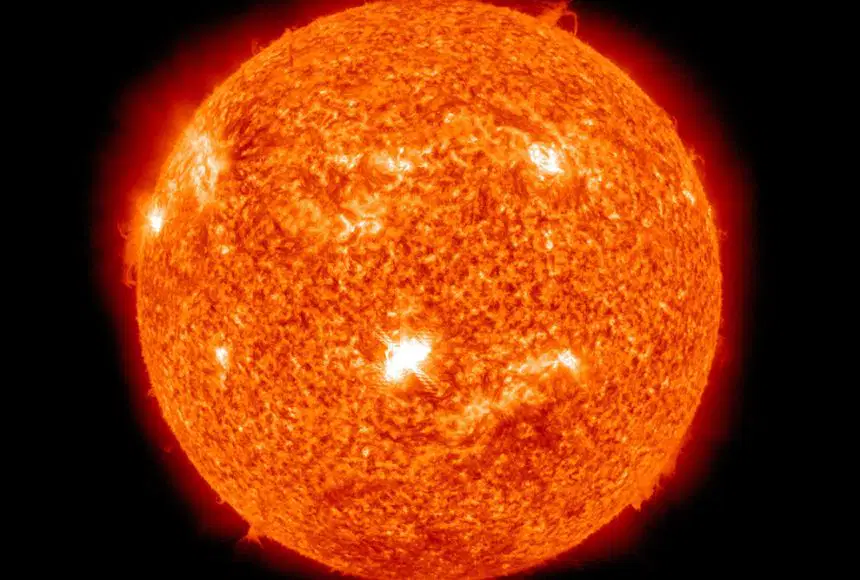
What is the primary component of the Sun?

a)

Iron

b)

Hydrogen

c)

Oxygen

d)

Carbon

109.

Which planet is known as the "Red Planet"?

a)

Venus

b)

Mars

c)

Jupiter

d)

Saturn

110.

Which of the following is true about meteors?

a)

They are always visible in the night sky

b)

They are known as "shooting stars"

c)

They are larger than planets

d)

They orbit the Sun in a fixed path

111.

Which planet is closest to the Sun?

a)

Earth

b)

Venus

c)

Mercury

d)

Mars

112.

What is the main difference between a planet and a moon?

a)

Planets orbit stars, while moons orbit planets

b)

Moons are larger than planets

c)

Moons have atmospheres, planets do not

d)

Moons have their own light, planets do not
113.

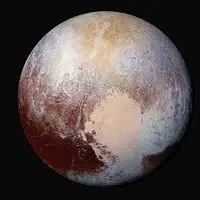
Which of the following is a dwarf planet?

a)

Neptune

b)

Pluto

c)

Uranus

d)

Haumea

114.

Which of the following best describes an asteroid?

a)

A small, irregular rocky body orbiting the Sun

b)

A large gaseous planet

c)

A frozen body with a tail

d)

A star in the early stage of formation

115.

Which planet is known for having the Great Red Spot?

a)

Mars

b)

Jupiter

c)

Saturn

d)

Neptune

116.

What is the main component of a comet's nucleus?

a)

Molten rock

b)

Liquid water

c)

Frozen gases and dust

d)

Metallic iron

117.

What is the correct order of the first four planets from the Sun?

a)

Mars, Earth, Venus, Mercury

b)

Earth, Mars, Venus, Mercury

c)

Venus, Mercury, Earth, Mars

d)

Mercury, Venus, Earth, Mars

118.

Which celestial object is located between Mars and Jupiter?

a)

The Kuiper Belt

b)

The Van Allen Belt

c)

The Oort Cloud

d)

The Asteroid Belt

119.

The asteroid belt is found between

a)

The Sun and Mercury

b)

Neptune and Uranus

c)

Venus and Earth

d)

Mars and Jupiter

120.

Organize these planets and characteristics into the right categories.

Categorize the following

rocky

frozen and gaseous

Mercury

Venus

Earth

Mars

Jupiter

Saturn

Uranus

Neptune

Have rings

Pluto

Not large enough to clear other bodies from its orbit
Inner Terrestrial Planets
Outer Jovian (Gas Giant) Planets
Dwarf Planets
121.

Order the following inner terrestrial planets in order from CLOSEST (1) to FURTHEST (4) from the sun.

a)

Mercury

b)

Venus

c)

Earth

d)

Mars

1)
2)
3)
4)
122.

Order the following outer gas giant planets in order from CLOSEST (1) to FURTHEST (4) from the sun.

a)

Jupiter

b)

Saturn

c)

Uranus

d)

Neptune

1)
2)
3)
4)
123.
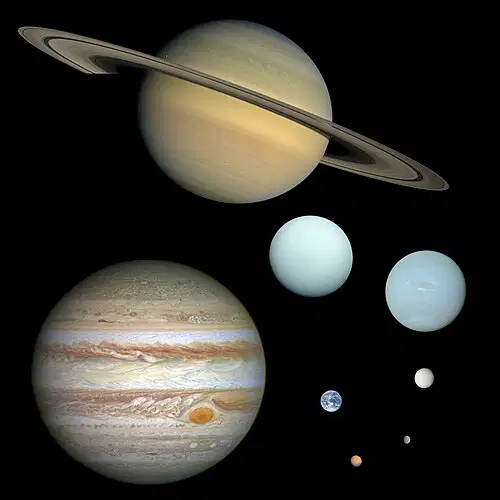
Identify the planets in the solar system shown in the image.
124.

Label the types of eclipses shown in each diagram.

125.

Label these correctly

126.

The name for a rock found in space changes depending on where it is. Label the diagram correctly.

127.

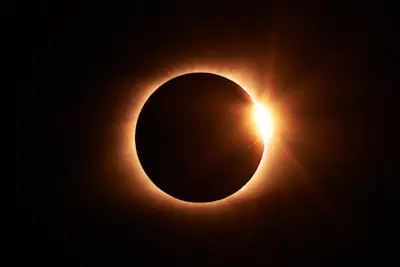
The following images have been captured from eclipses. Label each as either a solar or lunar eclipse.

128.

Which celestial phenomenon results from the sun's electromagnetic radiation interacting with the atoms in the Earth's upper atmosphere?

a)

lunar eclipse

b)

aurora borealis

c)

neap tides

d)

winter solstice

129.

Tides result from (select all that apply):

a)

gravitational pull on oceans from the Earth

b)

gravitational pull on oceans from the moon

c)

gravitational pull on oceans from the Sun
130.

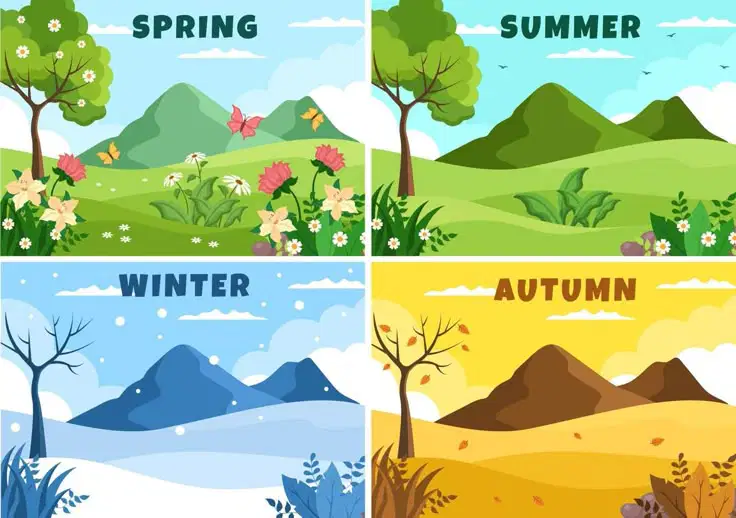
What causes the change of seasons on Earth?

a)

The gravitational pull of the Moon

b)

The rotation of the Earth

c)

The tilt of the Earth's axis

d)

The distance from the Sun

131.

During which season does the Northern Hemisphere experience the longest day of the year?

a)

Autumn

b)

Summer

c)

Spring

d)

Winter

132.

A moon is also known as a ___________ because it orbits Earth.

a)

satellite

b)

planet

c)

dwarf planet

d)

asteroid

133.

Which of the following is NOT criteria a celestial object must meet to be considered a planet?

a)

must orbit a star

b)

gravity must pull it into a spherical shape

c)

it is large enough to clear other celestial bodies from its orbit

d)

it must have its own moon

134.

Match the descriptions with the correct model of the solar system.

Categorize the following

The Sun and other planets orbit Earth

Earth orbits the sun

Ancient theory that used to be widely accepted

Accepted model of the solar system currently

Geocentric Model
Heliocentric model
135.

A​ (a)   is a vast collection of billions of ​ (b)   stars, gases, and dust. There are three different types:​ (c)   , which our Milky Way is classified as,​ (d)   , which are spherical in shape, and ​ (e)   , which take no particular shape.

Choose from the below words
galaxy
luminous
spiral galaxies
elliptical galaxies
irregular galaxies
non-luminous
angular galaxies
universe
136.

The planets in our solar system are​ (a)   and orbit the sun. The sun is a​ (b)   star.

Choose from the below words
non-luminous
luminous
137.

The study of celestial objects and phenomena.

a)

astronomy

b)

astrology

c)

biology

d)

spaceology

138.

A celestial body which emits energy in the form of heat and light:

a)

non-luminous

b)

luminous

c)

radioactive

d)

energetic

139.
What is an explosion on the sun that gives out huge amounts of energy?
a)
Sun Spot
b)
Solar Flare
c)
Sun Ray
d)
Sun Gases
140.
Which statement is true about the sun?
a)
It is a star.    
b)
It is the largest star in our galaxy. 
c)
It is a planet close to Earth.
d)
It is a moon. 
141.

What are pockets of magnetism on the sun that are cooler than the rest of the sun called?

a)
Solar Flares
b)
Corona
c)
Sun Spots
d)
Sun Rays
142.
Which layer of the sun is the hottest?
a)
Photosphere
b)
Chromosphere
c)
Corona
d)
Core
143.
How does the sun keep all of the planets in orbit?
a)
The pull of its gravity
b)
the flames give it power
c)
the sun spots
d)
The solar flares guide them
144.
What happens in the convective zone of the sun?
a)
convection
b)
conduction
c)
evaporation
d)
precipitation
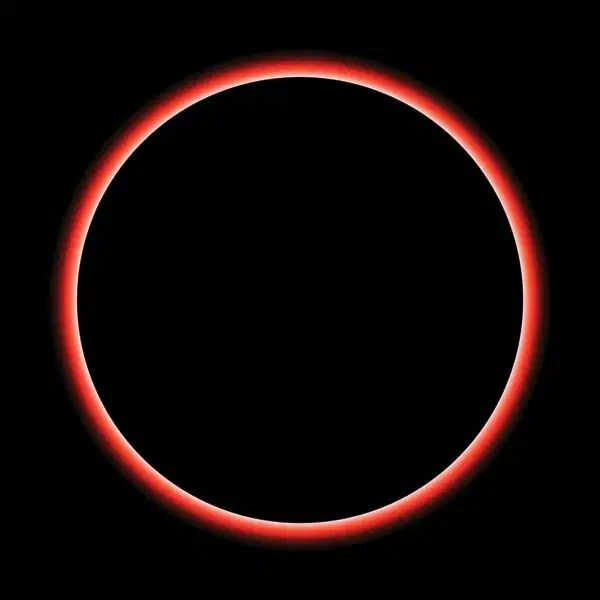
145.

The Sun is primarily made of which elements?
a)
carbon and oxygen
b)
water and carbon dioxide
c)
calcium and potassium
d)
hydrogen and helium
146.
The energy from the sun is created by a process called:
a)
nuclear fission
b)
nuclear fusion
c)
nuclear reaction
d)
nuclear core
147.
What layer gives the sun it's reddish color during a solar eclipse?
a)
convection zone
b)
corona
c)
chromosphere
d)
photosphere
148.
What layer of the sun's atmosphere gives the sun its "white halo" during a solar eclipse?
a)
chromosphere
b)
photosphere
c)
corona
d)
atmosphere
149.

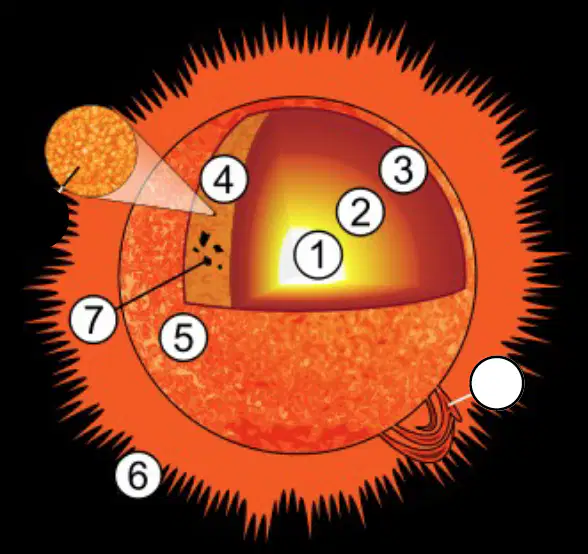
label the parts of the sun

  • * NOTE: 2,3,4,8 are not labeled

150.

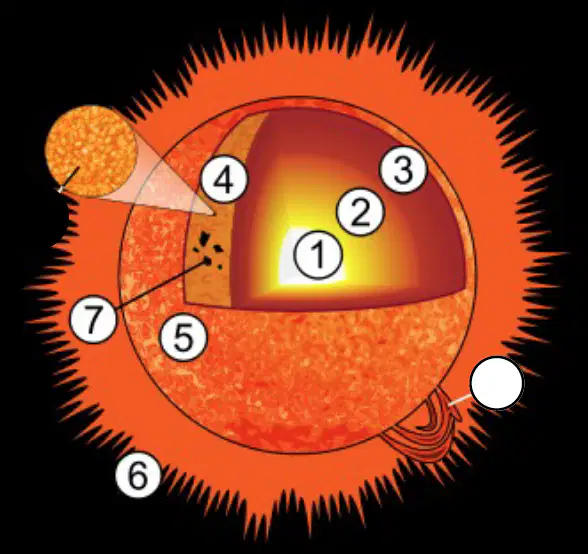
label the parts of the sun

  • * NOTE: 1, 5, 6, 7, 8, 9 are not labeled

151.

Thermonuclear fusion involves:

a)

hydrogen atoms fusing into helium

b)

helium atoms fusing into hydrogen

c)

carbon atoms fusing into glucose

d)

water fusing into hydrogen

152.

Which of the following best describes the greenhouse effect?

a)

Earth traps heat

b)

Earth's atmosphere traps thermal energy

c)

Earth's atmosphere reflects thermal energy back into space

d)

Earth's atmosphere is a blanket

153.

Through​ (a)   , the sun emits a vast amount of radiant energy. ​ (b)   of that is absorbed by Earth's land and oceans and is converted to ​ (c)   energy, while ​ (d)   is reflected back into space.

Choose from the below words
thermonuclear fusion
70%
30%
thermal
chemical
50%
154.

After​ radiant energy from the sun reaches Earth, it is absorbed and converted into thermal energy, also known as heat. Heat is ​ (a)   by ​ (b)   within the Earth's ​ (c)   , which ​ (d)   Earth. This is known as the ​ (e)   effect.

Choose from the below words
natural gases
cools
trapped
atmosphere
greenhouse gases
warms
Greenhouse
Trapping
Warming
155.

Classify the following gases as either greenhouse or non-greenhouse gases.

Categorize the following

Oxygen

Nitrogen

Carbon dioxide

Methane

Water vapour

Nitrous oxide

Ozone

Hydrogen

Greenhouse Gases
Non-Greenhouse Gases
156.

Classify these characteristics as describing either weather or climate.

Categorize the following

over a short term

can change daily, hourly

prevails over a smaller region

long term

average weather patterns

changes slowly

determines biodiversity present

large geographic regions

Climate
Weather
157.

Convection current:

a)

Warm fluid rises, cold fluid falls

b)

Cold fluid rises, warm fluid falls

c)

Warm fluid rising continuously

d)

Cold fluid sinking continuously

158.

Energy ​ (a)   ​be created and ​ (b)   be destroyed.

Choose from the below words
cannot
can
159.

Match the following

a)

Energy "stored" in molecular bonds

1.

Chemical energy

b)

Energy emitted from the sun

2.

Electromagnetic energy

c)

Movement energy

3.

Kinetic energy

d)

Heat energy

4.

Thermal energy

e)

Energy of moving electrons

5.

Electric energy