
 Worksheets
Evolution practice part 1
Total questions: 30
Worksheet time: 25mins
What word describes a trait that helps an organism survive in its environment?
natural selection
mutation
camouflage
adaptation
How do you "win" at natural selection?
survive
go extinct
survive & reproduce
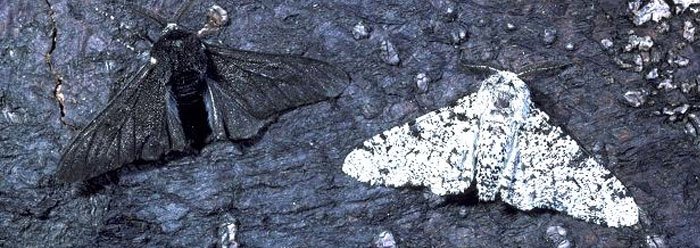
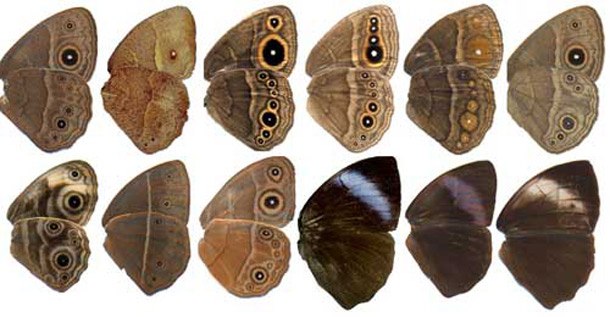
Charles Darwin observed that finches of different species on the Galápagos Islands have many similar physical characteristics, this supports the hypothesis that these finches
are twins
acquired traits through use and disuse.
all eat the same type of food.
descended from a common ancestor.
Adaptations can be:
camouflage
ability to survive cold weather
hunting skills
all of the above
Change in a population over time that descend from a common ancestor.
Natural Selection
Selective Breeding
Homeostasis
Evolution
Natural selection results in change in a population's _____________ traits over time.
inherited
acquired
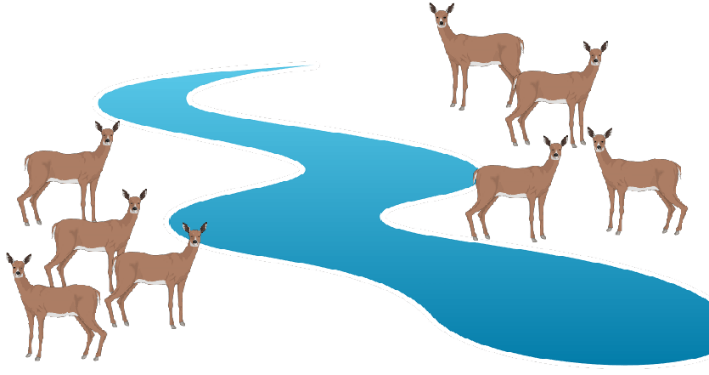
Two populations of the same species are separated by land barriers like rivers or mountains.
geographical isolation
temporal isolation
adaptive ratiation
behavioral isolaton

Two populations of the same species do not have the same mating rituals or signals.
geographical isolation
temporal isolation
adaptive ratiation
behavioral isolaton
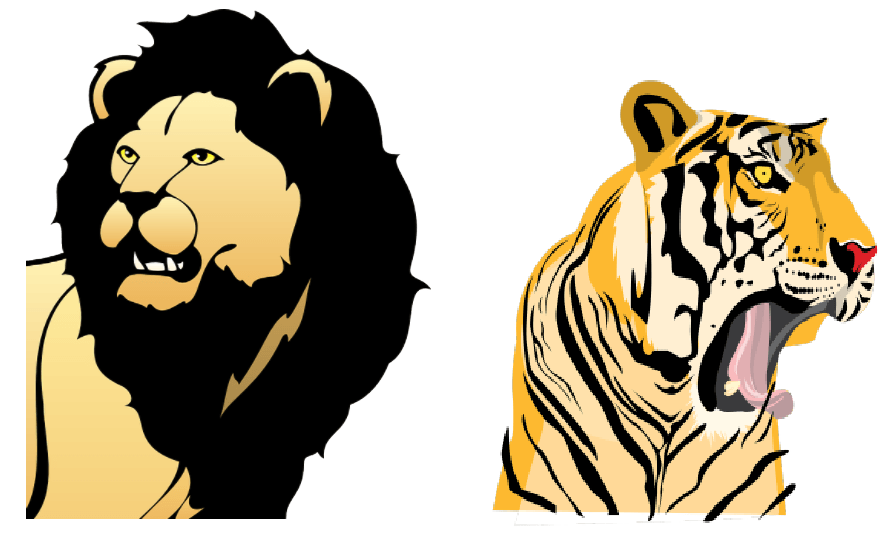
Organisms of the same species can no longer interbreed therefore creating two species.
Gene Pool
Genetic Drift
Gene Frequency
Speciation
What two parts of the classification system are used for the naming of organisms?
Domain and Kingdom
Genus and Species
Class and Family
Kingdom and Phylum
A population of finches that have 3 different beaks live on an island. Each beak type is adapted to one of 3 specific food sources. Two of the three food sources are eliminated during a hurricane. What will happen to the finch population?
The food source will adapt to the remaining finches
All 3 finches adapt to the remaining food source
All 3 finches will die
The finch that is adapted to the remaining food source will survive
True or False: An individual organism's genotype can be changed within its lifetime in response to its environment.
True
False
How do mutations contribute to evolution?
They bring on the death of the organism in which they develop
They bring on benefits for the individual, not for the population
They bring on genetic variation needed for a population to evolve
They bring on Hardy-Weinberg equilibrium within a population
The variety of genes and alleles that exist in organisms
independent assortment
chromosomal abnormalities
genetic diversity
mutations

Which is a group of organisms with similar characteristics and are able to interbreed to produce offspring
Variation
Species
Fitness
Gene
The probability of an organism surviving and reproducing
Variation
Species
Fitness
Gene
Differences in DNA between individuals or populations
Environmental Variation
Genetic Variation
Adaptive Feature
Genetic Engineering
Differences in DNA as a result of environmental factors
Environmental Variation
Genetic Variation
Adaptive Feature
Genetic Engineering

