
Font size
 Worksheets
History of Life Study Guide
Total questions: 30
Worksheet time: 8hrs 30mins
There are four species of bird living on Earth in the same forest. They all find their food in the trees, but the trees begin to die as global temperatures rise. Each of the four bird species adapts to this changing environment differently. Which species would most likely become extinct?
the species that moves to a new environment
the species whose behaviors and structures stay the same
the species that develops a smaller stomach
the species that learns to find food on the forest floor
Which statement supports the answer to:
There are four species of bird living on Earth in the same forest. They all find their food in the trees, but the trees begin to die as global temperatures rise. Each of the four bird species adapts to this changing environment differently. Which species would most likely become extinct?
The process of migration does not guarantee survival.
The forest floor cannot support food following the change.
Needing less food will only help the bird for a short time.
Failure to adapt means the birds will not survive very long.
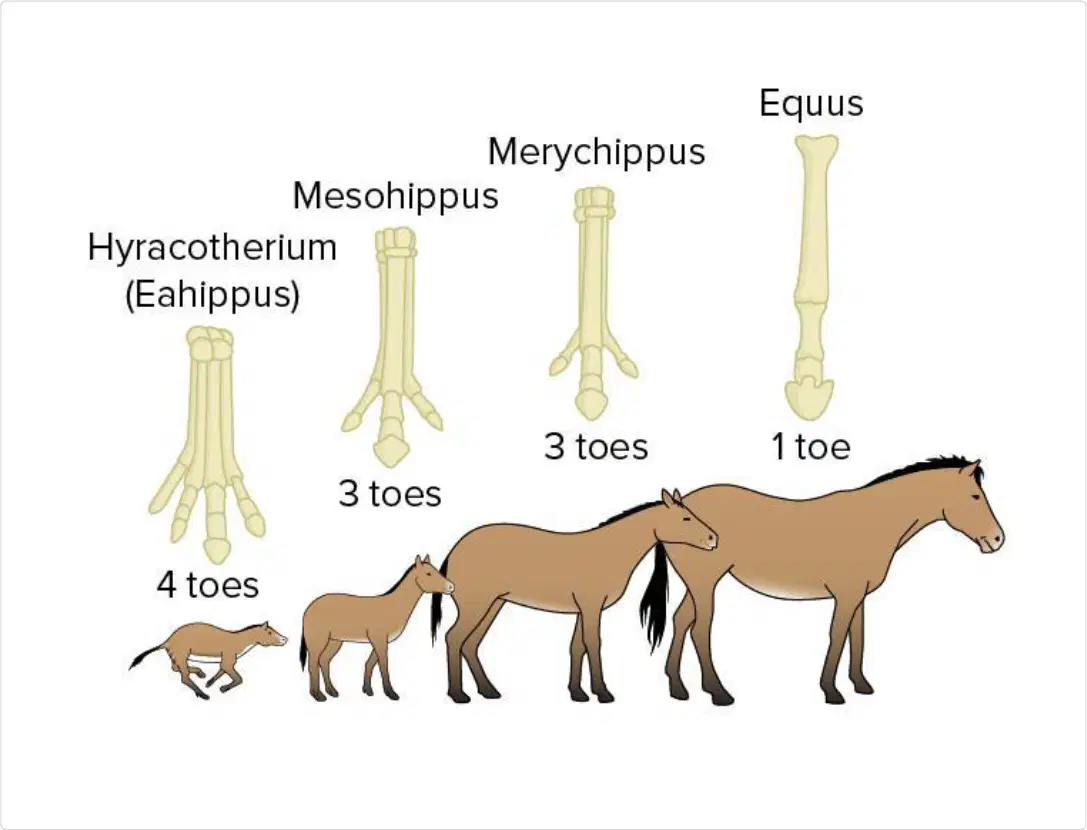
Scientists believe that the modern horse evolved from a very small multi-toed animal called Eohippus, which existed over fifty million years ago. Consider the picture below and choose the statement that explains the strongest evidence linking the Eohippus fossils to the modern horse.
Eohippus and the modern horse have the same coat color.
Eohippus and the modern horse have similar structures in their limb bones.
Eohippus and the modern horse lived in the same environment.
Eohippus and the modern horse consumed the same diet.
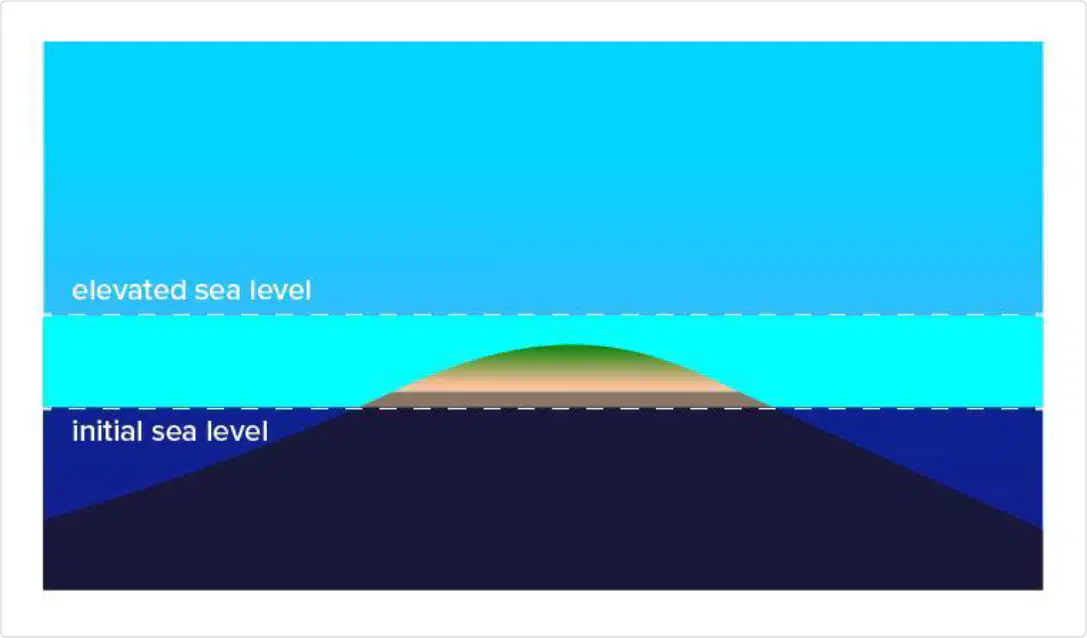
A land-dwelling species of animal is living on an island. As sea levels rise, the land environment will become permanently covered with ocean water. What adaptation could the land-dwelling species develop so it could live in an ocean environment and avoid becoming extinct?
gills
longer legs
feathers
thick fur
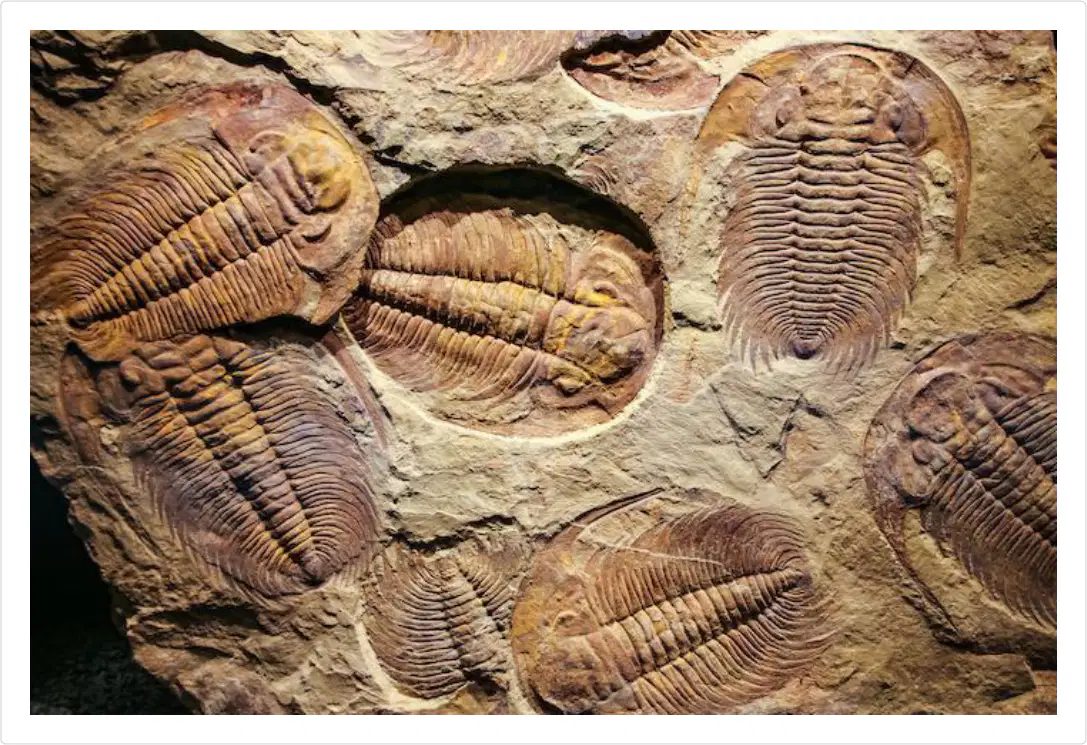
Trilobites went extinct about 250 million years ago. Trilobites are believed to be the ancestors of arthropods, a group of animals that includes lobsters. What did scientists observe to recognize a connection between trilobites and lobsters?
Their bodies contain the same chemical compounds.
The fossil was found in rock that was once under ocean water.
Their bodies show many homologous structures.
The fossil was found where many fossils are found today.
Which model can fossil evidence be used to build and why?
A. a Punnett square, because it explains how traits are passed from parent to offspring through generations
B. an evolutionary tree, because it explains how traits are passed from parent to offspring through generations
C. a Punnett square, because it makes connections between organisms found in the fossil record and those living today
D. an evolutionary tree, because it makes connections between organisms found in the fossil record and those living today
When organisms are better adapted to their environment they will survive and reproduce more successfully than organisms less adapted. This process is called what?
Selective breeding
Natural Selection
Cloning
Evolution of all species
Which scientist visited the Galapagos Islands and came up with the theory of natural selection?
Theodor Schwann
Gregor Mendel
Charles Darwin
Rudolf Virchow

Sometimes bones in the front limbs of animals are very similar in structure. What do we call similar bone structures that indicate a link to a common ancestor?
Adaptations
Gradualism
Homologous Structures
Extinction
A physical or behavioral trait that helps an organism survive and reproduce in its environment is called a what?
An adaptation
A response to a stimulus
A mutation
Evolution
What do we call a change in a species over time?
Adaptation
Evolution
Extinction
Environmental influences

Evolution is best defined as:
the process which organisms die.
the process which organisms change over time.
the process which organisms that are extinct become revived.
the process which non-living things fossilize.

The solidified remain or imprint of a once living thing are called:
Fossils
Homologous Structures
Vestigial Structures
DNA
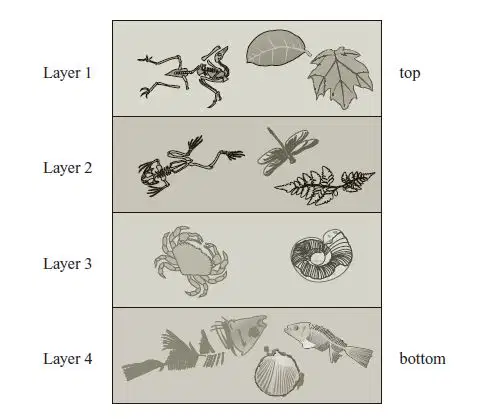
According to the picture, how has the environment led to changes over time?
Animals were able to walk in the past, but now they swim.
A species has lived there and never changed.
Animals used to swim in the past, but now they walk.
The environment was changed when animals decided to walk instead of swim.
Which trait MOST likely helps an animal survive in a very cold environment?
Long ears
Large eyes
Thick fur
Sharp Claws


SELECT ALL THAT APPLY: Which of the following are examples of fossils?
Bones encased in rock materials
Cemented footprints from ancient organisms
Insects encased in amber
Animal droppings that are several days old
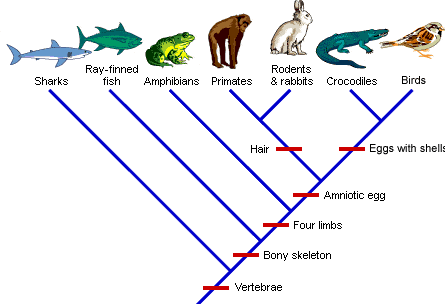
Structures that are similar to function but differing structure.
Homologous
Analogous
Vestigial
DNA
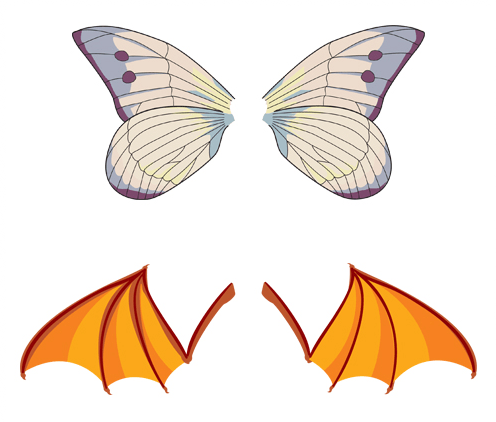
What is this an example of?
Homologous structure
Analogous structure
Vestigial organs
Functional adaption
What is adaptive radiation?
Adaptive radiation is when many different species arise from a single population, each evolving to fit into a unique habitat.
What is mass extinction?
Which of the following is NOT a way that species can evolve?
When part of a population separates and becomes isolated from the rest of the population.
When there are changes in the environment the species inhabits.
When an invasive species moves into an ecosystem and competes for limited food supply.
A sudden increase in new species
What is speciation?
The theory of evolution by natural selection means that what is changing over time?
The inherited traits of a population.
Hair color and eye color
The acquired traits of a population.
Attractive features.

