

Wayground logo

Free Printable Worksheets

Font size

S
M
L
XL
Worksheets

Atomic Theory

Total questions: 10

Worksheet time: 4mins
Name
Class
Date
1.
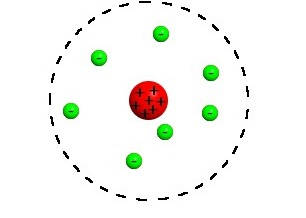
This model this model was the first to show a nucleus, consisting of protons and neutron.  Electrons surround the nucleus but are not shown in distinct energy levels. 
a)

The "Nuclear Model" by Rutherford

b)

The "Plum Pudding Model" of the atom by Thomson

c)

The "Quantum Mechanical Modell" of the atom by Heisenberg

d)
Democritus's model of the atom
2.
This model was developed after J.J. Thompson discovered electrons, a particle smaller than an atom. Is shows electrons floating freely in a positive space.
a)

Democritus's model of the atom

b)
The "Rutherford Model" of the atom
c)

The "Plum Pudding Model" of the atom

d)
The "Quantum Mechanical Model" of the atom
3.
Ernest Rutherford discovered that atoms were mostly _________________. 
a)
negatively charged
b)
positively charged
c)
electrons
d)
empty space. 
4.
Discovered the nucleus
a)
Democritus
b)
Robert Millikan
c)
James Chadwick
d)
Ernest Rutherford
5.

Who named the positive center of the atom the "nucleus?"

a)

Democritus

b)

Dalton

c)

Thomson

d)

Rutherford

6.
What can you conclude from the fact that scientists continue to update the atomic model?
a)
New information about atoms continues to be discovered
b)
Old information about atoms is completely useless
c)
Scientists did not have any information about atoms until a few years ago
d)
Scientists still have no idea what atoms look like
7.

What is the Greek word for atoms which means “indivisible”?

a)

Atomos

b)

Atomi

c)

Atomic

d)

Atoma

8.

Who was considered as one of the founders of the ancient atomist theory?

a)

Aristotle

b)

Parmenides

c)

Empedocles

d)

Democritus

9.

All of the following are true about Democritus' atomic theory EXCEPT ______.

a)

Everything is made up of atomos and the void.

b)

Atoms vary in size and shape.

c)

Atoms are composed of subatomic particles.

d)

Atoms are infinite in number.

10.

The following statements are based on Dalton's Atomic Theory, except one.

a)

Atoms of different elements have different masses and properties.

b)

Elements are composed of extremely small particles known as atoms.

c)

All atoms of a given element are different.

d)

Chemical reactions are rearrangement of atoms.
