Worksheets
Ionic bond 2
Total questions: 25
Worksheet time: 2hrs 32mins

The positive ions tend to _____________ electrons.
lose
gain
The negative ions tend to _____________ electrons.
lose
gain
When an atom loses an electron, it becomes a
positive ion
negative ion
neutral ion
neutral atom
Why do all bonds form?
so the number of protons equals the number of electrons
so an atom can become unstable
to fill the outermost energy level
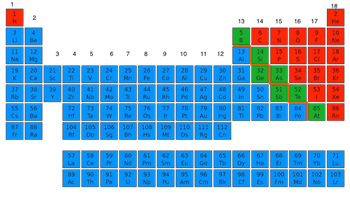

What type of elements form cations?
metals
nonmetals
metalloids?
Anions
Gain electrons, has an overall positive charge
Lose electrons, has an overall positive charge
Lose electrons, has an overall negative charge
Gain electrons, has an overall negative charge
Cations
Gain electrons, has an overall positive charge
Lose electrons, has an overall positive charge
Lose electrons, has an overall negative charge
Gain electrons, has an overall negative charge
How does calcium become an calcium ion?
it loses 2 electrons
it gains 2 electrons
How does magnesium become an magnesium ion?
it loses 2 electrons
it gains 2 electrons
How does oxygen become an oxide ion?
it loses 2 electrons
it gains 2 electrons


What is responsible for bringing cations and anions together?
the size of the ions
the opposite charges are attracted to one another
the similar charges are attracted to one another
depends on what period they're in

When assigning ionic charge it is always written as a...
superscript
subscript
coefficient
script
When ionic compounds form what is the overall charge?
neutral
positive
negative
An ionic bond is the attraction between: (Select ALL that apply)
oppositely charged ions
similarly charged ions
metals and nonmetals
neutral atoms
cations and anions
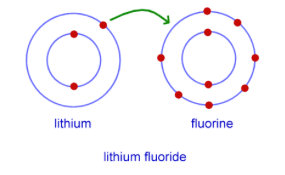
This image shows the bonding between Lithium and Fluorine. What does the red arrow show?
electrons being shared
electrons being transferred to Fluorine
electrons being transferred to Lithium
electrons being destroyed

This is a correct dot diagram for neon (Ne)
true
false