wayground logo

Free Printable Worksheets

Font size

S
M
L
XL
Worksheets

Settling the West Exam

Total questions: 31

Worksheet time: 16mins

Name
Class
Date
1.

What did the Dawes General Allotment Act of 1887 provide?

a)

It recognized Native American tribes as independent nations.

b)


It granted each Native American family a 160-acres farmstead.

c)


It presented land to individual Native American tribes.

d)

It improved conditions on reservations

2.

Which of the following factors contributed to the demise of the open-range system?

a)
Increased cattle prices
b)


The invention of barbed wire

c)
Expansion of railroads
d)
Government subsidies for ranchers
3.

How did Congress support construction of the transcontinental railroad?

a)

By actively recruiting immigrant labor

b)

By providing land grants

c)

By passing the Homestead Act

d)

By promoting an open-range system
4.
What was the effect of the Homestead Act?
4 lines
5.
Do you think the Dawes Act was intended to help or harm Native Americans?
4 lines
6.
How did the Homestead Act of 1862 and the Transcontinental Railroad (1869) contribute to closing the frontier?
4 lines
7.
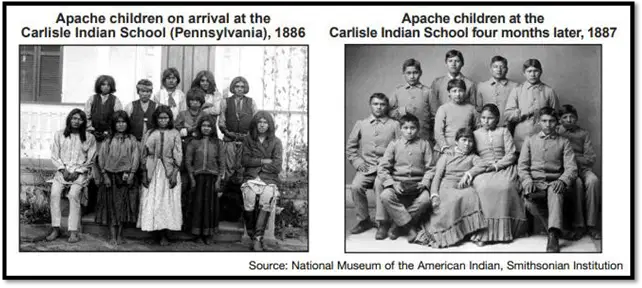
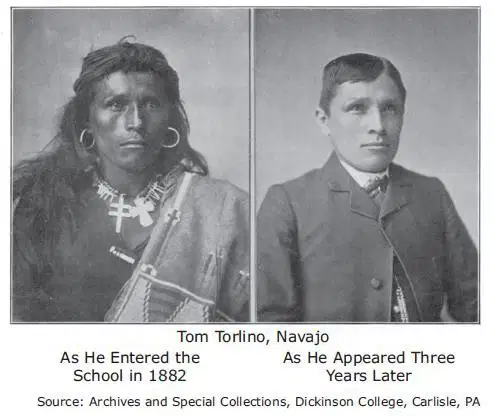
This pair of photographs suggests that the MAJOR purpose of the Carlisle Indian School was to -
a)
A. train future leaders in tribal traditions
b)
B. prepare children for life on the reservation
c)
C. teach skills needed for working in factories
d)
D. promote cultural assimilation
8.
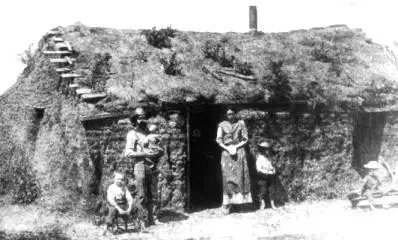
What does the photograph above BEST illustrate about the impact of the physical geography of the Great Plains on the lives of Settlers?
a)
A. Settlers came to the Great Plain with few possessions.
b)
B. Frequent dust storms meant that the settlers’ homes were dark and dingy.
c)
C. The lack of trees meant that lumber houses were too expensive for most settlers.
d)
D. The distance between homesteads meant that settlers had to deal with heart-rending loneliness.
9.
by breaking down the picture, what term is the picture depicting?
a)
manifest destiny
b)
homestead act
c)
dawes act
d)
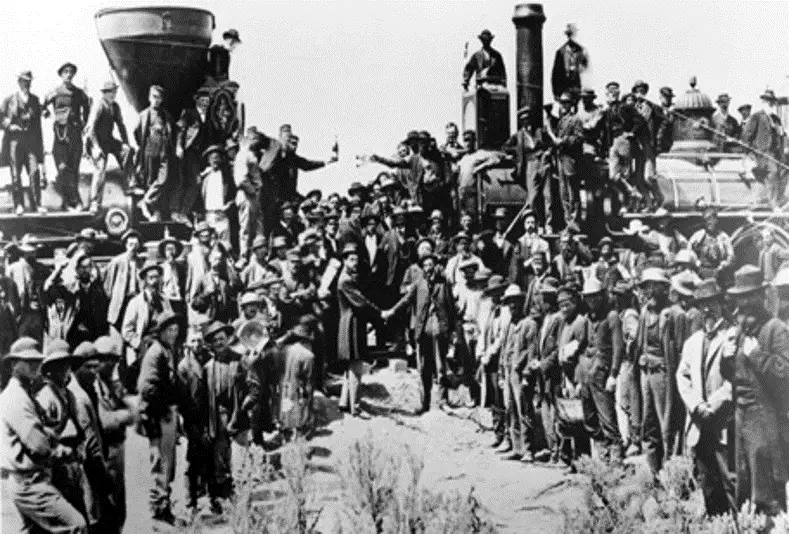
transcontinental railroad
10.
Settlers were able to claim 160 acres in the Great Plains as a result of the
a)
Homestead Act
b)
Dawes Act
c)
Wounded Knee Treaty
d)
Civil Rights Act of 1866
11.
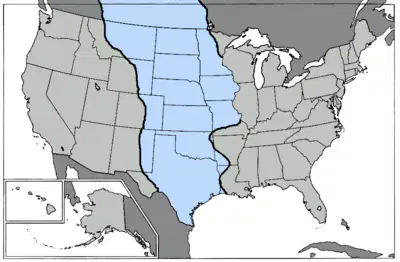
what vast land of area is located on this map?
a)
The east
b)
the central west
c)
western plateau
d)
Great Plains
12.
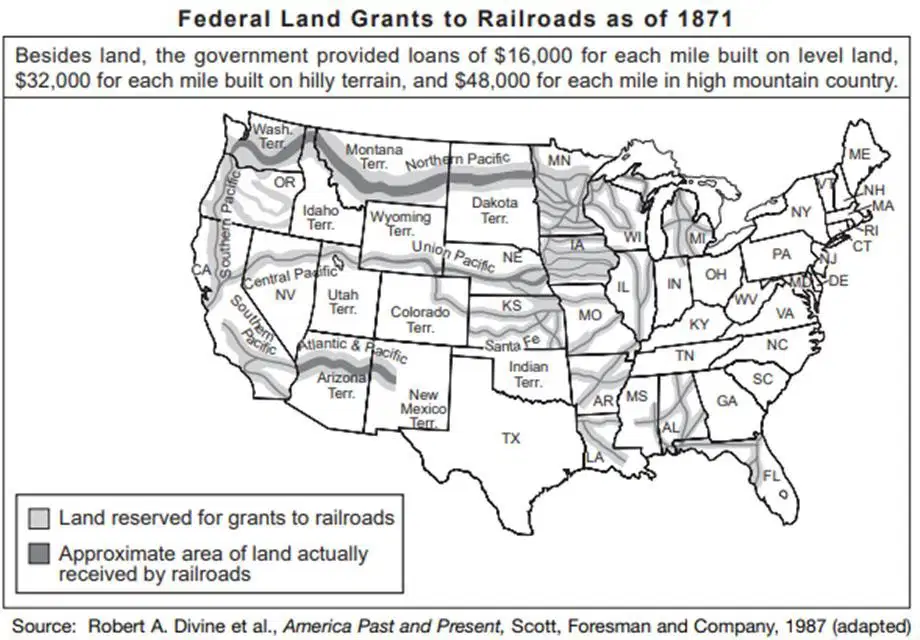
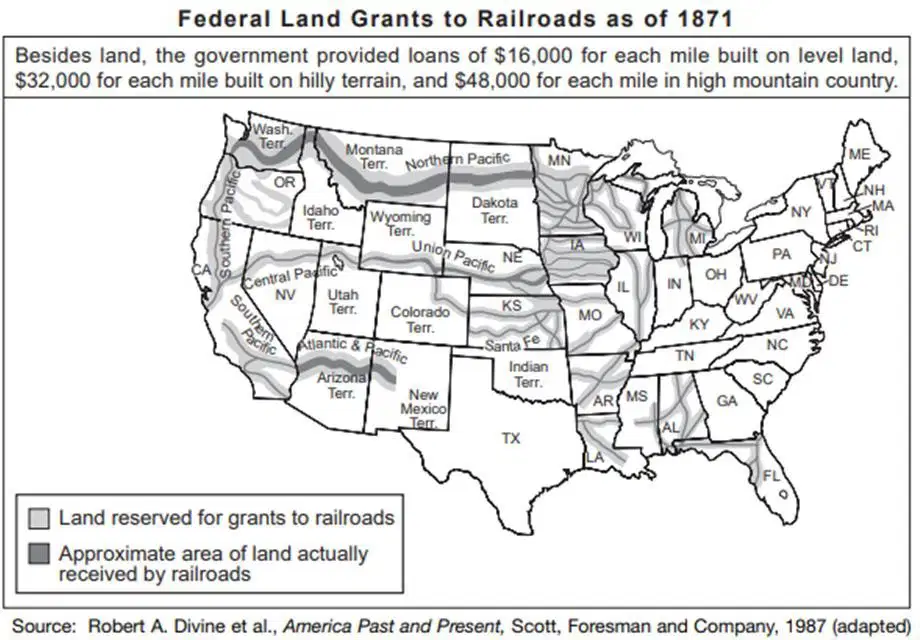
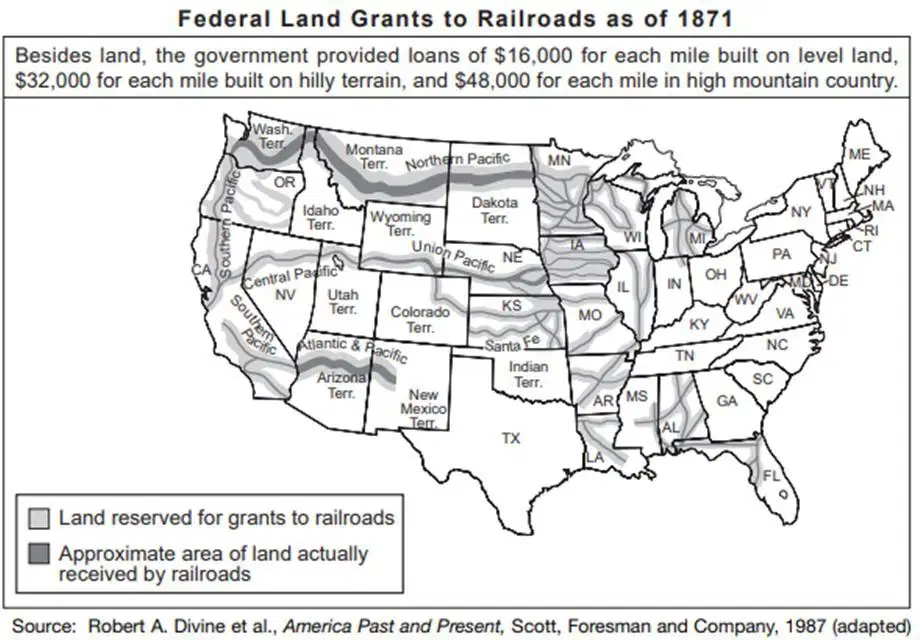
Which conclusion is MOST clearly supported by the information in the map?
a)
A. The belief in laissez-faire prevented the federal government from helping railroads.
b)
B. The federal government promoted transcontinental railroad construction.
c)
C. Western railroads generated little profit for their owners.
d)
D. Railroad companies had to buy the land they needed for construction.
13.
How did the discovery of mineral deposits of gold, silver, lead, and copper affect demographic patterns in the West?
a)
A. Western populations increased as more people migrated westward hoping to strike it rich.
b)
B. Population in the West dropped sharply as people migrated to new mining towns in the North.
c)
C. Urban populations declined greatly as more and more people moved to rural areas rich in resources.
d)
D. The overall western population became younger due to an influx of families with children.
14.
Which statement would MOST likely be found in a history of the economic impact of the Transcontinental Railroad on the United States?
a)
A. Statement 1
b)
B. Statement 2
c)
C. Statement 3
d)
D. Statement 4
15.
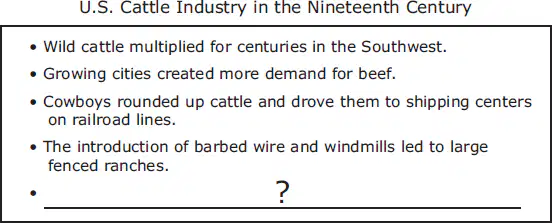
Which statement BEST completes this list?
a)
A. Congress passed legislation imposing tariffs on imported beef.
b)
B. Most of the cowboys on cattle drives were European immigrants.
c)
C. The cattle industry was nationalized under the Department of Agriculture.
d)
D. The need to process large amounts of cattle made meatpacking a major industry.
16.
Which technological innovation allowed homesteaders to turn the soil on the Great Plains?
a)
Barbed wire
b)
Steel plows
c)
Drilling equipment
d)
Harvesters
17.
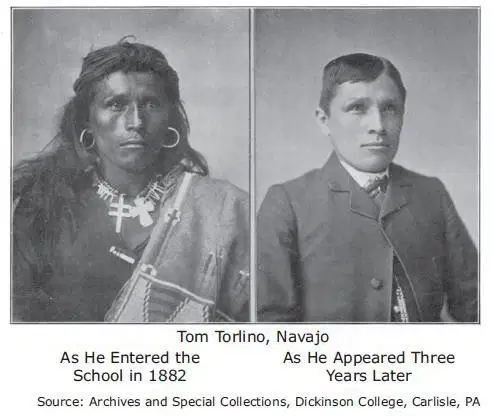
Which word BEST explains the changes shown in these photographs?
a)
A. Immigration
b)
B. Assimilation
c)
C. Nullification
d)
D. Nativism
18.
Which of the following was the main reason for the rapid settlement of the Great Plains during the late 1800s?
a)
Congress passed a law requiring all public lands to be sold at auction.
b)
Congress passed a law allowing people to claim public land and convert it to private property through homesteading.
c)
Speculators bought large parcels of land and then built factory towns to attract new immigrants.
d)
Native Americans sold most of their tribal lands directly to railroad companies.
19.
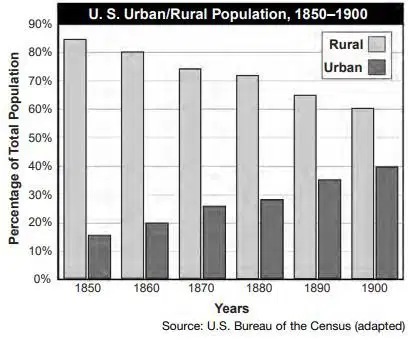
What was the PRIMARY cause of the trends shown on the graph?
a)
A. closing of the western frontier
b)
B. industrialization in the North and the Midwest
c)
C. passage of the Homestead Act
d)
D. completion of the transcontinental railroad
20.
Intended to help Indians, it had the opposite effect by giving tribal lands to individual Indians who often sold them and was intended to Assimilate the Indians in to American society by turning them into farmers.
a)
Homestead Act
b)
Chinese Exclusion Act
c)
Dawes Act
d)
Sherman Anti - Trust Act
21.
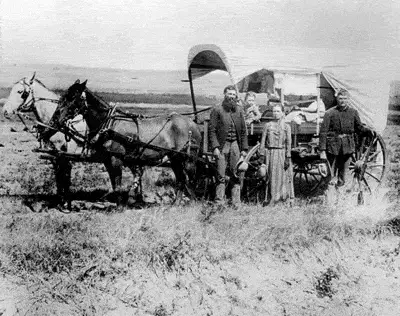
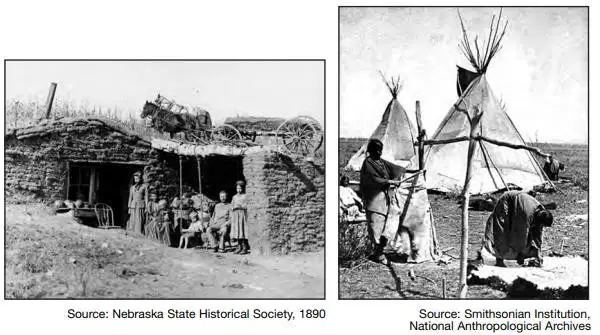
These photographs of 19th-century life on the Great Plains indicate that -
a)
A. Native American Indians and white settlers used the same building materials for protection
b)
B. Native American Indians and white settlers adapted differently to the same environment
c)
C. white settlers learned farming practices from Native American Indians
d)
D. both Native American Indians and white settlers depended on the buffalo for survival
22.
The discovery of gold in Alaska started a gold rush called…
a)
Californian Gold Rush
b)
Klondike Gold Rush
c)
49ers discover gold
d)
Texas Gold Rush
23.
This amendment was adopted in 1868 primarily to -
a)
A. protect the rights of formerly enslaved persons
b)
B. make it easier for immigrants to become citizens
c)
C. extend suffrage to settlers on the Great Plains
d)
D. require the federal government to pay the costs of Reconstruction
24.
Which of the following factors contributed to the demise of the open-range system and the need for cowboys?
a)
The use of sod for houses
b)
The development of railroads
c)
The invention of barbed wire
d)
The disappearance of big mining companies
25.
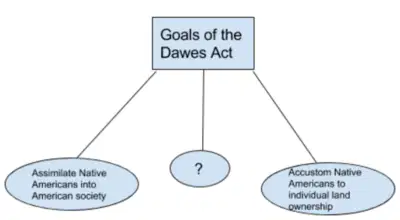
Which phrase best completes the diagram?
a)
Lure Native Americans to migrate to the frontier
b)
Give Native Americans jobs in the federal bureaucracy
c)
Entice Native Americans to move to urban areas
d)
Push Native Americans to adopt an agricultural lifestyle
26.
What was a result of the railroad construction shown on the map?
a)
A. A national market developed in the United States.
b)
B. Silver and gold mining opportunities decreased.
c)
C. Railroad companies gave free land to settlers.
d)
D. Steel factories relocated from the Great Lakes region to the Rocky Mountain states.
27.

The Homestead Act gave land to homesteaders if they _________________ for five years

a)
left the land untouched
b)
sold the land to others
c)
built a house on the land
d)


lived on it and improved the land

28.

Which technological innovation allowed homesteaders to turn the soil on the Great Plains?

a)
Steel plow
b)
Handheld shovel
c)
Gas-powered tractor
d)
Wooden hoe
29.
a)

Created a national market

b)

connected US to Mexico

c)

Less immigrant workers

d)

decrease in national commerce

30.

Use of barbed wire most associated with which outcome?

a)
Improved agricultural productivity and reduced labor costs.
b)
Enhanced wildlife protection and conservation efforts.
c)
Increased trade and economic cooperation between landowners.
d)

.End of open range and frontier

31.

Which type of music celebrates cowboy life and has its roots in British folk ballads?

a)
classical music
b)
jazz music
c)
bluegrass music
d)

Western music