
 Worksheets
Foundation Types Quiz
Total questions: 50
Worksheet time: 30mins
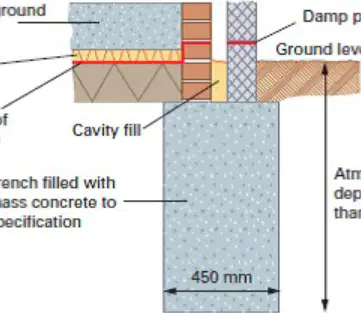
What type of foundation is this?
Raft
Wide Strip
Pile
Narrow Strip
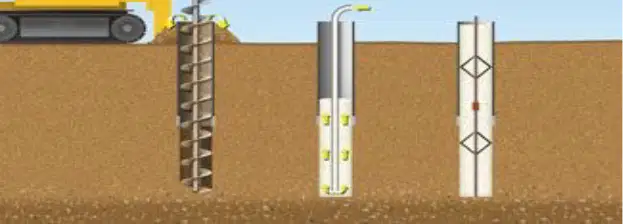
What processes are these images showing?
Pad
Narrow Strip
Stepped Foundation
Pile
Which one of these is not classed as a service to a building?
Water
Electric
Drainage
Wi-Fi
What is the name given to the gap between brickwork and blockwork?
Middle
Space
Cavity
Gap
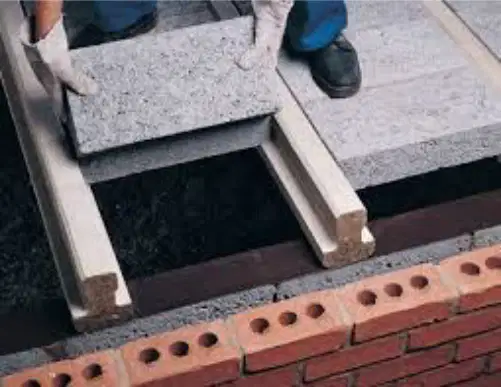
Which type of floor construction is shown below.
Solid concrete floor.
Suspended floor
Concrete Screed
Block and beam floor
Who would set the depth of concrete for the foundations and floor construction?
Quantity Surveyor
Structural Engineer
Architect
Site Surveyor
What name is given to the floor construction that is not fixed?
Suspended
Temporary
Solid
Floating
What is the name given to the insulation types like Celotex or Kingspan?
Blue Jeans
Mineral Wool
Thermal Insulation
PIR
Which type of insulation is used in roof spaces?
Thermal
Mineral Wool
Foam
Polystyrene
Which stamp says that timber is suitable for structural use?
C18
C24
C20
C26
What type of building would use a traditional strip foundation?
High rise flats
Industrial buildings
3-bedroom home
Sport Stadiums
Which of the following would you use a raft foundation?
Subsoil is unstable
The access to the site allows it
Subsoil is rock
Subsoil is stable
What is the minimum distance the DPC should be above ground level?
200mm
100mm
150mm
50mm
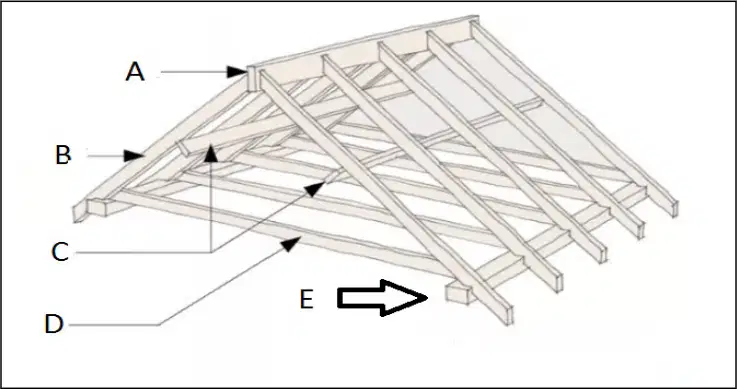
Name the components in the picture.
What happens to most of the waste from a building project?
it is buried on site
It goes to a landfill
It is burned
It is recycled
Which of the following is the MOST suitable foundation on a very weak soil such as peat?
Deep strip
Pile
Strip
Trench
Ensuring a building is energy efficient.
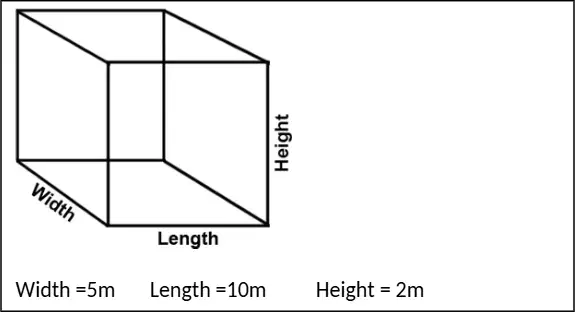
The volume in cubic meters would equal
50m3
200 m3
120 m3
100 m3
Which of the following is NOT a suitable construction material for use in permanent domestic foundations?
Aggregate
Timber
Steel
Cement
Ensuring a building is energy efficient.
Will delay the construction process
Will reduce the buildings impact on the environment
Will financially cost more long term
Is prohibitive
The main difference between mortar and concrete is there.
Sand types
Water quantity
Additives
Aggregate type
The purpose of a wall plate is to.
Provide insulation
Provide a fixing for roof trusses and joists.
Provide air vents
Provide a barrier
Which of the following is classed as a sustainable material?
(a)
Which of the following is not a method of floor construction?
Suspended timber
Solid timber
Solid concrete
Suspended concrete
What type of buildings use strip foundations?
Power stations
Low rise
Medium rise
High rise
Which is the following being a reason for using a raft foundation?
Subsoil is wet
Subsoil is rock
Subsoil is unstable
Subsoil is stable
A roof is said to be flat if it has a slope of less than how many degrees?
10
15
20
5
What is the shape of the upper part of a gable end?
Rectangle
Triangle
What happens to the majority of building materials after demolition?
Recycled
Burned
Buried
Dissolved
A wall tie is used.
To screed with
Strengthen and stabilise cavity walls
Waterproof garden walls
Hold down a joist
Lead flashing is used.
Provide anchorage for a chimney stack
Form a waterproof seal on joints
Used as a base to attach guttering
Hold cavity walls together
A new garage has wet/damp patches on the floor during the summer, what could be the cause of this?
DPM has failed
Wrong type of foundation used
Car has wet tires
DPC has failed
What is aggregate?
Sand, dust, debris
Sand, soil, coffee
Why would bricklayers protect newly laid bricks with hessian during the winter months?
Stop birds nesting
Protect against moon burn
Protect against frost
To prevent from being stolen
Which is a non-renewable source of energy?
Heated pump undergrounds
Gas turbine
Wind turbine
Solar panel
What type of water should be used when mixing concrete and mortar?
Clean uncontaminated water
Surface water
Contaminated water
Foul water
What regulation would deal with the use of cement?
PUWER
COSHH
LOLER
RIDDOR
A cavity walled house is showing random damp patches on the internal wall. What could be the cause of this?
Too much insulation in the cavity
Holes drilled in wall for shelves
Wrong type of paint
Which of these is not part of the structural system of the building?
Roof framing systems
Doors and windows
Columns and beams
Foundations
What does the soffit board protect?
Eaves
DPC
Fascia board
Guttering
Which one is not a roof?
Valley
Truss
Open void
Flat
What is the primary purpose of a damp-proof course (DPC) in building construction?
To prevent moisture from rising through walls
To enhance aesthetic appearance
To provide thermal insulation
To support structural loads
Which of the following is a common method for reinforcing concrete?
Applying paint
Mixing with water
Using steel bars
Adding sand
What is the main function of a structural engineer in a construction project?
Overseeing the construction schedule
Designing the building's aesthetics
Ensuring the structural integrity of the building
Managing the construction budget
What is the primary purpose of a damp-proof course (DPC) in construction?
To improve aesthetic appearance
To enhance structural strength
To prevent moisture from rising through walls
To provide thermal insulation
Which of the following materials is commonly used for roofing tiles?
Clay
Plastic
Glass
Wood
What is the main function of a lintel in building construction?
To support the weight above an opening
To insulate the building
To provide ventilation
To act as a decorative element
What is the primary function of insulation in a building?
To enhance structural strength
To prevent heat loss
To provide aesthetic appeal
To support the roof
Which of the following is a common material used for wall cladding?
Wood
Steel
Glass
Plastic
What is the main purpose of a foundation in building construction?
To provide a level surface for flooring
To support the weight of the building
To enhance the building's appearance
To insulate the building

