
 Worksheets
Math 7_Q1 Week 2
Total questions: 10
Worksheet time: 28mins

Palawan's Nipa Hut Challenge
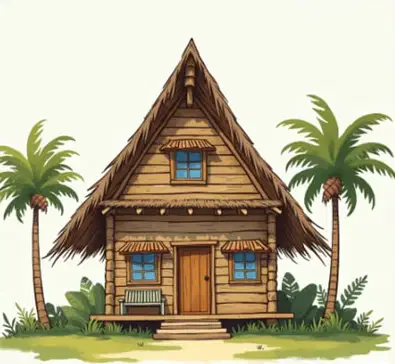
A group of Palawan students, passionate about their local heritage, are planning to build a nipa hut as a community project. They've sketched out a blueprint, but they're unsure about the specific shapes of the different parts of the hut. They need your help to classify these shapes accurately
The students have provided a sketch of the nipa hut, highlighting the following parts:
Roof: A triangular shape that covers the top of the hut.
Walls: Rectangular shapes that form the sides of the hut.
Door: A rectangular shape that provides entry to the hut.
Windows: Square shapes that allow light and air to enter the hut.
Which of the following shapes in the nipa hut have parallel sides?
Roof
Walls
Door
Both B and C
Palawan's Nipa Hut Challenge
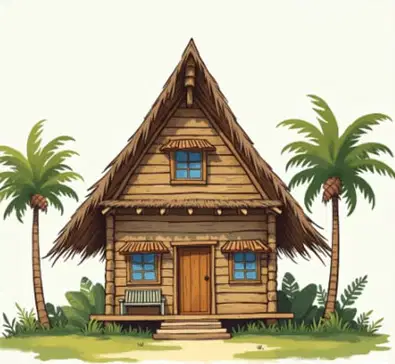
A group of Palawan students, passionate about their local heritage, are planning to build a nipa hut as a community project. They've sketched out a blueprint, but they're unsure about the specific shapes of the different parts of the hut. They need your help to classify these shapes accurately
The students have provided a sketch of the nipa hut, highlighting the following parts:
Roof: A triangular shape that covers the top of the hut.
Walls: Rectangular shapes that form the sides of the hut.
Door: A rectangular shape that provides entry to the hut.
Windows: Square shapes that allow light and air to enter the hut.
If the roof of the nipa hut is made into a regular polygon, what shape would it be?
Equilateral triangle
Isosceles triangle
Scalene triangle
Right-angled triangle
Palawan's Nipa Hut Challenge
A group of Palawan students, passionate about their local heritage, are planning to build a nipa hut as a community project. They've sketched out a blueprint, but they're unsure about the specific shapes of the different parts of the hut. They need your help to classify these shapes accurately
The students have provided a sketch of the nipa hut, highlighting the following parts:
Roof: A triangular shape that covers the top of the hut.
Walls: Rectangular shapes that form the sides of the hut.
Door: A rectangular shape that provides entry to the hut.
Windows: Square shapes that allow light and air to enter the hut.
The students want to add a decorative design to the front wall of the hut. They are considering using a combination of regular polygons. Which of the following combinations would be appropriate?
A square and a rectangle
A circle and a triangle
An equilateral triangle and a regular hexagon
A rectangle and a pentagon
The Honeycomb’s Geometry
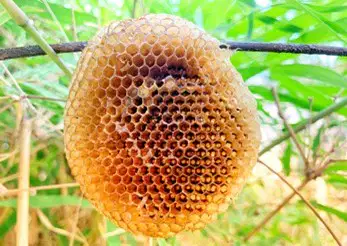
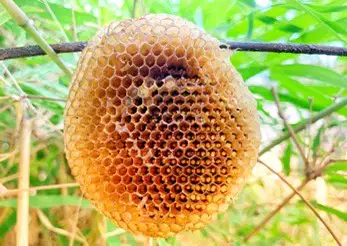
A beehive is a marvel of nature, with its hexagonal cells maximizing space and efficiency. Hexagons are the most efficient way to pack shapes together without any gaps, making them ideal for storing honey and raising young bees. This geometric arrangement allows bees to maximize the storage capacity of their hive while minimizing the amount of wax used to construct the cells. Let's delve deeper into the mathematics behind these fascinating structures.
What is the sum of an interior angle and its adjacent exterior angle at any vertex of a polygon?
90 degrees
180 degrees
270 degrees
360 degrees
The Honeycomb’s Geometry
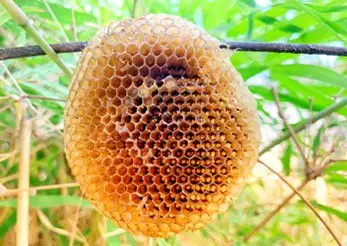
A beehive is a marvel of nature, with its hexagonal cells maximizing space and efficiency. Hexagons are the most efficient way to pack shapes together without any gaps, making them ideal for storing honey and raising young bees. This geometric arrangement allows bees to maximize the storage capacity of their hive while minimizing the amount of wax used to construct the cells. Let's delve deeper into the mathematics behind these fascinating structures.
If a bee extends a line along one side of a hexagonal cell, forming an exterior angle, what is the measure of this exterior angle?
30 degrees
60 degrees
90 degrees
120 degrees
The Honeycomb’s Geometry
A beehive is a marvel of nature, with its hexagonal cells maximizing space and efficiency. Hexagons are the most efficient way to pack shapes together without any gaps, making them ideal for storing honey and raising young bees. This geometric arrangement allows bees to maximize the storage capacity of their hive while minimizing the amount of wax used to construct the cells. Let's delve deeper into the mathematics behind these fascinating structures.
If a new type of bee were to build a honeycomb with pentagonal cells instead of hexagonal cells, how would the sum of the interior angles of each cell change?
It would increase by 180 degrees.
It would decrease by 180 degrees.
It would remain the same.
It would increase by 360 degrees.
Anna's Geometric Garden Adventure
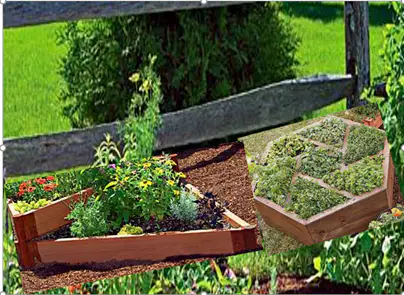
In a community garden, Anna is tasked with designing flower beds shaped like polygons. To make her designs symmetrical and beautiful, she carefully measures the angles but realizes that some are missing. With your help, she hopes to calculate these missing angles and confirm the number of sides of the polygons in her designs.
Anna started working on the triangle-shaped flower bed and remembered learning about the sum of interior angles in school. However, she's not entirely sure of the exact formula. Can you help her figure it out?
180∘
360∘
540
720∘
Anna's Geometric Garden Adventure
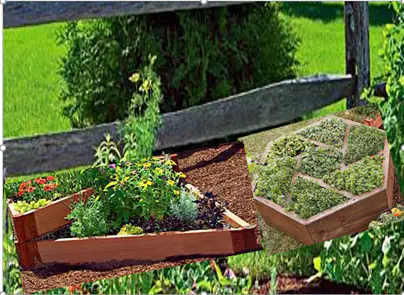
In a community garden, Anna is tasked with designing flower beds shaped like polygons. To make her designs symmetrical and beautiful, she carefully measures the angles but realizes that some are missing. With your help, she hopes to calculate these missing angles and confirm the number of sides of the polygons in her designs.
Moving to the hexagon-shaped flower bed, Anna wanted to ensure that her design was geometrically accurate. She recalled the formula for calculating the sum of interior angles but needed help applying it to a six-sided shape. Can you help Anna?
360°
540°
720°
1080°
Anna's Geometric Garden Adventure
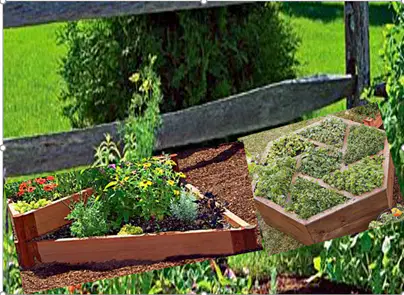
In a community garden, Anna is tasked with designing flower beds shaped like polygons. To make her designs symmetrical and beautiful, she carefully measures the angles but realizes that some are missing. With your help, she hopes to calculate these missing angles and confirm the number of sides of the polygons in her designs.
While finalizing the measurements of the hexagon-shaped flower bed, Anna found that the five angles of the hexagon flower bed are 120°,90°,110°,130°, and 100°, she labeled the sixth angle as z. Using the given data, can you calculate the missing angle?
90°
120°
170°
150°
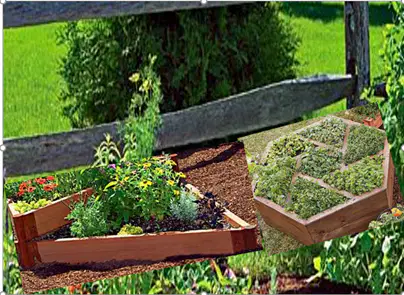
Anna's Geometric Garden Adventure
In a community garden, Anna is tasked with designing flower beds shaped like polygons. To make her designs symmetrical and beautiful, she carefully measures the angles but realizes that some are missing. With your help, she hopes to calculate these missing angles and confirm the number of sides of the polygons in her designs.
While Anna was working, her friend Marco joined and pointed out that they might want to design an additional polygon-shaped flower bed. Marco mentioned that the new bed should have a total interior angle sum of 1080°, but he wasn't sure how many sides that would require. Can you help Anna and Marco figure it out?
6 sides
7 sides
8 sides
9 sides

