
 Worksheets
Disjoint and Overlapping Events
Total questions: 20
Worksheet time: 20mins

Which of the following shows how to determine P(diamond or face card)?
13/52 + 12/52 - 3/52
3/52 + 13/52 -12/52
3/52 + 12/52 - 13/52
1/13 + 3/52 - 1/4
If you are picking a card randomly from a deck of cards, the events of picking a jack and picking a heart are mutually exclusive.
True
False
Events that have one or more outcomes in common.
Compound
Simple
Disjoint
Overlapping
Another word that means mutually exclusive is where the probability of them both occurring at the same time is 0.
Overlapping
Disjoint
Independent
Dependent
What is P(A or B) if P(A) = 1/4 and P(B) = 1/2, where A and B are overlapping events and P(a and B) = 1/8?
1/7
1/12
5/8
1/2

Which of the following shows how to determine P(shaded number or number less than five)?
4/8 + 4/8 - 2/8
4/9 + 2/8 - 4/8
4/8 + 6/8 + 2/8
2/8 + 4/8 - 4/8
When rolling a single die, the events of rolling an odd number and rolling a prime number are:
Disjoint
Overlapping
If you are picking a card randomly from a deck of cards, the events of picking a spade and picking a diamond are:
Disjoint
Overlapping

What it the P(greater than 2 or even)?
Disjoints Events
Overlapping Events
Independent Events
Dependent Events

Consider the table shown. It records the results of a survey of doctors. If you pick a doctor at random from the set represented by this table, find the probability that the selected doctor is either female or a non-specialist.
65.2%
80%
20%
34.8%
Two Events with no outcomes in common are called... [check all that apply.]
disjoint
mutually exclusive
overlapping
independent
Two Events with some outcomes in common are called...
disjoint
mutually exclusive
overlapping
independent
Rolling a prime number and rolling an even number on a normal six-sided die are
Mutually exclusive
Not mutually exclusive
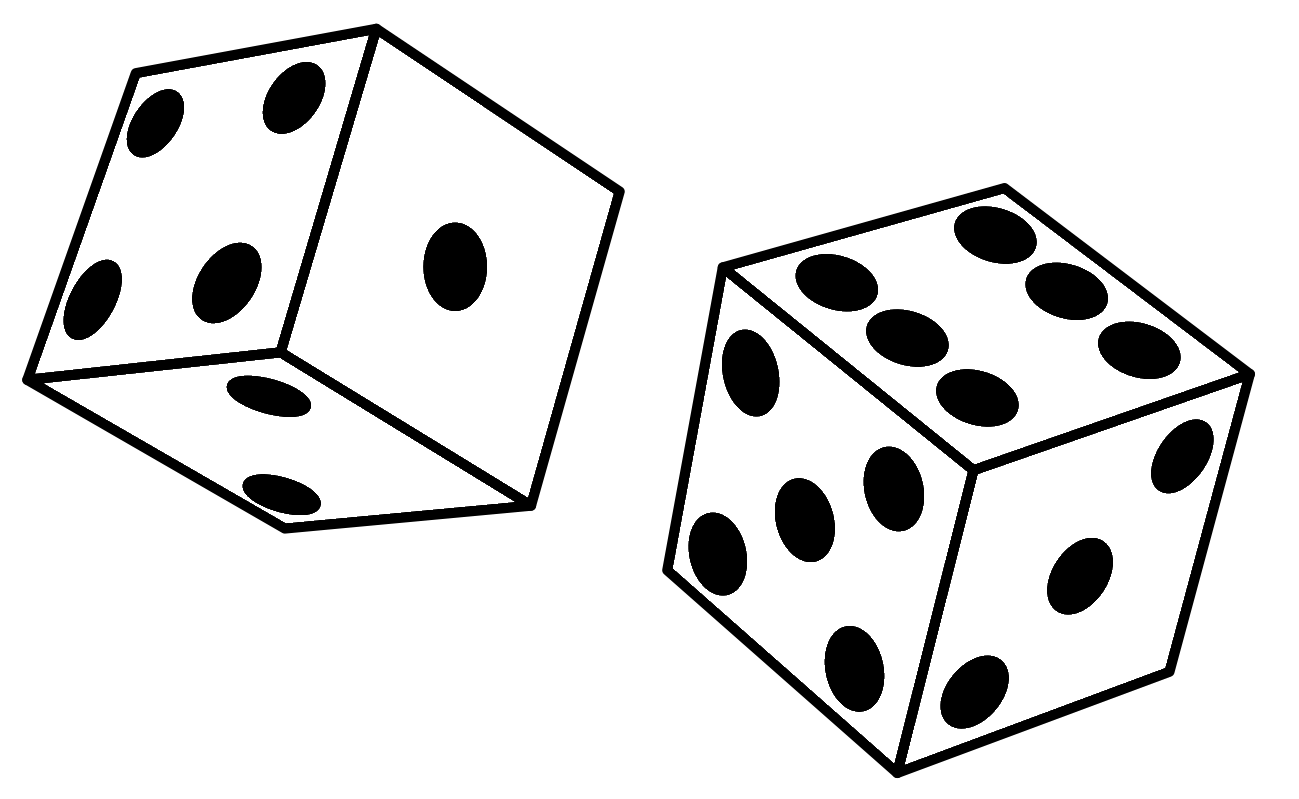
If you roll one die, what is the probability of getting an odd number or a 4?
2/3
1/3
1/2
1/6
All of the following are disjoint events when a 6-sided die is rolled, EXCEPT:
Rolling a number less than 4 and rolling a number greater than 4
Rolling a 3 or rolling an odd
Rolling a 2 or rolling an odd
Rolling a prime number or rolling a number greater than 5
From a standard deck of 52 cards, you choose a face card or a spade.
Does the scenario above represent disjoint or overlapping events?
disjoint
overlapping
Does the scenario above represent disjoint or overlapping events?
disjoint
overlapping
P(A or B) =
P(A) + P(B) - P(A and B)
P(A) + P(B)
P(A)∙P(B|A)
P(A)∙P(B)
When does P(A or B) = P(A) + P(B) ?
Always
Never
When A and B are disjoint in relation
When A and B are overlapping in relation
If two Events A and B are disjoint in relation, which of the following are necessarily true?
P(A or B) = P(A) + P(B)
P(A and B) = 0
P(A and B) = 1
P(A and B) = P(A)∙P(B)

