
 Worksheets
Skeletal System Quiz 1
Total questions: 40
Worksheet time: 35mins
What type of joint is found in the thumb and allows for a wide range of motion?
Hinge
Pivot
Ball & Socket
Saddle
Which type of joint is characterized by bones that are connected by fibrous tissue and have no movement?
Synovial Joint
Cartilaginous Joint
Ball & Socket Joint
Fibrous Joint
What is the primary function of synovial fluid in synovial joints?
To connect bones
To provide nutrients to bones
To lubricate the joint
To store minerals
An example of cartilaginous joints:
intervertebral discs
skull
wrist
knee

This type of bone is porous, allowing blood vessels to move through it and containing bone marrow.
Compact Bone
Spongy bone

The hardest, most dense part of the bone tissue is the
periosteum
spongy bone
osteoblast
compact bone
An example of a fibrous joint is
intervertebral joints
wrist
skull sutures
hip

Identify #2
Epiphysis
Diaphysis
Periosteum
Endosteum

Type of bone labeled 4
spongy bone
red bone
articular bone
compact bone

Which numbered structure has the function of cushioning and reducing friction in joints.
9
1
8
7

What connects bones together?
ligaments
brains
tendons
cartilage
Which bone disease causes bones to become weak and brittle?
artereosclerosis
arthritis
fracture
osteoporosis

What is the name of the tissue that attaches muscle to bone?
ligament
tendon
joint
bones
What is a joint?
The place where 2 or more bones meet.
A thin membrane that covers the surface of bone.
A band of tissue that hold bones together.
Connective tissue
What part of the skeleton protects the heart, lungs, and stomach?
rib cage
femur
skull
spine
Which of the following is not a function of bones?
Protection
Blood cell formation
Storage
Absorption
Which structure covers the outer surface of bones and serves as an attachment point for tendons and ligaments?
Endosteum
Epiphysis
Periosteum
Diaphysis
What is the main function of yellow bone marrow in adults?
Protection of joints
Production of blood cells
Storage of fat
Formation of cartilage
Which type of joint allows movement in only one direction, such as the elbow?
Ball & Socket Joint
Hinge Joint
Pivotal Joint
Saddle Joint
What is the name of the condition characterized by inflammation of the joints?
Osteoporosis
Arthritis
Scoliosis
Bursitis
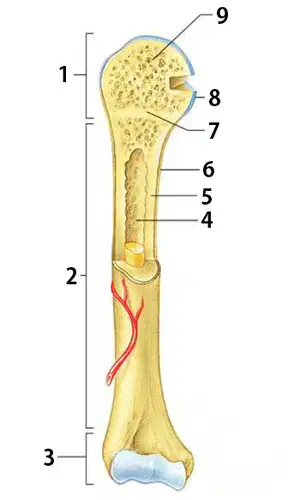
Number 7
Articular Cartilage
Epiphyseal Line
Epiphysis
Medullary Cavity
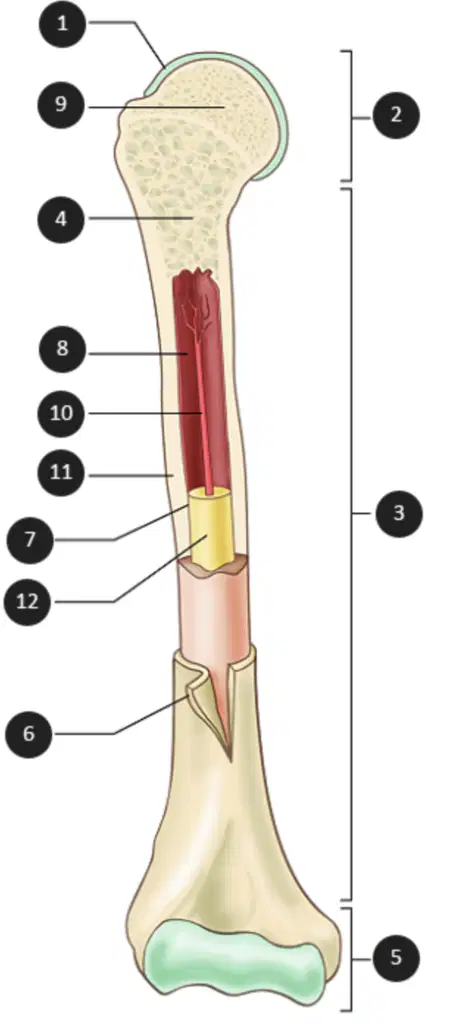
Which number represents the periosteum?
4
7
12
6
The joint that moves in one direction, like a door
ball and socket joint
hinge joint
pivot joint
gliding joint

Which of the numbers represents a structure that stores fat?
9
8
1
5

Which number is the site of bone growth?
9
8
9
1
Which type of joint allows for the largest amount of movement?
ball and socket
saddle
gliding
hinge

