
NEW
Font size
 Worksheets
Sheep Heart Dissection
Total questions: 27
Worksheet time: 14mins
How many heart chambers does the sheep heart have?
five
four
three
two
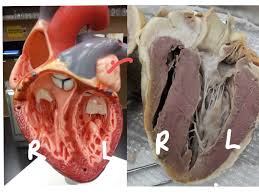
Which side of the heart handles oxygenated blood?
Left side only
Right side only
Both right and left
Neither side
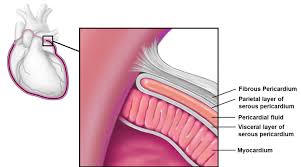
Double layered closed sac that surrounds the heart & anchors it is called:
Pericardium
Pericardial cavity
Myocardium
Papillary muscles

The muscle of the heart is called:
Pericardium
Cardicardium
Myocardium
Endocardium
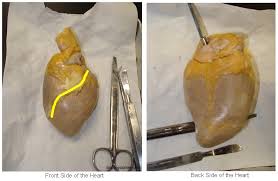
At the beginning of the sheep heart dissection the heart should be placed on the ventral side facing towards you? Ventral refers to?
Back
Front
Base
Tip

The front of the heart is recognized by a groove that extends from the right side of broad end of the heart diagonally to a point above, left of the apex. Name this feature.
Interatrial groove
Interventricular gyri
Interventricular sulcus
Interventricular fissure

The atria are the _____________ chambers.
Receiving
Pumping
Discharge
Oxygenated

The ventricles are the _____________ chambers.
Receiving
Pumping/Discharge
Deoxygenated
Thinner

This blood vessel lies in the groove on the front & back of the heart to supply it with fresh blood that is full of nutrients & oxygen.
Pulmonary artery
Aorta
Pulmonary veins
Coronary artery

This is the only artery in your body that carries deoxygenated blood.
Coronary
Pulmonary
Aortic
Carotid

This major vessel is a large artery that supplies blood to your upper & lower body.
Pulmonary
Coronary
Aorta
Interior & superior vena cava

These vessels return oxygenated blood from right and left lungs to the left atrium.
Pulmonary artery
Pulmonary veins
Aorta
Interior/superior vena cava

These 2 blood vessels connect to the right atrium. These vessels furthermore do not contain valves to control blood flow.
Interior/Superior vena cava
Pulmonary veins
Cardiac veins
Coronary sinus

Why are the atria much thinner in comparison to the ventricles?
They only temporarily hold the blood
It is released to the ventricles not the rest of the body
The blood it contains only travels a short distance
All of the above are correct

The valve that lies between the right and left atrium is called:
Tricupsid
Right AV valve
Bicupsid or mitral valve
Both A & B are correct

How are the valves named?
# of leaflets or cusps
relative size
location & functionality
both A & C are correct

The long fibers of connective tissue that attach to papillary muscles of the heart that enable the valves to properly open and close are called:
Chordae tendinae
Cardiac tendons
Cardiac ligaments
Myocardial tendinae

The thick muscular wall that separates the right and left ventricles from each other:
Interventricular sulcus
Groove
Septum
Cecum

Within the right ventricle the one way valve that controls blood flow away from the right ventricle is called:
Pulmonary valve
Tricupsid valve
Bicupsid valve
Aortic valve

How can you tell the front of the heart from the back of the heart? The interventricular sulcus runs...
Diagonally
Perpendicular
Laterally
Inferiorally

The most anterior blood vessel that wraps around the aorta is called?
Pulmonary trunk/artery
Pulmonary veins
Inferior vena cava
Superior vena cava

What do the pulmonary veins carry? (type, from, where to)
Oxygenated blood from lungs to left atrium
Deoxygenated blood from lungs to left atrium
Oxygenated blood from left atrium to aorta
Deoxygenated blood from right atrium to right ventricle

Identify # 10?
Superior vena cava
Right atrium
Aurticle
Aorta

Identify # 9?
Right ventricle
Left ventricle
Right atrium
Lett atrium

Identify # 12?
Bicupsid valve
Tricupsid valve
Seminlunar valve
Aortic valve

Identify #1?
Aorta
Superior vena cava
Pulmonary artery
Pulmonary veins

Identify #8?
Right atrium
Left atrium
Semilunar valve
Pulmonary vessels

