
 Worksheets
Cells Regents Review
Total questions: 26
Worksheet time: 1hrs 2mins
Name
Class
Date
1.
surrounds the cell; regulates what enters/leaves cell; maintains homeostasis
a)
vacuole
b)
cell wall
c)
cell membrane
d)
lysosome
2.
control the cell's activities; contains the cell's DNA
a)
mitochondria
b)
cell membrane
c)
nucleus
d)
golgi body
3.
breaks down glucose to release energy for the cell
a)
nucleus
b)
lysosomes
c)
mitochondria
d)
vacuole
4.
What is the cell organelle that stores water, food and waste called?
a)
The cytoplasm
b)
The lysosomes
c)
The vacuole
d)
The mitochondria
5.
What is the main difference between prokaryotic and eukaryotic cells?
a)
Prokaryotic cells have a nucleus and Eukaryotic cells do not
b)
Prokaryotic cells are unicellular and Eukaryotic cells are multicellular.
c)
Prokaryotic cells do not have a true-nucleus, Eukaryotic cells do have a true-nucleus.
d)
Prokaryotic cells are plant cells and Eukaryotic cells are animal cells.
6.
The main function of a chloroplasts is:
a)
To control what enters and leaves the cell.
b)
To break down food to release energy for the cell.
c)
To control all activities of the cell.
d)
To produce food for the cell using the sun's energy.
7.
The cytoplasm
a)
Is the gel-like fluid that holds other organelles in place.
b)
Breaks down food to produce energy for the cell.
c)
Is known as the "brain" of the cell.
d)
Is where photosynthesis takes place.
8.
Which statement is NOT part of the Cell Theory?
a)
Only animals are made of cells.
b)
Cells are the basic unit of structure and function in all living things.
c)
All living things are made of cells.
d)
New cells come from existing cells.
9.
Ribosomes are the cell organelle that
a)
Break down food to produce energy for the cell.
b)
Produce proteins for the cell.
c)
Break down broken cell parts.
d)
Make food for the cell using the sun's energy.
10.
Organisms composed of many cells are called
a)
Prokaryotic
b)
Eukaryotic
c)
Unicellular
d)
Multicellular
11.
Which types of organisms are Prokaryotes?
a)
Animals
b)
Plants
c)
Fungi
d)
Bacteria
12.
Unicellular organisms are
a)
Prokaryotic
b)
Eukaryotic
c)
Made of many cells
d)
Made of one cell
13.
This organelle helps plants keep their rigid structure.
a)
Cell wall
b)
Cell membrane
c)
Chloroplast
d)
Nucleus
14.

Using this image, what organelle is G?
a)
Vacuole
b)
Flagella
c)
Rough ER
d)
Nucleus
15.

Using this image, what organelle is O?
a)
Centrioles
b)
Cell Membrane
c)
Golgi Apparatus
d)
Mitochondria
16.

Using this image, what organelle is C?
a)
Cell Wall
b)
Mitochondria
c)
Large Cell Vacuole
d)
Chloroplast
17.
Using this image, what organelle is G?
a)
Cell Wall
b)
Mitochondria
c)
Large Vacuole
d)
Chloroplast
18.
Using this image, what organelle is E?
a)
Cell Wall
b)
Nucleus
c)
Vacuole
d)
Chloroplast
19.

Using this image, what organelle is A?
a)
Cell Wall
b)
Large Central Vacuole
c)
Mitochondria
d)
Chloroplast
20.
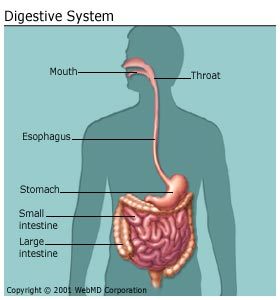
This is a example of........
a)
organ system
b)
cells
c)
organ
d)
tissue
21.
What is the correct order of organization
a)
tissues-cells-organs-organ systems-organism
b)
cell-tissue-organs-organ systems-organism
c)
organism-cells-tissues-organ systems-organism
d)
tissues-cells-organs-organ sytems-organism
22.
A group of cells that have similar functions? Examples are nervous, epithelial, muscle and connective
a)
cells
b)
tissues
c)
organs
d)
atoms
23.

This is a example of ........
a)
cell
b)
tissue
c)
organ
d)
organ system
24.
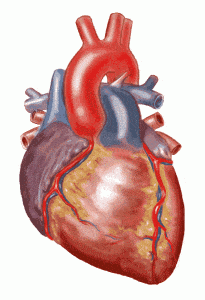
This is a example of ........
a)
cell
b)
organ system
c)
organ
d)
tissue
25.
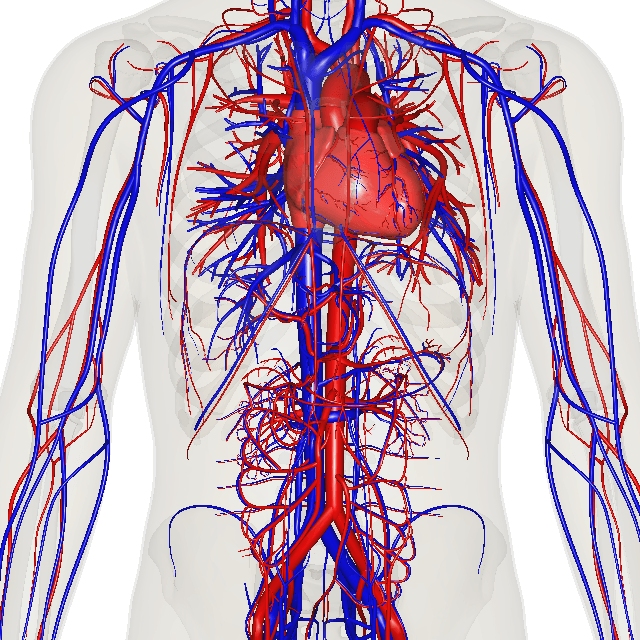
This is a example of ........
a)
organ
b)
organ system
c)
tissue
d)
cell
26.
Which invention from the 17th century allowed for the development of modern cell theory?
a)
x-rays
b)
computers
c)
the light microscope
d)
the scanning electron microscope
100 %

