
 Worksheets
Sound, Light, Mirrors & Lenses
Total questions: 15
Worksheet time: 11mins
Name
Class
Date
1.
When the surface of a mirror curves inward, like the inside of a bowl, it is called a _____. a
a)
plane mirror
b)
convex mirror
c)
concave mirror
d)
diffuse mirror
2.
The signals generated by the rods and cones are carried to your brain by the _____.
a)
cornea
b)
pupil
c)
optic nerve
d)
lens
3.
What instruments use lenses or mirrors to collect and focus light from distant objects?
a)
microscopes
b)
optical fibers
c)
telescopes
d)
lasers
4.
Which device uses lenses to focus light rays and record an image of an object on photographic film?
a)
microscope
b)
reflecting telescope
c)
refracting telescope
d)
camera
5.
Clear glass, water, and air are examples of what kind of material?
a)
opaque
b)
fluid
c)
translucent
d)
transparent
6.
The speed of sound depends on _____.
a)
the loudness of the sound
b)
the pitch of the sound
c)
the source of the sound
d)
the properties of the medium it travels through
7.
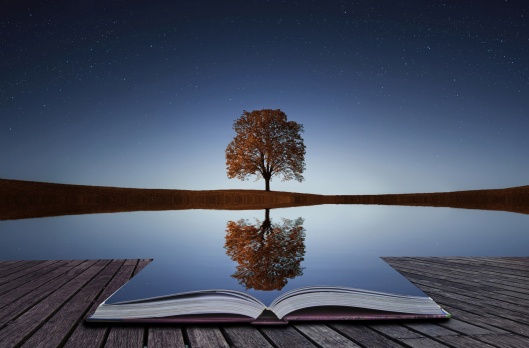
What does it mean to reflect?
a)
bounce off
b)
bend
c)
refract
d)
energy
8.
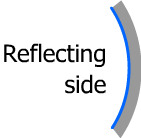
The following is a picture of what type of mirror?
a)
Convex Mirror
b)
Concave Mirror
c)
Plane Mirror
d)
Flat Mirror
9.

Light changes speed as it travels through various mediums. What are examples of mediums that light can travel through.
a)
snow and ice
b)
air and water
c)
cloth and wood
d)
glass and wood
10.

What is this image an example of?
a)
Reflection
b)
Diffusion
c)
Refraction
11.
Swimming pools and the ocean look shallower than they really are due to:
a)
reflection
b)
dispersion
c)
refraction
d)
total internal reflection
12.

A student placed a pencil in a cup of water. The pencil appears broken because light-
a)
always travels in a straight line
b)
bends when it passes through water
c)
makes the water in the glass evaporate
d)
reflects the pencil on the water's surface
13.
We can see objects because of_______
a)
reflection
b)
refraction
c)
transmission
d)
diffraction
14.
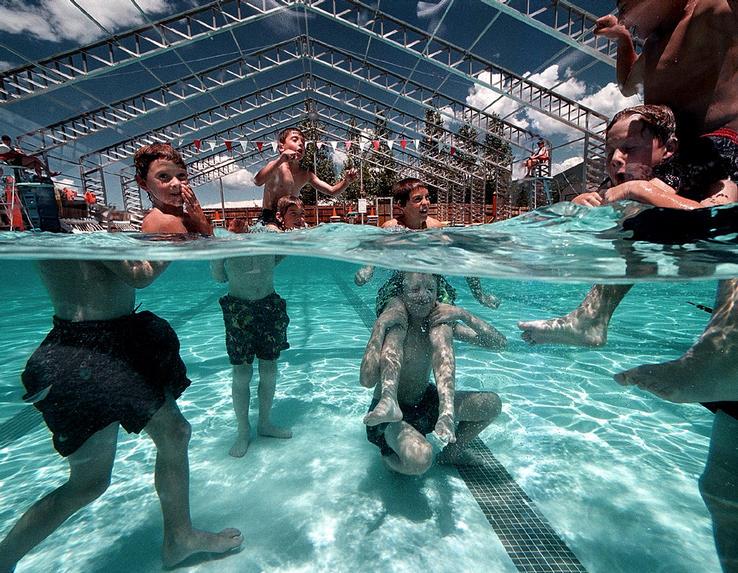
Why does the lower part of the child appear so much different in size from the upper part?
a)
The light rays that travel through water and then into air are refracted.
b)
The light rays that travel through water and then into air are enlarged.
c)
The light rays that travel through air and then into water are reflected.
d)
The light rays that travel through air and then into water are reduced.
15.

The point where the rays meet is known as....
a)
Fire
b)
the focal point
c)
refraction
d)
Plane of the lens
100 %

