
 Worksheets
1-31 post ch 8 review
Total questions: 150
Worksheet time: 2hrs 53mins
Which movement in the 1700s promoted reason, liberty, and self determination?
The Scientific Revolution
The Renaissance
The Enlightenment
The American Revolution
Which philosopher believed people were born with unalienable rights and that the government should protect them?
Thomas Hobbes
John Locke
Robert Owen
Voltaire
What is the name of the movement that promotes the interests of a particular nation due to intense pride?
A revolution
Protestantism
Enlightenment
Nationalism
Which TWO nations unified due to nationalistic movements?
Italy
America
Germany
France
Which nation was the first to industrialize?
Britain
France
Germany
Japan
All of the following helped countries to industrialize EXCEPT
Access to waterways
Natural resources like coal
Access to foreign resources and markets
Being colonies of other nations
Select ALL of the following that characterized the Second Industrial Revolution.
Oil
Electricity
Steam
Steel
After Britain industrialized, all of these nations followed suit EXCEPT
Japan
United States
Russia
India
Select ALL of the accurate social effects of the Industrial Revolution.
Poor working and living conditions for the lower class
Increased standard of living for middle and upper classes
Lower class families working closer together in their homes
More accessible and cheaper goods
Mexico was liberated from
the United States
the Spanish
the Portuguese
the Brazilians
Toussant L'Ouverture
was a member of the Committee of Public Safety under Robespierre
rose to the rank of General under Napoleon
was a complete revolutionary failure
helped free slaves in Haiti

Some of the machines invented in the 18th and 19th centuries are:
telephones, geographic positioning system, radios, airplanes
steam engine, railroads, flying shuttle, phonograph, steam ships, light bulb
sailboats, automobiles, wheel barrels, clocks, word processors
automatic washer, hair dryer, rockets, space shuttles

Select ALL of the following that are considered an impact of industrialization during the 18th and 19th centuries.
Increased competition between industrialized nations
Rise of global inequalities
Transformation of society.
Decolonization of Africa

Capitalism is
An economic system in which the means of production are privately owned and money is invested to make profits.
An economic system in which the means of production are owned by the public (government) and operate for the welfare of all.
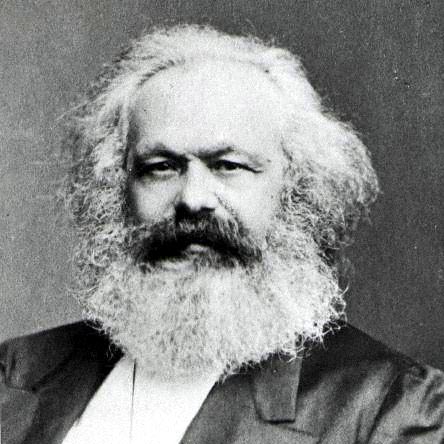
Which of the following scientific concepts had the greatest role in providing a justification for imperialism in the late 19th and early 20th centuries?
Louis Pasteur's germ theory of disease
Charles Darwin's theory of evolution
Albert Einstein's theory of relativity
Marie Curie's theory of radio activity
Which of the following was the most important cause of discontent among the French peasantry in the decades leading up to the French Revolution?
The failure of the government to encourage significant emigration to Canada
The efforts by many landowners to revive various kinds of taxes and feudal dues
The spread of Enlightenment critiques of organized religion
The drafting of large numbers of peasants to serve in the French army
The creation of large numbers of robe nobles by the French monarchy


Under the Tokugawa Japan was
a major trading nation
rapidly industrializing
bankrupt
isolated

The economic system that prevailed from c. 1750-1900 was
Capitalism
Communism
Socialism
Mercantilism

Which of the following descriptions is an accurate change over time in the period c. 1750-1900?
Once the leader in scientific and economic development, China fell behind Europe
Once the leading producer of porcelain, China fell behind India
Once a country that maintained an isolationist policy, China participated in the Scramble of Africa
Once a country that actively sought foreign converts to Buddhism, China became an atheist state

Why, in the time period c. 1750-1900, did European states fight to acquire overseas colonies?
To acquire raw materials to fuel their industrialization
To spread Enlightenment ideas
To abolish slavery worldwide
To stop the spread of Islam throughout the world

Who had to take on new societal roles as men left to find work in other countries?
Women
Eldest children
Grandparents
Uncles

Which company took over other European states colonies in India?
British East India Company
British West India Company
Dutch East India Company
French East India Company

Why did European powers turn to indentured servants for labor?
The abolition of the slave trade
The shift in control in India to the British
The growth of industrialization in China
The success of the Atlantic revolutions

What does the word suffrage mean?
the right to vote
the right to drive a car
the right to be free
the right to have an education
Abolitionists thought slavery was _____________________ wrong.
morally
really
mentally
physically

This 19th Century-ism appeals to the Aristocracy / Landed Gentry. Buzzwords are tradition, institutions, privileges. Proponents would Edmund Burke, and Metternich.
Conservatism
Liberalism
Romanticism
Socialism

This 19th Century-ism appeals to the Bourgeois (professional class). Buzzwords would include Liberty, Constitution, Natural Rights, laissez faire, Choice, Equality, reform, individualism, progress.
Conservatism
Liberalism
Romanticism
Socialism

This 19th Century-ism appealed to artists, authors, & poets. Buzzwords would include beauty, nostalgia, and nature.
Conservatism
Liberalism
Romanticism
Socialism

This 19th Century-ism appealed to all social classes. Buzzwords would include spirit (Volksgeist), freedom, and independence.
Nationalism
Liberalism
Romanticism
Feminism
This 19th Century-ism appealed mostly to the working class (proletariat). Buzzwords words include; justice, equality, fairness, harmony, corporations, associations, organization, community, & freedom.
Nationalism
Liberalism
Socialism
Feminism
Which 19th Century-ism would best apply to Mary Wollstonecraft & John Stuart Mill. With their books A Vindication of the Rights of Woman, The Subjection of Women.
Nationalism
Liberalism
Socialism
Feminism

Which would best describe the Glorious Revolution which restored an English King?
Conservative Revolution
Liberal Revolution

Which 19th Century-ism would best apply to leaders such as Mazzini, Cavor, Garibaldi or Bismarck?
Nationalism
Liberalism
Socialism
Feminism

Which 19th Century-ism would best describe works such as the Organization of Work, The Communist Manifesto
Nationalism
Liberalism
Socialism
Feminism

The idea of Malthusian Scissors or Cycle of Misery (limiting factors: disasters, war, Famine, disease check population growth) was highly influential on the lack British assistance for
the Irish Potato Famine.
the Great Migration.
the Crimean War.
German Unification.
He was the architect of German unification in the mid 19th century.
Kaiser Wilhelm I
Camillo Cavour
Otto von Bismarck
Victor Emmanuel II
The Paris Commune (1870-1871) tried and failed to establish which for of government?
Monarchy
Theocracy
Oligarchy
Communist
Which is true of Bismarck?
He was a liberal
He was a conservative
He was a monarch
He believed in democracy
Immediately after the Congress of Vienna,
both Italy and Germany were unified
Napoleon ruled Italy and Germany
There was no state of Italy nor a state of Germany
Bismarck became the Kaiser
Which person is associated with the phrase "blood and iron?"
Kaiser Wilhelm I
Otto von Bismarck
Count Cavour
Giuseppe Garibaldi
Who was the Last Person Executed by Guillotine during the Reign of Terror of the French Revolution?
Louis 16th
Marie Antoinette
Maximilien Robespierre
Napoleon Bonaparte

Who invented this?
Thomas Edison
Samuel Morse
James Watt
Wilbur Wright

Who invented this affordable car?
Henry Ford
Thomas Edison
Nicolai Tesla
Albert Chevrolet

Who is this Hattian Hero?
Simon Bolivar
Toussaint L'Ouverature
Georges Danton
Maximillian Robespierre
Which country did NOT create a new government in the 1800s?
Italy
Germany
Mexico
China
Who is NOT a famous Feminist thinker?
Lucretia Mott
Elizabeth Cady Stanton
Olympe De Gouges
Marie Antoinette
What is NOT true about Napoleon
He took power in a Coup D'eat
He was defeated by bad weather in Russia
He Spread French Revolutionary ideas around Europe
He was re-elected 4 times as President of France
Which Enlightenment thinker had a negative view of human nature?
Thomas Hobbes
John Locke
Baron De Montesquieu
Jean Jacques Rousseau
What was the Primary invention of the first industrial revolution?
Steam Engine
Light Bulb
Oil Processing
Cars
What is NOT made from oil?
Gasoline
Plastic
Tar
Glue
Slavery and serfdom were abolished in the 1860s in
Great Britain and Brazil
Austria-Hungary and India
France and Algeria
the United States and Russia
Who controlled India during the period known as the 'Raj"
Britain
France
Mughals
Viajaras
Which word is Synonymous with Working Class?
Blue Collar
White Collar
Bourgeoisie
Middle Management
What are tiny crowded apartments called?
Tenents
Tenements
Tents
Tonsils
In what way did the Haitian Revolution differ from the French Revolution?
The leaders of the French Revolution wanted religious freedom while the leaders of the Haitian Revolution wanted equal representation.
The Haitian Revolution began because of unfair taxation by the French king.
The leaders of the Haitian Revolution came from a different social class than did the leaders of the French Revolution.
The French Revolution was inspired by Enlightenment ideas while the Haitian Revolution was not.
Which of the following developments DID NOT emerge from the Enlightenment?
abolitionism
Nationalism
Absolutism
feminism
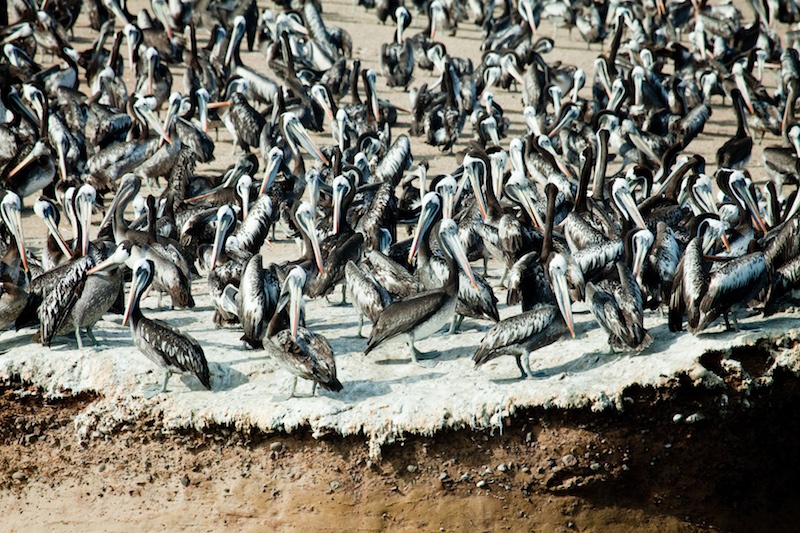
This image represents one of the most important industriesand exports in Peru in the industrial economy
Whale
Guano
Cotton
Rubber
What year was the Haitian Revolution?
1805
What year was the The Paris Commune?
1894
1851
1871
1815
What year was the Communist Manifesto?
1810
1821
1848
1850
Mongolian soldiers were experts with which weapon?
Bow and arrows
Samurai swords
Bayonets
Axe and Shield

What is the black plague?
Another name for the Guillotine
A disease that killed many people in Europe
A religious cult during the Middle Ages
The name for secret soldiers in the Roman army
What animal carried the Black Death and transferred it to humans?
Rats
Birds
Mosquitos
Cows
True or False. The Crusades were where Christians tried to retake the Holy Land from the Muslims.
True
False
What was one affect of the Crusades?
Muslims took over and controlled all of Europe
Christian Crusaders became more powerful as a result of all the fighting
Crusaders were introduced to math, science, foods, and other knowledge that they brought back to Europe.
Everything went back to normal
What was one impact of the bubonic plague during the middle ages?
Peasants were able to demand higher wages and better working conditions
The church increased its power
Feudalism became stronger and continued to last for hundreds of years
Everything was normal
Genghis Khan died in 1227 CE. What happened after is death?
His sons and grandsons continued his campaign of conquest
The Monngol reign ended immediately
The Mongols conquered North America
The Chinese overthew the Mongols


What did the Mongols do to the religions of the people they conquered?
They allowed them to exist and did not bother them
They converted to whatever religion they conquered
They forced the people they conquered to forget their religion
They killed all the priests and burned all the places of worshipped they conquered
Why did people join in fighting in the Crusades?
They thought it would help them practice their fighting skills.
They thought it would help them get rich.
They thought it would help them get into heaven.
All of these answers
The crusaders were from which place?
Europe
The Middle East
The Holy Land
What is the Holy Land to Christians, Jews and Muslims?
Mecca
Savannah
Jerusalem
Medina
What was the main job of monks during the Medieval Period in Europe?
Teaching at universities
Traveling with knights to the crusade
Copying scriptures by hand
Traveling the country reciting scriptures
Who had the most power in Medieval Europe?
Orthodox church
Muslim community
Serfs
Catholic Church
What happened to most people who were infected with the plague?
Nothing because they got a vaccine for the disease
Their hair fell out, but then they got better
All of their skin turned black, but then they got better
They got covered in swollen blisters (buboes) and mostly died
Some scientists think the plague arrived in Europe from?
Ships
Airplanes
Camel caravans
Trains
Many people did NOT believe that the Black Plague was a result of God punishing them?
True
False
When did the Black Plague occur?
Mid 1400s
Mid 1500s
Mid 1300s
Mid 1600s
What does renaissance mean?
rebirth
recreation
re-acclimation
The Renaissance was a time of...
political and cultural change
artistic creativity
Reawakened interest in classical learning
All of the above
What family was known to be patrons of the arts in Florence?
Michelangelo
Montague
Medici
Who invented the printing press with movable metal type?
Leonardo da Vinci
Johannes Gutenberg
Martin Luther
What mathematician formulated the model that Earth revolves around the Sun?
Claudius Ptolemy
Aristotle
Nicolaus Copernicus
Galileo Galilei

Who painted the Sistine Chapel ceiling?
Raphael
Michelangelo
Donatello
Leonardo da Vinci
Which of the following was NOT one of the effects of the invention of the printing press?
Books became cheaper
People gained access to new ideas
Books were only given to priests
None of the above
When did the Renaissance take place?
9th-11th century
11th-15th century
12th-16th century
14th-17th century
What made paintings during the Renaissance different from art from other periods of time?
They were symbolic, not realistic
Subjects were painted as they appeared in nature
They were very abstract
All of the above

During the Renaissance, there was a revival of interst in
perspective
humanism
Greek and Roman Civilizations
individual achievement

How did Renaissance art differ from Medieval art?
It was more godly
It was more realistic, and had three dimensions
it portrayed religious subjects
it was more biblical
Who was the German Monk who challenged the Catholic church and is credited with starting the reformation.
John Calvin
Martin Luther
Johannes Gutenberg
Martin Luther King Jr.
How did Gutenberg's printing press contribute to Reformation?
It allowed people to print copies of their indulgence documents so they didn't need the church
It made the scriptures more available to individuals
It made it harder to keep pass information on to the people outside of the church
The removal of penance for sins that have been forgiven:
indulgences
simony
penance
bribery
M. Luther translated the Bible into:
Latin
English
French
German
Italian
Luther protested the selling of indulgences. What does that mean?
Clergy members bought indulgences to reach higher offices.
The clergy sold pardons that released people from performing penalties for their sins.
Charles V told his people that buying indulgences was a way to earn a place in heaven.
Indulgences permitted priests to marry and have children.
Who supported Martin Luther and why?
The church because they saw the error of their ways
The Pope
German rulers and peasants because they resented the power and wanted equality
The Holy Roman Emperor
What was the Counter-Reformation?
The Reformation
The Reformation's cousin
The fake Reformation
The Catholic Church's reformation
Who were the Jesuits?
A new religion
A branch of Christianity
A group who acted as missionaries for the Catholic Church
A group who acted as missionaries for the Islamic Empire
What famous document did Martin Luther nail to a church door?
a challenge for a Church official to debate him
a list of arguments against abuses by the Church
an order for the peasants to go back to their fields
a statement that he was going to start his own church
True or False: The work of both Copernicus and Galileo were considered challenges to religious teachings at the time.
True
False
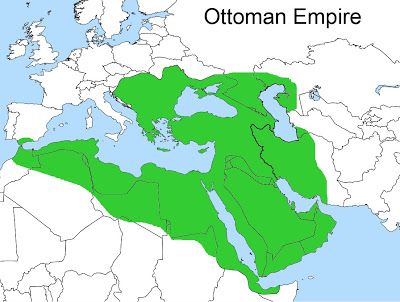
Which continents did the Ottoman Empire have some control over? Click all that apply.
Europe
Asia
Africa
North America
South America
____ were an elite guard of Ottoman soldiers.
sinans
ulema
pashas
janissaries
Which technology, first developed by the Chinese, enabled the Ottoman Empire to expand militarily into western Asia, Europe, and northern Africa?
woodblock printing
wheelbarrow
gunpowder
magnetic compass
Which of the following was a system in which the Ottomans took Christian boys, converted them to Islam, and had them work in the military and government?
Millet System
Sultan System
Vizier System
Devshirme System
What Trade Route went through the Safavid Empire?
Rich Route
Spice Route
Silk Road
Amber road
How did the Mughal Empire originally treat other religions?
everyone should be Sikh
everyone should be Muslim
everyone should be Hindu
tolerant of all because no single religion had all the answers
Q9. Why did Shah Jahan built the Taj Mahal?
As a palace for his wife
As a tomb for his wife
To honor the common people of the Mughal Empire
To match the accomplishments of his father
What is the correct location of the Mughal Empire


How was your position in the caste system determined?
earned it
born into it
given it
What term means "Caesar" and was the title of the ruler of Russia?
Caliph
Prince
Czar
Shah
Why did Peter the Great spend time in Western Europe?
to prepare for war
to find a wife
to avoid his duties in Russia
to study western technology

What was the great symbol of Peter's desire to forge a modern Russia?
St. Petersburg
Moscow
the Russian Orthodox Church
the partition of Poland
Peter the Great forced Russians to accept reforms that would make their culture more like ____.
Native Americans
Chinese
Ottoman Turks
Western Europeans

What country is this?
France
Germany
Russia
Ukraine

Which of the following is the best definition of Westernization?
A transition of dress and customs to that of American Cowboys
Expanding a countries borders
Converting to the customs and practices of Western European civilization.
Focusing a countries attention more toward farming and cattle herding
What happened in Russia as a result of actions taken by Peter the Great?
Russia borrowed Western ideas and expanded its territories
Catholicism was adopted as the state religion.
Russia was weakened by French invasions.
Nothing
How did Peter the Great contribute to the modernization of the Russian navy?
By hiring pirates to train the sailors
By building a new fleet based on Western designs
By banning all naval activities
By purchasing ships from other European countries
What type of professionals did Peter the Great bring back to Russia from his travels?
Artists and musicians
Scientists and mathematicians
Shipbuilders and engineers
All of the above
Why did Peter the Great build the city of St. Petersburg?
As a monument to himself
To have a warm-water port
To serve as the new capital of Russia
Both B and C
Why did Peter the Great and Catherine the Great want warm water ports?
Open the window for trading
To make new friends
To have better fishing
None of the above

