
NEW
Font size
 Worksheets
Darwins Evolution
Total questions: 25
Worksheet time: 13mins
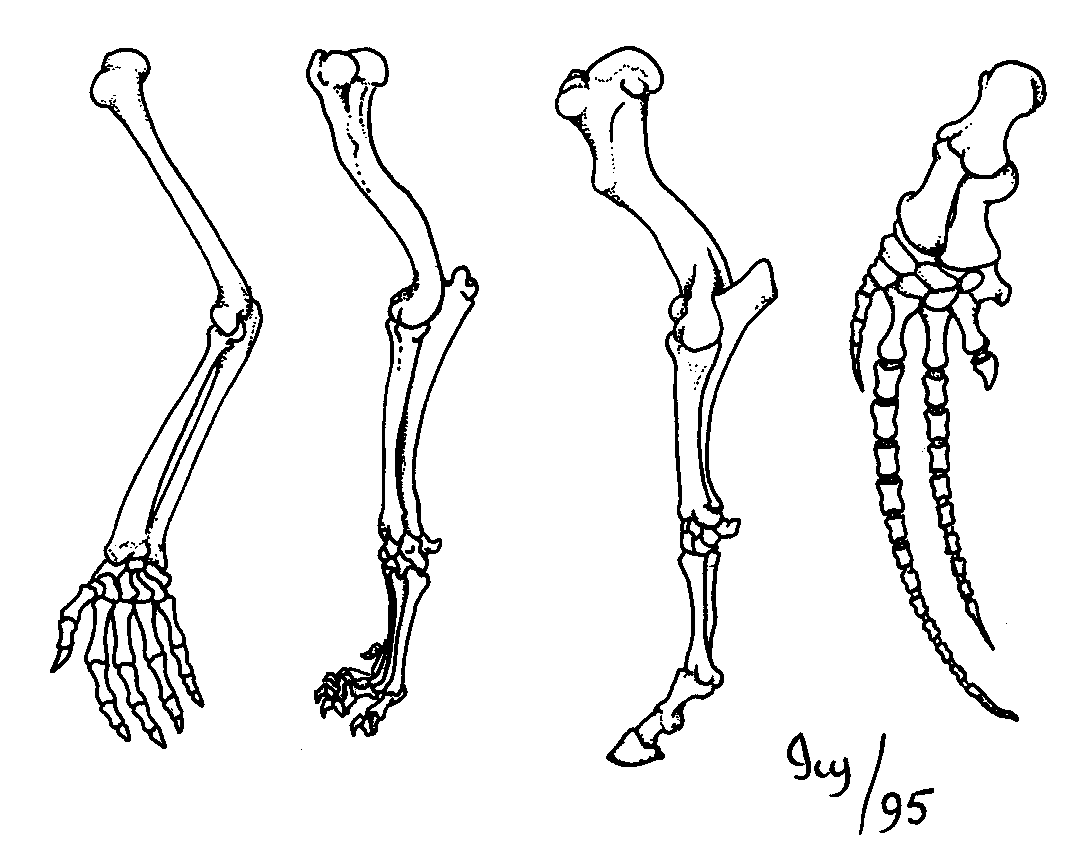
In a biology class, William and Lily were discussing about different structures in organisms. William suggested that structures with the same parts but different functions, like the wings of bats and the arms of humans, suggest that organisms share a common ancestry. Lily agreed and said this concept is known as what?
vestigial structures
homologous structures
adaptive radiation
fossil

Michael found a structure in an organism that seems to serve no purpose now. Elijah suggests that this vestigial structure likely once had a function in a(n)
close relative of the organism
early ancestor of the organism
unrelated organism
embryological stage of the organism

Evelyn, Anika, and Avery were studying for their biology exam. They came across a concept that some organisms that share a common ancestor have features that have different functions, but similar structures. They were trying to remember the term for this concept. Can you help them?
vestigial structures
analogous structures
homologous structures
fossil structures

In a biology class, Charlotte, Zoe, and Aria are studying the embryos of various organisms like chickens, frogs, and humans. They notice similarities in the development of these embryos which could indicate a common ancestor. What is this field of study called?
natural selection
embryology
speciation
evolution
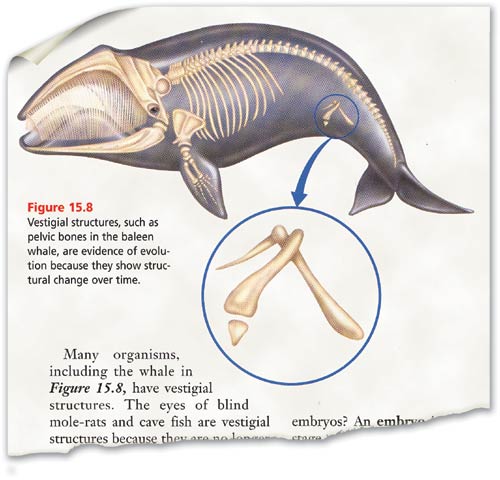
During a biology class, Lily, Mia, and Nora were discussing about vestigial structures. They listed down some examples. Which of the following examples they discussed is a vestigial structure?
the wings of a red-tailed hawk
the hind limbs of a house cat
the fins of sharks
the tailbone of a human

Hannah, Noah, and Daniel found some structures during their biology field trip. What type of structures could these be?
homologous
vestigial
analogous
fossil

Jackson and Avery are studying genetics. They come across a statement that two organisms that are closely related would have
very similar DNA sequence
exactly the same DNA sequences
no proteins in common
completely different DNA sequence

Ava, Michael, and Benjamin went on a field trip to a geological park. They observed fossils in different rock layers. Based on their observations, which of these statements about the age of these fossils is most likely correct?
Fossil A and C are the same age
Fossil B is older than fossil C
Fossils A is older than fossil B
Fossil D is older than fossil C

Mia, Liam, and Luna went on a field trip to a geological site. They found several layers of fossils. Which statement best describes the fossils they found?
The oldest fossils Mia, Liam, and Luna found can be found on the lower layers
The oldest fossils Mia, Liam, and Luna found can be found at the top layers
The youngest fossils Mia, Liam, and Luna found are always on the bottom layers
Mia, Liam, and Luna cannot tell the age of any of these fossils
Benjamin, Daniel, and Hannah were studying about whales in their biology class. They learned that whales are aquatic mammals that contain a pelvis bone. Even though it does not aid in their movement, they understood that the function must have been used by a common ancestor of the whale. Thus, they referred to the pelvis as a(n)
vestigial structure
analogous structure
homologous structure

James and Aria were studying about evolution in their biology class. They came across a concept and James asked Aria, 'How would you describe this evolution?'
Homologous structure
Analogous structure
Structural adaption
Functional adaption

Grace, Lily, and Mason are studying for their biology exam. They come across a question about animals living in different continents. They notice that Anteater/Armadillos of the Americas and the Pangolin of Africa, despite being geographically distant, have similar characteristics and are not close relatives. They live in similar environmental conditions. What can they deduce from this observation?
Living things can adapt similarly to similar environments over time.
Living things do not change over time
They must all have the same recent common ancestor
I don’t know
Mason, Nora, and Avery are studying the similarities of the structures of different species in their biology class. What do these similarities suggest?
a common ancestor
grow at different rates
evolved slowly
lived a long time

James found a picture in his biology textbook and asked Luna, 'This picture is best known as?'
homologous structures
analogous structures
vestigial structures
embryology
Hannah, Abigail, and Maya are on a field trip to a natural history museum. They come across a section dedicated to fossils. Hannah asks, 'Why do scientists look for fossils?'
to calculate how radioactive fossils are
to derive evolutionary relationships
to learn how fossils are formed
to learn more about how these extinct organisms reproduced

Liam, Kai, and Grace are studying the embryonic stages of two organisms shown in a diagram.
Which of the following can they determine by observing the embryos shown in the diagram?
The organisms share a common ancestry.
The organisms belong to the same genus.
The organisms are native to the same geographic areas.
The organisms will grow into anatomically similar adults.

Mason, Avery, and Noah are studying for their biology exam. They come across a table showing the number of differences in amino acids in a protein called “Cytochrome C” when comparing humans to other organisms.
They are trying to list the 4 closest human relatives based on this biochemical comparison. Can you help them?
chimpanzee, horse, rattlesnake, snapping turtle
chimpanzee, gorilla, rhesus monkey, horse
fruit fly, bread mold, tuna fish, snapping turtle
gorilla, rhesus monkey, rattlesnake, gorilla

Luna, Benjamin, and Aiden are studying different species of birds for their science project. They are comparing the DNA of different finches to a large tree finch. According to their research, which bird's DNA is most similar to a large tree finch?
small tree finch
medium tree finch
large ground finch
green warbler finch

Evelyn, Nora, and Aria are participating in a biology quiz. They are asked, 'Which three animals are most distantly related?'
The elephant, Manatee, and Yellow Frog
The Yellow Frog, Salamander, and Bird
The Lungfish, Crocodile, and Bird
The Elephant, Lungfish, and Crocodile
During a school trip to the Natural History Museum, Emma, Kai, and Charlotte learned about the founder of modern evolution theory. They were told that _____ is considered to be the founder.
Charles Darwin
Gregor Mendel
Charles Lyell
Alec Jefferies
Lily, Priya, and Maya are studying biology and they come across the concept of homologous structures. They are trying to identify an example of a homologous structure. Which of the following would they correctly identify as a homologous structure?
The wings of a bat and the wings of a bird that they saw at the zoo
The beak of a bird and the beak of a turtle they observed during their field trip
The arm of a human and the wing of a bat they studied in their textbook
The tail of a kangaroo and the tail of a monkey they saw in a documentary
During a school trip to the aquarium, Nora, Samuel, and Benjamin were observing a whale. Samuel noticed a peculiar structure in the whale and asked the guide about it. The guide explained that this structure suggests whales share a common ancestor with land-dwelling mammals. Which structure was Samuel referring to?
Dorsal fin
Blowhole
Vestigial hind limbs
Flippers
Fossils provide evidence of evolution because
fossils do not provide evidence of common ancestors
fossils show how organisms lived
fossils show how current species are similar to ancestors
fossils come from rocks

The pelvic bone of whales is not needed for movement within the water. This is an example of a(n) ______________ structure.
vestigial
analogous
homologous

