
 Worksheets
Sediments
Total questions: 23
Worksheet time: 12mins
Name
Class
Date
1.
How many different marine sediment types do we distinguish?
a)
2
b)
3
c)
4
d)
5
2.
What process creates lithogenous sediments?
a)
Precipitation from seawater
b)
Weathering and erosion
c)
Dissolution of carbonate shells
d)
Evaporation
3.
On the whole, what is the most important mechanism of transporting continental lithogenous sediments to the ocean?
a)
Wind
b)
Flowing water
c)
Glaciers and icebergs
d)
Gravity (mass flows)
4.
Pelagic deposits form
a)
in deep ocean basins.
b)
on the continental shelf.
c)
on the continental slope.
d)
in warm shallow water.
5.
Beach deposits are an example of
a)
hydrogenous sediment.
b)
cosmogenous sediment.
c)
biogenous sediment.
d)
lithogenous sediment.
6.
Which of the following organisms produce calcium carbonate shells (tests)?
a)
Coccolithophores and radiolarians
b)
Radiolarians and diatoms
c)
Coccolithophores and foraminifers
d)
Foraminiers and diatoms
7.
Evaporites are examples of
a)
lithogenous sediments.
b)
hydrogenous sediments.
c)
biogenous sediments.
d)
cosmogenous sediments.
8.
In which environment do neritic deposits not form?
a)
Close to the shore.
b)
In deep ocean basins.
c)
On the continental shelf.
d)
On the continental slope.
9.
Manganese nodules belong to
a)
lithogenous sediments.
b)
biogenous sediments.
c)
hydrogenous sediments.
d)
cosmologeous sediments.
10.
What is the largest particle in sediment?
a)
Gravel
b)
Sand
c)
Clay
d)
Silt
11.
Put the sediments in order from smallest sized particles to largest
a)
clay, silt, sand, gravel
b)
silt, clay, gravel, sand
c)
gravel, sand, silt, clay
12.
Deep ocean sediments tend to have proportionally _______ biogenous sediment than continental-shelf sediment.
a)
more
b)
less
13.

This is the largest intact meteorite. If it was broken down into sediment, what kind would it be?
a)
Lithogenous
b)
Biogenous
c)
Hydrogenous
d)
Cosmogenous
14.

What is the origin of this sediment? These are tiny shells called "tests."
a)
Lithogenous
b)
Biogenous
c)
Hydrogenous
d)
Cosmogenous
15.

What is the origin of this sediment? (satellite image of a river draining into an ocean)
a)
Lithogenous
b)
Biogenous
c)
Hydrogenous
d)
Cosmogenous
16.

What is the origin of the sediment that this makes?
a)
Lithogenous
b)
Biogenous
c)
Hydrogenous
d)
Cosmogenous
17.

What type of sediment are you most likely to find at the continental shelf if this is a temperate zone beach?
a)
Lithogenous
b)
Biogenous
c)
Hydrogenous
d)
Cosmogenous
18.
Rock salt is what kind of sediment?
a)
hydrogenous
b)
cosmogenous
c)
terrigenous
d)
biogenous
19.
if more than 30% of an area's sediment is made up of biogenous particles, it is called a(n)
a)
ooze
b)
slush
c)
mud
d)
silt
20.
Which means the same as lithogenous?
a)
biogenous
b)
authigenous
c)
terrigenous
d)
cosmogenous
21.
Most neritic sediments are ___________: they are eroded from the land and carried to streams, where they are transported to the ocean.
a)
terrigenous
b)
biogenous
c)
hydrogenous
d)
cosmogenous
22.
This type of sediment is the most abundant. They originate on the continents or islands from erosion, volcanic eruptions, and blown dust.
a)
terrigenous
b)
biogenous
c)
hydrogenous
d)
cosmogenous
23.
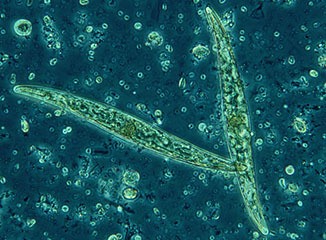
Plant-like plankton is called...
a)
Photosynthesis
b)
Phytoplankton
c)
Decomposer
d)
Consumer
100 %

