
NEW
Font size
 Worksheets
Middle of the Year Science Review
Total questions: 50
Worksheet time: 55mins


A student asked, "Which brand of battery lasts the longest?" What statement is the best hypothesis for this experiment?
If my toy train is left turned on, then it will run out of battery life.
If my toy train set is plugged into the wall, then the batteries will not be used.
If I change the batteries in my toy train set every week, then it will not run out of power.
If I use the Power Up battery in my toy train, then it will last longer than other batteries.
For scientific data to be considered accurate and reliable, most science experiments should be
Conducted as many times as possible
Conducted 3 times
Conducted only 1 time
Repeated no more than 2 times
Mr. Hewitt found an object that is bendable, conducts heat and electricity, and has a metallic luster. The object is most likely a ________.
metal
nonmetal
metalloid
gas
Which of the following statements about models is true?
Scientists use models to understand how systems work.
If an inaccurate scale model is used to create a structure, the actual structure will likely have problems.
A diagram is one example of a scientific model.
All of these statements are true.

A ____________ is a push or a pull on an object.
friction
force
magnet
This type of force resist motion between two surfaces that are pressed together
contact
gravity
friction
What will cause an object to move?
Applied forces
Balanced forces
Unbalanced forces
How does friction affect speed?
more friction decreases speed
more friction increases speed
less friction decreases speed


What is the relationship between mass and inertia?
The greater an object's mass, the more inertia it has.
The greater an object's mass, the less inertia it has.
The smaller an object's mass, the more inertia it has.
There is no relationship between mass and inertia.

Which of Newton's Laws states that an object at rest tends to stay at rest and an object in motion tends to stay in motion unless acted on by a force?
1st
2nd
3rd

If the unequal opposing forces are applied to the cart at the same time, what will occur?
The cart will move to the left.
The cart will move to the right.
The cart will alternate between moving left and right.
The cart will remain stationary.

to represent each one. She painted each one a different color. Then, she placed the Moon
and Earth close together and the Sun much further away.What is one limitation of the student's model?
Gravity is a force of attraction between two or more masses. The gravitational attraction between the Sun and each of the planets is responsible for which of the following?
The amount of sunlight reaching the planets
The presence or absence of water on the planets.
The number of planets that can orbit the Sun.
The orbital motions of the planets around the Sun.
What is the biggest difference between the Geocentric Model and the Heliocentric Model?
the shape of the planets' orbits
the movement of the moon
what is at the center, earth or sun
Which of the following aspects of the solar system contributes most to the motion of the planets
Friction with the atmosphere
Magnetic field around the planets
Gravitational attraction of the Sun
Radiation from nearby stars
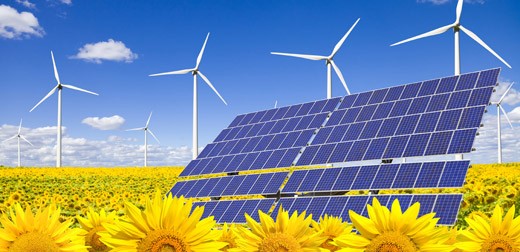
__________ is an energy resource that WILL NOT run out in the next several hundred years.
Renewable Energy Resource
Nonrenewable Energy Resource
Natural Resources
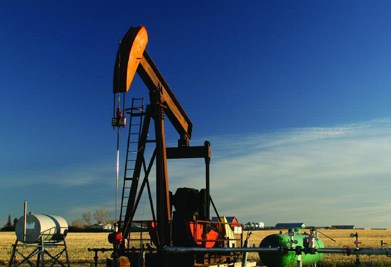
__________ is an energy resource that WILL run out in the next several hundred years.
Renewable Energy Resource
Nonrenewable Energy Resource
Natural Resources
A natural fuel such as coal or gas, formed in the geological past from the remains of living organisms
raw fuel
dinosaur dung
natural energy
fossil fuels
A battery-powered flashlight is used by a camper so that she can she after dark on a camping trip. Which of the sequences below illustrates the transformation that occurs inside the flashlight?
chemical energy → light energy → electrical energy
chemical energy → electrical energy → light energy
mechanical energy → chemical energy → electrical energy
electrical energy → chemical energy → light energy
Movers needed to move a heavy box from the bottom of some stairs to the top of the stairs. They placed a ramp over the stairs and pushed the box up the ramp.
Which best explains why the movers used a ramp to move the box?
The ramp reduced the amount of
force needed to move the box.
The ramp increased the height that
the box needed to be moved.
The ramp reduced the distance that
the box needed to be moved.
The ramp increased the amount of
friction needed to move the box.
The positive particles of an atom are
electrons
positrons
neutrons
protons
What is the atomic number?
the number of protons
the number of protons and neutrons
the number of neutrons
the number of protons and electrons

What is the number of protons in "F"
9
18
17
19
What particle identifies an element?
Number of Valence Electrons
Number of Protons
Number of Electrons
Atomic Mass

A hypothesis is a
a measurable variable
"If ... then..." statement that is measurable
a conclusion
problem or question
What is the dependent variable?
What we measure
What we keep the same
What we change

What is wrong with this data table?
Bad title
No lines
No units
Doesn't start at 0

Based on the graph, how many more students are in the science club than the book club?
20
16
46
18


