
 Worksheets
MCA Science Review
Total questions: 50
Worksheet time: 41mins


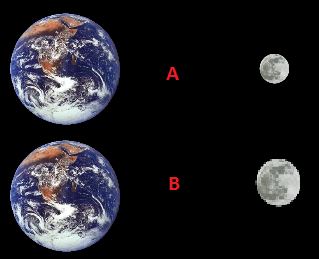
If an object has more _______, it will have more gravitational force.
mass
distance




Which of these factors does NOT influence climate?
latitude
longitude
elevation
distance from large body of water

The climate of an area is effected by which of the following factors?
CHOOSE THREE.
Large bodies of water
Latitude
Daily precipitation
Altitude
Daily temperature changes
Cutting down large forests (deforestation) can result in:
little to no changes
more homes for animals
less plants to absorb carbon dioxide, a greenhouse gas


8.ESS.1.01 Which of the following best explains why seasonal variations in temperature are more extreme at location X than at location Y?
The gravitational force is less at location X than at location Y.
The rotation of Earth has less effect on location X than on location Y.
The angle of incoming solar radiation varies more at location X than at location Y.
The ocean moderates the average temperature more at location X than at location Y.
8.ESS.1.02 An astronaut drops a hammer on the Moon, and a scientist drops an identical hammer on Earth. Both hammers are dropped from the same height. The hammer dropped on Earth falls to the ground faster than the hammer dropped on the Moon.
Why does the hammer on Earth fall faster than the hammer on the Moon?
Earth has a stronger magnetic field than the Moon because Earth orbits the Sun.
Earth has a stronger magnetic field than the Moon because Earth has an iron core.
Gravitational attraction is stronger on Earth than on the Moon because Earth rotates on its axis.
Gravitational attraction is stronger on Earth than on the Moon because Earth has a larger mass.

8.ESS.1.02 The diagram shows the relative heights of ocean tides on Earth at a particular time. Which diagram shows one possible location of the Moon at the time when these tides occur?


8.ESS.2.01 Which of the following processes created the high mountains of the Himalayas?
glacial erosion
physical weathering
the deposition of sediments
the collision of tectonic plates
8.ESS.2.01 A science museum wants to demonstrate some processes of Earth’s tectonic plates. Wooden blocks will be used to represent the tectonic plates.
Which of the following demonstrations would best show how Earth’s tectonic plates interact with the layer directly beneath the plates?
gluing the blocks onto solid rock
burying the blocks in a bed of dry sand
sliding the blocks along the top of warm solid metal
floating the blocks on a slowly moving pool of thick mud
8.ESS.2.05 Lake Ontario, one of the Great Lakes, usually receives heavy snowfall during the winter. Snow often falls after a cold air mass passes through the area. This air mass tends to be colder than the lake water.
Which of the following best explains why snow falls over the lake after the air mass passes over it?
The air mass pushes clouds over the lake, and snow falls from the clouds.
Snow falls when sinking air from the air mass is warmed by the lake water.
The air mass cools the surface of the lake, causing condensation to occur and snow to fall.
Snow falls from clouds that form when rising water vapor from the lake is cooled by the air mass and condenses.

The map below shows the locations of two cities. City Y is near the coast, and city Z is near the middle of a continent. The cities have the same elevation. Based on the map, which of the following statements describes how the climates of the two cities are most likely different?
City Y receives less rain than city Z.
City Y has colder winters than city Z.
City Y has cooler summers than city Z.
City Y receives more sunlight than city Z.
Which of the following is most similar to the number of stars in a galaxy?
the number of galaxies in the universe
the number of layers that make up Earth
the number of stars in our solar system
the number of planets in our solar system

The paths of two air masses, X and Y, are shown in the diagram below. Air mass X is a cold air mass. Air mass Y is a warm air mass. When the air masses meet, winter storms may be produced. Which of the following most likely contributes to the formation of these storms?
Cold air mass X moves over warm air mass Y, and evaporation occurs.
Warm air mass Y moves over cold air mass X, and condensation occurs.
Cold air mass X mixes with warm air mass Y, and the overall temperature increases.
Warm air mass Y mixes with cold air mass X, and the overall temperature decreases.


